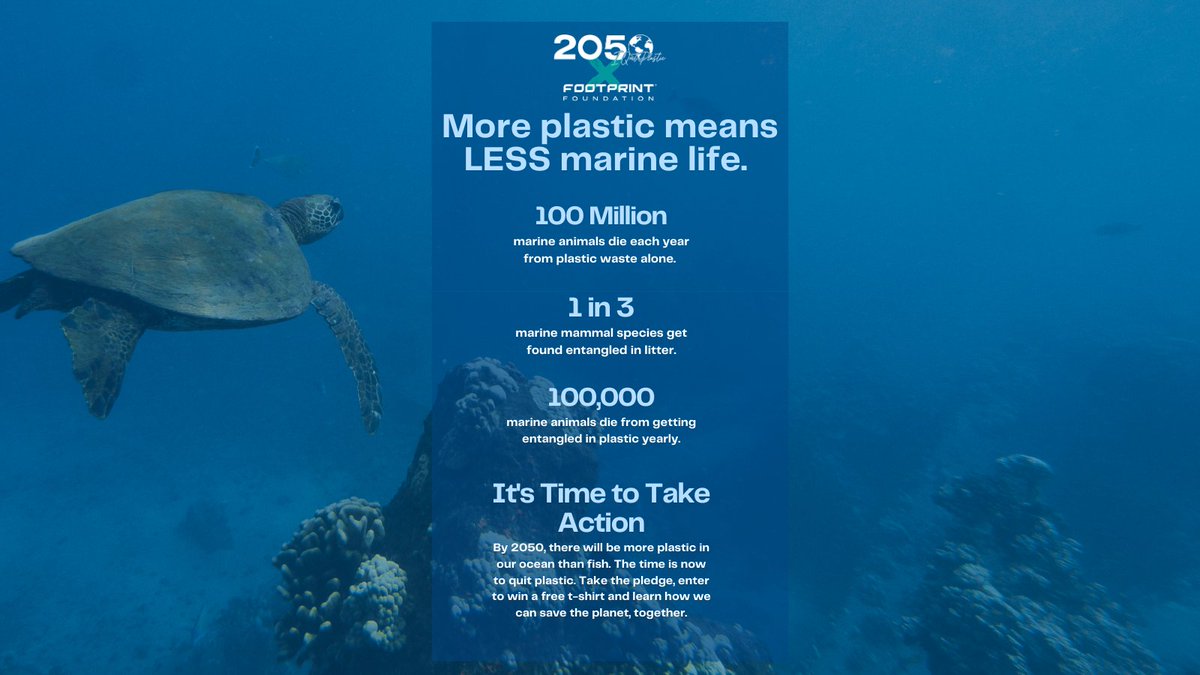
You read that right. By 2050, our oceans will contain more plastic than fish. It’s time to quit plastic once and for all. Take the pledge at https://t.co/VTcLqxNRYK. #Pledge2050
Wider Tim Hortons measures to reduce single-use plastic will see the coffee chain introduce wooden and fibre cutlery across all Canadian stores in early 2023, eliminating an estimated use of 90 million single-use plastics a year. To read more, visit https://t.co/SG8FjBFaW3
Have you thought about quitting plastic in the new year? It's 2023, and before we know it, it will be 2050.
By 2050, there will be more plastic in the ocean than fish. The time is now to quit plastic and pledge 2050. #QuitPlastic#Pledge2050
Single-use plastic cutlery, plates and other items are set to be banned by the UK government and replaced by biodegradable items as it seeks to tackle the country’s – and the world’s – growing plastic waste problem. https://t.co/CuV74t364I
It is now official: Canada banned the import and manufacturing of single-use plastics. Plastic items covered in the ban include straws, grocery bags, knives, forks, spoons, cups, stir sticks, takeout containers, and any other single-use plastic products. https://t.co/sIOdaJcHQC
Plastic packaging waste from the online retail giant Amazon ballooned to 709 million pounds globally in 2021 — equivalent to the weight of some 70,000 killer whales — according to a new report published Thursday by the nonprofit Oceana. https://t.co/q60J8GQH2R
When it comes to consumer packaged goods, the reality is that only a small fraction of the plastic is actually recycled, and a great deal ends up going to landfills or to even more undesirable scenarios such as incineration or release into the environment. https://t.co/gbwmLyTgbJ
The building blocks of almost all plastic items on the planet are nurdles that are melted together and shaped to create larger plastic products. These pellets pose a huge pollution problem long before they are turned into the products we know and use. https://t.co/SVON4kZhGT
A group of senators introduced “Protecting Communities from Plastics Act” bill, which would require a mandatory reduction in single-use plastics, and would invest in research to better understand the human health impacts of plastic production and waste. https://t.co/dQ5dvkzzI1
Border collies are natural working dogs and love to play fetch, so Yvonne and David were happy when Scruff started picking up discarded plastic bottles in fields, parks and streets around town. To read the full story, visit https://t.co/0a8WULupep
How can plastics be designed so they retain their desirable properties but at the same time can be more effectively recycled? To learn, visit https://t.co/mdBUPSZxfu
In May 2021, a container ship sank into the Indian Ocean. The vessel was carrying billions of tiny plastic pellets called nurdles, which began washing up along Sri Lanka’s western shore. The United Nations called it the largest plastic spill in history. https://t.co/gLEl2SMQ2U
McDonald's in France has come up with a new reusable packaging, and the photograph of the same has gone viral on Twitter. Check it out! https://t.co/m3u5cZXym8
In November, the European Commission published a legislative proposal setting a path to regulating emissions from tires and brakes in the coming years. This will help curb one of the leading sources of microplastic pollution in the world. https://t.co/TM3QQQRAA2
The world’s worst plastic polluters have been revealed, with Coca-Cola coming top of the list for the fifth year in a row. To read more, visit https://t.co/qZbIn4qeT9
An innovative proposal to tackle the global plastic pollution crisis with a combination of DNA-like encoding of plastics and international law has been put forward by a transdisciplinary team of QUT researchers.
https://t.co/y4DcFSkjHm
Microplastics are spread by winds and ocean currents and caused by the breakdown of the litter of 360 million tons of plastic produced annually. The impact of microplastics on human/animal life is not entirely understood but its effects are there to see.
https://t.co/2rxYSdJaH8
A range of single-use plastic, including straws, cutlery and micro beads in shampoo, will be banned in its most populous state, New South Wales (NSW), in a bid to reduce waste. To learn more, visit https://t.co/zpAYDgnTyG
The Ganges, is highly polluted despite a long campaign to clean up the river that provides a lifeline for almost 40 per cent of India’s 1.4 billion people as it flows about 2,500km from the western Himalayas to the Bay of Bengal. To learn more, visit https://t.co/YkAelujk4j