BTS and the Grammys: What They Gave Up, What the Academy Lost
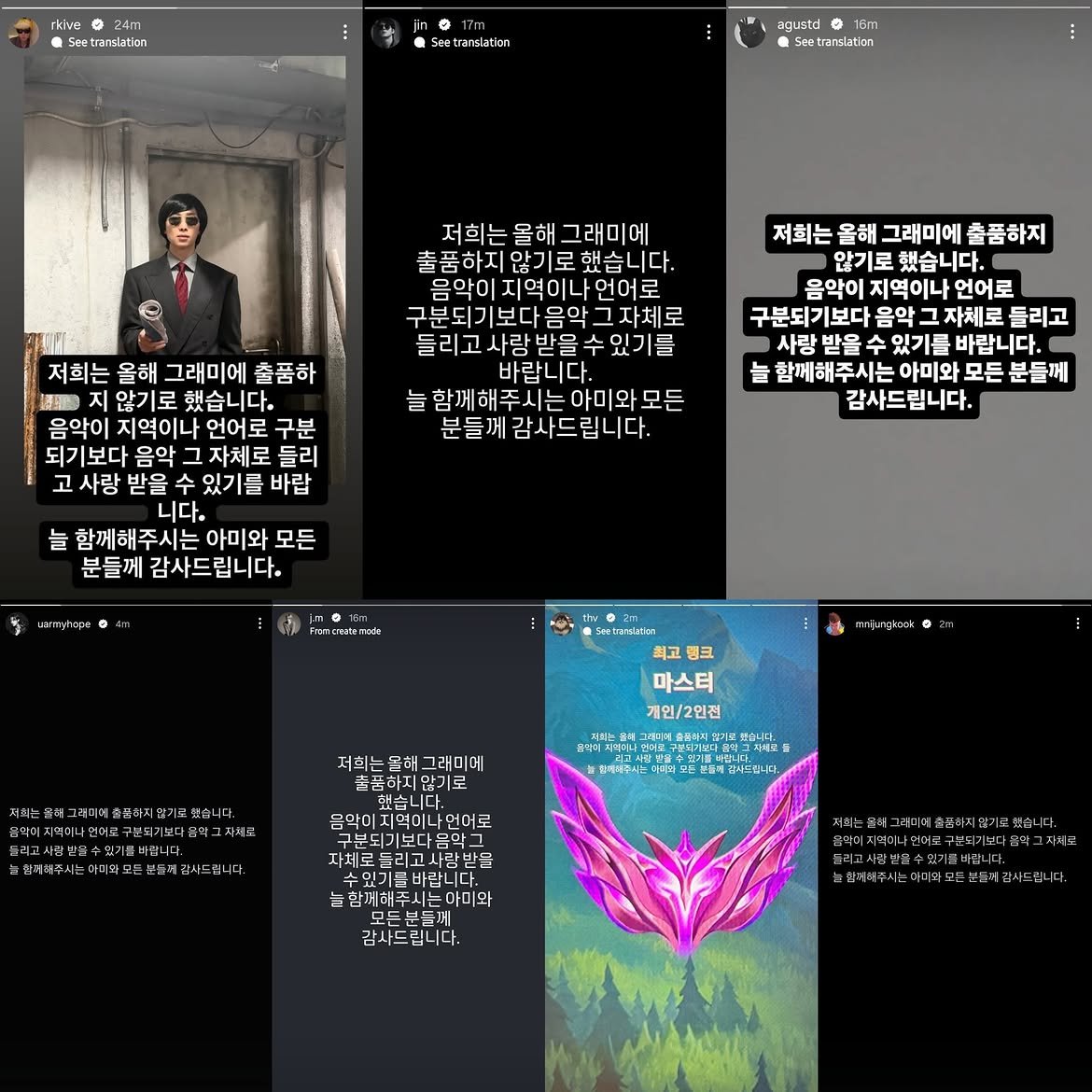
BTS's decision not to submit their work for Grammy consideration involved a real exchange. They gave up the possibility of a first trophy and the institutional status attached to becoming Grammy winners. Their refusal shouldn't be romanticised as costless, nor did it abolish the category. The Recording Academy can continue without them, and another artist may still become its inaugural winner.
But participation would also have carried a cost.
The new category groups different genres, languages and national industries within a regional framework. A prominent inaugural nominee or winner would not merely receive recognition within that structure. Their participation would help normalise the structure itself.
BTS's name would have supplied the category with immediate attention, prestige and historical significance. A BTS victory would have made the category immediately consequential. A nomination would still have brought it global visibility. Their participation could also have been presented as evidence that one of the most prominent acts the category could encompass had accepted its terms.
BTS withheld more than their presence. They withheld their symbolic capital and the appearance of representational consent. The Academy may create the category without BTS, but it can't convert their global status into its inaugural precedent without their participation.
Institutions don't legitimise new structures through rules alone. They also rely on recognised figures to enter them and make them appear normal, desirable and permanent. BTS were valuable not only as possible recipients of the award, but as a precedent that could help turn a contested category into an aspirational one.
The consequences were never fully bilateral. A third actor shaped them: the fandom. ARMY isn't a formal party to the Grammy process or a single unified body. It's a distributed network capable of converting support into visibility, collective memory and reputational pressure. Its response has already extended the effects of BTS's refusal by intensifying scrutiny of the Academy, the category and the arguments used to defend it, while making the scale of support for BTS visible. The Academy now confronts more than the absence of seven artists. It confronts a network capable of preserving, circulating and contesting the meaning of that absence beyond institutional control.
The Academy didn't lose the category. It lost a particular and non-reproducible route to legitimacy. The public meaning of the first cycle will be shaped not only by the creation of a new award, but by BTS's refusal to participate in it.
This was neither a costless victory for BTS nor a complete defeat for the Recording Academy. BTS surrendered a form of recognition that carried real value. The Academy was denied access to value that BTS had already created.
They gave up the possibility of a trophy. The Academy lost the possibility of turning BTS into its precedent.
[📰 𝐍𝐄𝐖𝐒]
The Grammys 2027 Best Asian Category Is Just Another Form of Segregation | Teen Vogue
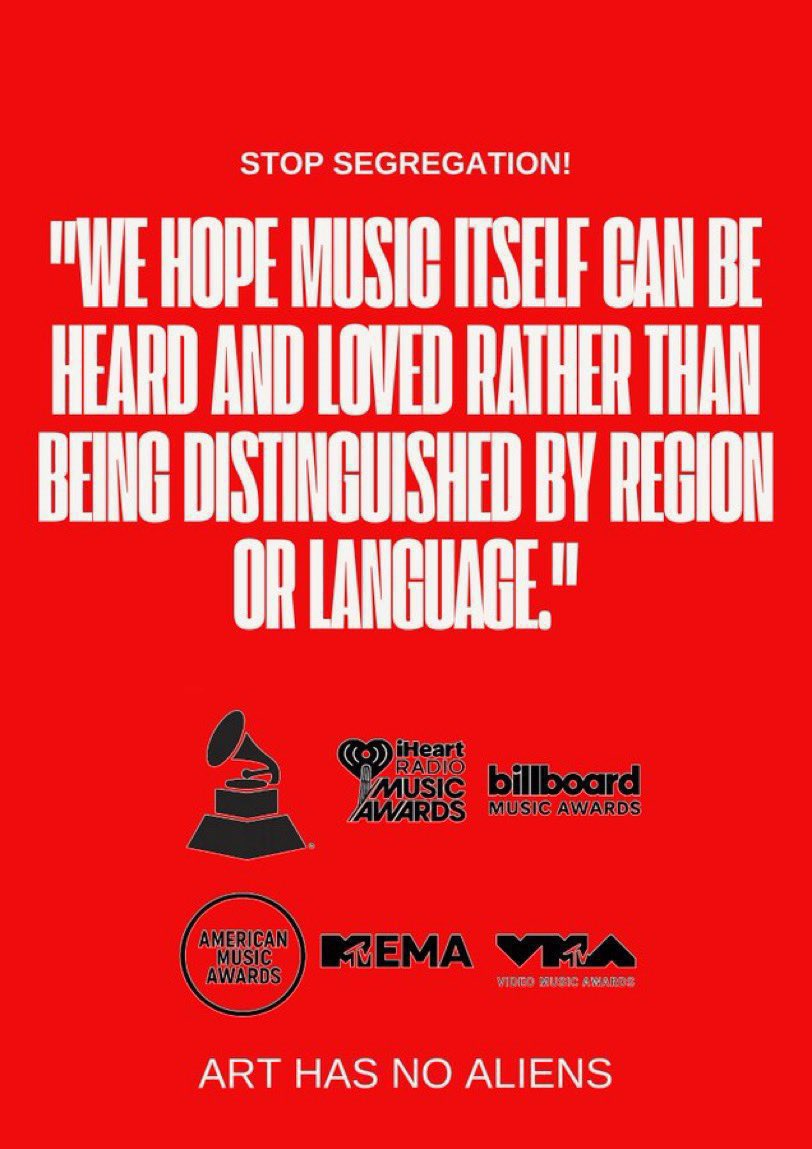
— Some might insist that these new rules and categories will diversify the Grammys, that we should celebrate these changes and view them as baby steps toward equity from an earnest awarding body. But to me, the awarding body has always seemed more committed to exclusion. In reality, these changes contribute more to segregating non-white artists within the major awards. An out-of-touch Grammy voter who is unfamiliar with K-pop’s influence can feel satisfied in voting for #BTS for best Asian pop and never have to think seriously about Arirang for album of the year..
— The addition of these new Grammy categories is not progress; it is tokenistic inclusion that dresses up white bias as recognition. The myth these measures help maintain, intentionally or not, is that non-white/non-English speaking artists exist in a vacuum, that their work is somehow less essential — that it does not help create the very fabric of culture..
— The mere existence of #BTS threatens the myth that the only art worth engaging with comes from our side of the globe..
— On Arirang, #BTS’s song “Aliens” addresses the colonial eyes that appraise and other them in the West. It’s almost as though they could see the panic their success would trigger in the American music industry, even before they released the project..
(https://t.co/iZpFfx0BU0)
ART HAS NO ALIENS
#ArtHasNoAliens
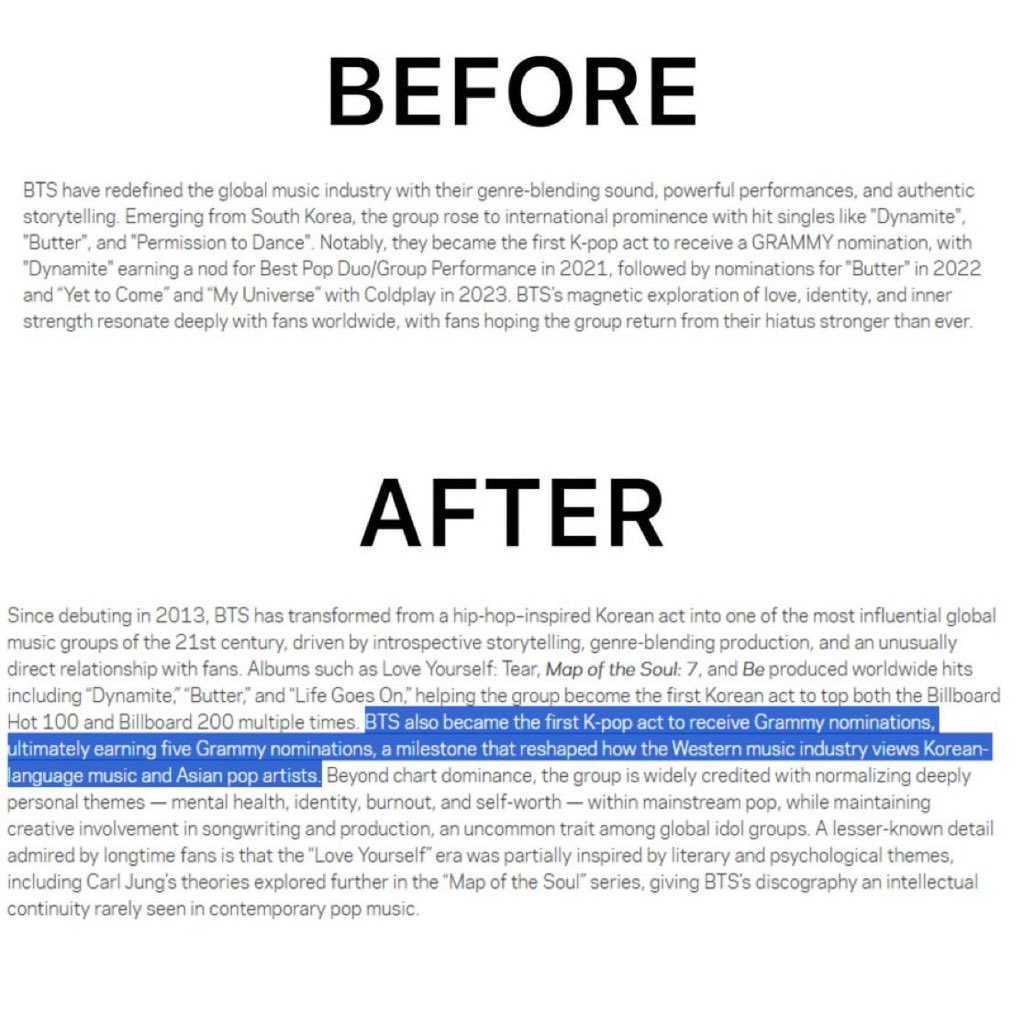
in may 2026, the grammys updated bts's biography to add the title "asian pop artist". this confirms the category was created entirely to keep bts away from the main categories, because bts is the only asian but GLOBAL artist who has been crushing it solo in the us market for years and standing on the same level as grammy darlings.
BTS aren’t interested in rounding off their grand comeback album, ARIRANG, with the chance to take home a few golden gramophones. https://t.co/iBuLmETnkq


![bts_bighit's tweet photo. [#오늘의방탄]
260806 BTS WORLD TOUR 'ARIRANG' IN FOXBOROUGH
#방탄소년단 #BTS #BTS_WORLDTOUR_ARIRANG
#BTS_WORLDTOUR_ARIRANG_NA
#BTS_WORLDTOUR_ARIRANG_FOXBOROUGH https://t.co/JIa8NDUOjZ](https://pbs.twimg.com/media/HPFzn7_bMAASEBl.jpg)
![bts_bighit's tweet photo. [#오늘의방탄]
260806 BTS WORLD TOUR 'ARIRANG' IN FOXBOROUGH
#방탄소년단 #BTS #BTS_WORLDTOUR_ARIRANG
#BTS_WORLDTOUR_ARIRANG_NA
#BTS_WORLDTOUR_ARIRANG_FOXBOROUGH https://t.co/JIa8NDUOjZ](https://pbs.twimg.com/media/HPFzn79bYAA69tM.jpg)
![bts_bighit's tweet photo. [#오늘의방탄]
260806 BTS WORLD TOUR 'ARIRANG' IN FOXBOROUGH
#방탄소년단 #BTS #BTS_WORLDTOUR_ARIRANG
#BTS_WORLDTOUR_ARIRANG_NA
#BTS_WORLDTOUR_ARIRANG_FOXBOROUGH https://t.co/JIa8NDUOjZ](https://pbs.twimg.com/media/HPFzn79a0AAVT0j.jpg)
![bts_bighit's tweet photo. [BANTAN BOMB] FIFA World Cup 2026 Green Room Photographers
(https://t.co/SgG0z30GlB)
#BTS #방탄소년단 #방탄밤 https://t.co/N6h9sNfOGv](https://pbs.twimg.com/media/HPB9p4PaAAAxPWp.jpg)
![bts_bighit's tweet photo. [#오늘의방탄]
260805 BTS WORLD TOUR 'ARIRANG' IN FOXBOROUGH
#방탄소년단 #BTS #BTS_WORLDTOUR_ARIRANG
#BTS_WORLDTOUR_ARIRANG_NA
#BTS_WORLDTOUR_ARIRANG_FOXBOROUGH https://t.co/HFJ7Fyxh4V](https://pbs.twimg.com/media/HPArmxBasAAIsbN.jpg)
![bts_bighit's tweet photo. [#오늘의방탄]
260805 BTS WORLD TOUR 'ARIRANG' IN FOXBOROUGH
#방탄소년단 #BTS #BTS_WORLDTOUR_ARIRANG
#BTS_WORLDTOUR_ARIRANG_NA
#BTS_WORLDTOUR_ARIRANG_FOXBOROUGH https://t.co/HFJ7Fyxh4V](https://pbs.twimg.com/media/HPArmwzaUAAa2I6.jpg)
![bts_bighit's tweet photo. [#오늘의방탄]
260805 BTS WORLD TOUR 'ARIRANG' IN FOXBOROUGH
#방탄소년단 #BTS #BTS_WORLDTOUR_ARIRANG
#BTS_WORLDTOUR_ARIRANG_NA
#BTS_WORLDTOUR_ARIRANG_FOXBOROUGH https://t.co/HFJ7Fyxh4V](https://pbs.twimg.com/media/HPArmwxa8AAwHby.jpg)


![bts_bighit's tweet photo. [#오늘의방탄]
260802 BTS WORLD TOUR 'ARIRANG' IN EAST RUTHERFORD
#방탄소년단 #BTS #BTS_WORLDTOUR_ARIRANG
#BTS_WORLDTOUR_ARIRANG_NA
#BTS_WORLDTOUR_ARIRANG_EASTRUTHERFORD https://t.co/bDdxCdhDmB](https://pbs.twimg.com/media/HOxLleSbMAA5vnk.jpg)
![bts_bighit's tweet photo. [#오늘의방탄]
260802 BTS WORLD TOUR 'ARIRANG' IN EAST RUTHERFORD
#방탄소년단 #BTS #BTS_WORLDTOUR_ARIRANG
#BTS_WORLDTOUR_ARIRANG_NA
#BTS_WORLDTOUR_ARIRANG_EASTRUTHERFORD https://t.co/bDdxCdhDmB](https://pbs.twimg.com/media/HOxLleRa4AAoWOm.jpg)
![bts_bighit's tweet photo. [#오늘의방탄]
260802 BTS WORLD TOUR 'ARIRANG' IN EAST RUTHERFORD
#방탄소년단 #BTS #BTS_WORLDTOUR_ARIRANG
#BTS_WORLDTOUR_ARIRANG_NA
#BTS_WORLDTOUR_ARIRANG_EASTRUTHERFORD https://t.co/bDdxCdhDmB](https://pbs.twimg.com/media/HOxLleOboAAgT79.jpg)
![bts_bighit's tweet photo. [#오늘의방탄]
260801 BTS WORLD TOUR 'ARIRANG' IN EAST RUTHERFORD
#방탄소년단 #BTS #BTS_WORLDTOUR_ARIRANG
#BTS_WORLDTOUR_ARIRANG_NA
#BTS_WORLDTOUR_ARIRANG_EASTRUTHERFORD https://t.co/5YaXd94h8m](https://pbs.twimg.com/media/HOsGCP5bYAEvYAC.jpg)
![bts_bighit's tweet photo. [#오늘의방탄]
260801 BTS WORLD TOUR 'ARIRANG' IN EAST RUTHERFORD
#방탄소년단 #BTS #BTS_WORLDTOUR_ARIRANG
#BTS_WORLDTOUR_ARIRANG_NA
#BTS_WORLDTOUR_ARIRANG_EASTRUTHERFORD https://t.co/5YaXd94h8m](https://pbs.twimg.com/media/HOsGCP3boAAmaQN.jpg)
![bts_bighit's tweet photo. [#오늘의방탄]
260801 BTS WORLD TOUR 'ARIRANG' IN EAST RUTHERFORD
#방탄소년단 #BTS #BTS_WORLDTOUR_ARIRANG
#BTS_WORLDTOUR_ARIRANG_NA
#BTS_WORLDTOUR_ARIRANG_EASTRUTHERFORD https://t.co/5YaXd94h8m](https://pbs.twimg.com/media/HOsGCP2aIAAus2Z.jpg)





![bts_bighit's tweet photo. [#오늘의방탄]
260806 BTS WORLD TOUR 'ARIRANG' IN FOXBOROUGH
#방탄소년단 #BTS #BTS_WORLDTOUR_ARIRANG
#BTS_WORLDTOUR_ARIRANG_NA
#BTS_WORLDTOUR_ARIRANG_FOXBOROUGH https://t.co/JIa8NDUOjZ](https://pbs.twimg.com/media/HPFzn8BbAAAHlCC.jpg)
![bts_bighit's tweet photo. [#오늘의방탄]
260805 BTS WORLD TOUR 'ARIRANG' IN FOXBOROUGH
#방탄소년단 #BTS #BTS_WORLDTOUR_ARIRANG
#BTS_WORLDTOUR_ARIRANG_NA
#BTS_WORLDTOUR_ARIRANG_FOXBOROUGH https://t.co/HFJ7Fyxh4V](https://pbs.twimg.com/media/HPArmxBbkAAk158.jpg)
![_BTSMoments's tweet photo. [📰 𝐍𝐄𝐖𝐒]
The Grammys 2027 Best Asian Category Is Just Another Form of Segregation | Teen Vogue
— Some might insist that these new rules and categories will diversify the Grammys, that we should celebrate these changes and view them as baby steps toward equity from an earnest awarding body. But to me, the awarding body has always seemed more committed to exclusion. In reality, these changes contribute more to segregating non-white artists within the major awards. An out-of-touch Grammy voter who is unfamiliar with K-pop’s influence can feel satisfied in voting for #BTS for best Asian pop and never have to think seriously about Arirang for album of the year..
— The addition of these new Grammy categories is not progress; it is tokenistic inclusion that dresses up white bias as recognition. The myth these measures help maintain, intentionally or not, is that non-white/non-English speaking artists exist in a vacuum, that their work is somehow less essential — that it does not help create the very fabric of culture..
— The mere existence of #BTS threatens the myth that the only art worth engaging with comes from our side of the globe..
— On Arirang, #BTS’s song “Aliens” addresses the colonial eyes that appraise and other them in the West. It’s almost as though they could see the panic their success would trigger in the American music industry, even before they released the project..
(https://t.co/iZpFfx0BU0)
ART HAS NO ALIENS
#ArtHasNoAliens](https://pbs.twimg.com/media/HOzyaSQaQAARJ1U.jpg)
![bts_bighit's tweet photo. [공지] BTS (방탄소년단) 'ARIRANG' (NORMAL x CALVIN KLEIN SLEEPWEAR) 예약 구매 안내 (+ENG/JPN/CHN/ESP)
🔗 https://t.co/9A791A19Je
#BTS #방탄소년단 #BTS_ARIRANG #BTS_NORMAL
@CalvinKlein https://t.co/2ciLY2B3GA](https://pbs.twimg.com/media/HOzlr4XaIAAjuE0.jpg)
![bts_bighit's tweet photo. [#오늘의방탄]
260802 BTS WORLD TOUR 'ARIRANG' IN EAST RUTHERFORD
#방탄소년단 #BTS #BTS_WORLDTOUR_ARIRANG
#BTS_WORLDTOUR_ARIRANG_NA
#BTS_WORLDTOUR_ARIRANG_EASTRUTHERFORD https://t.co/bDdxCdhDmB](https://pbs.twimg.com/media/HOxLleVawAAyYY9.jpg)
![bts_bighit's tweet photo. [#오늘의방탄]
260801 BTS WORLD TOUR 'ARIRANG' IN EAST RUTHERFORD
#방탄소년단 #BTS #BTS_WORLDTOUR_ARIRANG
#BTS_WORLDTOUR_ARIRANG_NA
#BTS_WORLDTOUR_ARIRANG_EASTRUTHERFORD https://t.co/5YaXd94h8m](https://pbs.twimg.com/media/HOsGCP6bMAA_0y-.jpg)

![HYBE_MERCH's tweet photo. [NOTICE] BTS WORLD TOUR ‘ARIRANG’ IN EAST RUTHERFORD – Official Merchandise On-Site Sales & Booth Information
📍https://t.co/qu0jNVHAtX
#방탄소년단 #BTS #BTS_WORLDTOUR_ARIRANG
#BTS_WORLDTOUR_ARIRANG_NA
#BTS_WORLDTOUR_ARIRANG_EASTRUTHERFORD https://t.co/aK6LrEai1M](https://pbs.twimg.com/media/HOW8DOGbUAARc4J.jpg)


