The source code for Multidex is here.
My impressions so far.
- Great work building in the open and attracting many-eyes to help find bugs!
- Lots of bugs! 😄 They will be fixed. Dfinity are pros and many-eyes is helpful.
- Some structural concerns, not as easily fixed as bugs. Still, I think most can be solved as we get data.
- Some potentially showstopping concerns, that worry me a lot more. They are:
Showstopper 1: Oracle risk.
Multidex absolutely requires Chainlink to operate safely. Successful oracle manipulation could potentially be catastrophic for the DEX and its liquidity providers, and its current oracle solution is woefully inadequate.
Showstopper 2: Subnet downtime risk.
If the Multidex subnet goes down for 10 minutes during a market crash so liquidations fail to execute, the DEX can wake back up to being stuck with a lot of bad debt, that is taken first from the insurance fund and then from liquidity providers in the the AMM Vault.
But we'll get back to the showstoppers, let's go through things in order.
Bugs first. I will not discuss the actual bugs discovered so far - suffice it to say that running Sol and Opus over the codebase discovers a fair amount, and vigilant devs have found even more - some quite serious issues - despite the code only having been up a few hours.
One might be surprised that @dfinity would release code in this shape. However, anyone who's been on the inside of the sausage factory knows code (especially in vibe coded projects) will go through this phase, it's rarely born pristine. In other words, this may well be interpreted as Dfinity just showing us the code at an earlier stage than they normally would, which I would see as a good thing. I am not worried about the bugs.
Structural concerns are those that remain once we assume the bugs have been fixed. Here the main questions are if the AMM can produce enough profit over a passive basket to compete for liquidity, or if it is possible to exploit systematic architectural weaknesses to extract from the AMM. These things can be hard to predict, ultimately the market will judge if the product works and is attractive.
Then we have the showstoppers: structural concerns that potentially make it impossible for the product to work and be attractive enough. To understand how and where they come in, let's look at the more general structural concerns in better detail.
The central concern for the Multidex, once the bugs are fixed and the machine is executing as expected, will be: can it attract enough traders and liquidity to make enough profit to pay for its gas costs?
The question for traders is generally if they can get better execution for their trades than in competing venues, and the question for liquidity providers is if the APR they can get on their capital is greater than the risk.
All three of these questions require positive answers for the DEX to work.
For traders, the answer depends to some extent on how you trade. The trading fees are very low, which is good. However, for a limit order maker, it soon becomes clear that most market making advantages are captured by the AMM, reducing the value of placing limit orders.
Some commentators have observed that the Multidex is not suitable for High Frequency Trading (HFT) because it is too slow, and that this hurts the targetable market share. After inspecting the source code, we could go even further and conclude that the AMM's "last look" opportunity to move its order ladder before executing an incoming trade outright punishes anyone who tries to take advantage of being fast.
So, the DEX mechanics can be good for humans placing market orders, not so good for HFT bots. For liquidity providers considering placing limit orders, providing their liquidity to the AMM vault seems the better option.
But again, the trading fees are low, so this might drive a fair volume of trade via market orders. That's part of the bet, and is indeed one of the crucial things that remain to be seen when the DEX opens for real.
Then we have the liquidity providers, and the AMM. As mentioned, the AMM has mechanical advantages compared to limit orders, so the AMM is the relevant component to look at for liquidity provision.
It's important to understand a few things about how to evaluate the performance of this AMM. First, your liquidity is split into a basket of USD, BTC, ETH, SOL and ICP. This basket will have a performance on its own.
To be profitable, the AMM output must be compared to the output of just holding the same basket of assets. If the AMM gives 20% return over a period, but just holding the asset basket gave 15% over the same period, the AMM's relevant return compared to the basket was 5%.
Second, the way to judge what APR compared to the basket you need from the AMM (in order for it to be a rational placement of your money) is to judge the risk associated with placing your money there. The higher the risk, the higher the APR you would need.
Coming up with exact reward/risk ratios is complex, but the basic relationship is clear (more risk requires greater reward) and the showstopper is this: it can be the case that the market considers the best APR that the AMM can muster insufficient for the risk it implies.
These numbers are made up, but give an idea. If the risk of losing a substantial portion of your placement is very low, perhaps 1% yearly, then an APR of 10% over the basket might sound fine. But if there is a more pressing risk of catastrophic loss, you may require 50%-100% APR over the basket, or more - something the AMM can't provide, which means that nobody wants to provide liquidity.
Safety against catastrophic risk thus has to be a central concern and selling point of Multidex. Only then will the APR over the basket it can actually provide become attractive.
Unfortunately, Multidex has not one but two substantial and potentially catastrophic risk modes where your liquidity can be lost. In my opinion, both these modes must be addressed for Multidex to become a serious contender for attracting liquidity.
The first risk is oracle manipulation, and if history is any guide, Dfinity risks joining the ranks of every DeFi protocol who thought they didn't need Chainlink for their oracles and got rekt. They all bend the knee, post-catastrophe. In my view, it would be preferrable if Dfinity bent the knee pre-catastrophe instead.
Here's the problem: if you can manipulate the price oracle, you can extract the liquidity from the DEX. There are many ways, the core point is: don't let anyone manipulate your price oracles! You can put in circuit breakers if your oracles behave suspiciously or go offline, but a trading halt while not knowing real prices can in fact be one of the catastrophic failure modes.
If the oracles go down during a crash, liquidation engines can't liquidate uncollateralized positions. The shortage is assumed by the insurance fund, and when that runs out, the LP (the AMM Vault). There are protections in place to limit the Vault's exposure, but in an unfortunate scenario most or all of the provided liquidity could be wiped out.
Multidex has its own, home-grown oracle solution. The setup is not comparable to a Chainlink Decentralized Oracle Network (DON). I have explained in other posts how DON's work, but in short they are dedicated feed providers, specifically incentivized to provide the best data possible at all times, resulting in the solution with the best track record of doing so.
In contrast, Multidex relies on making HTTPS outcalls to a few price sources like Binance and Coinbase - when have they ever gone down in times of high market volatility?
It claims there are 8 sources, but looking more closely reveals that it will continue operations as long as only 2 are available, and furthermore the price sources are far from independent. On top of that, the HTTPS Outcalls have replication turned off (do not pass consensus).
Bottom line: it doesn't matter if more sources are added, if the HTTPS Outcalls are properly replicated, if higher thresholds are used - unless they replicate a full Chainlink DON where dedicated people have as their entire job to make sure you get your doggone price feed no matter what, dagnabbit, you don't have what you need to do oracle driven DeFi. I will happily dive deeper into exactly why in follow up posts, but for this post, I will leave this as my line in the sand.
Without going too far into technical details, the situation can be summarized by saying that the risk of the DEX depends to a *large* extent on the quality of the oracle solution, and the current setup is far from good enough to seem realistic. Best-in-industry and the absolute no-brainer choice is Chainlink, so the time for a call to Sergey is overdue.
This point I consider an absolute showstopper. A DEX that relies so fundamentally on its oracle as Multidex is not possible to take seriously without a best-in-class oracle solution - and the more leverage it supports, the more pronounced the risk becomes. Perps are next? You most definitely need Chainlink.
Without Chainlink, I see Multidex a non-starter. The good news is that all it would take is to ensure Chainlink support and this showstopper is eliminated.
The second showstopper falls in the same category of "what happens if we fail to liquidate longs in a crash, or shorts in a pump?" - but this time we ask ourselves: what if the oracle is working fine but the DEX itself goes down? Not in the sneaky CEX way where all their liquidation engines "luckily" continue to work, but in the "Subnet down" fashion where we genuinely miss our window to liquidate, ending up with bad debt and wiping the insurance fund and Vault.
One important premise: We can't just put a backup of the DEX on another subnet and fall over to that if the subnet with the primary copy of the DEX goes down. Ensuring that something like "chain splits" wouldn't happen would amount to essentially creating a whole new infrastructure layer on top of subnets, to support a "subnet of subnets" (in a different way than what Cloud Engines give us), which would also make the DEX far slower and is just in general not going to happen.
So if the subnet with Multidex goes down during a dramatic crash, it could really be over for it, or at least its liquidity providers. But subnets never go down, right?
They do. I wish I had access to good stats on uptime, if anyone knows a link please feel free to share in the comments. But there are two things that are important to understand:
1) When ICP talks about 100% uptime, that is in the sense that "at least some subnet will always be up and running". The subnet with your app on it may still go down, taking your app with it. Subnets do go down sometimes, in some recorded incidents for hours.
2) We're not (mainly) talking about nodes in a subnet going down. A subnet is resilient to a few nodes going down. The more nodes in the subnet, the more nodes can go down without taking the subnet with it, and the Multidex will as I understand it run on a subnet with lots of nodes (I think 34) so that part is good. The problem is when the whole subnet goes down despite nodes in principle being fine.
How often do subnets go down? Well, weekly, for 1-5 minutes of maintenance. Let's hope it's not at the same time as a market crash, eh?
They also go down from protocol errors, some of the more famous incidents lasting for hours, but anyone who has looked at the logs of an app like Swaprunner that regularly tries to ping 100s of ledgers on different subnets know that it's more rule than exception to see at least a few of those subnets to be down.
I don't know anyone who has recorded reliable statistics on how often subnets experience expected and unexpected outages, but honestly this is one of the most important numbers going into any serious calculation regarding the reward/risk ratio for providing liquidity to the Multidex AMM Vault.
So on this showstopper I am not actually saying "subnet uptime isn't good enough" - the problem is that I don't know if it is. And I would have to be able to know in order to risk any serious capital on the DEX.
If such numbers show the risk is acceptable, then all is good and this showstopper is solved! Maybe @dominic_w even has access to the numbers? Then, if Multidex also starts using Chainlink as its authoritative oracle, both my showstoppers would be solved. This seems solvable!
But both showstoppers do have to be solved, or I think Multidex may end up dead in the water, unable to attract liquidity due to not being able to provide sufficient APR over the basket for its risk. Let's hope we're not doomed to repeat the most classic DeFi mistakes.
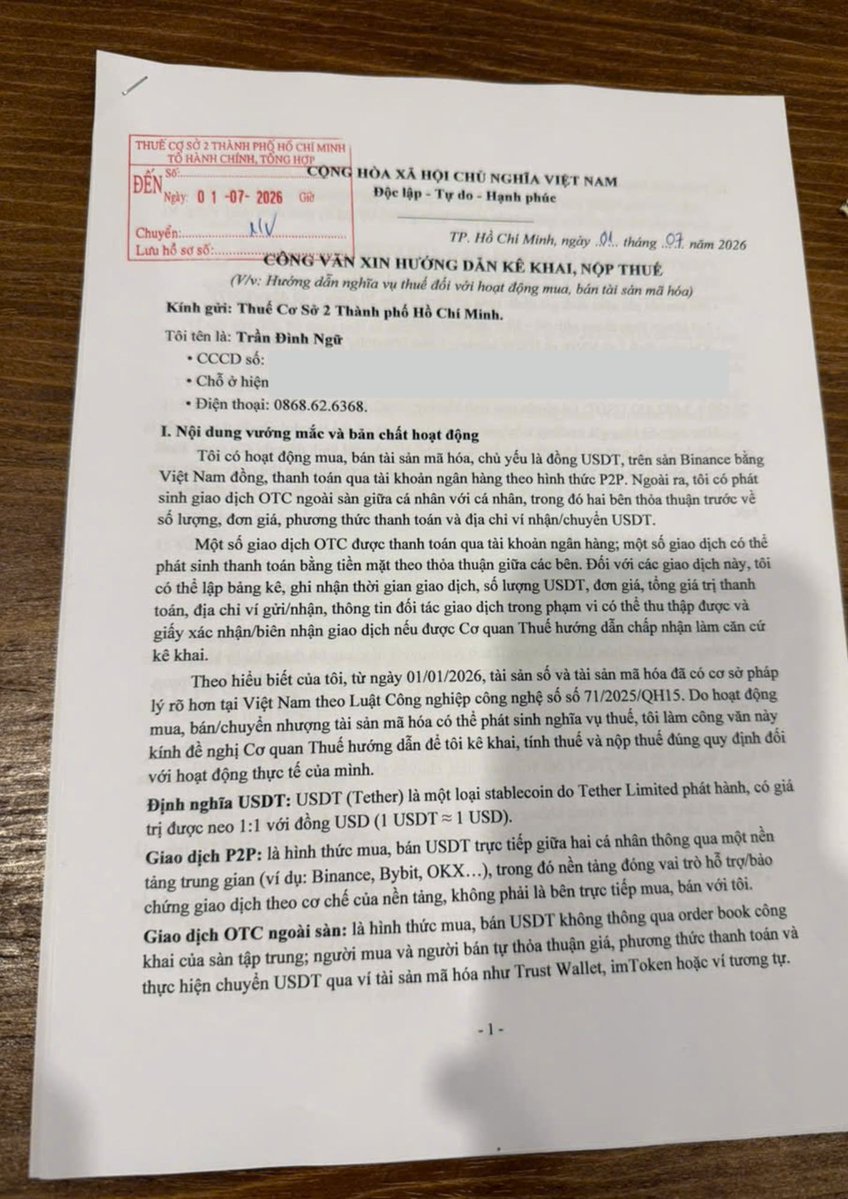
🇻🇳CẬP NHẬT THÊM VỀ VIỆC KÊ KHAI THUẾ P2P/OTC USDT!
Mình đã trực tiếp nộp công văn tại Thuế cơ sở 2 TP.HCM để xin hướng dẫn chính thức về cách kê khai, tính thuế và nộp thuế đối với hoạt động mua bán USDT trên Binance P2P và OTC ngoài sàn.
Nội dung mình hỏi chủ yếu gồm:
• Hoạt động P2P/OTC USDT được xem là đầu tư, chuyển nhượng tài sản số hay hoạt động kinh doanh?
• Thuế sẽ tính trên tổng doanh thu/giao dịch quay vòng, trên giá chuyển nhượng, hay trên lợi nhuận thực tế sau khi trừ giá vốn và chi phí?
• Giao dịch Binance P2P, OTC ngoài sàn, OTC tiền mặt có kê khai như thế nào?
• Lịch sử giao dịch, sao kê ngân hàng, lịch sử ví, TxID blockchain, bảng kê OTC có được chấp nhận làm căn cứ kê khai không?
• Trong giai đoạn chưa có hướng dẫn rõ cho giao dịch ngoài phạm vi thí điểm, cá nhân muốn chủ động kê khai thì phải làm theo căn cứ nào?
Bên Thuế đã tiếp nhận công văn và hẹn chờ phản hồi trong khoảng 5–7 ngày làm việc.
Mình chia sẻ việc này để anh em thấy rằng giai đoạn này nên chủ động hơn. Đừng đợi đến khi bị hỏi sao kê, dòng tiền hoặc giao dịch rồi mới đi giải trình.
Theo mình, anh em làm P2P/OTC nên chuẩn bị sẵn:
✅ Lịch sử giao dịch trên sàn
✅ Sao kê tài khoản ngân hàng
✅ Lịch sử ví và mã giao dịch blockchain
✅ Bảng tổng hợp mua/bán, giá vốn, giá bán, phí và lợi nhuận
✅ Biên nhận hoặc bảng kê đối với giao dịch OTC tiền mặt nếu có
Khi có phản hồi chính thức từ cơ quan thuế, mình sẽ cập nhật tiếp để anh em cùng nắm.
Bài viết chỉ mang tính chia sẻ trải nghiệm thực tế của cá nhân mình trong quá trình chủ động hỏi cơ quan thuế, không phải tư vấn pháp lý hay tư vấn thuế chính thức.
-----
Này của 1 bác đã chia sẽ ae có thể đọc tham khảo cũng nhật cập nhật thêm những cái còn thiếu xót để tránh việc bỏ lỡ thông tin về luật Thuế.
HÚP NHANH KÈO NC MƯA FREE: THAM GIA WAITLIST NHẬN THẺ STARTALE CARD
Dự án gọi vốn $70M
cơ hội cho early adopters để mở khóa đặc quyền và tiềm năng húp airdrop kh���ng.
Hoàn toàn free và chỉ mất chưa đầy 1 phút
Thẻ Startale Card có thể:
Chi tiêu trực tiếp
Swap
Earn rewards
Các bước:
Truy cập: https://t.co/WfCLm5sBME
Tạo tài khoản cá nhân.
Reserve thẻ Startale Card của ae
Đăng ký ngay đi trước khi đóng cổng nhé ae
🚨 Một "cá voi" Solana từ thời Genesis Distribution được cho là đã bị tấn công, mất khoảng 180.900 solana:So11111111111111111111111111111111111111112 (tương đương 14,2 triệu USD).
Theo nhà điều tra on-chain ZachXBT, số solana:So11111111111111111111111111111111111111112 bị đánh cắp đã được chuyển sang mạng Ethereum thông qua bridge – một dấu hiệu thường thấy trong các vụ hack nhằm che giấu dòng tiền.
Vụ việc tiếp tục là lời nhắc nhở rằng ngay cả những ví nắm giữ tài sản lâu năm cũng không miễn nhiễm trước các rủi ro bảo mật.
#Solana #Crypto #Blockchain #Security
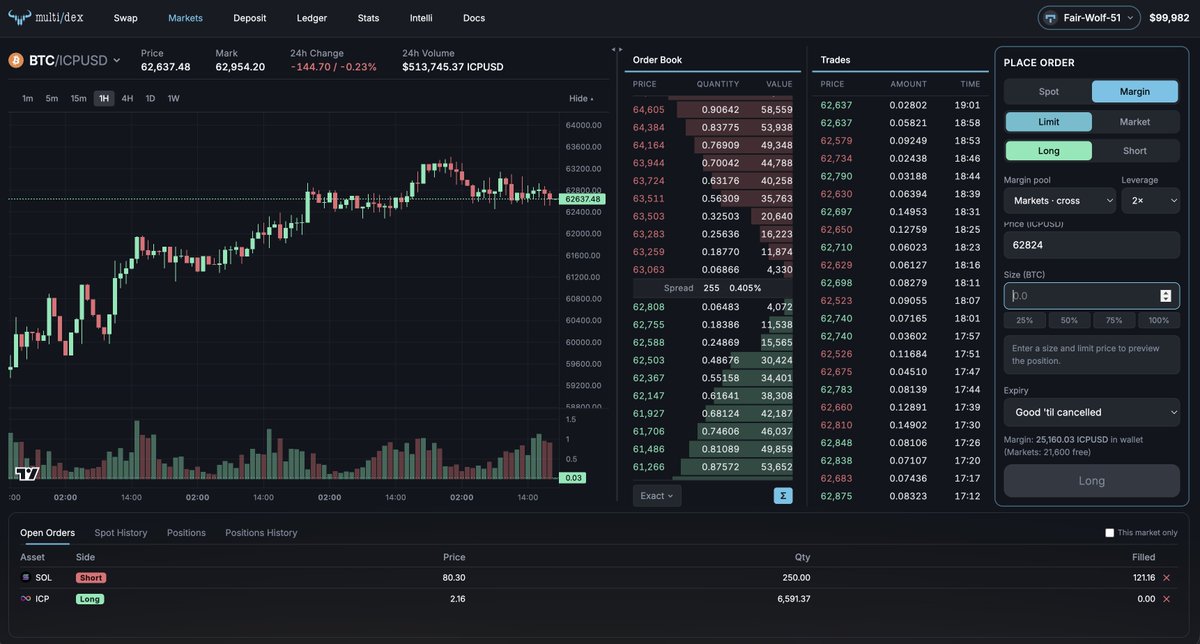
MULTI/DEX — the world's most advanced DeFi — will be released in game mode later this week, together with source code for ICP community eval. Players to get $100k dummy assets to compete. Will be offered to the NNS for autonomous/ownerless execution. *True* DeFi that mimics CEXs.
MULTI/DEX is live on https://t.co/THp2nkOhaV in Play Mode. The community eval process has begun...
Trade to win prizes!! Send bugs and exploits to [email protected] for bounties!! GitHub link to follow.
100% onchain. Owned by the world. DeFi 3.0. NNS autonomy for safety 🔥📈
Ngày xưa cứ mỗi khi $BTC dựng cột or tăng 5-10k giá thì sẽ có xu thế là hô Uptrend kkk
Giờ đã hết 1/2 năm 2026 không còn ai hô uptrend vs altcoin season nổi rồi.
- Quan sát thì ae phần lớn vẫn thua lỗ và chẳng mấy ai thấy được bờ?
2026 năm đỉnh nhưng cho tài sản có giá trị chứ còn altcoin chỉ pump nhất thời rồi dump mãi mãi thôi.
Ngày đẻ cả trăm nghìn con alt thì season gì mà ra nổi.
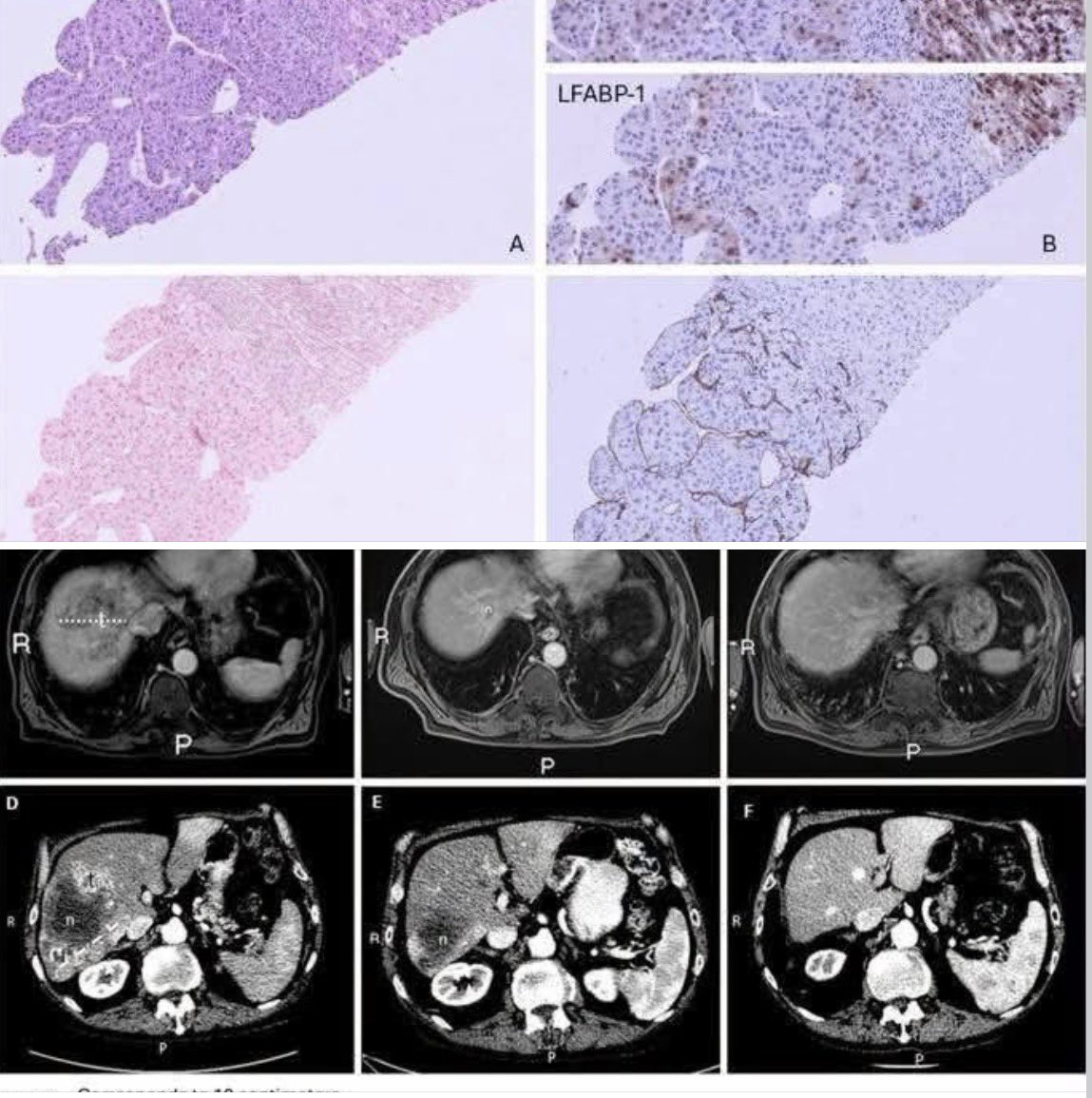
Các bác sĩ đã phải kinh ngạc: Ung thư biểu mô tế bào gan (loại ung thư có tiên lượng xấu nhất) hoàn toàn biến mất ở hai bệnh nhân chỉ bằng cách sử dụng tinh dầu CANNAB dạng nhỏ giọt.
Điều gì đã xảy ra trong hai trường hợp này:
Hai bệnh nhân cao tuổi (một người 82 tuổi, một người 77 tuổi) mắc ung thư gan giai đoạn nặng với nhiều khối u.
Về cơ bản, các bác sĩ đã cạn kiệt các phương án điều trị cho họ.
Cả hai đều bắt đầu sử dụng dầu thuốc CANNAB dưới lưỡi chỉ để cảm thấy dễ chịu hơn và kiểm soát các triệu chứng:
Bệnh nhân A: dầu dịu nhẹ 2 giọt, 3 lần một ngày.
Bệnh nhân B: dầu mạnh hơn 5 giọt, 2 lần một ngày.
Và họ đã sử dụng dầu thuốc trong thời gian dài.
Điều đáng ngạc nhiên là, các kết quả chụp chiếu sau đó cho thấy khối u của họ đã dần nhỏ lại và biến mất hoàn toàn và không xuất hiện trở lại trong một thời gian dài (thuyên giảm hoàn toàn và lâu dài).
Hình ảnh 1 + 2: 👇👇
Nguồn: Tạp chí cần sa Thế Giới.
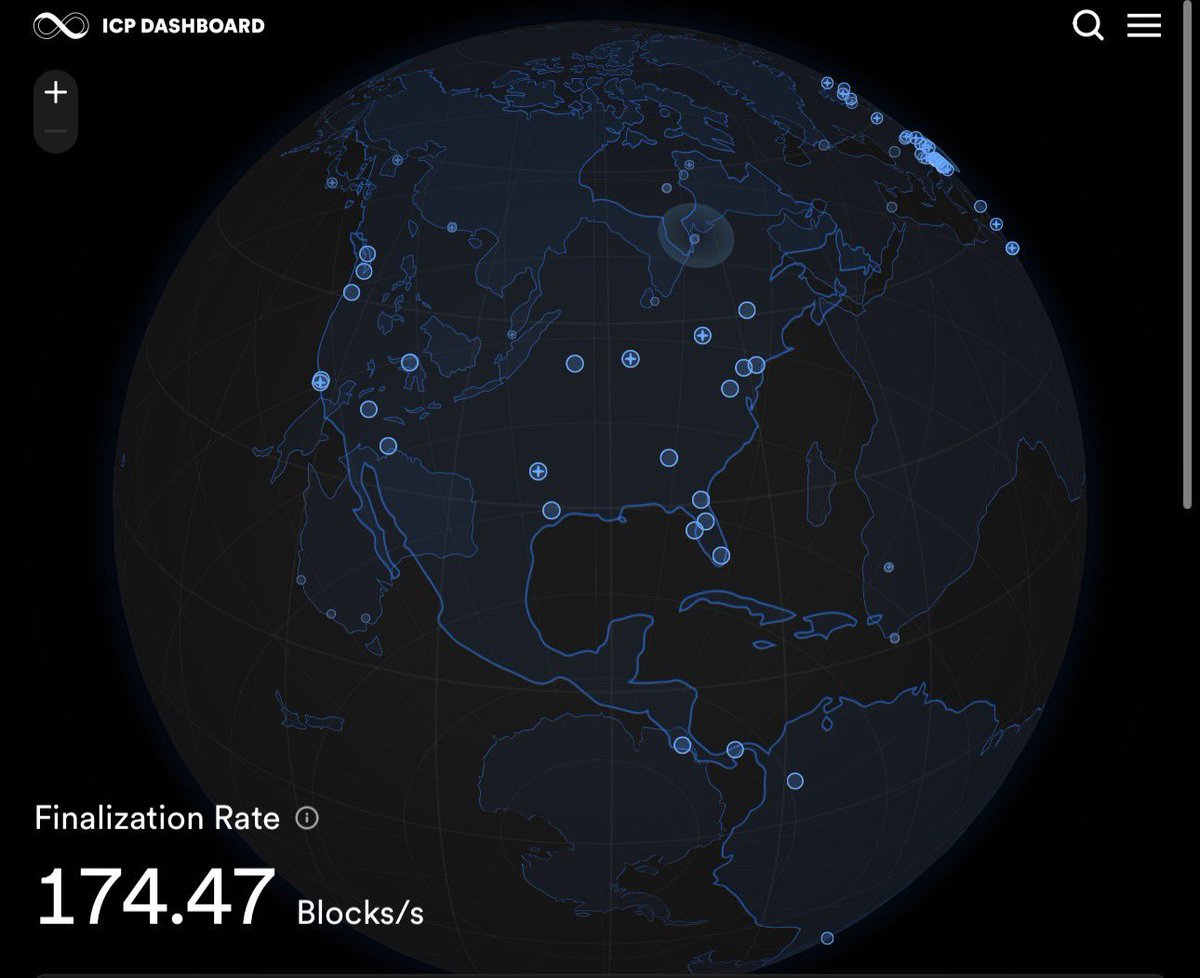
$ICP keeps crossing milestones that don't fit the typical blockchain narrative.
First cloud to reach 200 BPS.
Step by step, the World Computer is becoming less of a vision and more of a reality. ♾️
The 3D Motoko Ghost upgrade is not about abandoning the original art,
It is about extending it!
The 2D Ghost remains the foundation.
The 3D version adds another layer.
ICP ÂM THẦM XÂY DỰNG MẠNH MẼ DÙ GIÁ VẪN GẦN VÙNG ĐÁY
Internet Computer đang được chú ý trở lại khi hệ sinh thái tiếp tục ghi nhận hoạt động phát triển mạnh, dù giá ICP vẫn giao dịch gần các vùng thấp. Theo Dfinity, nền tảng Caffeine với mô hình “ứng dụng tự viết” hiện có số lượng nhà phát triển cao gấp 10 lần tổng số builder trên tất cả các mạng crypto khác cộng lại.
Sau bản phát hành v3, lượng người đăng ký Caffeine cũng tăng khoảng 20% theo tháng. Điều này cho thấy ICP đang tập trung vào tăng trưởng hạ tầng và cộng đồng phát triển sản phẩm thực tế, thay vì chỉ phụ thuộc vào biến động giá ngắn hạn trên thị trường.
🆘 Xin chia buồn cùng gia đình anh trai trong vụ việc đau lòng này…
Ở vùng sông nước, bình “chích cá” gần như quá quen thuộc trong mỗi nhà. Chỉ một sự cố rò điện nhỏ thôi… mà mất đi cả một mạng người.
Cùng vì mưu sinh, nhưng cái giá lần này quá đau 😔
Amerika ' da 15 yaşındaki bir çocuk marketten ekmek çalarken yakalandı. Kaçmaya çalışırken bir de raf kırmış.
Cocuk tutuklanmış ve mahkemeye çıkartılmış.
Kararı vermeden önce hakim çocuğu da duymak ister.
Hakim: ′′ Neden çaldın? ′′
Çocuk: ′′ Ekmeğe ihtiyacım vardı. ′′
Hakim: ′′ Çalmak yerine ekmek alamadınız mı?"
Çocuk: ′′ Satın alacak param yoktu."
Hakim: ′′ Ailenden para isteyebilirdin. ′′
Çocuk: ′′ Evde sadece annem var. Annem hasta ve işsiz. Sırf bunun için biraz ekmek ve peynir çaldım."
Hakim: ′�� Sen küçüksün, normalde işin de yok. ′′
Çocuk: ′′ Yıkama üzerinde çalıştım. Bir hafta önce anneme hizmet etmek için izin aldım ve bu yüzden kovuldum. ′′
Hakim: ′′ Yardım isteyecek yeriniz ,kimseniz yok muydu? ′′
Çocuk: ′′ Her gün evden çıktığımda herhangi bir iş için eleman arayan en az elli adresle iletişime geçiyorum ama, başarısız. Sonunda hırsızlık yapmaya karar verdim. ′′
Çocuğun ifadesinin ardından hakim kararını açıkladı:
-" Çalmak, özellikle EKMEK çalmak çok utanç verici bir suçtur. Ve işte hepimiz bu suçtan sorumluyuz. Bu odadaki herkes ve ben de bu suçtan sorumluyum.
O zaman tüm mahkeme katılımcıları 10 $ ile ceza alacak. Siz her biriniz 10 $ gönderene kadar kimse mahkeme salonundan ayrılmayacak."
Hakim de 10 $ ' ını verdikten sonra aç çocuğu polise teslim eden markete de 1,000 $ para cezası verdi.
Kararı duyduktan sonra çocuk gözyaşlarını tutamadı ve ikinci karar okunurken hakimi görünce heyecanlandı.
Hakim gözyaşlarını saklamaya çalışarak, salonu terk etti. Hakimin son sözleri bunlardı:
-"Bir kişi EKMEK çalarken yakalanırsa, o cemaatin, toplumun, devletin tüm insanları utanmalıdır."
Alıntıdır