Even identical twins – who have the same DNA sequence and tend to share a very similar appearance – have slightly different fingerprints. That's because fingerprints are influenced by both genetic and environmental factors during development in the womb.
Fake passports and identity documents can help criminals cross borders, avoid detection and commit crimes.
At #CCPCJ35, UNODC experts demonstrate how experts spot fraudulent documents and uncover signs of tampering.
In a biocrime investigation, a recovered bacterial sample can be analyzed by modeling its virulence proteins and comparing their 3D structures with those of known reference strains.
Differences and similarities in protein structure, especially those caused by unique mutations, may help determine how closely related the unknown strain is to known sources. When combined with genomic and epidemiological evidence, this structural comparison can support investigations aimed at identifying the possible origin of the organism.#MicrobialForensics
#Bioterrorism
#ForensicEvidence
If investigators recover a hair with a root attached from a victim's clothing, they may obtain a full nuclear DNA profile and compare it directly with a suspect.
If only a hair shaft is recovered, forensic scientists may perform microscopic examination and mitochondrial DNA analysis, but the evidential value is generally lower than that of a hair with an intact root.
Through careful forensic examination, it may be possible to estimate the victim’s position at the time the fluids were deposited, for example whether the victim was standing, sitting, lying in a supine position, prone position, or lying on the left or right side. Such findings assist investigators in reconstructing events at the crime scene and determining whether the body was moved after death.#CSI #Forensics
Forensic scientists often collect bone marrow or compact bone powder from long bones because these materials are more likely to yield high-quality DNA profiles suitable for human identification.
Among all long bones, the femur is frequently preferred because of its large size, thick cortical structure, and spacious marrow cavity, all of which improve the chances of successful DNA recovery.#Forensics #DVI
Ai is shifting forensics from expert opinion to measurable, reproducible evidence
The nuance though:AI handles the measurement.The forensic scientist still handles the meaning😃
AI: 3 stains intersect at a point 1.4 above the floor
Scientist: now has to decide if that fits the assault,the fall,or the staged scene
Because forensic testimony has never really been about measurement. It's been about narrative coherence under adversarial scrutiny. A stain at 1.4m means nothing until it's placed inside a story that has to hold against cross-examination, against alternative hypotheses, against a jury's intuition.#Forensics #CSI #Evidence #Justice
Nearly every country is implicated in illicit wildlife trade.
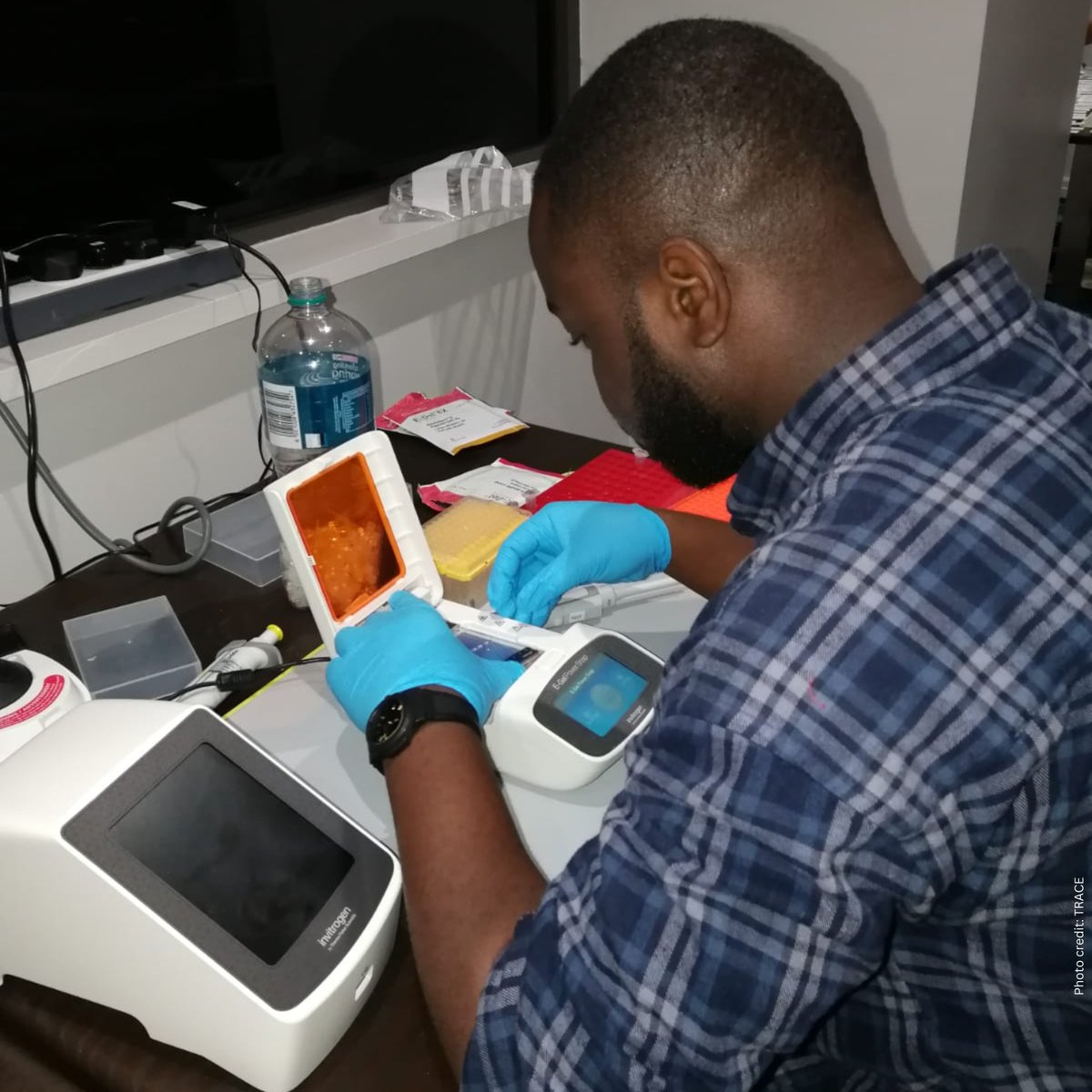
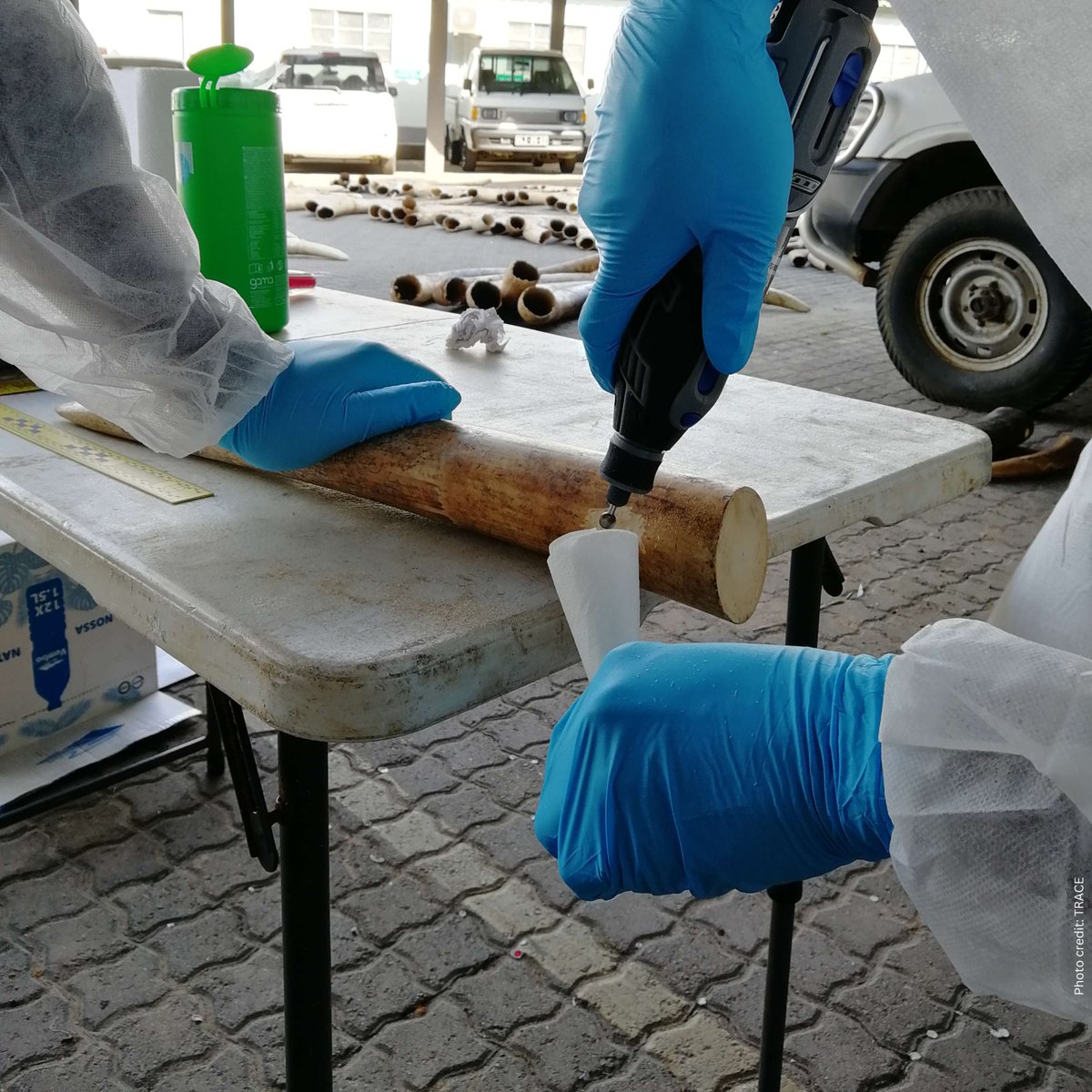
DNA profiling helps trace illicit wildlife, forest & fisheries products & link them to trafficking networks.
UNODC supports countries in improving forensic capacity & targeted casework to secure justice.
@The_AAFS Ai is shifting forensics from expert opinion to measurable, reproducible evidence
So now the future isn't "AI vs Scientist".
-It's Scientist+ AI vs the old way of forensics.interesting!😊
Ever wondered if #AI can more accurately analyze *BloodstainPatterns than human analysts?
Participants were asked to classify 40 test bloodstain pattern images of wipes and 20 swipes.
Learn who was more accurate in recent #JFS article: https://t.co/fHL3rNtJDA
The forensic value of exhumation depends largely on the burial interval, as prolonged burial increases decomposition and loss of soft tissues, reducing available evidence. Nevertheless, exhumation may still yield important medico-legal findings years after death.
In suspected poisoning cases, detection depends on the stability of the poison. Heavy metals such as arsenic, lead, mercury, and thallium are highly preservable and may remain detectable in bones, hair, nails, teeth, and surrounding soil for many years.
In contrast, volatile or unstable poisons may degrade over time due to decomposition and environmental factors, making their identification difficult after prolonged burial.#forensicscience
#forensictoxicology
#forensicpathology
#forensicevidence #justice
A drowning scene investigation combines careful scene documentation, body recovery, forensic pathology, toxicology, entomology, and environmental analysis to determine the cause of death, estimate the time spent in water, and establish whether foul play was involved.#Forensics #CSI #ForensicEvidence
In forensic and archaeological practice, there is an important balance between obtaining the maximum possible DNA and preserving the structural and evidentiary integrity of the remains.
Why Preservation Matters?
Human remains are not only biological samples — they are also:
legal evidence
anthropological material
cultural or historical specimens
sometimes religious or family-sensitive remains
Destructive sampling can permanently alter or damage skeletal evidence.#DVI.#ForensicHumanIdentification
Correlation between biological specimens is essential in Forensic Toxicology because it enables experts to distinguish between recent drug ingestion and past exposure, therapeutic use and overdose, acute poisoning and chronic drug use, as well as antemortem drug administration and postmortem redistribution or contamination.#Forensics #ForensicEvidence
#Justice
How a body decays after death is of crucial importance in forensic investigations because decomposition follows predictable biological and chemical changes that can provide valuable investigative information. the study of insects associated with decomposing bodies can help to determine the cause of death,the time since death and whether a body has been moved.#ForensicEntomology
#CSI
In forensic toxicology, gastric contents are analyzed because they can directly reflect unabsorbed or partially absorbed substances present in the stomach at the time of death. The presence of intact drug material or elevated concentrations in gastric contents is indicative of recent oral ingestion and may support a diagnosis of acute overdose when interpreted in conjunction with postmortem blood concentrations, autopsy findings, and case history.
Forensics plays an important role in combating wildlife crime.
UNODC supports Mozambique with a mobile lab (PELTS) enabling on-site analysis of seized wildlife to help identify origin and strengthen investigations.
More: https://t.co/eapVPdTyp3
#EndWildlifeCrime
WATCH | Police in Mpumalanga are waiting for DNA test results to ascertain if the partial human remains found on Saturday inside a crocodile in the Komati River are indeed those of the 59-year-old Gauteng Businessman who drowned in the river last week.
#dandarostreets Human remains were discovered inside the intestines of a crocodile in the Komati River near Komatipoort, Mpumalanga, during a week-long search for a missing businessman.
Authorities believe the remains could be linked to the man, whose Ford Ranger was earlier found stuck on a low-lying bridge in the river.
DNA testing is now underway to confirm the identity as investigations continue.
Follow Our WhatsApp Channel:
https://t.co/cYTwWjSLzD
Algor mortis is the gradual cooling of the body after death and is a key early indicator used to estimate the Postmortem Interval (PMI); once circulation and metabolism stop, heat production ceases and the body begins to lose heat to the surrounding environment until it reaches ambient temperature, allowing forensic investigators to approximate the time since death by measuring the drop in core body temperature, although this estimate must be interpreted cautiously alongside other postmortem changes due to environmental and individual influencing factors.#PMI
#CSI
#deathinvestigations
Forensic toxicogenomics is the application of genomics (gene expression, genetic variation, and epigenetics) to understand how toxic substances affect the body and to support forensic investigations. It extends classical toxicology by asking not just what chemical is present, but how the body responded at the molecular level.#forensics