as someone who works with sexual assault survivors directly after the assault… so many of you have to fucking die lol. Not just loud and stupid but loud stupid and evil.
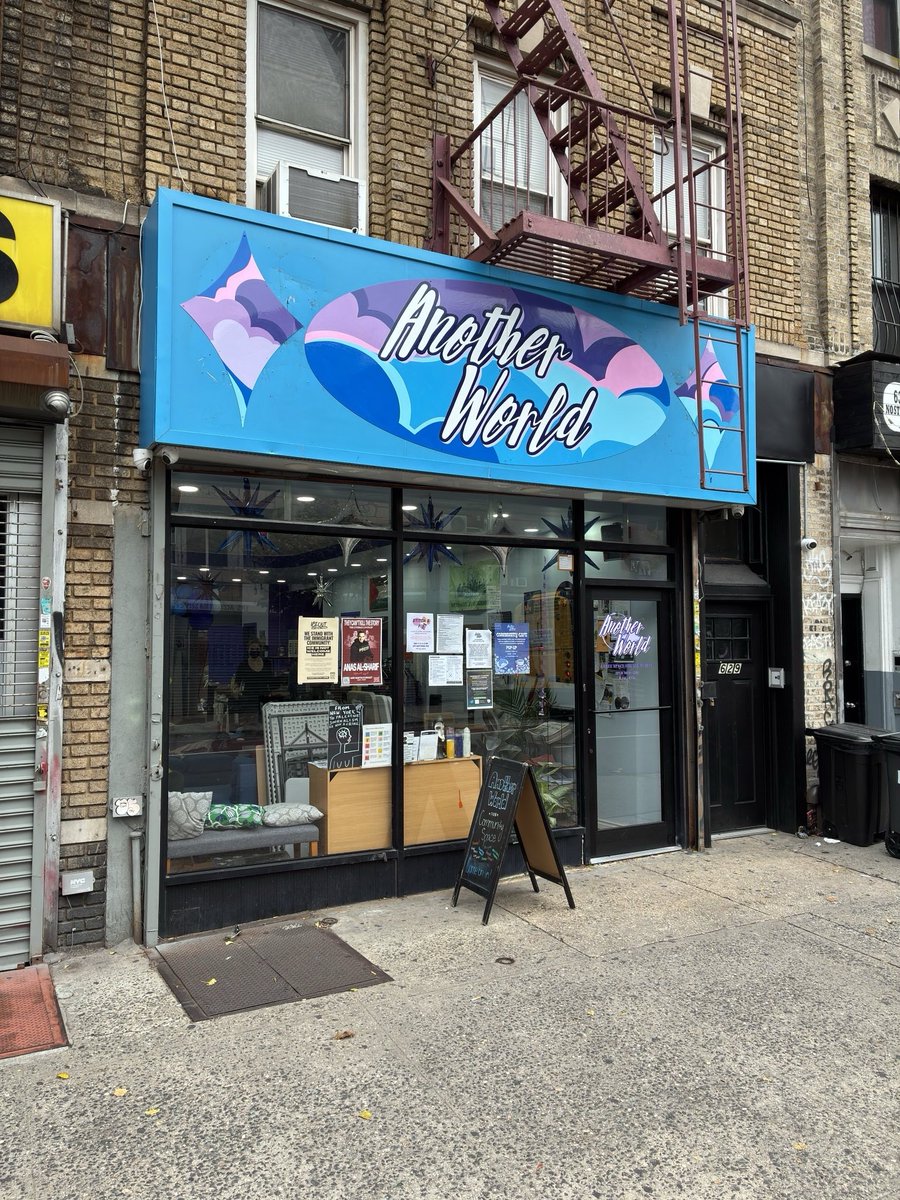
This happens at Another World, a free space for the people. Please become a sustaining member to help support all the things we do
https://t.co/0Pb3H20m08
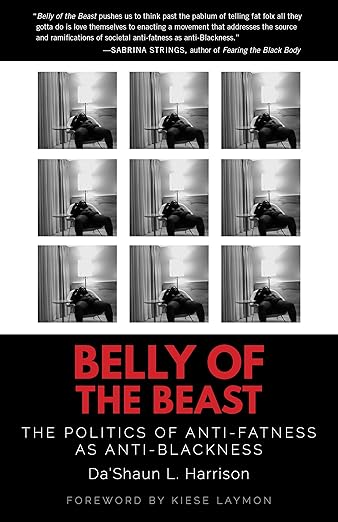
“The policing of black fat flesh anchors entire systems of governance. Without a population to discipline, there would be no BMI, no "obesity epidemic," and no medical or scientific institutions organized around managing fatness.” @DaShaunLH
https://t.co/2RrwdnPnm7
IMPORTANT message for everyone using Gmail.
You have been automatically OPTED IN to allow Gmail to access all your private messages & attachments to train AI models.
You have to manually turn off Smart Features in the Setting menu in TWO locations.
Retweet so every is aware.
As I've been saying, the normalizing and pushing of rapid weight loss drugs for general population use rather than treatment for chronic illnesses like Diabetes, and the resurgence of ED trends on social media is a eugenicist ploy to condition people to accept less access to food
This was Palestinian journalist Saleh Al-Jaafarawi's Last message before he was killed today.
He shared this video yesterday, a heartfelt message of thanks to everyone who supported, stood by, and protested for Gaza and the Palestinian cause.
Rewatching it broke my heart
🔴We are entering what could be called the "red zone," the danger zone.
FROM TONIGHT ON, WE BELIEVE THAT THE ISRAELI ARMY COULD ATTACK THE THOUSAND MADLEENS X FREEDOM FLOTILLA COALITION AT ANY MOMENT
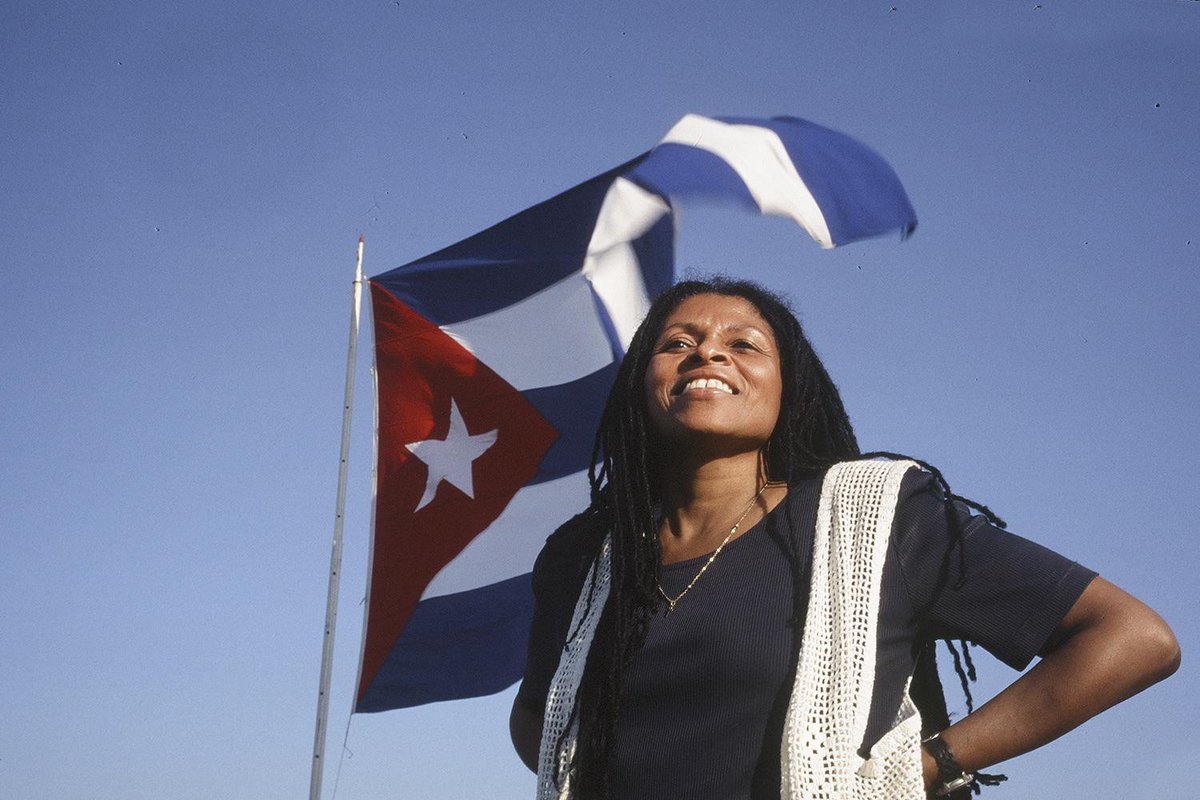
Assata Shakur Speaks from Exile: Excerpts from an Interview by Sociologist Christian Parenti (Cuba, 1997)
Parenti: How did you arrive in Cuba?
Assata Shakur: Well, I couldn’t, you know, just write a letter and say, “Dear Fidel, I’d like to come to your country.” So I had to hoof it–come and wait for the Cubans to respond. Luckily, they had some idea who I was, they’d seen some of the briefs and U.N. petitions from when I was a political prisoner. So they were somewhat familiar with my case and they gave me the status of being a political refugee. That means I am here in exile as a political person.
Parenti: How did you feel when you got here?
Shakur: I was really overwhelmed. Even though I considered myself a socialist, I had these insane, silly notions about Cuba. I mean, I grew up in the 1950s when little kids were hiding under their desks, because “the communists were coming.” So even though I was very supportive of the revolution, I expected everyone to go around in green fatigues looking like Fidel, speaking in a very stereotypical way, “the revolution must continue, Companero. Let us triumph, Comrade.” When I got here people were just people, doing what they had where I came from. It’s a country with a strong sense of community. Unlike the U.S., folks aren’t so isolated. People are really into other people. Also, I didn’t know there were all these black people here and that there was this whole Afro-Cuban culture. My image of Cuba was Che Guevara and Fidel Castro. I hadn’t heard of Antonio Maceo (a hero of the Cuban war of independence) and other Africans who had played a role in Cuban history.The lack of brand names and consumerism also really hit me. You go into a store and there would be a bag of “rice.” It undermined what I had taken for granted in the absurd zone where people are like, “Hey, I only eat uncle so and so’s brand of rice.”
Parenti: So, how were you greeted by the Cuban state?
Shakur: They’ve treated me very well. It was different from what I expected; I thought they might be pushy. But they were more interested in what I wanted to do, in my projects. I told them that the most important things were to unite with my daughter and to write a book. They said, “What do you need to do that?” They were also interested in my vision of the struggle of African people in the United States. I was so impressed by that. Because I grew up–so to speak–in the movement dealing with white leftists who were very bossy and wanted to tell us what to do and thought they knew everything. The Cuban attitude was one of solidarity with respect. It was a profound lesson in cooperation.
Parenti: Did they introduce you to people or guide you around for a while?
Shakur: They gave me a dictionary, an apartment, took me to some historical places, and then I was pretty much on my own. My daughter came down, after prolonged harassment and being denied a passport, and she became my number one priority. We discovered Cuban schools together, we did the sixth grade together, explored parks, and the beach.
Parenti: She was taken from you at birth, right?
Shakur: Yeah. It’s not like Cuba where you get to breast feed in prison and where they work closely with the family. Some mothers in the U.S. never get to see their newborns. I was with my daughter for a week before they sent me back to prison. That was one of the most difficult periods of my life, that separation. It’s only been recently that I’ve been able to talk about it. I had to just block it out, otherwise I think I might have gone insane. In 1979, when I escaped, she was only five years old.
Parenti: You came to Cuba how soon after?
Shakur: Five years later, in 1984.
Since Charlie Kirk was killed until this moment, Israel has killed no less than 500 civilians in Gaza, including a large number of children and women. Every day, Israel kills no less than one hundred people
What this reveals is the base American instinct: never wanting to see their own violence, especially when it’s against their own. There’s a sanctity preserved for the (white) American body.
This type of violence is always presented as an aberration (“what have we become?”) versus the inevitability of a culture that partakes in unmitigated violence inside and outside its borders that has rendered it necessary to dispose of any human life for one’s own gains.