Research funding does more than generate new discoveries. It also prepares the people who will shape the future of animal agriculture.
ICASA projects like the one here, supporting Dr. Kendall Samuelson's research on liver abscesses in cattle, at @wtamu , provide graduate students hands-on experience while working to solve real-world challenges facing producers.
At a time when fewer students are pursuing advanced training in agricultural sciences, these opportunities strengthen the pipeline of future veterinarians, researchers and industry leaders.
Future leaders like Macie Weigand.
More to come!
With the U.S. cattle herd at a 75-year low, demand for beef is increasing...
We have a new breakthrough from our International Consortium for Antimicrobial Stewardship in Agriculture (ICASA) that could offer new management practices to keep cattle healthy, reduce antibiotic use and produce beef more efficiently.
Recent studies estimate that Bovine Respiratory Disease causes more than $1 billion in annual losses for U.S. beef operations alone.
Because treating an entire group is costly not just on their margins, but also with the risk of creating antibiotic-resistant bacteria, producers must weigh the costs of treating entire groups of cattle upon arrival.
Researchers led by Dr. Brad White of @KState developed models that predict which groups of cattle are most likely to benefit from preventive antibiotic treatment.
https://t.co/ZgD78udgKI
Catfish, trout and tilapia accounted for most of the nearly $820 million in sales generated by U.S. fish farms in 2023.
Even so, we imported about 7.4 billion pounds of fish that same year, highlighting an opportunity for domestic aquaculture to supply more of the fish we Americans eat.
This research could help fish farmers raise healthier, more productive fish, while protecting wild populations and natural ecosystems by preventing escaped fish from reproducing.
Led by Michael Phelps, an associate professor at @WSUPullman , the research builds on his 2021 FFAR New Innovator Award, which found that rainbow trout could be sterilized by preventing reproductive cells from developing.
With matching funding from @TroutlodgeInc, the team is investigating two promising and scalable approaches that could turn a better profit, while protecting our wild resources.
Dr. Sander Bruun of University of Copenhagen is studying how enhanced efficiency fertilizers and cover crops can work together to improve nitrogen use efficiency and enhance crop productivity.
Dr. Ran Erel of the Volcani Institute is assessing innovative fertilizer technologies for diverse crop rotations in irrigated dryland regions.
Farmers are facing increasing pressure to maintain crop yields amid rising fertilizer costs and increasing ecological impacts.
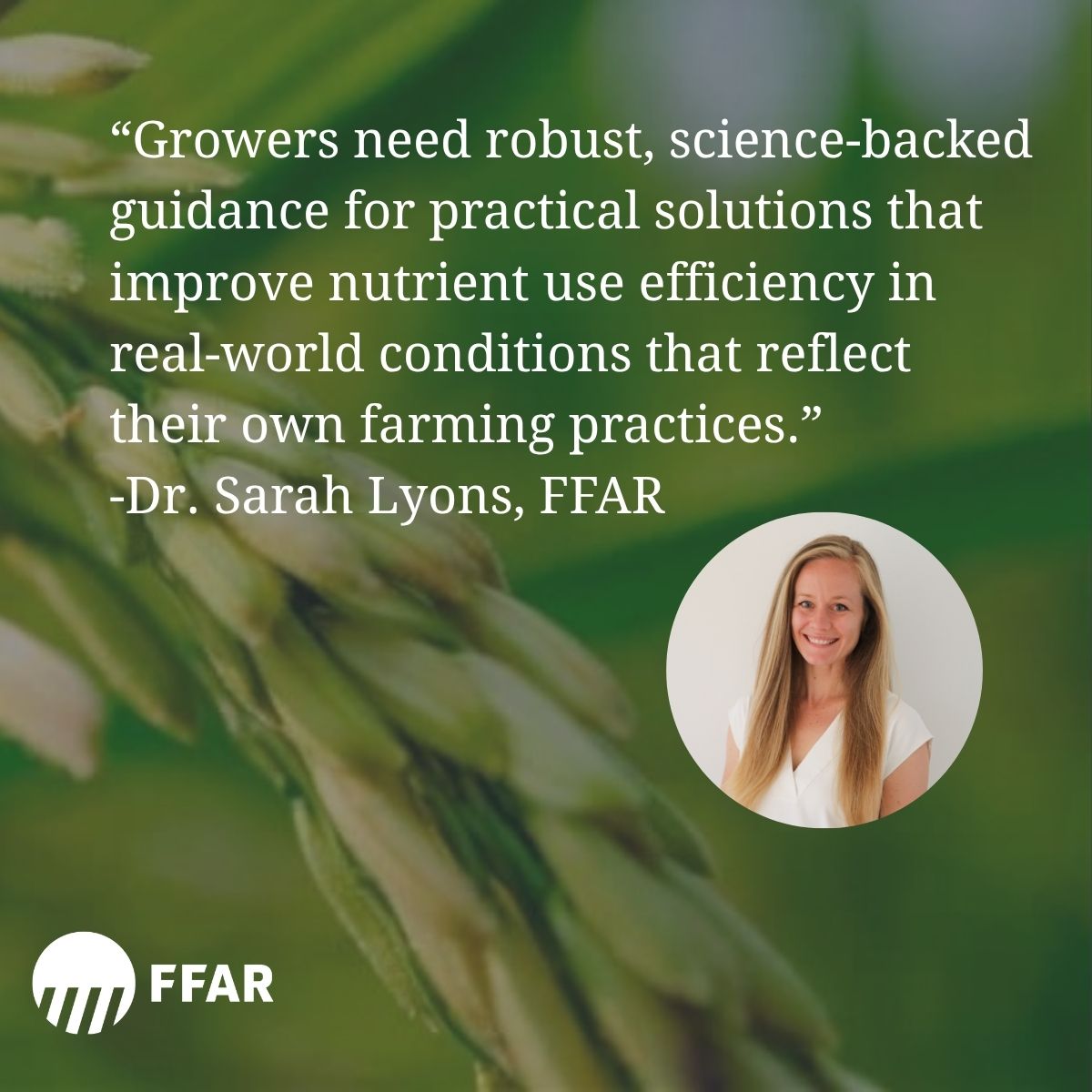
They need science-backed guidance for practical solutions that improve nutrient use efficiency in real-world conditions.
Our Efficient Fertilizer Consortium was formed with various key crop sectors such as @CottonInc , to ensure the research reflects practical production needs and real-world applicability.
Today we're announcing the 2026, $9.3M investment to improve nutrient use efficiency across different agricultural systems.
Listed below are the 2026 Efficient Fertilizer Consortium awardees:
Dr. Craig Drury of Agriculture & Agri-Food Canada is studying the agronomic, environmental and microbial impacts of fertilizers combined with placement methods, conversation tillage and cover crops.
Dr. Benjamin Ellert of Agriculture & Agri-Food Canada is determining how effectively nitrogen moves from applied fertilizers to the crop.
Our very own, Dr. John Reich was named in the Bioeconomy 500 for his leadership in transforming the bioeconomy!
John currently manages our Bolstering Healthy Food Systems research priority area and is responsible for creating FFAR's first consortium.
Well done John!
https://t.co/kAOIxMAMFG
New World Screwworm. The fight continues.
The latest screwworm outbreak in Texas alone is estimated to cost $1.8 billion in livestock losses, veterinary expenses, and labor costs.
$1.8 Billion.
We've been frontlines along with the @USDA in selecting and equipping researchers with novel ideas, the funds to provide needed breakthroughs, quickly.
We've awarded our 3rd grant in our series of NWS research grants, to Dr. Lee Haines and Dr. Álvaro Acosta-Serranoto of @NotreDame , to evaluate whether an existing drug can be repurposed to kill screwworm larvae.
Reports of reduced effectiveness of some commonly used treatments in South America, combined with the limited number of approved control options, underscore the need to evaluate new approaches.
https://t.co/MGL5l6ncsw
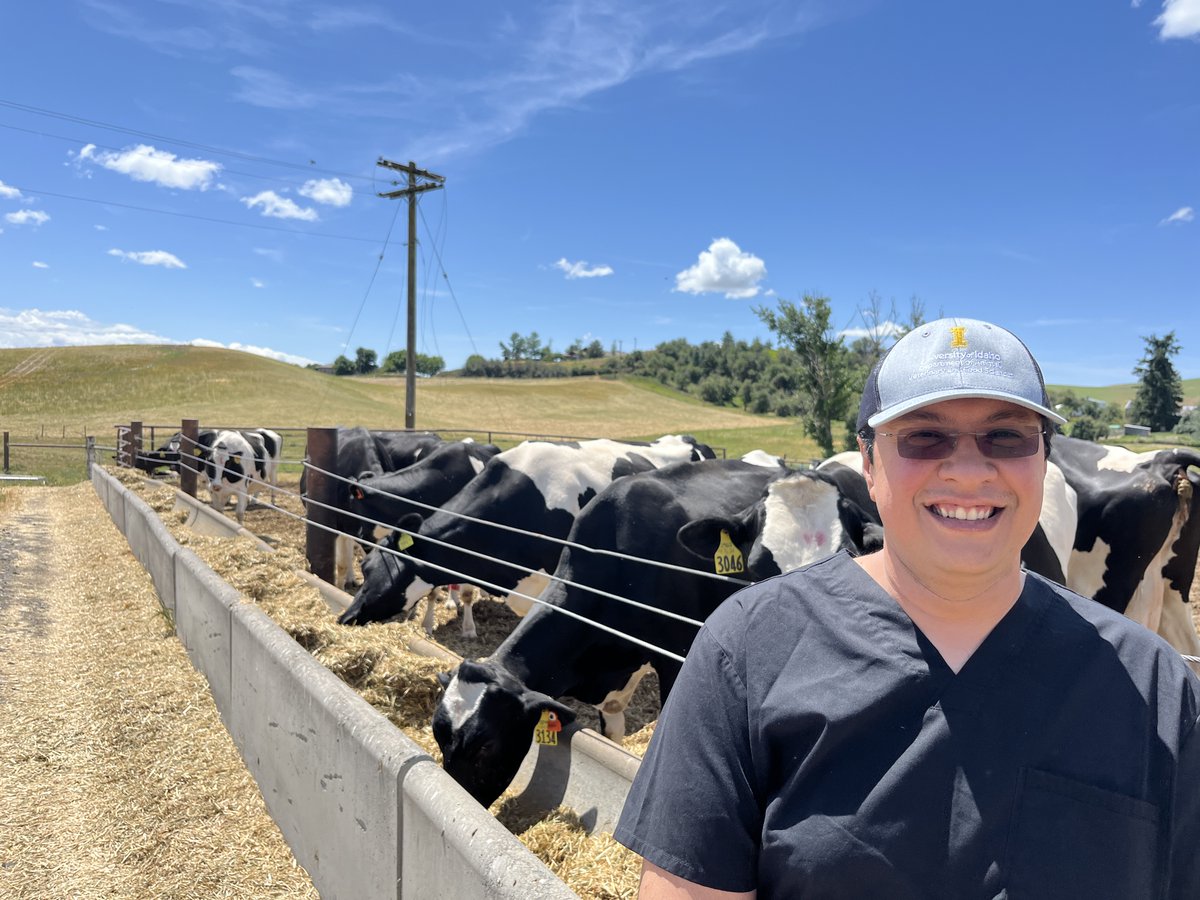
@FFARFellows Mostafa Kamyabi is 'Clearing the Air' on wildfire smoke's effects on dairy cattle and dairy farmers.
Amidst another devastating fire season across the American West, and Canadian fires that blanketed Eastern dairy regions this summer, this research is more important than ever.
"My research at the @uidaho focuses on understanding how wildfire smoke affects respiratory health, immune responses, and metabolic function in dairy cattle.
At a milk price of $0.44 per kg, this corresponds to an average estimated revenue loss of ~ $0.71 per cow per day. For a 1,000-cow herd, this translates to approximately $10,000 in total milk revenue losses over two weeks."
https://t.co/jsZjGtXsaP
Initial modeling results for the state of Illinois are also available to view in an interactive, online tool that can help inform agricultural stakeholder decision-making. https://t.co/epzs3r0ePB
As drought conditions increase in frequency and severity, researchers and farmers aim to increase adoption of practices and systems that lower the risk for losses during dry conditions.
But, there is little empirical correlation between good soil health practices like cover cropping, reduced tillage and crop rotations and their impact on crop yields.
As a result, agricultural lenders and insurers who price risk do not currently factor in incentives for the risk reduction generated by improved soil health management practices.
Partnering with @landcoreUSA , we're bridging that gap in empirical data for crop yields regarding soil health practices.
Their team is examining over 17 years of data on corn and soybean fields in the U.S. Midwest and translating that data into a model capable of predicting the likelihood of reduced financial risk at field, county and state levels for corn and soybeans.
https://t.co/Zzxz8xs6mW