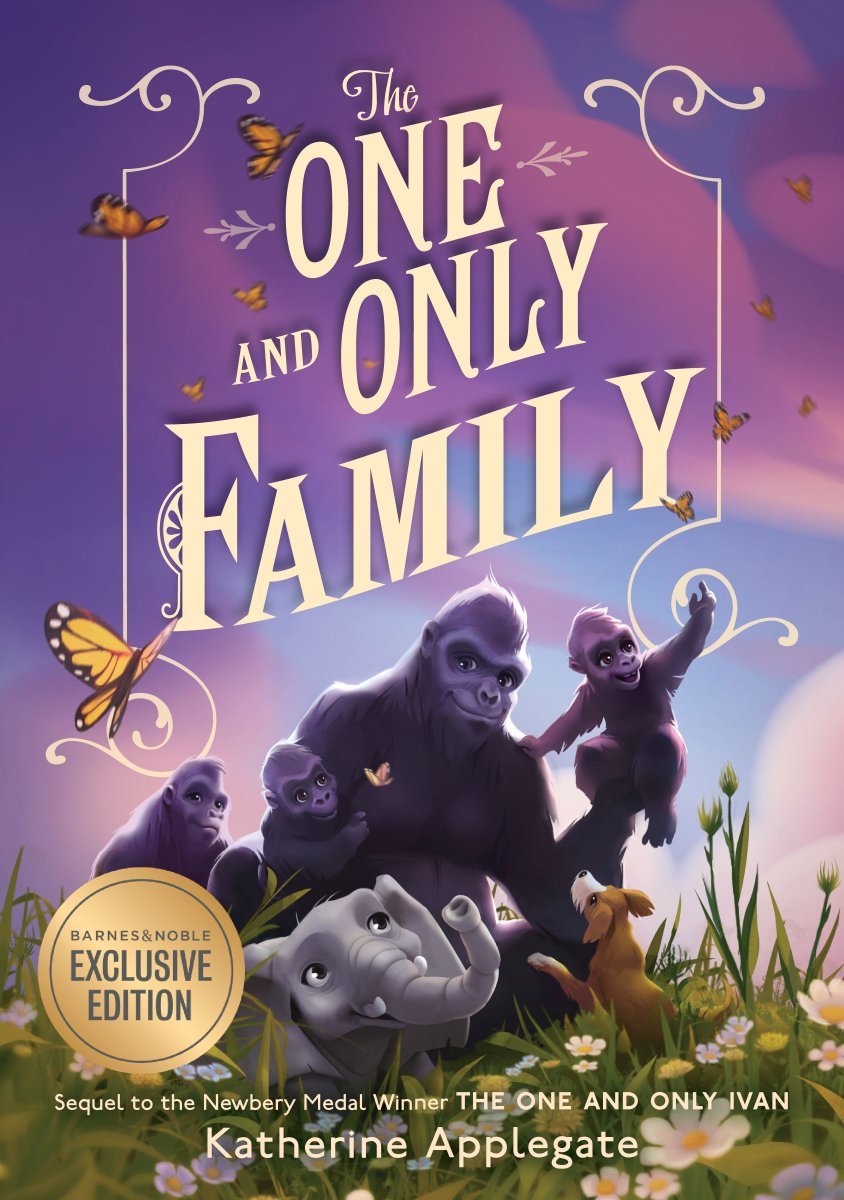
So happy to share this news: Ivan is coming back for one last adventure—his biggest yet.
THE ONE AND ONLY FAMILY is out May 7, 2024. 🦍❤️
You can preorder here: https://t.co/6VC8Z5bpYO
Or order a @BNBuzz exclusive edition here: https://t.co/6czfzvr4il
@HarperChildrens#mglit
@TColabufo@CentralSquareSD Originallly created by General Washington in 1782 to recognize meritorious service. It has changed (in looks and meaning) since its beginning. 💜 🇺🇸
@drheidibc@reading_league@lifelonglit @OCLI_Reads @MHEMrsViel Instead of labeling schwas “irregular”, we can name them.
Then students learn it and wire it into their brains.
Schwa is very chameleon-like, but we can give students enough information for them to see and consider the sound when we label it as a syllable type.
@drheidibc@reading_league@lifelonglit @OCLI_Reads @MHEMrsViel Fair question. I’ve thought about this...a lot. I’ve narrowed it down like this.
The definition has evolved as I’ve considered the way we use syllables and mapping (and the routes our brains use) to come up with the correct vowel sound for a syllable when we are decoding.
@drheidibc@reading_league@lifelonglit @OCLI_Reads @MHEMrsViel When we give students the option of a “schwa syllable”, they have a more concrete way to figure out the code.
They can wire /uh/ into their sounds and use it as an option within a syllable.
@drheidibc@reading_league@lifelonglit @OCLI_Reads @MHEMrsViel As the most common sound popping up in all sorts of places and in all sorts of combinations, I submit that schwa has earned the right to its own syllable type.
😎🥳
@drheidibc@reading_league@lifelonglit @OCLI_Reads @MHEMrsViel Agree on all points above.
However, when explicitly teaching about schwa and taking the approach that it is a “syllable type” to consider, student decoding improves.
And when mapping words such as “family” and “America”, schwa syllable type makes sense.