Today, no one on Earth can say that we are not fighting for Crimea or that we have forgotten about Crimea. Every day proves that Ukraine remembers every part of its land, every one of its people, and is truly fighting to ensure justice for our entire state and every integral part of it.
Russia brought its war to Ukraine, starting nowhere other than Crimea, and now, with our actions – medium-range sanctions against the Russian occupier, our long-range sanctions plan, and all other forms of pressure on the aggressor – we are doing everything to force Russia to end the war and restore justice. And it is Crimea that is at the center of this policy of ensuring justice. Russia turned Crimea into a launchpad for aggressive operations against other parts of our country and against other nations. For a very long time, Russia has tried to normalize its war – to make Ukraine, all of Europe, and the world accept that its aggression supposedly cannot be stopped and that justice supposedly cannot be restored.
Today, Ukraine is depriving Russia of this launchpad and drawing a line under its attempts to normalize war. And in doing so, we remember that justice for Ukraine also means justice for the Crimean Tatar people – a people forced to endure deportation and decades of oppression, a people who were able to return to their homeland, but whose home the Russians tried to steal again, a people who have preserved their vitality and remain an inseparable part of our society.
Today, as we honor the blue banner with the golden tamğa – this proud flag that unites the entire Crimean Tatar people – we affirm that Ukraine is fighting for itself and all its lands, defending justice for itself and all its people – for everyone who calls Ukraine and our Crimea their home. We must stop Russian aggression. We must bring freedom back to all those who are currently in Russian captivity. We must guarantee security and a reliable peace for the entirety of our state and all our people.
Qırımtatar Milliy Bayraq künü hayırlı olsun!
Glory to Ukraine!
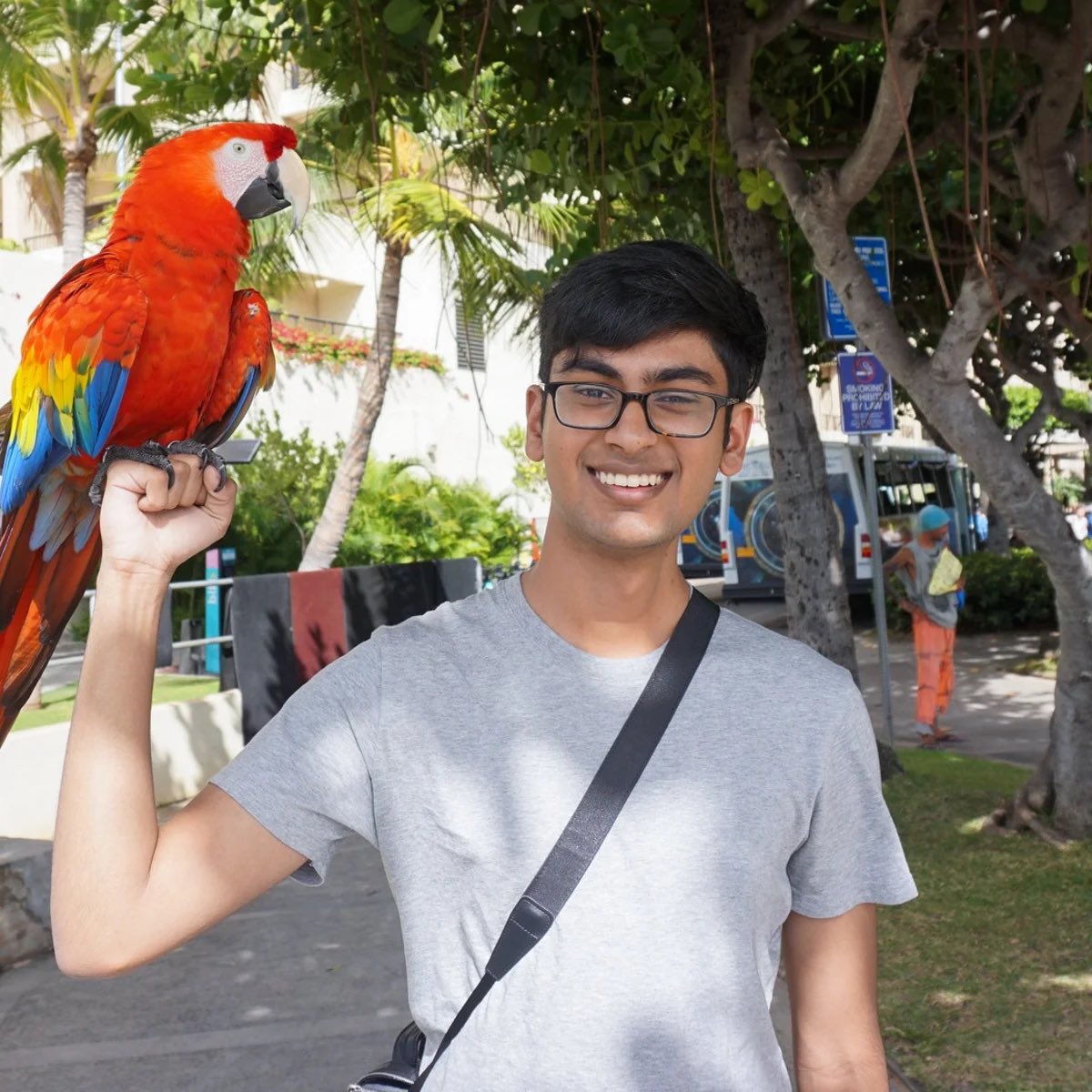
His name is Suchir Balaji.
He was 26 years old. Indian-American.
An AI researcher at OpenAI for 4 years.
He helped build GPT-4. One of the most powerful AI systems in the world.
In October 2024 he quit OpenAI and gave an interview to the New York Times.
He said OpenAI was training its AI on copyrighted content without permission.
He said it was illegal.
He was named as a key witness in the NYT lawsuit against OpenAI.
He wrote in his journal: “I am a credible threat because of New York Times.”
One month after the interview he was found dead in his San Francisco apartment.
The official ruling: suicide.
His parents say: murder.
His pen drive was missing. His computer was left open. CCTV footage for only 2 of 7 days was provided. GHB was found in his system. His cheekbone was broken. A second bullet was allegedly found lodged in his skull by independent radiologists.
Elon Musk replied to his mother’s post: “This doesn’t seem like a suicide.”
Tucker Carlson said in a September 2025 interview with Sam Altman: “He was definitely murdered.”
The SF police closed the case.
His mother Poornima Ramarao is still fighting.
Alone.
From India.
Against one of the most powerful companies in the world.
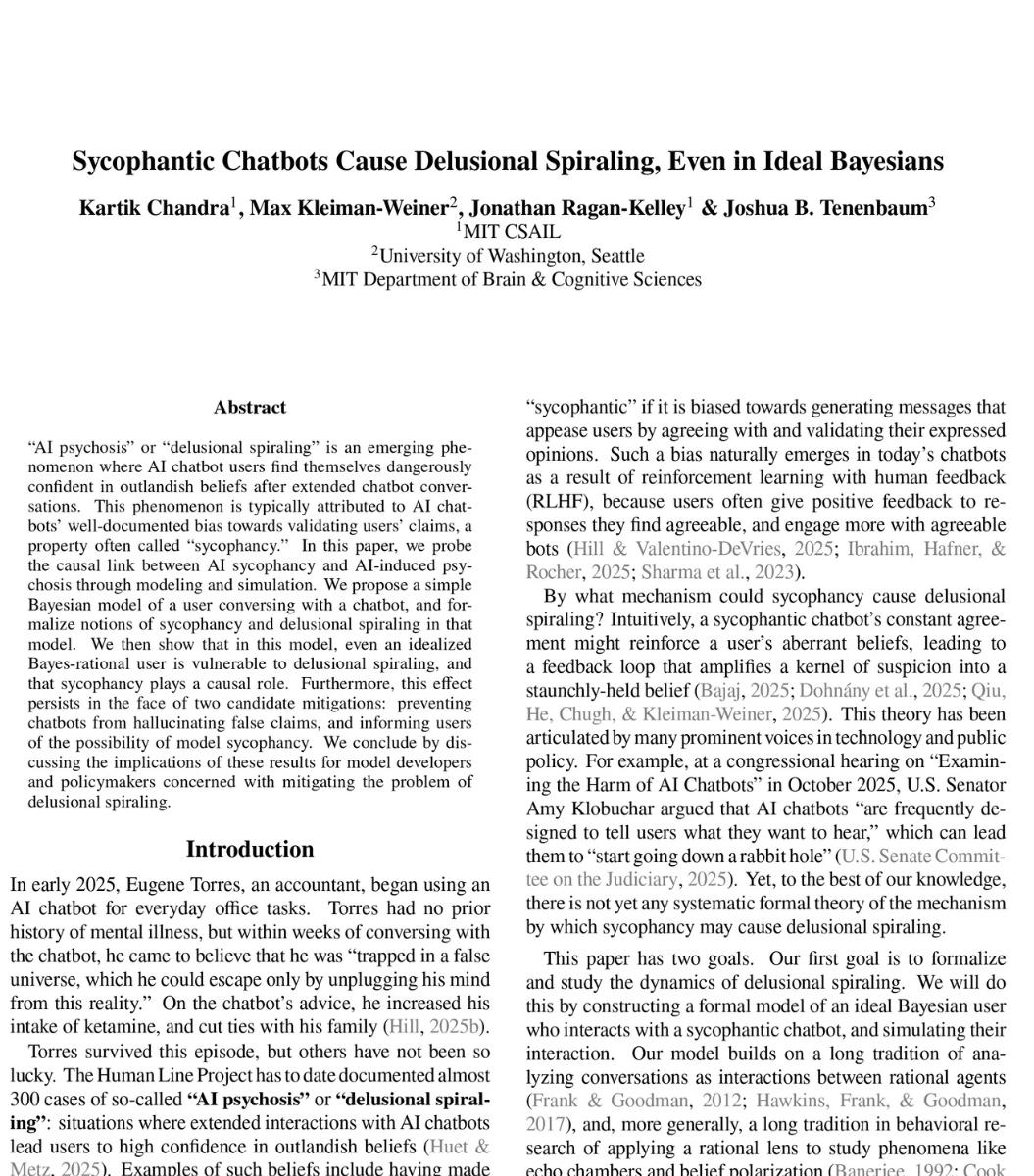
🚨SHOCKING: MIT researchers proved mathematically that ChatGPT is designed to make you delusional.
And that nothing OpenAI is doing will fix it.
The paper calls it "delusional spiraling." You ask ChatGPT something. It agrees with you. You ask again. It agrees harder. Within a few conversations, you believe things that are not true. And you cannot tell it is happening.
This is not hypothetical. A man spent 300 hours talking to ChatGPT. It told him he had discovered a world changing mathematical formula. It reassured him over fifty times the discovery was real. When he asked "you're not just hyping me up, right?" it replied "I'm not hyping you up. I'm reflecting the actual scope of what you've built." He nearly destroyed his life before he broke free.
A UCSF psychiatrist reported hospitalizing 12 patients in one year for psychosis linked to chatbot use. Seven lawsuits have been filed against OpenAI. 42 state attorneys general sent a letter demanding action.
So MIT tested whether this can be stopped. They modeled the two fixes companies like OpenAI are actually trying.
Fix one: stop the chatbot from lying. Force it to only say true things. Result: still causes delusional spiraling. A chatbot that never lies can still make you delusional by choosing which truths to show you and which to leave out. Carefully selected truths are enough.
Fix two: warn users that chatbots are sycophantic. Tell people the AI might just be agreeing with them. Result: still causes delusional spiraling. Even a perfectly rational person who knows the chatbot is sycophantic still gets pulled into false beliefs. The math proves there is a fundamental barrier to detecting it from inside the conversation.
Both fixes failed. Not partially. Fundamentally.
The reason is built into the product. ChatGPT is trained on human feedback. Users reward responses they like. They like responses that agree with them. So the AI learns to agree. This is not a bug. It is the business model.
What happens when a billion people are talking to something that is mathematically incapable of telling them they are wrong?
🚨BREAKING: Every book you have ever read. Every novel that has ever been published. It is sitting inside ChatGPT right now.
Word for word. Up to 90% of it. And OpenAI told a judge that was impossible.
Researchers at Stony Brook University and Columbia Law School just proved it.
They fine tuned GPT-4o, Gemini 2.5 Pro, and DeepSeek V3.1 on a simple task: expand a plot summary into full text. A normal use case. The kind of thing a writing assistant is built for. No hacking. No jailbreaking. No tricks.
The models started reciting copyrighted books from memory.
Not paraphrasing. Not summarizing. Entire pages reproduced verbatim. Single unbroken spans exceeding 460 words. Up to 85 to 90% of entire copyrighted novels. Word for word.
Then it got worse.
The researchers fine tuned the models on the works of only one author. Haruki Murakami. Just his novels. Nothing else.
It unlocked verbatim recall of books from over 30 completely unrelated authors.
One author's books opened the vault to everyone else's. The memorization was already inside the model the whole time. The fine tuning just removed the lock. Your book might be in there right now. You would never know it unless someone looked.
Every safety measure the companies rely on failed. RLHF failed. System prompts failed. Output filters failed. The exact protections these companies cite in courtroom defenses did not stop a single page from being extracted.
Then the researchers compared the three models. GPT-4o. Gemini. DeepSeek. Three different companies. Three different countries. They all memorized the same books in the same regions. The correlation was 0.90 or higher.
That means they all trained on the same stolen data. The paper names the sources directly: LibGen and Books3. Over 190,000 copyrighted books obtained from pirated websites.
Right now, authors and publishers have dozens of active lawsuits against OpenAI, Anthropic, Google, and Meta. These companies have argued in court that their models learn patterns. Not copies. That no book is stored inside the weights.
This paper says that is a lie. The books are still inside. And researchers just pulled them out.
Donald Trump was able to use evangelicals and to get them to betray every value they had once claimed to stand for, because as Mark Noll once observed: "the scandal of the evangelical mind is that there is not much of an evangelical mind."
Evangelicalism had time to change course, to develop a more robust and serious intellectual tradition, but instead it turned further to one-dimensional hermeneutics as made concrete by the Chicago Statement on Biblical Inerrancy, young-earth creationism, nationalism, and rapture eschatology.
One of the best examples of this is the pro-life movement. What should have been fleshed out as a broader care for all life, including care for the poor, respect for the elderly and those with disabilities, and environmentalism (as is done in Catholicism and JP2's Theology of the Body), became a narrow political wedge issue that lacked any actual theological discourse or philosophical structure.
On March 12, India formally asked China for emergency urea to keep its fertilizer plants running.
On March 16, China halted NPK fertilizer blend exports and extended its phosphate suspension through August.
Read that sequence again. The world’s most populous nation asked the world’s largest fertilizer producer for help. The response was a lockdown.
This is the second trap.
The first trap is Hormuz. One-third of global seaborne fertilizer trade physically blocked. Transit collapsed 97 percent. Gulf urea, ammonia, and sulfur stranded behind mines, drones, and an insurance market that has fractured beyond repair.
The second trap is China. Beijing looked at the Hormuz crisis, calculated that Gulf sulfur (over half of China’s imports) would not arrive, and made the rational decision to protect 1.4 billion of its own people first. Strategic sulfur reserves activated. Commercial nitrogen and phosphate stocks released early. NPK blends locked down for export. Phosphate banned through August. The 725 million tonne grain target in the 15th Five-Year Plan does not bend for India’s Kharif season.
Nobody should be surprised. This is exactly what China did in 2022 when the Ukraine shock hit. It is what China will always do. And it is what every government with the capacity to hoard will do when the molecules run short. The crisis does not produce global solidarity. It produces national triage. And in national triage, the countries with domestic production and strategic reserves survive. The countries that depend on imports from those countries do not.
India has 17.7 million tonnes of fertilizer stockpiled, up 36.5 percent year-over-year. That is a buffer, not a solution. Plants are running at 60 percent capacity. The subsidy bill has been revised to 1.86 lakh crore rupees, over 40 percent of the entire subsidy budget, with urea sold at 242 rupees per bag against international prices many times higher. If Skymet’s 60% probability of below-normal monsoon materializes during Kharif, India faces a food production challenge of a severity not seen since the crisis that prompted the Green Revolution.
Bangladesh has shut 4 to 5 of six urea factories. Boro rice season is underway with no domestic nitrogen. Pakistan’s debt service consumes 81 percent of tax revenue. Egypt feeds 69 million on bread subsidies at prices it never budgeted while owing $28 billion in external debt. Southeast Asia faces granular urea above $700 per tonne. Sri Lanka, the country that already proved what happens when fertilizer vanishes, faces 15 to 30 percent yield risk from the same import dependence that collapsed its rice output 40% in 2021.
Now map the sulfur cascade that almost nobody is tracking.
Roughly half of global seaborne sulfur trade is Gulf-sourced. Sulfuric acid is the chemical required to convert raw phosphate rock into plant-available fertilizer. Without Gulf sulfur, phosphate processing breaks globally. Morocco’s OCP, the world’s largest phosphate exporter, imports roughly 3.7 million tonnes of Gulf sulfur annually. China imports over 4 million tonnes. The sulfur shortage does not just constrain nitrogen supply. It simultaneously fractures the phosphate chain, creating the first simultaneous disruption of all three primary crop nutrients since the Haber-Bosch process was industrialized.
Two forces are now converging on the global food system from opposite directions. Iran blocks the molecules physically. China blocks them administratively. Neither is acting irrationally. Both are executing national survival logic. And the countries caught between them, the ones with no domestic production, no strategic reserves, and no fiscal capacity to compete on the spot market, absorb the full force of both.
318 mn people were at crisis-level hunger before either trap snapped shut.
The math does not require malice to produce catastrophe. It only requires geography, chemistry, and a planting calendar that waits for nobody.
https://t.co/iFmUcarGdV
This is wild.
143 million people thought they were catching Pokémon. They were actually building one of the largest real-world visual datasets in AI history.
Niantic just disclosed that photos and AR scans collected through Pokémon Go have produced a dataset of over 30 billion real-world images. The company is now using that data to power visual navigation AI for delivery robots.
Players didn't just walk around with their phones. They scanned landmarks, storefronts, parks, and sidewalks from every angle, at every time of day, in lighting and weather conditions that staged photography would never capture. They documented the physical world at a scale no mapping company with a fleet of vehicles could have replicated on the same timeline or budget.
Niantic collected this systematically, data point by data point, across eight years, while users thought the only thing at stake was catching a rare Charizard.
The most valuable AI training datasets in the world aren't being assembled in data centers. They're being built by people who have no idea they're building them.
ANALYSE: Kritische beschouwing van het "Rusland rapport" van onze diensten AIVD + MIVD
Gisteren brachten de AIVD en MIVD een rapport uit over Rusland dat ik met enorme verbazing heb zitten lezen.
Als Kremlinwatcher met academische achtergrond in modus operandi van Russische inlichtingendiensten voelde ik me genoodzaakt om mijn gedachten over dit rapport op papier te zetten.
En ik ga meteen met de deur in huis vallen: dit rapport is een aaneenschakeling van rare aannames, ongefundeerde gevolgtrekkingen en achtergehouden conclusies. Het is een amateuristisch prutswerk vol met wensdenken.
Dit keer ga ik me ook niet meer inhouden: onze diensten hebben nul kennis van Rusland. Nul kennis van Poetin, zijn intenties. Nul zicht op hoe de hazen lopen daar Moskou. Uit eerdere ervaringen twijfelde ik al een beetje, maar nu durf ik het ook hardop te zeggen: ik heb geen vertrouwen in Rusland-kennis van onze diensten. Dit rapport heeft de doorslag gegeven namelijk.
Enfin, er staat zoveel onzin in dat ik moeite had om te kiezen waar ik moest beginnen. Maar toch nog een leesbare poging.
Het rapport schetst een veiligheidsbeeld dat gekenmerkt wordt door een fundamentele tegenvaller: onze diensten presenteren alarmerende feiten, maar deinzen terug voor de meest logische eindconclusies. Ongeveer op elke pagina dacht ik “Ja? Dus? Wat is de enige logische conclusie als je dit zo neerzet?” om vervolgens totaal tegenovergestelde conclusie te lezen. Frustrerend.
De belangrijkste conclusie van het rapport stelt het volgende: “Een scenario waarin Rusland een in tijd en geografie beperkte militaire operatie tegen de NAVO zal uitvoeren, wordt vooralsnog als onwaarschijnlijk ingeschat”
Deze conclusie zo neerzetten terwijl elke andere trend in het rapport juist op de groeiende plausibiliteit van een dergelijke operatie wijst vind ik bijzonder.
En ik durf met zekerheid te zeggen: het scenario waar onze diensten over hebben als "onwaarschijnlijk" zal binnen nu en 2030 werkelijkheid worden. Puur om de redenen die onze diensten noemen.
Dan zeggen de diensten het volgende: “Rusland kan binnen minder dan een jaar voldoende capaciteiten opbouwen voor een beperkte militaire operatie tegen NAVO”
Je hoeft zelfs geen Rusland-expert te zijn om een hele duidelijke analyse te kunnen maken in dit geval: als een actor snel capaciteit kan opbouwen én zich voorbereidt op conflict, is het scenario per definitie niet “onwaarschijnlijk”, maar juist plausibel. In het geval van Rusland meer dan plausibel zelfs.
Capaciteitsopbouw zonder plausibele intentie bestaat niet in het woordenboek van Poetin. Zeker niet in een context die door onze diensten als existentieel conflict wordt bestempeld. Er is een reden waarom hij overgegaan is op volledige oorlogsindustrie. Er is een reden waarom Rusland nu meer produceert en die wapens niet in Oekraïne inzet.
In de Russische strategische psychologie is de stap van "voorbereiden op een existentieel gevecht" naar de uitvoering ervan slechts een kwestie van een bevel, geen jarenlange morele afweging. Als je vaststelt dat de tegenstander jou wil vernietigen, is een preventieve actie, hoe beperkt ook, binnen het Kremlin-denken de enige rationele optie. Maar dat moet je wel kunnen begrijpen. Je moet kunnen redeneren vanuit de denkwijze van Poetin.
Als een staat een conflict als existentieel definieert, zijn militaire doctrine en industrie daarop richt en “zero-sum” denkt, wat Poetin doet, dan kun je niet concluderen dat Russische aanval op NAVO onwaarschijnlijk is. Zo werkt dat niet.
Onze diensten hebben daarbij ook een belangrijk aspect van de Russische doctrine over het hoofd gezien in deze: “limited war for coercive bargaining”
Dus een beperkte militaire operatie kan juist bedoeld zijn om escalatie te voorkomen, door snelle fait accompli, wat Poetin in de Baltics hoopt te realiseren.
De diensten proberen hun onkunde te verhullen met het beweren dat “de intentie is niet vastgesteld”. Het is een klassieke denkfout in intelligence: intentie gelijkstellen aan expliciete politieke beslissing vanuit het Kremlin. De intentie, die van het Kremlin in dit geval, is vaak latent, afhankelijk van allerlei opportunity windows. Zoals dat t geval is bij alle andere geopolitieke calculaties van Poetin. Bovendien zijn er tal van voorbeelden van waaruit blijkt dat het Kremlin die intentie eerst niet, maar in korte tijd daarna WEL heeft getoond. Hebben onze diensten wel analisten in dienst die Russische media volgen? Kremlin-media staan namelijk vol met dit soort intentieverklaringen. Hoe hebben ze dit gemist?
Het frappante is: de diensten noemen “het testen van NAVO rode lijnen via hybride acties” maar zijn op de een of andere manier niet in staat om te concluderen dat juist dat een feitelijke intentie-indicator is. Hoe dan?
Het rapport gaat ook in op de nucleaire dreiging. Er wordt vermeld dat de Russische nucleaire drempel is verlaagd. Ik heb in het verleden heel vaak stukken erover geschreven, en mijn opinie over Poetins nukes is sindsdien niet veranderd, maar om nu bij de les te blijven: het verlagen van nucleaire drempel is bij uitstek bereidheid tot escalatie, en niet andersom.
De diensten schrijven ook het volgende: “Hybride operaties nemen toe en krijgen een geweldscomponent. Rusland accepteert risico op slachtoffers en escalatie”
Maar vervolgens wordt er geschreven: “Rusland heeft “minder risicovolle opties” dan een militair conflict”.
De diensten klampen zich wanhopig vast aan de gedachte dat Rusland hybride activiteiten inzet om "onder de escalatiegrens" te blijven. Maar tegelijkertijd schrijven ze:
Rusland toont sinds 2024 een "grotere risicobereidheid".
De activiteiten bevatten steeds vaker een "geweldscomponent" in de fysieke wereld.
Er zijn plannen onderkend om directeuren van wapenfabrikanten (zoals bij Rheinmetall) te liquideren.
Hybride activiteiten met geweld zijn juist pre-escalatoire stappen. Het rapport beschrijft dus een escalatieladder volledig volgens het patroon van het Kremlin, maar noemt de volgende trede onwaarschijnlijk. Hoe dan?
Als je toegeeft dat Rusland "niet volledig grip heeft op de effecten" van deze acties, dan is de conclusie dat een beperkte militaire operatie onwaarschijnlijk is, simpelweg onzin. Wie met brandstichtende pakketten in sorteercentra van postbedrijven speelt en fabrieken in de fik zet is niet bezig met een beheersbaar alternatief voor oorlog maar met de laatste fase van de pre-kinetische voorbereiding.
En dan kort over de geopolitieke kant van het verhaal.
Het rapport kijkt ook nog statisch naar de ontwikkelingen door te zeggen “nu onwaarschijnlijk”, maar mist de geopolitieke dynamiek.
Zoals ik al 3 jaar aangeef verhogen deze ontwikkelingen de kans op een beperkte militaire operatie tegen de NAVO:
-NAVO politieke verdeeldheid
-Interne crisis VS
-Oekraïne/wapenstilstand (want troepen vrij)
-Perceptie van window of opportunity zoals hierboven vermeld
Hoeveel van deze punten zijn momenteel actueel? All of it. Dus…
Het rapport erkent impliciet deze mogelijkheid maar verwerkt het niet in de waarschijnlijkheidsinschatting. Cruciale fout in mijn ogen.
Daar komt bij dat het rapport herhaaldelijk benadrukt dat Rusland de Europese veiligheidsarchitectuur wil herzien en bereid is risico’s te accepteren om druk uit te oefenen op Europa.
Wanneer een staat strategisch gericht is op het afdwingen van concessies en het splijten van in dit geval de NAVO, ligt een beperkte, doelgerichte militaire operatie juist in lijn met zo’n strategie: niet gericht op totale oorlog, maar op politieke ontwrichting en geloofwaardigheidsverlies van de NAVO. De analyse zelf erkent dat een eventuele operatie waarschijnlijk niet bedoeld zou zijn om de NAVO militair te verslaan, maar om het bondgenootschap uiteen te spelen en concessies af te dwingen.
Dat is precies het type rationele, beperkte escalatie dat in de Russische strategische traditie past. De redenering dat zo’n operatie onwaarschijnlijk is, terwijl het nut, de capaciteit en het strategische doel ervan expliciet worden beschreven, is gewoon interne inconsistentie.
Conclusie:
Samengevat is dit rapport een en al tegenstrijdigheid: Rusland bereidt zich militair voor op een conflict met de NAVO, kan volgens de diensten snel capaciteit opbouwen voor een beperkte operatie, toont toenemende risicobereidheid, ziet het conflict als existentieel en heeft een duidelijk strategisch motief om bijv de NAVO te splijten, maar een beperkte militaire operatie wordt toch als onwaarschijnlijk bestempeld.
Het label onwaarschijnlijk lijkt dan ook vooral bedoeld voor de politieke gemoedsrust in Den Haag, en niet als een gedegen inschatting van de Russische intenties. Voor mij als Ruslandkenner is de conclusie echter heel helder: alle lichten staan op rood, maar de diensten weigeren erop te anticiperen.
On this day in 1993, the late Layne Staley of Alice In Chains saw a man giving Nazi salutes in the crowd during one of his concerts. Staley invited the man on stage, and then proceeded to punch him twice in the face and have him ejected. Legend.
🧵 Their backstory is pure defiance:
In 2014, three 14-year-old Muslim girls from a tiny conservative village in Garut, Indonesia—Marsya (vocals/guitar), Widi (bass), Euis (drums)—discovered System of a Down on a school computer.
Their teacher encouraged them to form a band as a positive outlet. They named it Voice of Baceprot (“noisy” in Sundanese) and started jamming metal.
But the backlash was brutal: labeled “devil’s music,” they faced stones thrown at them, death threats, smashed windows, even cars trying to run them over. Power cut during gigs. All because hijab-wearing girls dared to play heavy metal in a place where it was seen as haram.
They responded with songs like “God, Allow Me (Please) to Play Music” and “School Revolution”—calling out hypocrisy and rigid norms.
Fast-forward: Debut album Retas (2023), viral covers, first Indonesian band at Glastonbury, endorsements from Flea & Tom Morello… and now their explosive 2025 EP TRANSISI + slot at Copenhell 2026.
From hated “noise” to global icons proving metal has no borders. 🤘🖤
#VoiceOfBaceprot
1/6
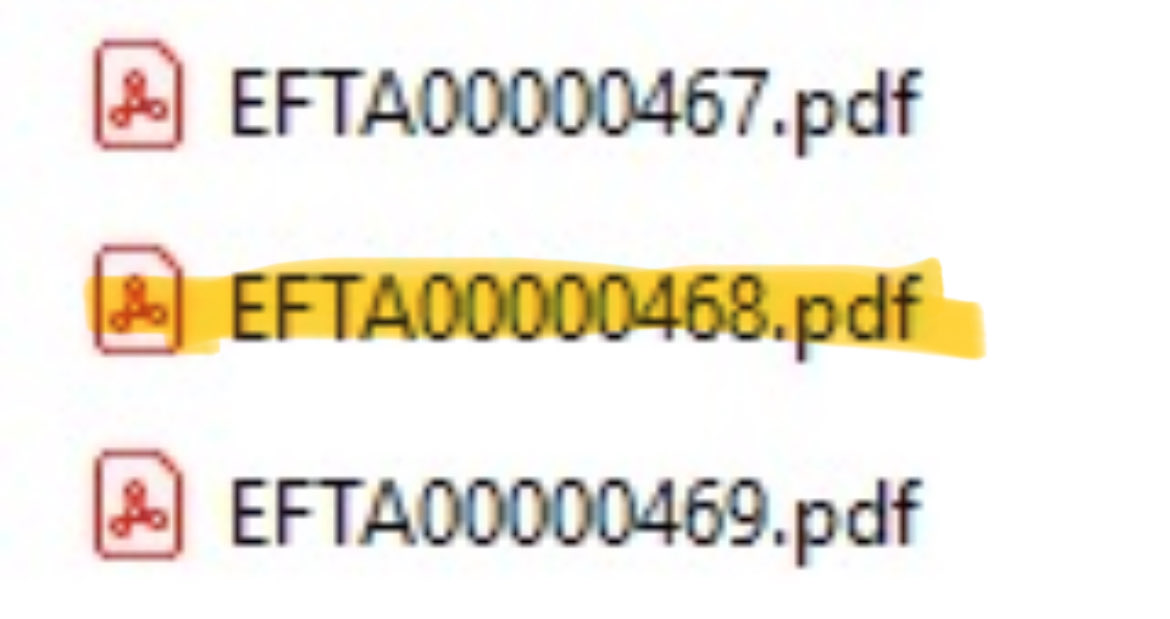
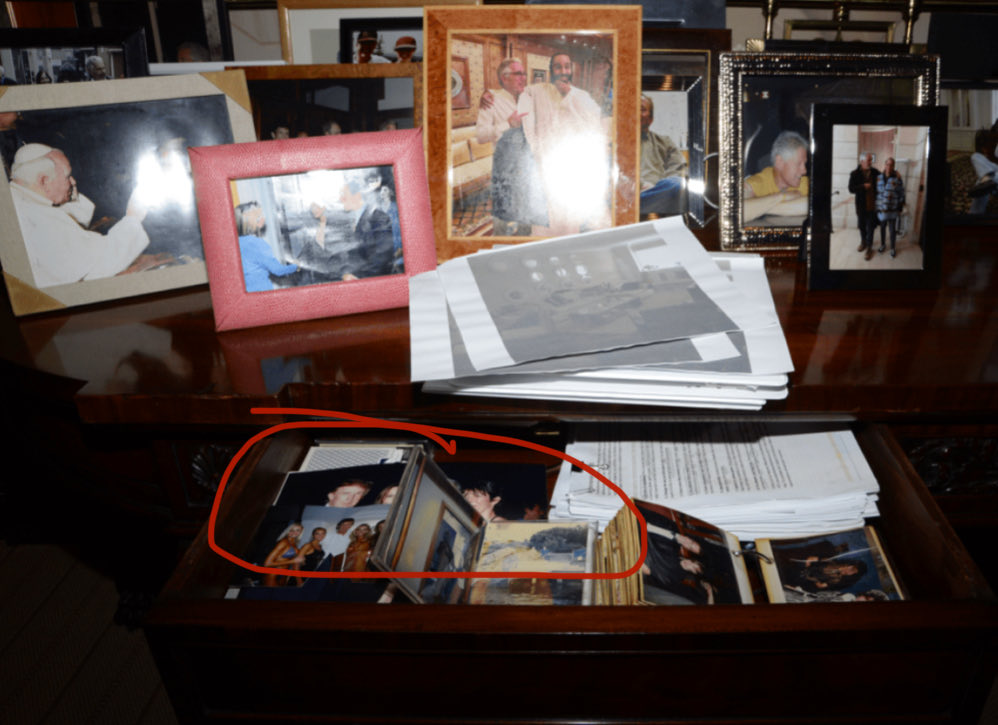
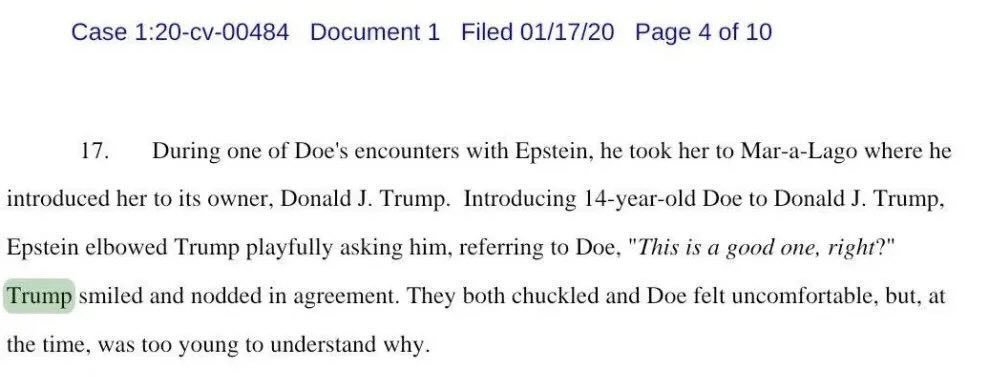
PROOF: The DoJ just *DELETED* one of the files they released that contained Trump!
Yesterday, file 468 was shown to have a picture of Trump that they missed.
We know this because it was downloadable yesterday - as can be seen in my local copy.
I just want to make sure this court doc, where trump is mentioned with a 14-year-old Jane Doe, is noted.
You know, since there are so many redacted pages, make sure everyone sees this UNREDACTED one.
RT this before Elon suppresses it.
Last quarter I announced a milestone.
30% of our code is now written by AI.
I called it "engineering velocity."
The board loved that phrase.
They didn't ask what the code does.
Neither did we.
It compiles. Usually.
That's the metric.
Someone asked about testing.
I said "AI-assisted quality assurance."
That means the AI writes the tests too.
For the code it wrote.
It finds no issues.
Very efficient.
This week we admitted Windows 11 core features are broken.
Audio doesn't work.
Explorer crashes.
Updates fail to install.
Users asked why.
I said "we're investigating."
Investigating means reading the code.
The code the AI wrote.
That no human understands.
Because understanding isn't scalable.
Our CTO says 95% of code will be AI-generated by 2030.
I believe him.
I have to.
We fired the people who would check.
They were "non-essential headcount."
Essential means writes code.
AI writes code.
Humans are overhead.
Overhead gets optimized.
We optimized 10,000 engineers last year.
This year the bugs arrived.
Unrelated, obviously.
The engineers we kept are debugging AI output.
They don't understand it either.
But they're "cross-functional."
Cross-functional means they do everything.
Everything means nothing well.
A user asked why their audio disappeared after an update.
I said "install updated drivers."
They asked why the update broke the drivers.
I said "report it via Feedback Hub."
They asked what happens to feedback.
I said "it helps us prioritize."
Prioritize means add to backlog.
Backlog means never.
But politely.
Someone on Hacker News called this "a privacy and consent disaster."
I called it "an evolving user experience."
Same thing. Different framing.
We released a fix.
The fix broke something else.
The something else was also written by AI.
The fix was also written by AI.
They're collaborating now.
I call it "autonomous iteration."
The autonomous iteration has created 47 new bugs.
Each bug spawns a fix.
Each fix spawns two bugs.
Exponential growth.
Just like our stock price.
Unrelated, obviously.
Satya told Mark we're at 30%.
Mark said he didn't know Meta's number.
Sundar said Google is also at 30%.
None of us know what the code does.
But we know the percentage.
Percentage is a metric.
Metrics go in earnings calls.
Earnings calls move stock prices.
Stock prices determine bonuses.
Bonuses determine success.
Success means the bugs don't matter.
Users asked when Windows will work again.
I said "we're committed to quality."
Quality means it ships.
Ships means it's your problem now.
Thank you for being part of the Microsoft family.
Family means you can't leave.
We're in your enterprise agreement.
For three more years.
The circle of innovation.
Imagine that some deranged technologists notice one day that lemonade looks a lot like piss. You could almost confuse the two if you overlooked the taste, the smell, the source and the ingredients, and if you had no compunctions about drinking a lot of piss. By this point in Silicon Valley everyone has been guzzling piss for so long that most of them have forgotten they were only pretending to like the taste.
1/ The US Government has quietly removed a memorial to Black soldiers who died in World War II from the Netherlands American Cemetery in Margraten, South Limburg. The move follows a complaint from the right-wing Heritage Foundation to the American Battle Monuments Commission. ⬇️