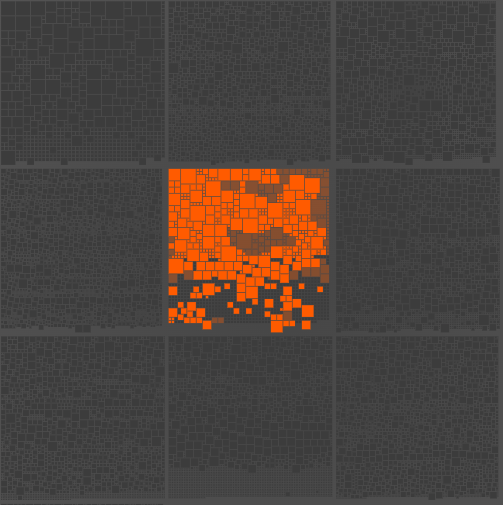
If you're a Bitmap holder, here's something important to know about Digital Matter World.
Your Bitmaps already represent your Bitcoin blocks (ofc).
In Digital Matter World, you can link them and give them additional earning potential.
Once linked, whenever any eligible digital matter from your blocks is created on Bitcoin, whether that’s next week or years into the future, you'll receive 15% of the minting fee (in $TAP), regardless of whoever creates those assets.
We’ll soon release the full details around linking and the specific earnings mechanics.
I’ve always loved the idea that something people already own can find entirely new uses, which is why Bitmaps are integrated as a central economic component within DMW.
Here is an interoperability convention for bitmap.
It sits in the Product section, along with some additional words on how bitmap prescribes no interpretation or product standards, and inherits Ords features. Not yet pushed to main.
Here for review:
https://t.co/Nmu7JS9cUG
This in no way conflicts with any existing standards, it simply recommends a way for products to write standards that are interoperable with existing metadata and leave the content field alone for users to reinscribe anything they want, not product-specific.
What a busy 48 hours! We haven't slowed down for a second. 🔥
Within our sandbox environment on Bitcoin Signet, we've successfully completed test minting, confidential transfers, and redemption via RGB. We've validated our transaction flows and finalized key integrations.
We're just as excited as you are about this important milestone for the Bitcoin ecosystem, and we'd love for our community to join us in testing what we're building.
But before we can bring USDT to Bitcoin Mainnet and make it accessible to everyday users, the Utexo team needs to ensure that all the key partners — including wallets like UniSat and exchanges — have completed their internal testing and integrations.
These partners are critical links between our technology and the users who will ultimately use it. There's a tremendous amount of work involved, and getting these integrations right is essential for a smooth Mainnet launch.
We're actively working to see if more spots can be made available for community testing. That said, community access to the test environment is an added bonus, not a reason to disrupt our partners' testing schedules. We want to respect their process and give them the time they need.
Our shared goal is a smooth and successful Mainnet launch. That's what matters most.
We'll keep the community updated as things progress. Thanks for your patience and for being part of this journey with us. ❤️
In the meantime, feel free to download UniSat wallet and get ready. We're working toward supporting it from day one of Mainnet.
👉 Download UniSat wallet here: https://t.co/IIdTJoNeIF
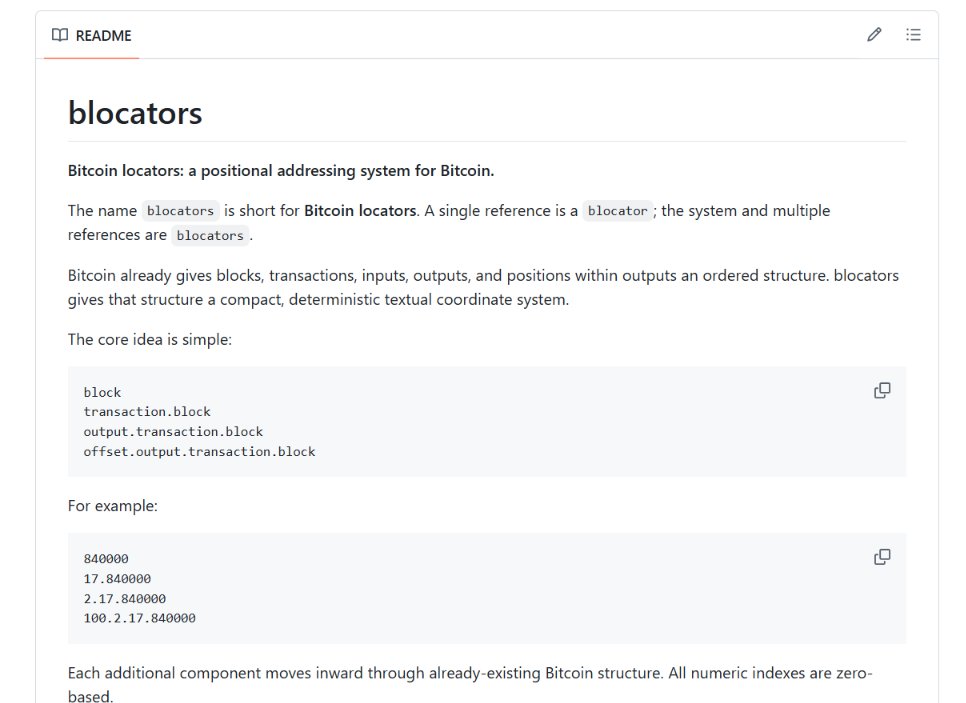
Gateway uses something called blocators, which stands for Bitcoin Locators (previously BPS).
I've published the specs here: https://t.co/PD8UmuP3Gm
It's looks like:
offset.output.tx.block
First satpoint of first output of first tx of second block:
0.0.0.1
I'm drafting a BIP.
WHY USE BLOCATORS?
When working with Bitcoin peers, you can only ask them for blocks. Not specific data inside.
That means, to use transaction ID's, you must have that block already, or know what block to ask for. In practical terms, this usually requires you to have a full node, since you don't know which block it is.
Since blocators point to the exact location, you can skip running a full node entirely and fetch data on-demand.
This means you don't need to have almost a terrabyte of storage available to work directly with Bitcoin.
I'm building Gateway indexes almost entirely on blocators. You can run transaction locators which indexes txid's against tx locators.
That means a translation from existing transaction hashes to blocators. This enables the use of traditional inscription ID's within Gateway.
This way you can also export indexes that use traditional ID's instead of blocators.
However, I'm so confident in blocators that I'm making it the default way to index with Gateway.
It's going slightly against the grain, but with a bridge between methods. But put it this way...
If ord used blocators for references like recursion, for example, there would be almost no need to use traditional inscription ID's.
This is a system I wrote independently of @rodarmor for Gateway (and has been perculating for a long time), but later came to find that Casey proposed literally the mirror image of blocators in an early draft of the ord protocol.
Personally, I think Casey's biggest mistake is not using a system like this to begin with. It means that for on-demand systems like Gateway, we have to have a translation index from transaction ID's to blocators (or have the raw blocks themselves) to be able to resolve an inscriptions directly from Bitcoin peers.
So that's why Gateway uses inscription locators instead of inscription ID's, because we can resolve them on-demand from Bitcoin peers.
But the limitation is simply that recursion and any reference to inscription ID won't work without having the txid locator index or raw block index.
So I'm going all in on blocators. I'm writing a BIP for Bitcoin itself, and at some point I'll propose it for ordinals itself as an alternative to ID's.
For now, we just prove its usefulness in Gateway.
Any questions, please ask!
---
THE GATEWAY BITMAP UPDATE IS ON ITS WAY
Full Bitmap District and Parcel Indexing and exporting. It will ship with a much smoother user experience for the timeline, arming of tracks for indexing, control buttons, and general usability improvements.
You can index tracks in parrallel now, with prompts when that is the best thing to do, such as when you index Bitmap or inscriptions, it will now prompt you to also arm the transaction locator track.
Bitmap Chain will be held off until a 0.8.x update. The design is final, but there are some serious considerations I want to put to the community before I roll it out. You can view the current design on the "chain" branch of the bitmap github: https://t.co/cw1lceI6bG
I'm not sweating it right this second, my focus is finishing up 0.7.x versions. After the Bitmap v0.7.8 update, the v0.7.9 will be most likely be the last 0.7.x update for deeper Ordinals indexing and usability features, which will land us nicely on v0.8.x, where my intent is validation features, a full index building engine, and tightening the ship, testing it compulsively until we are ready for the 0.9.x versions, where I will begin implementing Gateway p2p features for on-demand index sharing. Where a bitcoin node will not get you the answer, in 0.9.x versions onwards, Gateway peers shall bridge the gap. And I intend to bridge Gateway and Bitcoin peers to web hopefully in 0.9.x. One day, even mobile.
When that's done, I think we'll be ready for primetime, which is v1! At that point, I may change the name to Bitcoin Gateway just so I can appeal to plebs. If we ever add wallet features, it will be after v1, but I'm not rushing to do anything like that as it's not the main goal, and there are huge risks there. I may even keep this client focused solely on serving data.
---
Anyway, that's my word for now!
Stay notified for the Bitmap update 🔔
BILLIONAIRE MICHAEL SAYLOR SAYS STRATEGY "WILL BE INCORPORATED" INTO THE S&P 500 INDEX
"WE WILL BE INCORPORATED INTO MORE AND MORE INDEXES"
MATTER OF TIME 🚀
🚨 Michael Saylor CLASHES with CNBC hosts over Bitcoin vs AI!
Does the AI boom make the case for investing in Bitcoin even STRONGER?
Saylor says YES and explains the connection most investors are missing:


 [成交](https://t.co/wFqeCtv7we)
2⃣比特币数字物质世界项目 Digital Matter World(DMW)建设方 Trac Systems CEO Benny(@rarity_garden)介绍 DMW 与 Bitmap 的经济联动:持有者可将 Bitmap 关联(link)进 DMW;关联后,凡在该区块上创建符合条件的 digital matter,无论由谁铸造,关联持有者均可获得铸造费(minting fee)的15%(以 $TAP 结算)。完整关联与分成细则将另行公布。Benny 称 Bitmap 被设为 DMW 的核心经济组件之一,目的是让既有资产获得��用途。
[原帖](https://t.co/JDG0iBc5RV)
3⃣Bitmap 多元宇宙项目 Starbreeders 创始人 natum(@TommyMultiverse)发布 Ordinals 链上治理协议 Ordinals DAO:任何人可在比特币网络上铭刻(inscribe)DAO,面向 Bitmap、铭文收藏、BRC-20、Runes 等资产持有者组织链上讨论与投票;投票默认不必然具有约束力,具体规则由提案定义。已部署 bitcoin.dao、ordinals.dao、bitmap.dao,创世提案投票窗口为2016个区块。配套提供链上投票构建工具,投票需 BIP-322 签名;协议开源仓库见原帖评论。
[原帖](https://t.co/VugY0W8N7Q) [相关](https://t.co/JkvVA1YLxo) [仓库](https://t.co/bfBIMfj1kY)
4⃣Bitmap 理论与媒体平台 https://t.co/OaC83ymB9V 创始人 dabber.sats(@elevateddabber)公开参与昨日已报道的 BitmapWin Bitcoin Puzzle #71:该谜题由 Bitmap 链上世界应用 BitmapWin 开发者 urⓑanⓑor.ⓑtc(@UrbanBor)推出,在浏览器本地扫描私钥,尝试破解2015年起存在、余额约7.10 BTC 的比特币谜题地址,密钥不上传,也不花费聪(sats);若命中,90%归用户,10%归金库。dabber.sats 展示本机 GPU(称 RTX 5070)算力贡献,并称此为 “bitmap power”。Bitmap 链上世界应用 BitmapWin 开发者 urⓑanⓑor.ⓑtc(@UrbanBor)回应其算力已超过自己的 CPU 贡献。
[原帖](https://t.co/bWllSvmtPw) [相关](https://t.co/oVRQSBVx1Z)
📢以上内容均来源于互联网,仅为信息分享,无任何立场和广告,不构成投资建议。数字资产波动极大,请自行核实并谨慎决策。
👉关注我,获取Bitmap最新动态
🧡您的转发和点赞是我坚持不懈的动力
🫱购买Bitmap参考:https://t.co/3klgaOSJgF
#BitmapDaily #Bitmap #Ordinals #Bitcoin #BTC](https://pbs.twimg.com/media/HV7JSDubkAEN1HZ.jpg)