When I was Muslim, I compared Muhammad’s last words to Jesus’ last words.
Not just the facts, but the spirit behind them.
And bro, the difference is staggering. It shook my devout Muslim faith.
According to Sahih al-Bukhari, Muhammad’s final words included: “May Allah curse the Jews and the Christians. They made the graves of their prophets into places of worship.”
Those are words associated with his final moments.
No forgiveness. No reconciliation. No peace.
Now compare that to Jesus.
Beaten, betrayed, tortured, hanging on a cross with nails through His wrists, Jesus says:
“Father, forgive them, for they know not what they do.”
And then: “It is finished.”
One dies speaking curses.
The other dies extending forgiveness.
One ends by drawing lines and reinforcing division.
The other tears the veil and reconciles heaven and earth.
And whether people like it or not, final words reveal something deeply personal about the heart.
That contrast shook me.
Because one man’s final moments reinforced separation, while the other’s changed eternity through mercy, sacrifice, and love.
Please sit with that honestly.
In 2014, Stanford professor Matt Abrahams gave a legendary 1-hour lecture called “Think Fast, Talk Smart.”
It has 51M+ views for a reason.
His frameworks:
• Dare to be dull
• Greet your anxiety
• The paraphrase is your Swiss Army knife
12 lessons on communication:
🔥🚨: Is this how the WORLD’S BEST soccer balls are REALLY made?
Hand-stitched with insane precision and old-school skill in Pakistan.
No machines. Just pure craftsmanship.
The balls the pros kick around? Is this the hidden reality behind them?
A man spends 50 years teaching at MIT.
He knows his time is running out.
So he records one last lecture — everything he knows, distilled into a single hour.
He died 5 months later.
This is that lecture.
The most important hour you'll watch this week. 👇
Bookmark it for later
A MIT professor gave a 1-hour lecture in 2019 that has 18 million views.
He died 5 months after recording it.
It was his final gift to the world.
Patrick Winston taught at MIT for 50 years.
The smartest engineers on earth sat in his classroom.
And he spent his last lecture teaching them the one skill their degrees never covered.
How to speak.
15 lessons that will change how you communicate forever:
Never open with a joke. Your audience is not ready to laugh yet. Open with a promise of what they will know by the end.
Your ideas are like your children. You are too close to them. What is obvious to you is invisible to everyone else. Explain the obvious.
The 5-minute rule: the first 5 minutes of any talk determine whether people will listen for the next 55. Spend more time on your opening than anything else.
Repeat your most important idea 3 times in 3 different ways. Once is never enough.
Build a fence around your idea. Tell people what it is NOT before you tell them what it IS.
Verbal punctuation. Pause. Let the idea land before moving to the next one.
Ask questions nobody will answer. Then wait 7 seconds. The silence is not awkward. It is processing.
Never read your slides. Your audience can read. They cannot listen and read simultaneously.
Use the board not the slides. Writing forces you to slow down. Slowing down forces clarity.
Inspire before you inform. Nobody learns from someone they are not inspired by.
End with a contribution not a summary. Tell them what you gave them. Not what you said.
Never say thank you at the end. It is weak. End with something that lands.
Stories make ideas stick. Data makes ideas understood. You need both. In that order.
The quality of your communication determines the quality of your ideas in the eyes of the world. Not the ideas themselves.
Practice is not preparation. Practice IS the skill.
Patrick Winston understood something most people spend their entire careers missing.
Your ideas are only as powerful as your ability to transfer them into someone else's mind.
You can be the smartest person in the room and be completely invisible.
Or you can master communication and make average ideas feel like breakthroughs.
He chose to spend his last lecture teaching this.
Watch it tonight.
Bookmark this first.
Follow @cyrilXBT for more lessons from the people who built the future.
In Tokyo, there's a cleaning crew that does the impossible every 12 minutes.
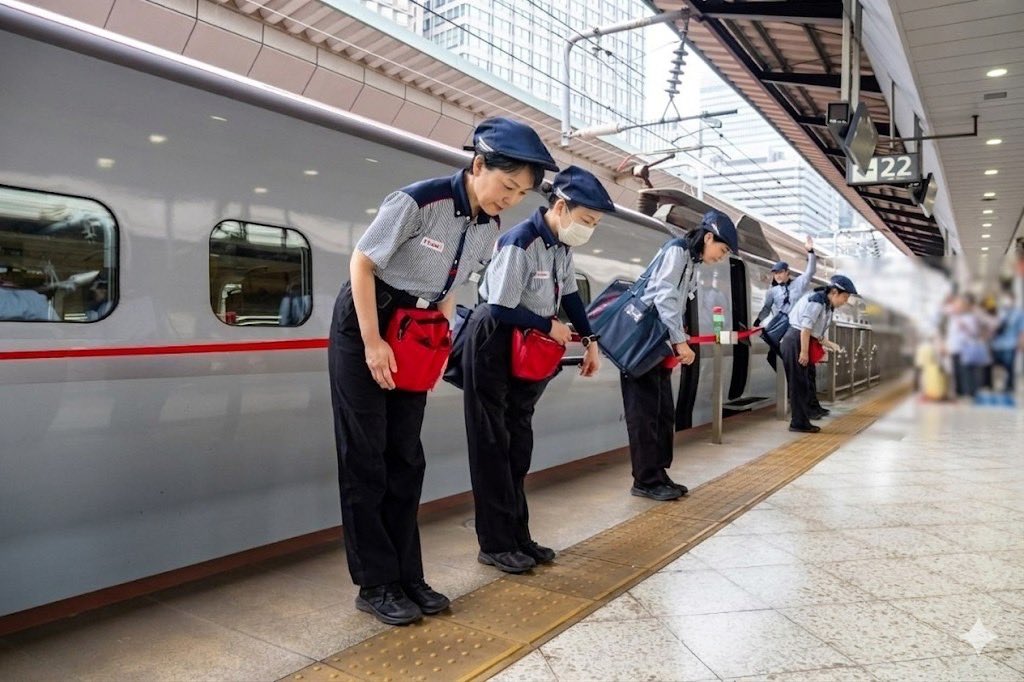
They're called TESSEI. They clean the Shinkansen bullet trains at Tokyo Station.
When a train arrives, it stops for 12 minutes before departing again.
Two minutes for passengers to exit.
Three more for the next batch to board.
That leaves seven.
In those seven minutes, one person must:
- Clean 100 seats
- Wipe every tray table
- Vacuum the floor
- Rotate every seat to face the new direction of travel
- Replace all headrest covers
- Check the overhead bins
- Bow to incoming passengers
Seven. Minutes.
They do this hundreds of times a day.
Harvard Business School published a case study about them.
The New York Times called it "the 7-minute miracle."
Tourists now stand on the platform just to watch.
Before they start, they bow to the train.
When they finish, they line up and bow to the passengers.
They're paid by the hour. Many are in their 50s and 60s.
Japan didn't invent cleaning.
They invented the dignity of doing small things perfectly.
Satan in Eden: “Take and eat.”
Jesus at Last Supper: “Take and eat.”
In Genesis it was temptation,
At the Last Supper, it became grace.
What was broken in Eden,
was restored through Christ.
>The Catholic Church surpasses 1.42 billion members for the first time in recorded history 🇻🇦
>"The Bible in a Year" by Father Mike Schmitz reaches the milestone of 1 billion downloads 🇺🇸
>Friar Gilson becomes Brazil's most-watched streamer in 2025 🇧🇷
>In France, over 21,000 people are baptized during the 2026 Easter Vigil 🇫🇷
We are back ✝️
🇺🇸🧐💪Once, the Pentagon realized it had far too many generals and suggested they retire. It promised that any general who stepped down immediately would receive a pension equal to their salary plus $10,000 for every inch measured in a straight line between two points on the general’s body. The generals could choose those points themselves.
The first to agree was an Air Force general. He told the pension officer to measure from the top of his head to the tips of his toes. It came out to six feet. He retired with a check for $720,000.
The second was an Army general. He asked for the distance from the tips of his fingers (with arms stretched upward) to the tips of his toes. That came out to eight feet. He retired with a check for $960,000.
When the third general—a gray-haired Marine—was asked which two points to measure between, he said: “Measure from the tip of my penis to my testicles.”
The pension officer suggested that perhaps the respected Marine general might want to reconsider, mentioning the generous sums the previous generals had received. But the Marine stood his ground.
A medical officer was called in for such a delicate measurement. He approached the general and asked him to take it out. The general did.
The medical officer placed a ruler at the tip—and suddenly recoiled.
“My God!” he exclaimed. “Where are the testicles?”
“In Vietnam,” the general replied.
What if I told you that this exact same thing you’re watching in this video happened in my parish tonight? 😳🔥
And mind you, I live in a village in Africa… yet the same Latin Exsultet, the Paschal Candle, the bonfire, literally everything, was done exactly the same way here.
This is what we mean when we say the Catholic Church is One and Universal.
Same liturgy. Same order. Same faith across continents, cultures, and languages.
God is not the author of confusion… and this kind of beauty and unity? It speaks for itself. ✨
#Easter
To those entering the Catholic Church tonight:
The world will try to take this joy.
You will lose friends.
You will make enemies.
Because the world despises Jesus.
Before the world hated you, it hated
Him first.
And because you love Him,
the world will hate you too.
Have no fear.
Jesus has overcome the world.
I AM SO PROUD OF YOU!
WELCOME HOME!
Hundreds of actresses from all over the world auditioned for Zero A.D. to play the role of Mary, the Mother of God.
Only one was chosen.
Deva Cassel.
The daughter of Monica Bellucci,
who once portrayed Mary Magdalene in The Passion of the Christ, directed by Mel Gibson.
Weeks later, after Deva was cast, I was with Mel at his office in Santa Monica.
He asked me who would be playing Mary in our film.
When I told him… he paused.
Then he showed me something, and shared an incredible story.
A photo of Monica Bellucci from the crucifixion scene, portraying Mary Magdalene.
Then he said:
“That was the moment Monica found out she was pregnant.”
And now, 20 years later…
that child is portraying Mary.
Some stories don’t just happen.
They feel written from above.
Zero A.D. Coming to theaters this Christmas.
Back in my Catholic secondary school, if you even dared to talk on Good Friday, it’s over for you… 😭 We didn’t just fast from food, we fasted from speaking. We communicated in sign language—e reach make you feel like na we crucify Jesus.
So imagine my shock when I got home after graduation and experienced the Easter Triduum outside school. The noise?? I didn’t even know people talked on Good Friday or during the vigil before the Great Alleluia.
For six years, we observed it in deep silence and reverence, and it shaped me. Now, every little noise in church those days still feels off. Even at home, when people try to gist, I’m just not in the mood.
Those moments taught me how sacred these days truly are—and honestly, I miss it. 😪
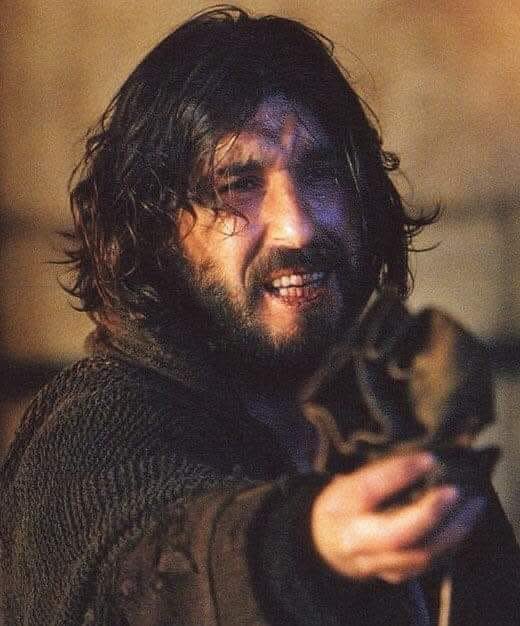
Italian actor Luca Lionello, once an atheist, converted to Catholicism during the filming of The Passion of the Christ, where he portrayed Judas Iscariot. The experience deeply impacted him, leading to his conversion, the baptism of his children, and the blessing of his marriage in the Church.
When Charles de Gaulle led France, he treated public money as something untouchable.
At the Élysée Palace, there was a strict rule for him: no personal expense could ever be paid for by the state.
His wife, Yvonne, kept a small notebook in which she meticulously recorded all family expenses — from food and electricity to clothing and even soap.
At the end of each month, she would send a check to the state treasury, reimbursing every last cent.
Once, an accountant remarked that this was not really necessary.
She calmly replied:
“Everything that is not public is personal.
And for personal matters, we pay ourselves.”
This principle applied without exception.
Their children and grandchildren were not allowed to use official cars for private matters.
De Gaulle himself refused any privileges of office: he paid his own bills at the palace — even for the smallest things, such as soap or family meals.
Moreover, he did not use his presidential salary, living only on his military pension.
After his death, there was no wealth or luxury left behind — only a modest house in Colombey-les-Deux-Églises, purchased before the war.
It is said that he would sometimes personally send money to the treasury if he suspected that any personal expense might have accidentally been covered by the state budget.
This was not a formality.
It was a principle.
✨ An example of true integrity, honor, and responsibility in public service.
Every Lenten season, my neighbour becomes a different person.
Normally, he’s the lively type—always joking, always playing music in the compound.
But once Lent begins, everything about him slows down.
One evening, he knocked on my door and said, “Come, let’s go for Stations of the Cross.”
I hesitated. I had heard about it, but I had never really taken it seriously. Still, I followed him.
When we got to the church, it was quiet. People were already gathered, moving slowly from one station to another.
At each stop, they paused, prayed, and reflected.
At first, I didn’t really understand what was going on.
We moved from one point to another, reading, kneeling, standing… repeating the same pattern.
But somewhere along the way, something changed.
At one of the stations, they talked about Jesus falling under the weight of the cross.
I glanced at my neighbour—his head was bowed, eyes closed.
And for some reason, it hit me.
This wasn’t just about what happened years ago.
It felt like a reminder of the struggles we all carry every day—the pressure, the disappointments, the silent battles no one sees.
As we continued, I started paying more attention. Each station felt personal. Each prayer felt heavier.
By the time we got to the end, the whole place was silent.
No noise, no distractions—just people thinking, reflecting.
On our way back home, my neighbour didn’t say much. That was unusual for him.
After a while, he finally spoke.
He said, “You see why I don’t joke with this period? It helps me reset.”
I didn’t reply immediately.
Because deep down, I understood what he meant.
Sometimes, in the middle of all the noise of life… you need moments like that—to slow down, reflect, and face yourself.
Since that day, whenever he knocks during Lent, I don’t hesitate.
I just follow.
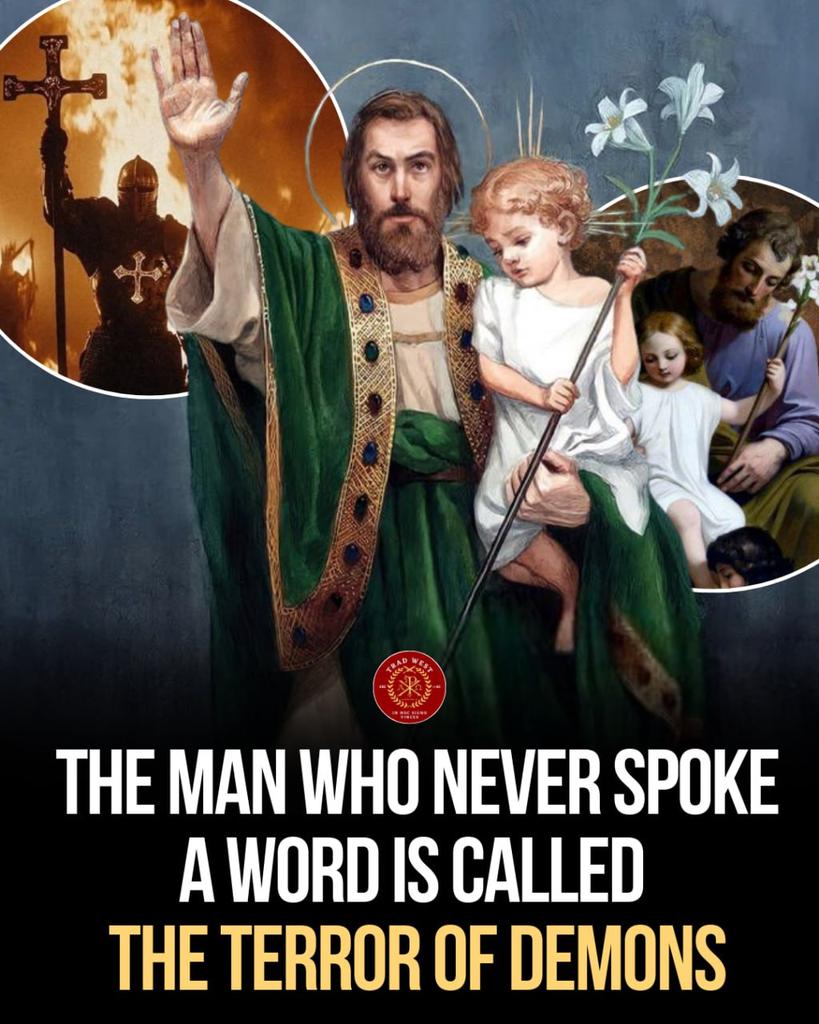
The man who never spoke a word is called the Terror of Demons.
In the entire Bible, St. Joseph never speaks a single word. He is silent but he acts.
He wakes up at midnight to flee to Egypt. He protects the Virgin. He raises the Son of God. His title in the litany is Terror Daemonum (Terror of Demons). Why?
Because Satan fears silence. Satan fears the man who does his duty without complaining, without bragging, and without hesitation. St. Joseph is the model of the interior life. This makes him the perfect spiritual weapon in quiet spiritual combat.
In the age of fatherlessness & impurity we need the spirit of St Joseph more than ever.
Our modern world is plagued by weak men, broken homes & the collapse of fatherhood. St. Joseph is the antidote to the age.
St Joseph, Terror of Demons, pray for us!