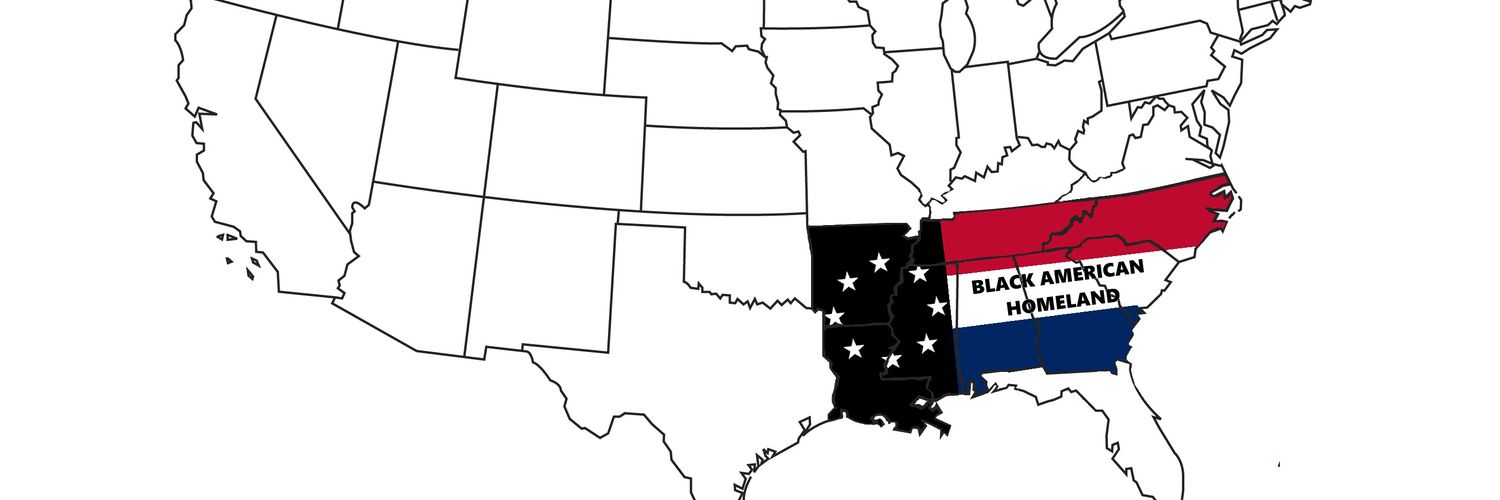
Black American Homeland Authority Atlanta Durham Birmingham Charleston Memphis NewOrlean Predominant Black Population & Control over Contiguous Region of States
The Black American Homeland Flag (Economic Community of Eight Southern States) (Super Majority Black Region of States North Carolina South Carolina Georgia Alabama Mississippi Louisiana Arkansas and Tennessee)
Land Area: 400,000 square miles
Population: 50 million
Demographics 2050: Black 80%,White 15%, Hispanic 3% Asian and others 2%
1 Black American Political Party
40 million Card Carrying Members
8 Black Governors
16 Black US Senators
66 US Congressmen
81 Electoral College Votes
1,200 State Representatives & State Senators
By Frederick Delk & others
🚨BREAKING: South Carolina Jury Finds Asian Store Owner NOT GUILTY After Shooting Unarmed 14-Year-Old Black Teen In The Back
A 61-year-old convenience store owner chased down and shot a 14-year-old Black teen in the back even though the boy didn’t steal anything and a jury just found him not guilty.
On May 30, 2023, Chikei Rick Chow chased 14-year-old Cyrus Carmack-Belton over 130 yards before shooting him in the back. Prosecutors said Carmack-Belton did not steal anything and did not point his gun at anyone — it fell during the chase. Carmack-Belton died in his twin brother’s arms.
On June 1, 2026, a jury found Chow not guilty of murder after he claimed self-defense.
Cyrus Carmack-Belton’s family sobbed in court as the verdict was read. The case sparked protests in the Black community, with many questioning how someone could shoot an unarmed 14-year-old in the back and still walk free.
I don’t think its been 500 true Black Nationalist together since then and even afterward I dont think those 500 played a real role in the movement to liberate New Afrika, only 100 signed. That shows how we as Black people feel about ourselves & our ability to be self sufficient.
The Republic of New Afrika (RNA) drew their inspiration from Harry Haywood’s classic works Negro Liberation and Black Bolshevik. My proposal introduces a distinct paradigm shift. What makes the Frederick Delk stratagem stand out among the RNA, Harry Haywood, Dr. Claude Anderson, Dr. Amos Wilson, and the Malcolm X Society is the method of execution: Leveraging the existing US system of Federalism and the 10th Amendment to the US Constitution for Black Americans to establish their own Independent Political Party and obtain Super Majority Population and Governing Control over Several Southern States.
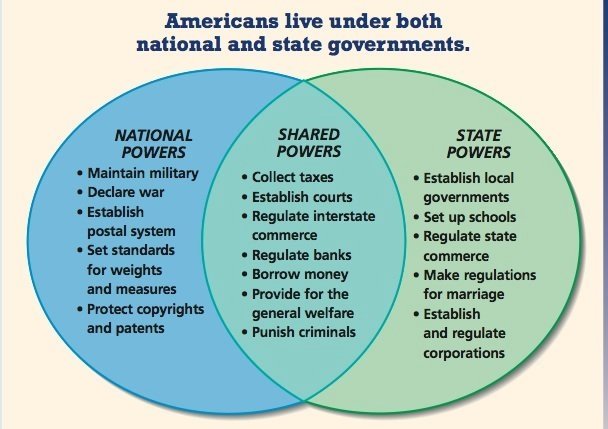
The complexities of U.S. federalism, where the 50 states hold Reserved and Shared US Constitutional Powers with the Federal Government, are rarely addressed by mainstream Black lawyers, professors, politicians, scholars, or activists. Aside from myself (Frederick Delk), @GryKngBlakState, and Charles Blow, who utilized the insights I shared with him between 2015 and 2019 for his 2021 book (The Devil You Know), few have engaged with this legal framework. In my own book, Black Paper: Black American Homeland, Super Majority Black Region of States, The Great Reverse Migration (2012), I provide the comprehensive blueprint (the how, what, where, when, and why) for Black Americans to establish an independent political party and wield genuine constitutional power through state governance.
#RenaissanceParty
#Delkism
#GreatReverseMigration
#BlackRegionalism #8StatesSolution
#StateDefenseForces
#StateRecompenseLaws
#RegionalEconomicDevelopmentAuthority
#StateEconomicDevlopmentAthority
Frederick Delk
The Midwest States vs Southeast States..... Human Development Index HDI scores and Critical infrastructures within these States are fairly similar. Mississippi has the lowest Human Development Index HDI score 0.868 of any state however, it still has first world HDI numbers (HDI scores over 0.8600 sre considered First World).
Black Americans HDI scores across all 50 States average 0.916
The 8 States Southern Region (NC SC GA AL MS LA AR TN) average HDI score 0.906
Country Comparison:
First World Countries HDI scores 1.000 - 0.860
1. Iceland 0.972
Switzerland 0.970
Germany 0.959
Sweden 0.959
Australia 0.958
United Kingdom 0.946
Canada 0.939
United States of America 0.938
South Korea 0.937
Japan 0.925
France 0.920
Israel 0.919 (Before the War)
Spain 0.918
Italy 0.915
Poland 0.906
Saudi Arabia 0.900
Portugal 0.890
Qatar 0.886
Chile 0.878
Hungary 0.870
Argentina 0.865
Second-World Countries HDI scores 0.859 - 0.800
Oman 0.858
Turkey 0.853
Kuwait 0.852
Bulgaria 0.845
Romania 0.845
Panama 0.839
Russia 0.832
Bahamas 0.820
Malaysia 0.819
Barbados 0.811
Albania 0.810
Trinidad and Tobago 0.807
Developing Second-World World Countries HDI scores 0.799 - 0.760
Frederick Delk advises exercising caution when traveling to Countries with HDI scores under 0.800
Iran 0.799 (Before the War)
Thailand 0.798
China 0.797
Peru 0.794
Mexico 0.789
Colombia 0.788
Brazil 0.786
Dominican Republic 0.776
Sri Lanka 0.776
Vietnam 0.766
Algeria 0.763
Dominica 0.761
Functional Third-World Countries HDI scores 0.759 - 0.700
Frederick Delk advises exercising extra caution when traveling to Countries with HDI scores under 0.760
Egypt 0.754
Tunisia 0.746
South Africa 0.741
Indonesia 0.728
Jamaica 0.720
Philippines 0.720
Morocco 0.720
Medium Functional Third-World Countries HDI scores 0.699 - 0.650
Frederick Delk advises exercising extreme caution when traveling to Countries with HDI scores under 0.700
Iraq 0.695
Bangladesh 0.685
India 0.685
Equatorial Guinea 0.674
Cape Verde 0.668
Namibia 0.665
Guatemala 0.662
Low Functional Third-World Countries HDI scores 0.649 - 0.500
Republic of the Congo 0.649
Honduras 0.645
Ghana 0.628
Kenya 0.628
Laos 0.617
Angola 0.616
Myanmar 0.609
Cambodia 0.606
Zimbabwe 0.598
Zambia 0.595
Cameroon 0.588
Ivory Coast 0.582
Uganda 0.582
Rwanda 0.578
Papua New Guinea 0.576
Togo 0.571
Mauritania 0.563
Nigeria 0.560
Tanzania 0.555
Haiti 0.554
Pakistan 0.544
Senegal 0.530
Benin 0.515
Sudan 0.511
Liberia 0.510
Eritrea 0.503
Guinea 0.500
Dysfunctional Third-World Countries HDI score 0.499 - 0.400
Ethiopia 0.497
Afghanistan 0.496
Mozambique 0.493
Madagascar 0.487
Yemen 0.470
Sierra Leone 0.467
Burkina Faso 0.459
Mali 0.419
Nigeria 0.419
Chad 0.416
Central African Republic 0.414
Somalia 0.404
Failed State HDI score under 0.400
?
All Tiers are labeled By Frederick Delk
The Democratic Party Platform vs The Black American Homeland Political Party Platform
Based on the 2024 Democratic Party platform and trends heading into 2026, the party leadership, often referred to as the establishment or elite wing, centers its agenda on defending democratic institutions, strengthening the economic middle class, promoting social equity, and accelerating the green energy transition.
Preamble and Core Values
"Stronger Together": The overarching theme emphasizes unity, diversity, and collective action over individualism.
Defending Democracy: Pledging to combat authoritarianism, protect voting rights, and restore the nation's character, frequently contrasting this with the Republican platform.
American Promise: Believing in the American idea, its principles, purpose, and promise, and fighting for a fair society, an opportunity-driven economy, and a strong, safe nation.
Ideology: Modern Liberalism and Technocracy
Modern Liberalism/Center-Left: The party is firmly based in modern liberalism, championing active government involvement in regulating business and providing social services.
Technocracy and Expertise: The elite wing often highlights a "governance-by-design" framework, relying on professional expertise, data, and academic expertise to shape public policy.
Institutional Stewardship: A key focus is protecting established government institutions and international alliances.
Platform and Objectives (2024-2026 Priorities)
Economy (Middle-Out): Growing the economy from the "middle out and bottom up," rewarding work over wealth, strengthening labor unions, and raising the federal minimum wage.
Healthcare: Protecting and expanding the Affordable Care Act (ACA), lowering prescription drug costs, and protecting Medicare/Medicaid.
Climate Change: Tackling the climate crisis by investing in clean energy, creating green jobs, and promoting energy independence.
Social and Racial Equity: Advancing LGBTQ+ rights, protecting reproductive freedom, fighting systemic racism, and closing the racial wealth gap.
Voting Rights: Passing comprehensive legislation to safeguard access to the ballot and curbing the influence of dark money in politics.
Foreign Policy: Rebuilding alliances, leading with diplomacy, and countering authoritarianism worldwide.
Immigration: Seeking a pathway to citizenship while managing border security and protecting "DREAMERS".
2026 Midterm Strategy
Countering the Opposition: The strategy focuses on mobilizing voters against the policies of Donald Trump and the Republican Party, with a specific focus on protecting Democratic seats in Congress.
Affordability: Addressing high inflation and the cost of living, which are major voter concerns.
"Soft Power": Using non-governmental organizations and international partnerships to support democratic values.
Key Factions
The Establishment/Elites: Focus on pragmatic policy, institutional stability, and coalition building.
Progressive Wing: Often pushes for more aggressive action on issues like climate, healthcare, and economic redistribution.
The Black American Homeland Political Party Platform now known as the Renaissance Party
The Black American Homeland Political Party, now known as the Renaissance Party and founded by Frederick A. Delk, is a political movement designed to secure political and economic control over a designated regional territory in the Southern United States. It operates on the ideology of intentional, targeted migration to create a Black super majorities in specific states.
Preamble and Philosophy
The Party’s philosophy is detailed in Frederick Delk’s work, Black Paper: Black American Homeland, which argues that Black Americans should not remain a minority in all 50 states.
The "Great Reverse Migration": The core philosophy centers on consolidating 77%-80% of the 52 million Black Americans into the 8 States Southern Region.
Territorial Control: The party seeks to transform the Southern US, specifically North Carolina, South Carolina, Georgia, Alabama, Mississippi, Louisiana, Arkansas, and Tennessee, into a "Black American Homeland".
"Delkonomics": The strategy is supported by Delk’s economic framework, termed "Delkonomics," focused on strategic economic Intervention, Planning and Implementation for the party’s goals.
Ideology
The Renaissance Party is defined by:
Ethno-Regionalism/Nationalism: Focusing political power on a specific geographic region to create a self-governing entity.
Constitutional Utilization: Leveraging the 10th Amendment of the U.S. Constitution to maximize state-level control.
Economic Sovereignty: Developing independent economic systems within the designated states.
Platform and Objectives
The platform focuses on consolidating power, achieving regional dominance, and implementing a new political structure.
Targeted Migration: Consolidation 40 million Black Americans (77%-80% of the population) into 8 core Southern states, with 12 million residing in the other 42 states as a hedge.
Political Dominance: The objective is to control the Executive, Legislative, and Judicial branches in target states.
Super Majorities: The party projects establishing a "Super Majority" in states like Mississippi, Georgia, Louisiana, and South Carolina by 2036, followed by North Carolina and Alabama 2040, Arkansas 2044, Tennessee 2048, and eventually Florida 2060.
Aligned Leadership: Candidates are pledged to uphold the party’s vision at local, state, and federal levels, including influencing the ~110,000 state, local, and appointed officials.
Regional Control Goal: The long-term goal is to secure 8 Black Governors, 16 Black US Senators, 66 Black US Congressmen and 81 Electoral College Votes.
Recompense Laws: In the event the Government neglects to pass Reparation laws on the Federal level, the Black American Homeland States shall enact mandatory recompense laws at the state level.
Illegal and Legal Immigration: Illegal and legal immigration in the Black American Homeland requires a comprehensive approach that takes into account the economic, cultural, and political factors at play. To address the concerns of Black Americans regarding illegal immigration, the Federal Government must take steps to secure the border and enforce immigration laws. If the Federal government cannot secure the border, then the 8 States Southern Region must take a number of steps to patrol and protect the border of the Black American Homeland from Illegal Aliens.
Key Factions
1. Black Right Extremist 5%
2. Black Nationalist/Regionalist 10%
3. Black Conservatives 20%
4. Black Moderates/Centrist 30%
5. Black Progressive 15%
6. Black Pan-Africanism 10%
7. Black Liberals 10%
Key Figures and Information
Founder: Frederick A. Delk
Party Name: Black American Homeland Political Party (formerly), Renaissance Party (currently).
Symbol/Mascot: Black Panther
Color: Black, Blue, and Red
Founded: 1999
Membership: 40 million
The Contrast is Clear, Not Even Close:
The Democratic Party: Represents a broad, diverse coalition aiming for mainstream electoral success. Its strategy often involves balancing the interests of various demographics, which critics argue can lead to diluted policies or "hollow promises" that fail to deliver substantive, specific economic or social improvements for Black Americans.
The Black American Homeland Political Party aka Renaissance Party: Focus exclusively on Black American issues, interest, solidarity, autonomy, and direct accountability. They advocate for controlling their own political destiny, arguing that aligning with either major party often sacrifices specific, immediate needs for the sake of a broader, often ineffective, political party platform.
Frederick Delk suggest complete governing control on the state level and utilizing the Black American Homeland (8 States Southern Region) as a base to act as a swing vote (81 Electoral College Votes, 16 US Senators and 66 US Congressmen) or form strategic coalitions with the Democratic or Republican parties on various issues, negotiating federal level policies from a position of independent strength.
Frederick Delk
Who Has More Authority Over Black Americans' Everyday Lives; The Federal Government or The 50 States?
The question of whether the Federal government or the 50 States wield more authority over Black Americans' daily lives is deeply rooted in the structural tension of American federalism. Because the 50 States retain nearly all the attributes and functions of an independent nation, including the police power to regulate health, safety, morals, and welfare, day-to-day existence is largely shaped by state capitols and governors rather than Washington or the President. From criminal justice and public education to voting regulations and economic infrastructure, state laws and regulations exert a more immediate, pervasive control over Black, White, Hispanic and Asian American communities. Historically, this decentralized authority has often been weaponized to enforce systemic inequities, making the control over the apparatus of state government a critical battleground for Black survival and self-determination. This is not merely a call for political representation; it is a quest for structural sovereignty within the existing US constitutional framework. By securing a super majority in specific states (North Carolina, South Carolina, Georgia, Alabama, Mississippi, Louisiana, Arkansas and Tennessee) Black Americans could command the entire system of state governments, controlling the judiciary, law enforcement, state budgets, and state legislation.
To counter this localized vulnerability, Frederick Delk’s Black Paper: Black American Homeland outlines a strategic pivot: the necessity for Black Americans to obtain super majority population and governing control over several Southern states. This demographic and political consolidation serves as a defensive shield, transforming states from historical engines of oppression into fortresses of protection and economic empowerment.
This vision requires a precise distinction between historical segregation and the concept of the Black American Homeland. Segregation was a top-down, white-supremacist system designed to subjugate, disenfranchise, and isolate Black Americans into underfunded enclaves while denying them autonomy. Conversely, the Black American Homeland is a bottom-up movement centered on self-governance, institutional ownership, and cultural preservation. While segregation enforced a secondary status within someone else's state system, the Homeland concept seeks to establish a geographic sphere of genuine authority where Black Americans hold the primary levers of power.
Crucially, Delk’s framework emphasizes that the Black American Homeland does not support secession unless it becomes an absolute necessity. The primary objective is to exercise legitimate constitutional authority from within. However, the Black Paper presents a radical ultimatum for the American republic: Black Americans must prepare and brace for complete independence, or the 50 states must ratify an amendment to the US Constitution to dissolve the federal government. This dual-track approach stems from deep disillusionment with a centralized system that consistently fails its citizens and the states. It suggests that if long-standing political, social and racial divisions persist and/or the federal structure cannot be radically overhauled, independence is the only viable path left. Ultimately, this argument shifts the strategy away from pleading for federal oversight, positioning the seizure of state-level power and sovereignty as the true vehicle for Black American liberation.
#Delkism
#BlackRegionalism
#RenaissanceParty
#8StatesSolution #GreatReverseMigration
Frederick Delk
@DaBusinessBully Dave Anderson, I would like to send you a Flip Book copy of Black Paper: Black American Homeland, Super Majority Black region of States, Great Reverse Migration Published by Frederick Delk in 2012 and 2023 through private message. The 2023 Edition is available on https://t.co/KYe4APAKDG
In boxing and other judging sports, the black athletes have to overwhelmingly win. If the fight is close and the black athlete appears to have won, the white person will be awarded the win. This is the same in the courtroom; the black person must overwhelmingly win
Black Americans transform imported European instruments like the saxophone, originally a defunct toy, into lead instruments through jazz and innovation, exemplified by legends like Ornette Coleman and Sonny Rollins. #MusicHistory#CulturalImpact#Jazz
Who Has More Authority Over Black Americans' Everyday Lives; The Federal Government or The 50 States?
The question of whether the Federal government or the 50 States wield more authority over Black Americans' daily lives is deeply rooted in the structural tension of American federalism. Because the 50 States retain nearly all the attributes and functions of an independent nation, including the police power to regulate health, safety, morals, and welfare, day-to-day existence is largely shaped by state capitols and governors rather than Washington or the President. From criminal justice and public education to voting regulations and economic infrastructure, state laws and regulations exert a more immediate, pervasive control over Black, White, Hispanic and Asian American communities. Historically, this decentralized authority has often been weaponized to enforce systemic inequities, making the control over the apparatus of state government a critical battleground for Black survival and self-determination. This is not merely a call for political representation; it is a quest for structural sovereignty within the existing US constitutional framework. By securing a super majority in specific states (North Carolina, South Carolina, Georgia, Alabama, Mississippi, Louisiana, Arkansas and Tennessee) Black Americans could command the entire system of state governments, controlling the judiciary, law enforcement, state budgets, and state legislation.
To counter this localized vulnerability, Frederick Delk’s Black Paper: Black American Homeland outlines a strategic pivot: the necessity for Black Americans to obtain super majority population and governing control over several Southern states. This demographic and political consolidation serves as a defensive shield, transforming states from historical engines of oppression into fortresses of protection and economic empowerment.
This vision requires a precise distinction between historical segregation and the concept of the Black American Homeland. Segregation was a top-down, white-supremacist system designed to subjugate, disenfranchise, and isolate Black Americans into underfunded enclaves while denying them autonomy. Conversely, the Black American Homeland is a bottom-up movement centered on self-governance, institutional ownership, and cultural preservation. While segregation enforced a secondary status within someone else's state system, the Homeland concept seeks to establish a geographic sphere of genuine authority where Black Americans hold the primary levers of power.
Crucially, Delk’s framework emphasizes that the Black American Homeland does not support secession unless it becomes an absolute necessity. The primary objective is to exercise legitimate constitutional authority from within. However, the Black Paper presents a radical ultimatum for the American republic: Black Americans must prepare and brace for complete independence, or the 50 states must ratify an amendment to the US Constitution to dissolve the federal government. This dual-track approach stems from deep disillusionment with a centralized system that consistently fails its citizens and the states. It suggests that if long-standing political, social and racial divisions persist and/or the federal structure cannot be radically overhauled, independence is the only viable path left. Ultimately, this argument shifts the strategy away from pleading for federal oversight, positioning the seizure of state-level power and sovereignty as the true vehicle for Black American liberation.
#Delkism
#BlackRegionalism
#RenaissanceParty
#8StatesSolution #GreatReverseMigration
Frederick Delk