Ugandan internet child star Teng Teng has spoken out in an interview alongside his father, revealing that his former manager allegedly took over control of his YouTube channel and claimed ownership of it.
The channel, which has over 4 million subscribers and attracts millions of views globally, reportedly generates far more revenue than what has been declared to Teng Teng’s family. According to them, the former manager has only been declaring about USD 100 (approximately UGX 360,000), raising serious concerns about underreporting of earnings.
The family is now seeking urgent help to recover and regain full control of the YouTube channel.
Teng Teng is no ordinary creator he is now a globally recognized Ugandan content creator. Theres merchandise with his face sold on a website, with the snap chat app at one time creating a customised filter with his face. Global streamer IShowSpeed collaborated with him on his recent African tour, highlighting his growing international influence. However looks like there have been traces of child exploitation from his management.
The boy urgently needs support and justice.
🎥 SB4 Media | #NBSAfter5
Liverpool source 🕵️♂️⬇️
Liverpool want to sign Yan Diomande and Bradley Barcola.
Anthony Gordon's reps wanted us to come in for him. We informed them we have moved on to elite wingers.
1/8
For years, Pastor Chris Oyakhilome watched his daughter, Charlyn, remain paralyzed. Doctors declared her condition permanent. Every medical report crushed hope further, yet he refused surrender, believing God still had the final word.
One Farm. Multiple Enterprises. Maximum Profit: The Power of Integrated Farming
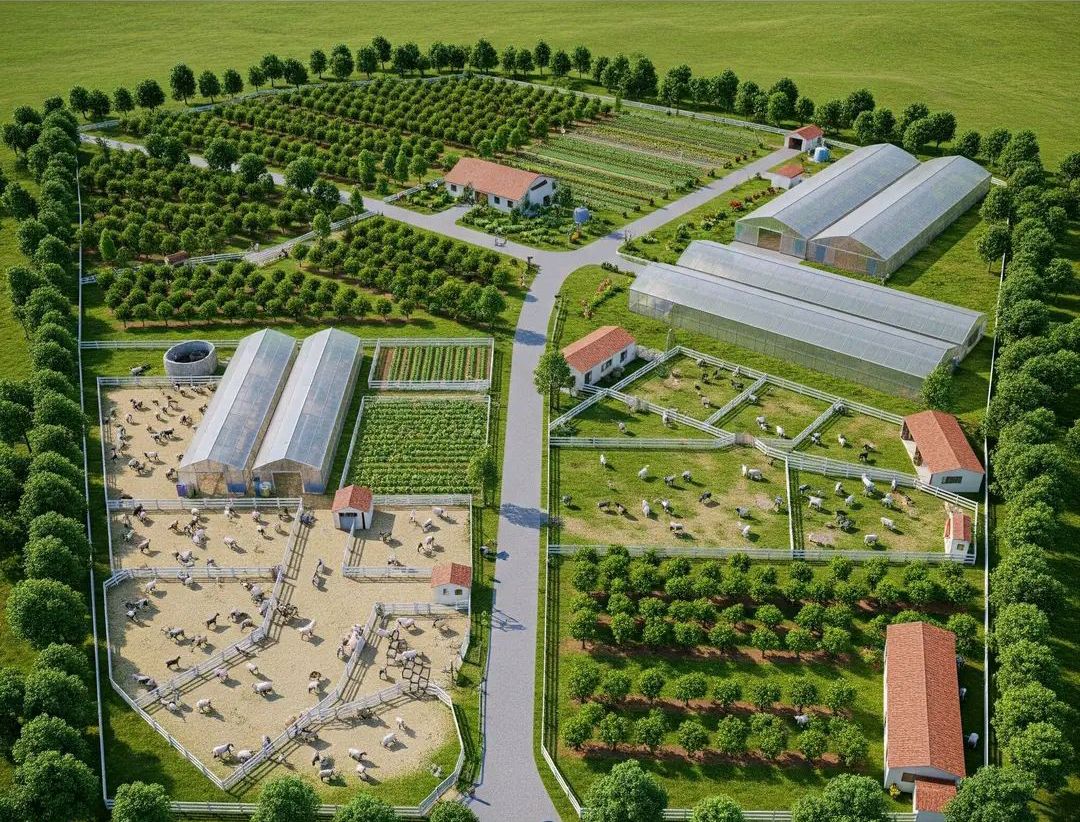
Look at this aerial view and take a moment to absorb everything you see. An orchard of fruit trees lining the boundaries. Greenhouse structures for controlled crop production. Open vegetable gardens in neat rows. Livestock pens with cattle and goats grazing. Dedicated animal housing. Pathways connecting every section with purpose and order. This is not several farms, this is ONE farm operating as a complete, self-sustaining ecosystem. This is Integrated Farming System, and it represents the smartest way to farm in the modern world.
What Is Integrated Farming?
Integrated Farming System (IFS) is an approach that deliberately combines multiple agricultural enterprises on the same piece of land so that each component supports and benefits the others. Crops feed animals. Animal waste fertilises crops. Greenhouse production extends growing seasons. Orchards provide shade, windbreaks, and fruit income simultaneously. Nothing is wasted. Everything has a purpose.
What This Farm Is Doing Right
Looking at this layout, several brilliant decisions stand out. The fruit orchard runs along the outer boundary, acting as a natural windbreak protecting inner crops while generating fruit income. The greenhouses allow year-round production of high-value vegetables and seedlings regardless of weather conditions outside. The open vegetable beds produce fresh crops for markets and household consumption. The livestock section with what appears to be cattle and goats provides manure that cycles back as organic fertiliser for the crops, dramatically reducing the need for expensive synthetic fertilisers. The structured pathways between sections allow efficient movement of labour, equipment, and produce without damaging crops or disturbing animals.
Why Every Farmer Should Consider This Model
The greatest vulnerability of single-enterprise farming is total dependence on one income stream. If your only crop fails or prices collapse, everything collapses with it. Integrated farming builds resilience. When crop prices fall, livestock income sustains the farm. When animal feed costs rise, on-farm crop production reduces the feed bill. The farm essentially insures itself.
Beyond financial resilience, IFS dramatically improves soil health through organic matter cycling, reduces pest and disease pressure through biodiversity, and maximises income per acre of land far beyond what monoculture farming achieves.
Starting Your Own Integrated System
You do not need to replicate this entire layout tomorrow. Start with what you have. Add poultry to your vegetable garden. Plant fruit trees along your fence lines. Use animal manure to build your compost. Each small integration step moves you closer to a farm that is productive, profitable, and sustainable across all seasons.
This image is not just a beautiful farm. It is a blueprint.
Study it. Plan it. Build it.
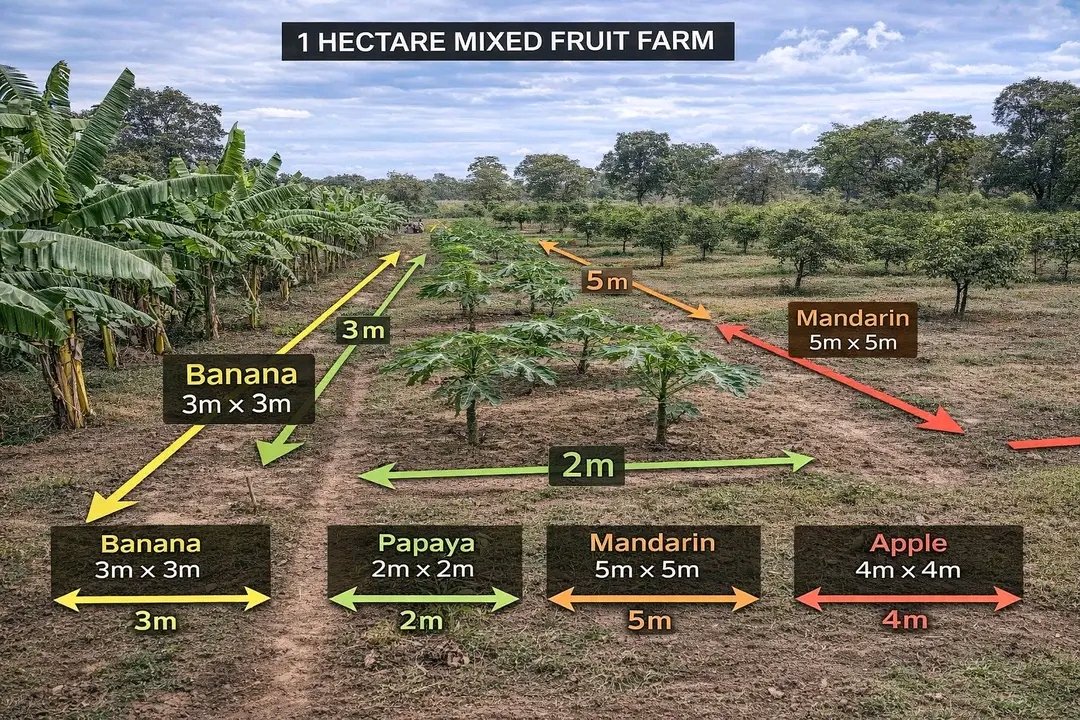
Spacing is a key factor in achieving high yields and healthy plant growth in a mixed fruit system. Each crop requires enough space to access sunlight, nutrients, and water without competition. Bananas should be spaced at 3 meters by 3 meters, papaya at 2 meters by 2 meters, mandarin at 5 meters by 5 meters, and apples at 4 meters by 4 meters. Proper spacing improves air circulation, reduces disease risk, and allows easy movement for management practices such as weeding, spraying, and harvesting.
dreck