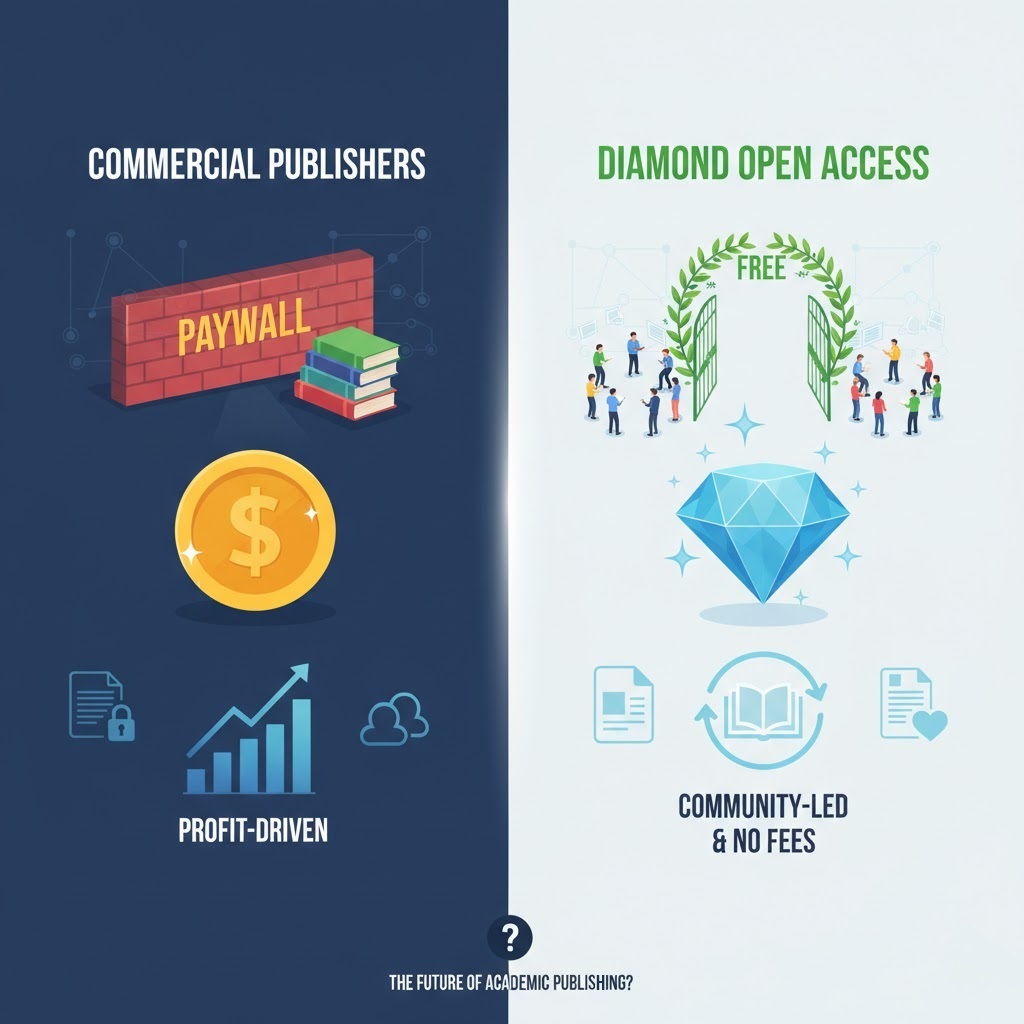
The future of scholarly publishing is at a crossroads! 🚀In 10 years, what role will commercial publishers💰play compared to non-commercial, Open Access journals💎Our journal is launching a vital survey. Share your insight 👉https://t.co/6ouRxmVzDn
Want to learn about recent updates in multiple sclerosis research? New insights into susceptibility and disease progression - Check out this interesting review article: https://t.co/NCLI8atT7P
@DGNN_eV@JungeNPath
Anything can be said in one minute or in one hour, or written down on one page or on one hundred pages. Brevity is an advantage for authors, readers and editors, so any interesting neuropathological data can be submitted as a letter to FNP, like this one https://t.co/oZixkaEc9Y
Publish with Springer and you will be like Einstein. Ore more probably, like a publisher who is interested in show business and marketing rather than in science.
I hypothesize that expressing a view that contradicts the leading opinion has become increasingly difficult. And it reduces the “price“ of the deviant scientist as expressed in scientific currencies, i.e. impact points, number of cooperations, amount of funding and reputation.
I have been surprised that so few Opinion Piece articles are submitted to Free Neuropathology, given that this is a unique type of article and many (lay) people still believe that controversial discussions represent an integral part of science.
Meanwhile I feel there are actually less controversies in neuropathology than decades ago. This is remarkable because with increasing knowledge the number of unresolved questions has increased, and because virtually all neurological diseases are far from being understood.
Free #Neuropathology is happy to publish papers of any length in any format. Look at this one with 99 pages and 1,561 references: https://t.co/Wy5DVDHhUc We encourage free formatting -- Insisting on rigid formal requirements like most publishers do is counterproductive.
Fascinating autobiography by Clive Harper about his life in neuropathology and beyond: Just published in the Reflections series of Free #Neuropathology https://t.co/wuctz8uS5e
A new study from UF Gainesville shows that soluble brain homogenates from diverse human and mouse sources preferentially seed diffuse Aβ plaque pathology when injected into newborn mouse hosts: https://t.co/YqsAoTHTxz
#Neurodegeneration#Alzheimer#Neuropathology