Medical history was just made.
Researchers in the US have officially cracked the code on reversing diabetes. Instead of relying on constant monitoring and external injections, they successfully jumped-started the body's natural defense systems.
The breakthrough centers on waking up dormant pancreatic beta cells. By reactivating these specific cells, the body can organically resume manufacturing its own insulin supply.
It is a monumental shift from managing a lifelong condition to actually biological restoration.
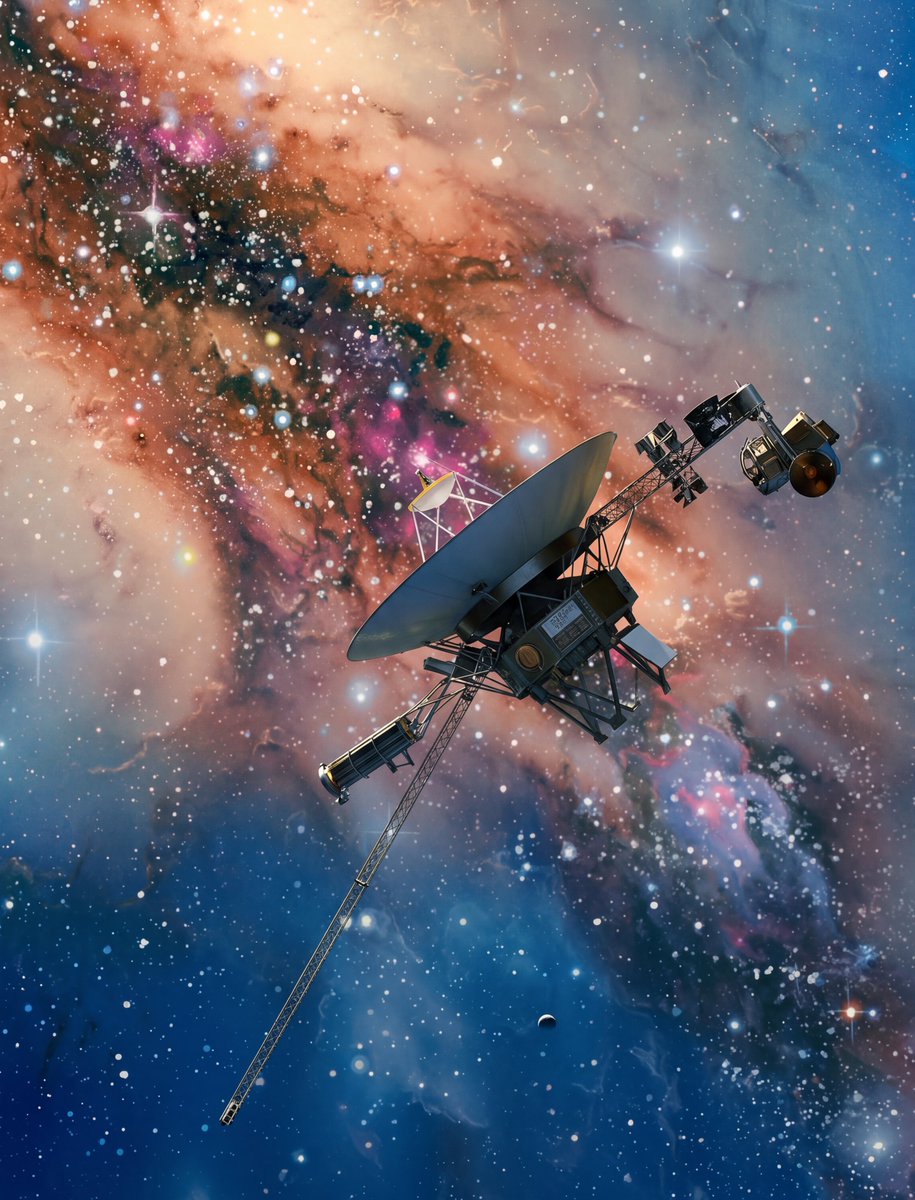
🚨: Voyager 1 is now so far from Earth that a signal traveling at the speed of light takes 23 hours, 32 minutes and 35.444 seconds to reach it — so when engineers send a command, they can wait nearly two days to know whether the spacecraft responded.
The Oort Cloud: Our Solar System’s Invisible Frontier
Far beyond the planets, at the outermost edge of the Sun’s domain, lies a realm so vast and remote that it challenges the imagination: the Oort Cloud.This enormous spherical shell of icy comets and frozen debris forms the true boundary of our solar system. While Neptune orbits at about 30 AU and Pluto at roughly 40 AU, the Oort Cloud begins thousands of astronomical units from the Sun and may extend out to 100,000 AU or farther. (One AU — the average Earth-Sun distance — is roughly 150 million kilometers.)To grasp this scale: light, traveling at 300,000 km per second, takes just eight minutes to cross one AU. Yet it requires weeks to reach the inner edge of the Oort Cloud and more than a full year to arrive at its outermost fringes — over one light-year away.Human technology barely scratches this frontier. Voyager 1, our most distant spacecraft, would still need roughly 300 years just to reach the inner Oort Cloud and another 30,000 years to cross https://t.co/R6T3FjqdHD, the Sun’s gravitational grip grows incredibly weak. Icy bodies drift in a loosely bound swarm, easily nudged by the gravity of passing stars or the subtle tides of the Milky Way itself. Occasionally, one of these frozen wanderers is disturbed from its ancient orbit and sent plunging inward — becoming the long-period comets that streak dramatically across our night skies millions of years later.The Oort Cloud isn’t just far away; it represents a conceptual edge. Our solar system doesn’t end neatly at the planets or even at the Kuiper Belt — it fades gradually into interstellar space across a volume so immense that it underscores both our isolation and our subtle connection to the rest of the galaxy.A vast, invisible reservoir of ice and history, silently guarding the outer limits of the Sun’s realm — the Oort Cloud reminds us just how breathtakingly large our cosmic backyard truly is.
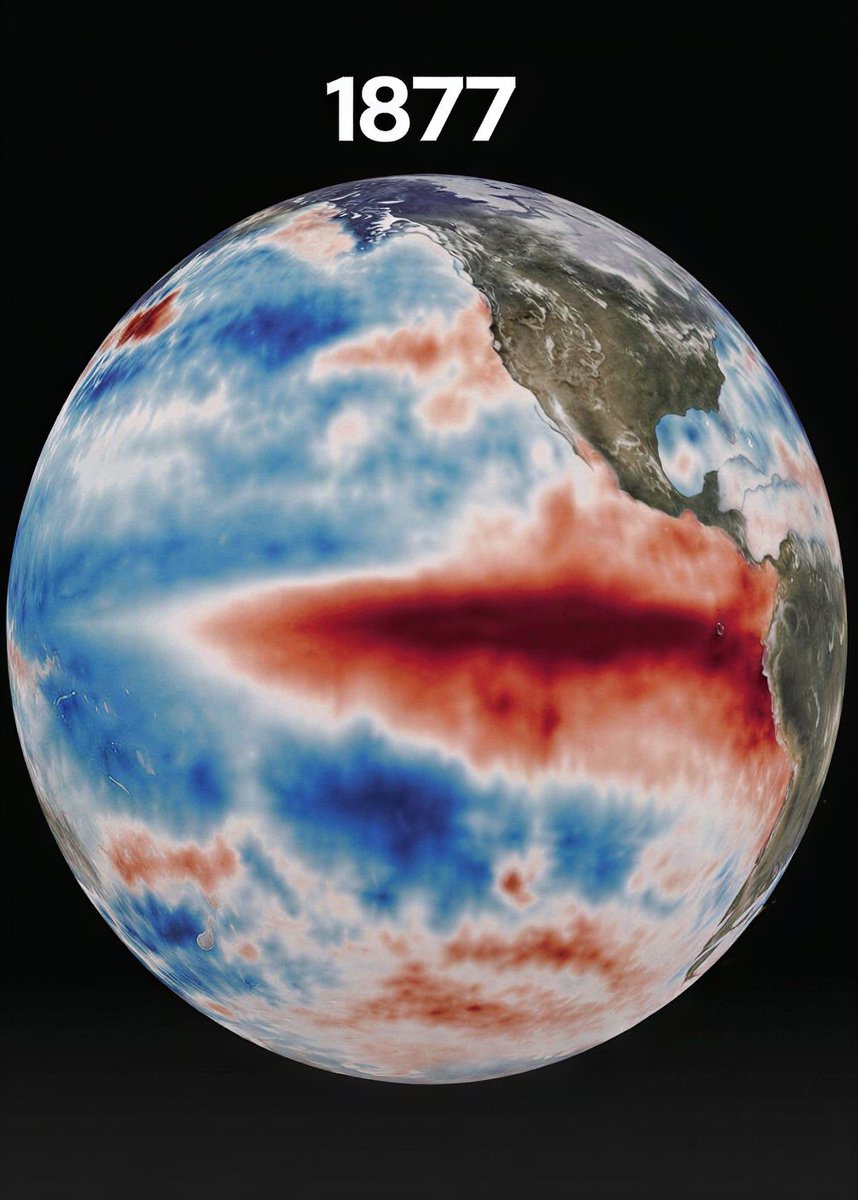
BREAKING🚨: Earth just entered intense weather cycle and could be the strongest ever recorded
The 2026 El Niño is shaping up to be the deadliest since 1877 — the year famines killed more than 50 million.
Forecasters are tracking ocean temperature spikes of 2 to 3 degrees Celsius. That's not a minor uptick. That's the signature of a once-in-150-years event.
Per LiveScience: a "Super" El Niño is now the most likely outcome by year's end. The human cost could be staggering.
It's a battle at every turn on the tight streets of Detroit!
2026 Detroit Chevrolet Sports Car Classic
🟢: Saturday, MAY 30 | 4:00PM ET
📺: Peacock, NBCSN
🌍: IMSA YouTube Live, IMSA .tv
📻: IMSA Radio
That’s it 😤 A really tough one to take. From the lead, our car suffered a broken driveshaft, ending our fight for the win. Thank you all for your support throughout the weekend 🙏