“Das Großartige an der Aufklärung bestand ja von Anfang an darin, dass
rationale Argumente ihren Wert unabhängig davon haben, wer sie äußert.”
Slavoj Žižek
Untersuchung in den USA gestartet:
Der ehemalige US-Außenminister Anthony Blinken und sein Assistent James O'Brien sollen zusammen mit dem ehem. rumänischen Außenminister Luminița Odobescu darauf hingewirkt haben, die rumänischen Behörden zur Annullierung der Wahlen zu bewegen.
Read first
Part 1:
Challenging False Narratives About Syria
I will address the false narrative perpetuated by much of the Arabic and Western media, which seeks to distort the history of Syria and the reasons behind Bashar al-Assad’s foreign support.
Many attempt to oversimplify the situation by reducing it to a dichotomy of "Assadists" versus "freedom fighter supporters." This binary framing is misleading and false.
There are those who supported and continue to stand with Bashar al-Assad for various personal or political reasons. Additionally, many supported the Syrian government under Assad because Takfiri groups - ISIS (led by Abu Mohamad al-Julani, the new moderate HTS leader in his 2024 version - not to doubt but for history purpose) had plans to take over Iraq, Syria and Lebanon and impose their extremist agenda.
the Takfiri killed first many Iraqi, Syrians and Lebanese before Iran and Hezbollah was involved fighting on Syrian territories even if many suicide attacks were carried out in Lebanon before any Hezbollah involvement.
ISIS, initially known as Al-Qaeda in Iraq, sent Abu Mohammad al-Joulani to Syria before 2011 with a staggering $1 billion to lay the groundwork for establishing a caliphate. The group had already honed its strategy in Iraq, turning the conflict there into a sectarian Sunni-Shia war under the leadership of Abu Musab al-Zarqawi, who was later killed. After Zarqawi’s death, several emirs succeeded him until Abu Bakr al-Baghdadi rose to power.
It was Abu Bakr al-Baghdadi who dispatched al-Joulani to Syria with a clear mission: to transform Syria, referred to as "the land of Nusra," into "the land of Jihad." To achieve this, numerous radical preachers were spread throughout Syria, exploiting its role as a transit point for jihadists travelling to Iraq to fight against the US occupation. This movement was facilitated by Assad himself after US Secretary of State Colin Powell warned him during a 2003 visit that Syria could face the same fate as Iraq unless it cooperated.
While the early demonstrations in Daraa marked the beginning of the uprising and the Syrian government’s heavy-handed response was indeed brutal, groups like Jabhat al-Nusra (ISIS at the time) were already preparing to exploit the chaos and step in as major players.
Iran and Hezbollah’s Entry into Syria
Iran and Hezbollah launched their first major military operation in Syria in 2013, focusing on the town of Qusayr, two years after Jabhat al-Nusra’s first attack. On 23 December 2011, the group carried out twin suicide car bombings targeting Syrian security facilities in Damascus, killing 44 and injuring 166. Jabhat al-Nusra claimed responsibility for this act of terrorism.
By that time, sectarian tensions had escalated, with Shia communities in Lebanon and Iraq becoming frequent targets of attacks. This sectarian conflict was fuelled by financial and logistical support from various Arab countries, Turkey, the United States, the United Kingdom, and other NATO allies.
Major Arrests of Al-Qaeda-Linked Operatives in Lebanon
2002: Arrest of Al-Qaeda Suspects
Details: Lebanese authorities arrested several individuals accused of belonging to Al-Qaeda and plotting attacks against Western targets, including embassies, businesses and Shia dominated areas.
2005-2006: Al-Qaeda-Linked Plots
Details: Al-Qaeda-affiliated groups, including Abd al-Rahman al-Masri’s network, were linked to a series of failed bombing plots targeting Lebanese Shia areas and UN peacekeeping forces in southern Lebanon.
Nahr al-Bared Conflict Aftermath – 2007
Details: During and after the Lebanese Army's battle with the Fatah al-Islam group in the Palestinian Nahr al-Bared refugee camp, Takfiri elements conducted bombings and attacks in northern Lebanon.
Tripoli Bombings – August 2008
Details: A car bomb targeted a bus carrying Lebanese soldiers in Tripoli, a Sunni-majority city with a history of sectarian tension.
Casualties: 15 people killed, including 9 soldiers.
Bir Hassan, Beirut (Iranian Embassy Attack) – 19 November 2013
Details: Two suicide bombers targeted the Iranian Embassy in the Bir Hassan neighbourhood of Beirut.
Casualties: 25 people killed, over 150 injured.
Responsibility: Abdullah Azzam Brigades (linked to Al-Qaeda) claimed responsibility, citing Hezbollah’s involvement in the Syrian conflict.
Haret Hreik, Beirut – 2 January 2014
Details: A suicide car bomb exploded in the predominantly Shia suburb of Haret Hreik in southern Beirut, a Hezbollah stronghold.
Casualties: 5 people killed, over 75 injured.
Responsibility: Jabhat al-Nusra claimed responsibility.
3. Haret Hreik, Beirut – 21 January 2014
Details: Another suicide car bombing occurred in Haret Hreik, near the site of the earlier attack.
Casualties: 4 people killed, 35 injured.
Responsibility: Al-Qaeda-affiliated groups were suspected.
Hermel, Bekaa Valley – 16 January 2014
Details: A suicide bomber detonated a vehicle at a government building in Hermel, a predominantly Shia area in the Bekaa Valley.
Casualties: 4 people killed, dozens injured.
Responsibility: Jabhat al-Nusra claimed responsibility.
Hermel, Bekaa Valley – 22 February 2014
Details: A suicide car bomb targeted a busy checkpoint at the entrance to Hermel.
Casualties: 3 people killed, 15 injured.
Responsibility: Jabhat al-Nusra claimed responsibility, citing Hezbollah's support for Assad in Syria.
Bir Hassan, Beirut – 19 February 2014
Details: Twin suicide bombings targeted an Iranian cultural centre in the Bir Hassan neighbourhood.
Casualties: 11 people killed, over 100 injured.
Responsibility: Abdullah Azzam Brigades claimed the attack, citing Iran and Hezbollah’s roles in the Syrian war.
Baalbek, Bekaa Valley – 17 June 2014
Details: A suicide bomber detonated a vehicle at a Hezbollah checkpoint in Baalbek.
Casualties: Several Hezbollah members were killed or injured.
Responsibility: Takfiri groups linked to Jabhat al-Nusra.
Bourj al-Barajneh, Beirut – 12 November 2015
Details: Two coordinated suicide bombings targeted a busy market in the Shia-majority neighbourhood of Bourj al-Barajneh in southern Beirut.
Casualties: 43 people killed, over 200 injured.
Responsibility: ISIS claimed responsibility, stating the attack was aimed at Hezbollah supporters.
Jabhat al-Nusra’s Attacks in Syria: Not a Revolution
Below is a timeline of attacks carried out by Jabhat al-Nusra in Syria. These acts of terror should not be conflated with the broader Syrian revolution:
23 December 2011 – Damascus Bombings: Twin suicide car bombs targeted Syrian security facilities, killing 44 and injuring 166.
10 February 2012 – Aleppo Bombings: Twin bombings hit military and security buildings, killing 28 and injuring 235.
10 May 2012 – Damascus Bombings: Two powerful explosions near a military intelligence complex killed 55 and wounded 400.
3 October 2012 – Aleppo Bombings: Explosions in Saadallah al-Jabiri Square caused significant casualties.
15 January 2013 – Aleppo University Bombings: Explosions killed 87. Jabhat al-Nusra was reportedly involved.
21 February 2013 – Damascus Bombing: A car bomb near the Ba'ath Party headquarters killed at least 53.
8 April 2013 – Raqqa Attack: Jabhat al-Nusra fighters ambushed a government convoy, killing and capturing soldiers.
4 August 2013 – Latakia Offensive: An attack on Alawite villages reportedly killed over 190 civilians.
December 2013 – Adra Massacre: Over 32 civilians were massacred in the town of Adra.
March 2014 – Kassab Offensive: The group displaced Armenian Christians in the coastal town of Kassab.
May 2014 – Aleppo Hotel Bombing: The Carlton Citadel Hotel, used as a military base, was destroyed.
March 2015 – Idlib City Capture: The group captured Idlib in a coalition effort.
April 2015 – Jisr al-Shughur Offensive: A strategic victory in Idlib province.
September 2015 – Abu al-Duhur Airbase Siege: The group overran the airbase, capturing soldiers and equipment.
April 2016 – Aleppo Artillery School Attack: An attack resulted in significant military casualties.
July 2016 – Castello Road Offensive: The group sought to cut off a vital Aleppo supply route.
September 2016 – Southern Aleppo Assault: Jabhat al-Nusra led an assault in government-held areas.
October 2016 – Hama Offensive: The group captured towns and military installations.
December 2016 – Aleppo Evacuation Convoy Attack: Civilians and fighters were attacked during evacuations.
January 2017 – Idlib Suicide Bombings: Suicide bombings targeted rival rebel factions.
The above timeline of terror attacks demonstrates that Jabhat al-Nusra’s role in Syria was never about revolution but about spreading chaos and fostering a jihadist state. The Syrian conflict’s complexity cannot be reduced to a simple narrative of freedom fighters versus government forces. It is a multifaceted war, involving sectarian strife, regional ambitions, and the machinations of extremist groups. Understanding this reality is essential to countering false narratives and recognising the true dynamics at play.
Part 2 -
The passage from Jabhat alNusra - ISIS to Jabhat alNusra - AlQaeda
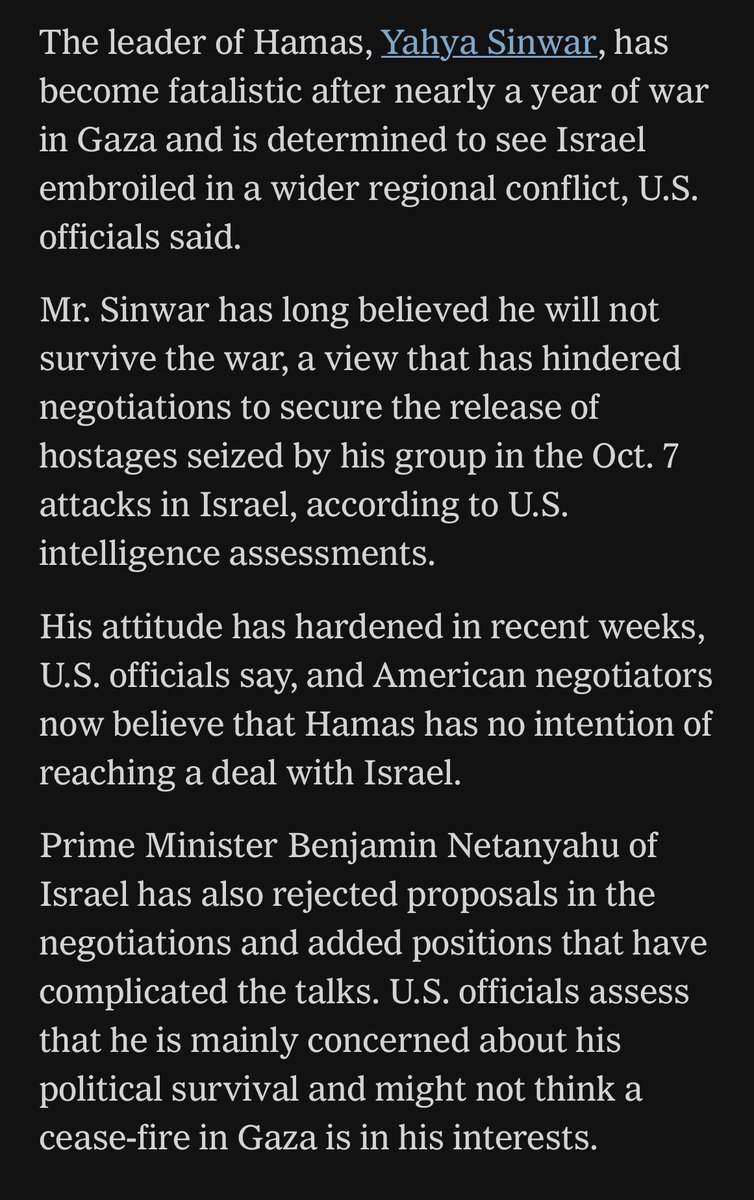
On July 2, Hamas accepted the ceasefire terms proposed by Joe Biden and ratified by the UN Security Council. Benjamin Netanyahu waged a sabotage campaign and torched the deal. Israel then expanded its wars. Let’s check in on latest New York Times coverage of this situation:
My peer-reviewed journal articles along with videos & forensic examinations, testimonies of most wounded protesters at Maidan massacre trial & investigation & their results show that police & at least absolute majority of Maidan protesters were shot by snipers in far-right-controlled Hotel Ukraina and other Maidan-controlled locations.
Ich finde es immer wieder erstaunlich, wie deutsche (H)Ampel-Männer der 🇨🇭 wegen des Krieges in der Ukraine ihre Neutralität vorhalten. Da gibt es offenbar null Kenntnisse über die Gründe für ein kleines Land, das zwischen europäischen Großmächten eingekeilt war. Neutrale Staaten
Ich habe vor einigen Tagen darüber spekuliert, dass es bei #CreditSuisse Krise (ähnlich wie bei #Wirecard) auch um geopolit. Konflikte (Neutralität der 🇨🇭 im Ukraine Krieg und Sanktionen) ging 👇🏽 US Ermittlungen liefen schon vor Krise (gab es vlt gezieltes Leak im Finanzmarkt?)
Selbst der ehemalige Chef von #CreditSuisse und #UBS Oswald Grübel kann nicht fassen, dass die Bank nicht einfach verstaatlicht wurde 🤷🏽♀️ https://t.co/SpmTKZDRuz
I wrote this letter recently to my friends in the antiwar and anti-nuclear movements. I see it’s being circulated, so I’ve decided to share it here. For all of you working on these issues, thank you, and please keep going!
please tell me the white house did not spend the month of february scrambling jets to fire $400,000 missiles at the local hobby club's TWELVE DOLLAR BALLOON
lord have mercy
https://t.co/4D7DaTncvT
Wow! Jeffrey Sachs: US government "definitely contributed to the overthrow of Yanukovych... I know this from inside, not just from outside. I know from top people involved in these issues." Media & self-proclaimed supporters of Ukraine would be silent. https://t.co/vqcKyAJbcN
In 2020, Pelosi was in the same position as McCarthy is now: with a small majority, every Dem member had leverage to extract concessions.
Progressives were too subservient even to honor activists' request: demand a floor vote on Medicare For All that would require Dems to vote.
The US gov, through the FBI, had the censorship units at major internet platforms on speed dial.
Public figures that claimed such a year ago were cast out of polite society as lunatics. When it is now established to be true, the same polite people now shrug: "Trust the ruler."
Als die Schweizer Armee an der Neutralität zu zweifeln begann
1992 kam das Militärdepartement zum Schluss, die Neutralität sei zum Sicherheitsrisiko geworden.
https://t.co/4s28SKOdgL @srfnews#dodis#diplomatischeDokumente
This thread is a remarkable case study on how the FBI overcame a major tech company's resistance to running favors for the Feds by basically running an influence operation against key staffers—and paying to rent others—until they had the censorship crew eating out of their hands.
Ausgerechnet @nicolabeerfdp schwingt sich jetzt im Fall Eva Kalii zur neuen Antikorruptionsexpertin auf. In meiner Zeit im EU Parlament gab es liberale Abgeordnete, die einzig dadurch auffielen Events für Rolls-Royce auszurichten und sich von denen die https://t.co/6QhCGH2eeH