In 1910, an educator named Abraham Flexner, who held a bachelor's degree in classics and had never studied medicine, was sent by the Carnegie Foundation to inspect every medical school in the United States and Canada.
He visited 155 of them. His report recommended closing most.
What happened next is the foundation of every health system you know today.
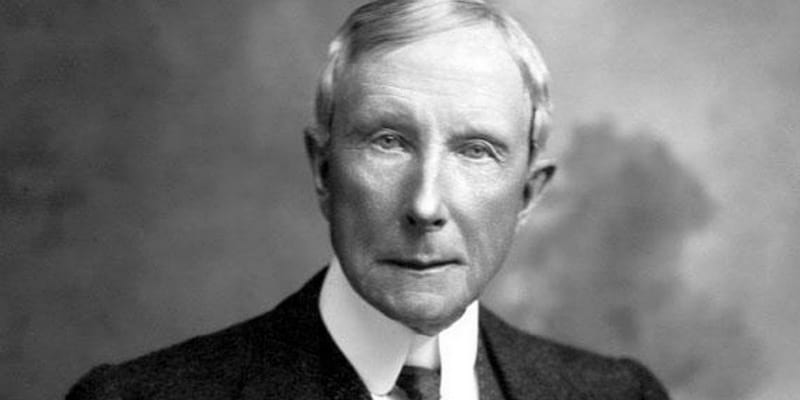
John D. Rockefeller, the founder of Standard Oil and at the time the richest man on Earth, saw an opening. Standard Oil's refining produced vast quantities of coal-tar and petrochemical byproducts. Those byproducts were, conveniently, the raw material from which most early synthetic pharmaceuticals could be made.
Through his General Education Board and the Rockefeller Foundation, Rockefeller directed approximately $50 million, around $10 billion in today's money, into American medical schools. The money came with a condition. The schools had to teach allopathic, drug-based medicine. Anything else was defunded.
Within twenty-five years, more than half of America's 155 medical schools had closed. By 1935, only 66 remained. The schools teaching homeopathy, naturopathy, herbalism, eclectic medicine, and what we would now call nutrition and lifestyle medicine were starved out of existence. Five of America's seven Black medical colleges were closed. Most of the women's medical colleges were closed. The surviving schools all taught one paradigm. They still do.
The petroleum byproduct became the medicine. The medicine became the curriculum. The curriculum became the doctor. The doctor became the prescription pad.
The model that emerged has one structural feature no regulator can legislate away. The pharmaceutical industry earns its revenue when you take a pill. It does not earn revenue when you stop needing the pill. A cure is a one-time transaction. A chronic condition is a subscription.
This is not a conspiracy theory. It is on the income statement. From 2017 to 2024, the average net profit margin of pharmaceutical manufacturers was 23.2%, roughly ten times higher than every other sector of the drug supply chain. The system is performing exactly as designed.
A century after Flexner, the population of the wealthiest country on Earth is fatter, sicker, and on more medication than at any point in human history.
The grass-fed beef, the egg from a hen you can name, the butter, the morning walk, the eight hours of sleep, are all unpatentable.
That is why no oil baron funded a hundred medical schools to teach them.
In 1910, an educator named Abraham Flexner, who held a bachelor's degree in classics and had never studied medicine, was sent by the Carnegie Foundation to inspect every medical school in the United States and Canada.
He visited 155 of them. His report recommended closing most.
What happened next is the foundation of every health system you know today.
John D. Rockefeller, the founder of Standard Oil and at the time the richest man on Earth, saw an opening. Standard Oil's refining produced vast quantities of coal-tar and petrochemical byproducts. Those byproducts were, conveniently, the raw material from which most early synthetic pharmaceuticals could be made.
Through his General Education Board and the Rockefeller Foundation, Rockefeller directed approximately $50 million, around $10 billion in today's money, into American medical schools. The money came with a condition. The schools had to teach allopathic, drug-based medicine. Anything else was defunded.
Within twenty-five years, more than half of America's 155 medical schools had closed. By 1935, only 66 remained. The schools teaching homeopathy, naturopathy, herbalism, eclectic medicine, and what we would now call nutrition and lifestyle medicine were starved out of existence. Five of America's seven Black medical colleges were closed. Most of the women's medical colleges were closed. The surviving schools all taught one paradigm. They still do.
The petroleum byproduct became the medicine. The medicine became the curriculum. The curriculum became the doctor. The doctor became the prescription pad.
The model that emerged has one structural feature no regulator can legislate away. The pharmaceutical industry earns its revenue when you take a pill. It does not earn revenue when you stop needing the pill. A cure is a one-time transaction. A chronic condition is a subscription.
This is not a conspiracy theory. It is on the income statement. From 2017 to 2024, the average net profit margin of pharmaceutical manufacturers was 23.2%, roughly ten times higher than every other sector of the drug supply chain. The system is performing exactly as designed.
A century after Flexner, the population of the wealthiest country on Earth is fatter, sicker, and on more medication than at any point in human history.
The grass-fed beef, the egg from a hen you can name, the butter, the morning walk, the eight hours of sleep, are all unpatentable.
That is why no oil baron funded a hundred medical schools to teach them.