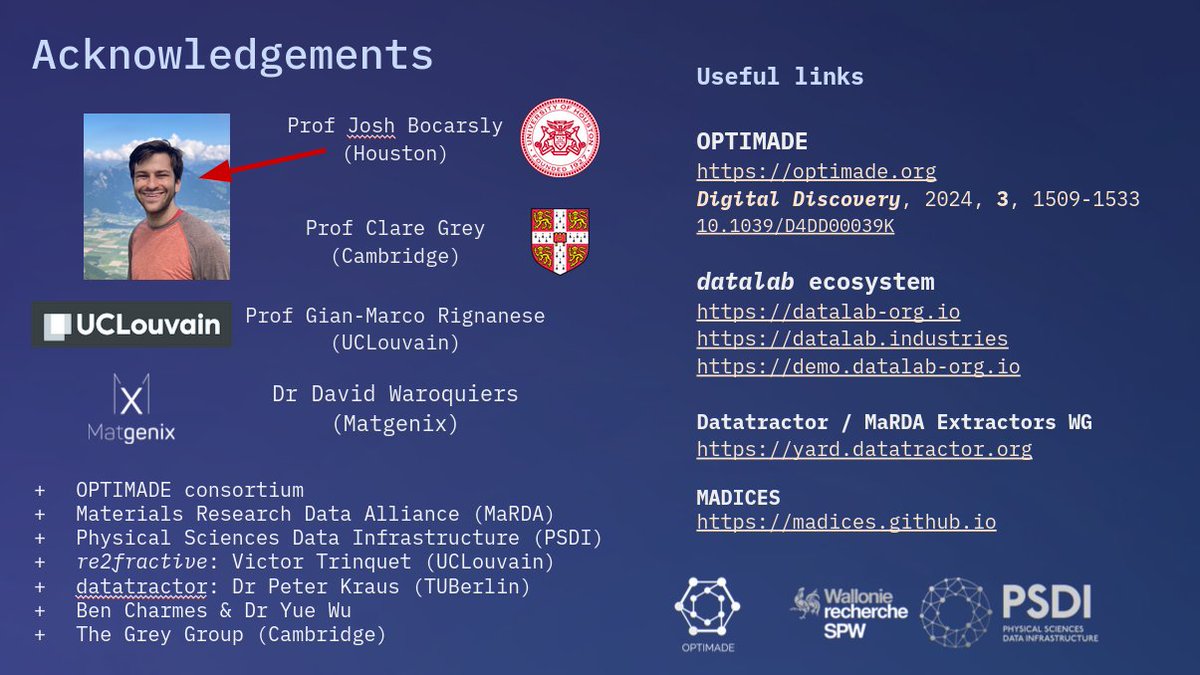
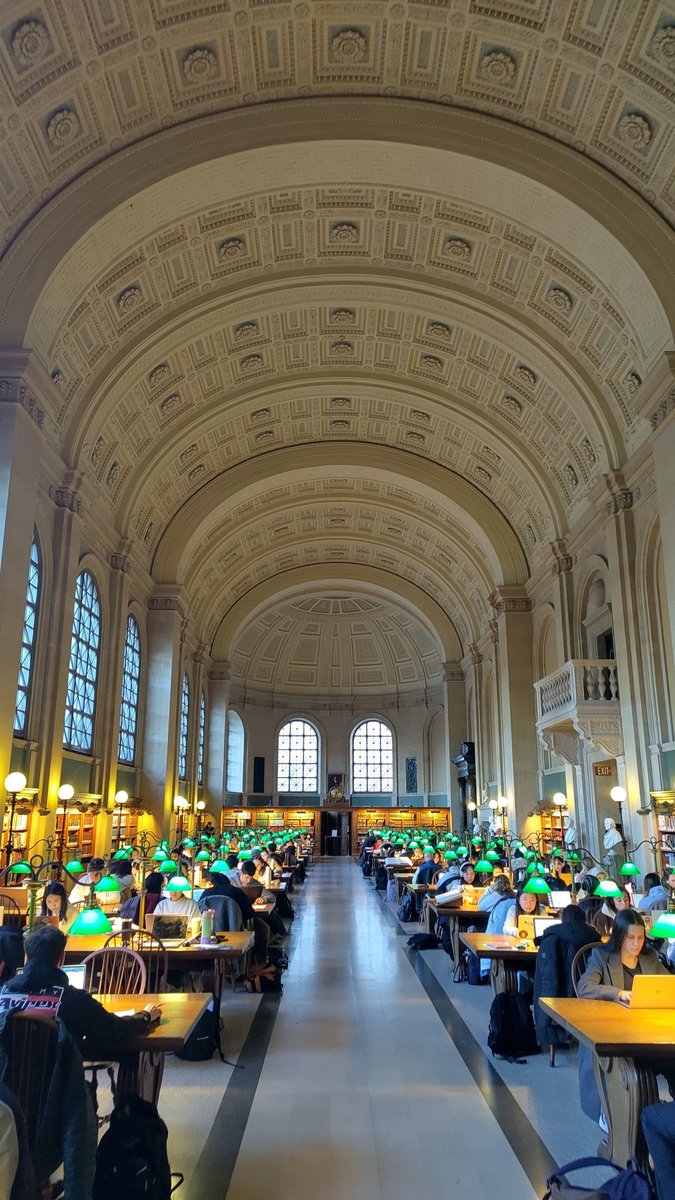
Managed to croak my way through my talk with cold sweats (ill, not hungover -- honest), DM/email if you want the slides, otherwise here's some useful links
In sunny Boston for #f24mrs! Just putting the "finishing" touches on my talk from the public library ready for Tuesday at 13:30. Come listen to me talk about OPTIMADE, datalab and their relevance to broadening access to AI in materials research!
For those of you looking for a big helping of LLMs for Thanksgiving, here you go! 🤖🦃 (link in next post)
In this work, we release 34 examples (each with open code!) demonstrating applications of LLMs in materials science and chemistry across:
🔶molecular and material property prediction;
🔷molecular and material design;
🔶automation and novel software interfaces;
🔷enhanced scientific communication and education; 🔶research data management and automation;
🔷hypothesis generation and evaluation; and
🔶knowledge extraction and reasoning from scientific literature
@anuroopsriram@bkmi13@RickyTQChen@bwood_m Interesting work! Will you be releasing the new crystal structures? Once out there, there's a whole raft of us who want to screen them for our favourite properties to prioritise some for expt. validation
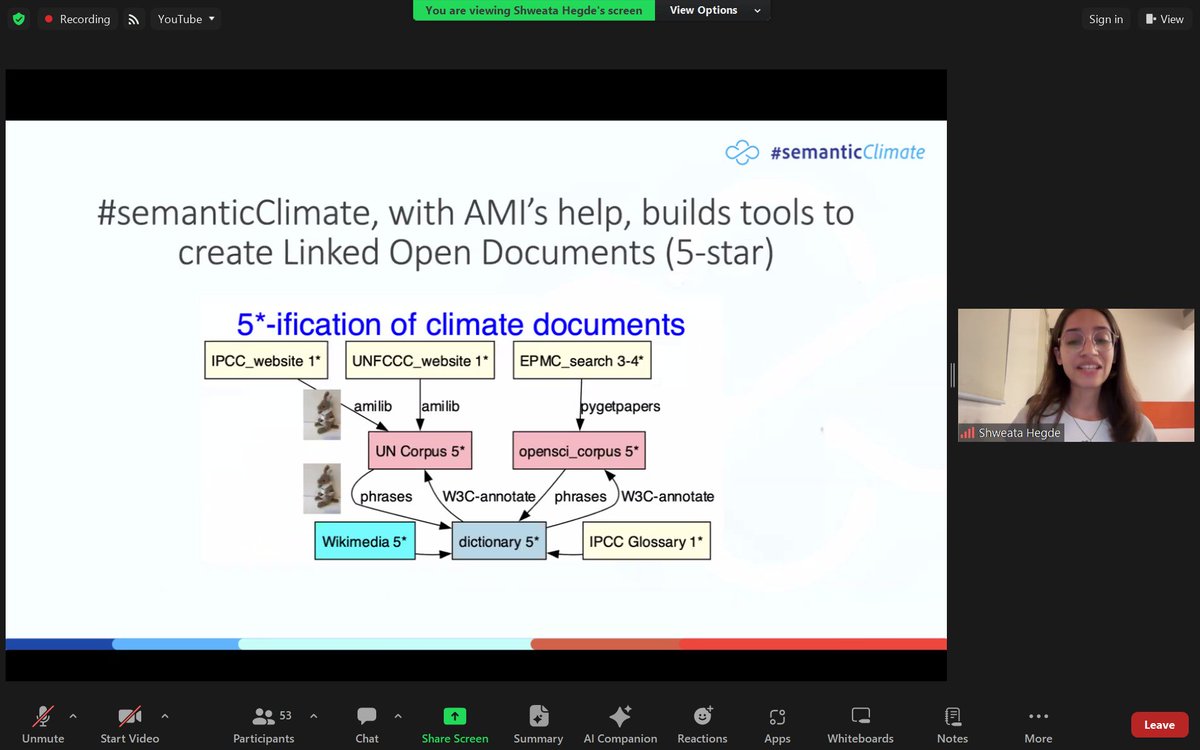
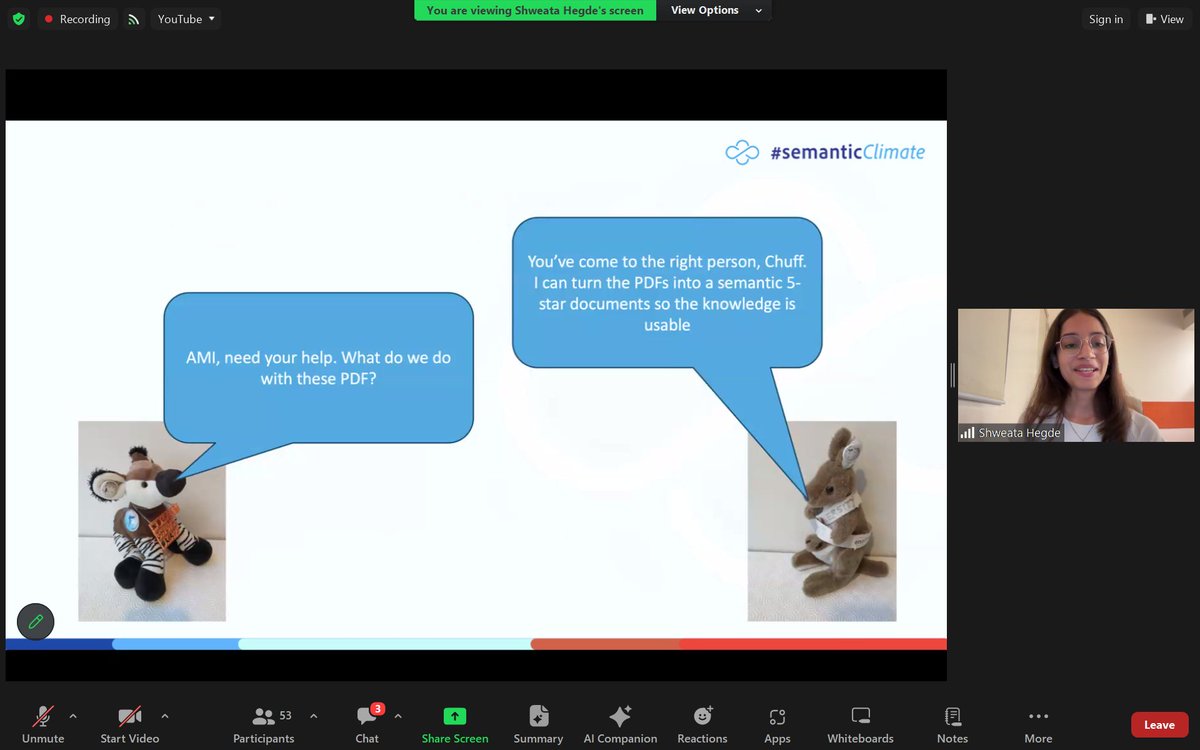
Presented #semanticClimate's work in 5-starification of climate documents for its sustainable future. My takeaway from the panel: #TheTechWeWant is simple, plural and fosters community. Software should be rooted around the planet with goals other than economic growth. @OKFN
@MJCliffe Not sure it's entirely what you want but I've worked with Xerus in the past, which wraps GSAS-II with a Bayesian optimizer and can screen OPTIMADE and other dbs (https://t.co/EJ0Pbze6Fq), or the new iteration of fullprofapp is open source (https://t.co/NGAM525o2J)
@digital_rsc If you are interested in getting involved we still hold open monthly meetings online (details at https://t.co/NNECMMScwf), and fingers crossed there will be another CECAM workshop next year
https://t.co/bWDDkef6VU
The workshop "Open Databases Integration for Materials Design" returns to CECAM-HQ (& online) this week!
The @optimade_ consortium was first established to create a comprehensive #API capable of accessing all #materials#databases, to address the issue of scattered databases.
Our paper on the latest OPTIMADE developments is now in print in @digital_rsc (https://t.co/2q6oISXzGG), accompanying the latest version of the specification (changelog: https://t.co/zpyP8h8sFc) [1/2]
The large-scale use and exchange of data is a prerequisite for AI in materials research. A major international collaboration, including #CECAM and @nccr_marvel, now presents an extended version of the #OPTIMADE standard.
Read more ➡️ https://t.co/D3mjtlS4cK
@digital_rsc As always, thanks to all the other authors and contributors who have volunteered their time over the past years. Looking forward to seeing how people build on our efforts! [3/2]
@bkmi13 Lovely work! Do you plan to release any of the DFT stable structures your model has already generated? We have some nice tools for doing this within the OPTIMADE consortium (https://t.co/dpv11djIcT) which can (in principle) get them in front of experimentalists for verification
@Andrew_S_Rosen@Robert_Palgrave@MolecularXtal I would add that some of the most egregious examples in the first release of structures were pathological even under DFT (numerical issues from overlapping atoms etc), I think these have since been removed from the Google drive data release