Eddie Murphy and Nicki Bella spotted having a nice time and sharing a kiss shortly after split with 34-year-old model girlfriend. Never knew Nicki Bella and Eddie murphy have a thing together😳
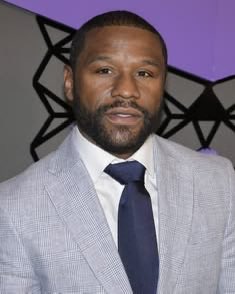
American boxer, Floyd Mayweather reveals why he cut ties with his daughter, Iyanna Mayweather after she got pregnant for rapper NBA Youngboy for the second time;
“She had a baby for the n!gga in 2021 and he ended their relationship the same year, i told her to move on and never have anything to do with him again, then last month I was in my house when I got a call from her and she told me that she got pregnant again for the same guy, this pissed me off real bad, I told her to never speak with me again and I also put a stop to her $750k monthly allowance from me”
Andrew Garfield and Monica Barbaro has reportedly broken up. Yesterday at the LACMA Art+Film Gala, a photographer asked Andrew to stand beside her for picture, he got visibly upset and adjusted even further from her, this was after they arrived in separate cars, they only started dating early 2025, is this really the end, and what is the cause?
I kept wondering why such a sweet and charming guy like Ricky Alvarez would be in a relationship with Ariana, but I eventually realized he might just be in it for the money. It makes me wonder whether he genuinely loves her or is simply enjoying the paycheck that comes with being by her side.
Eddie Murphy and Nicki Bella spotted having a nice time and sharing a kiss shortly after split with 34-year-old model girlfriend. Never knew Nicki Bella and Eddie murphy have a thing together😳
Actor Omari Hardwick shared that Denzel and Pauletta Washington gave him a place to stay and helped him keep his car when he was struggling to make it in Hollywood. After getting back on his feet, Hardwick repaid them, and the family framed his cheque.
In 1936, a man named William Branch sat down to be interviewed. He was 86 years old, and what he remembered spanned nearly a century of American history that was about to disappear forever.
He was born enslaved on May 13, 1850, on a Virginia plantation where 75 people lived in bondage, growing tobacco and cotton, sleeping on dirt floors in log houses. He made clothes for the enslaver's family. He ate hoecakes baked in hot ashes. This was simply his reality for eleven years.
Then one day in 1861, Union soldiers arrived. A sergeant lifted young William onto his horse and rode with him all the way to Washington, D.C. Just like that, a child who'd been considered property was carried toward freedom.
For nine years, he worked as a houseboy in the capital, learning what freedom meant. And then at age 20, William Branch made a choice: he enlisted in the United States Army.
He became a Buffalo Soldier—one of the Black cavalrymen who earned that name from Plains Indians who saw their courage and spirit. These were segregated regiments, mostly formerly enslaved men, serving a country that had barely acknowledged their humanity.
William marched across Texas carrying his gun and bedroll, sleeping under trees, eating hardtack and hunting deer when they could find them. He fought in the brutal frontier wars—conflicts where the U.S. government was systematically destroying Indigenous peoples' ways of life.
This is where his story becomes uncomfortable and important: a man who'd escaped slavery was now serving the same government that had enslaved him, fighting against Indigenous peoples who were also being destroyed by that government.
Some Buffalo Soldiers deserted to join Native tribes, recognizing the parallel struggles. Others served with pride, seeing military service as one of the few paths to dignity in a country that denied them almost everything else.
There are no simple heroes in this story. Only human beings navigating impossible choices in impossible times.
At the end of his interview, someone asked William if he liked being in the army.
His answer was just eight words: "I'd rather be in the army than a plantation slave."
Think about what that means. He'd seen terrible violence. He'd lost fellow soldiers. He'd slept on frozen ground and been shot at. All of that—every hardship, every danger, every moral compromise—was still better than slavery.
That single sentence tells you everything about how brutal slavery truly was.
After his service, William settled in San Antonio and worked until age made it impossible. By 1936, he was among the last living witnesses to both slavery and the frontier wars.
The Federal Writers' Project interviewed over 2,300 formerly enslaved people between 1936 and 1938, racing against time to capture these voices before that generation vanished. Within a few years, they would all be gone.
William Branch's words survived. His testimony survived. His truth—complicated, painful, and profound—survived.
He described his life without sentimentality or glorification. He told the truth as he lived it: that he was born enslaved, carried to freedom on a soldier's horse, served in morally complex wars, and survived long enough to tell us what he saw.
History is never simple. People who lived through it rarely were either. William Branch was neither just a victim nor just a hero—he was a human being who lived through extraordinary times and left us his voice.
The least we can do is listen to what he told us, honor the complexity of his experience, and remember that the voices of ordinary people who lived through extraordinary times matter most of all.
Because William Branch sat down in 1936 and gave us a gift: his story, in his own words, about survival and choice and what it cost to be free.
And that gift is still here, waiting for us to receive it.