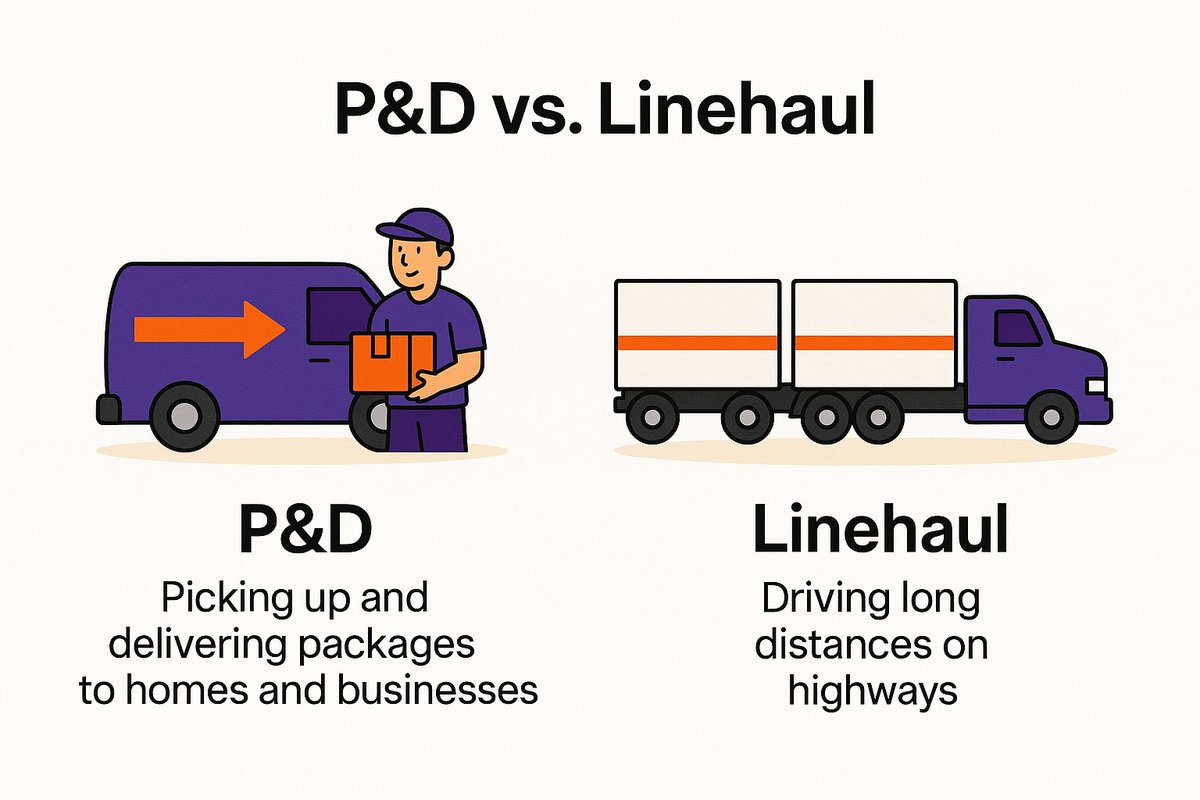
Here’s the simple difference between P&D and Linehaul 👇
P&D contractors = ISPs (they deliver packages).
Linehaul contractors = TSPs (they move trailers between terminals).
And of course… FedEx gave both their own acronyms.
Because why use 3 words when you can use 3 letters?
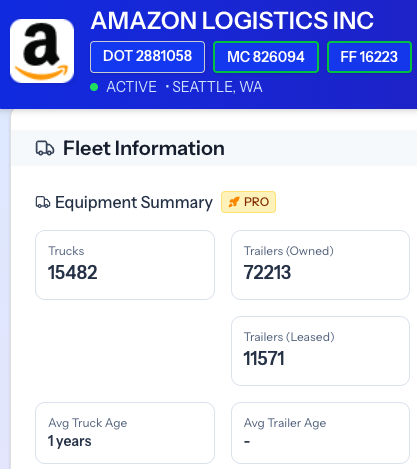
Most of their loads are hauled by Amazon Relay carriers, which means they each run under their own authority.
That's why they have 72k trailers and only 15k trucks.
In comparison, FedEx contractors run under FedEx authority (138k trucks and 90k trailers).
Amazon Logistics' private fleet is one of the safest on the road. Ranking 628 out of 803 in terms of crash frequency.
Amazon's private fleet has a rigorous training and certification process, unlike many on the list that ranked much higher that hire directly from CDL mills.
Want to make trucking safer? Ban CDL mills.
@FreightAlley I don't think this is a fair comparison. We FedEx linehaul contractors run under FedEx authority, so you would need to add all the Amazon Relay capacity.
If you are a FedEx contractor and one of your drivers do this:
- He/She could go to jail if involved in a fatal accident.
- Your contract will be terminated
A FedEx Linehaul contractor isn’t your typical trucking company:
1️⃣ We don’t use our own DOT number — we run under FedEx’s authority.
2️⃣ We don’t hunt for loads — our runs are assigned, not brokered or pulled from load boards.
3️⃣ We get paid weekly — steady and predictable, no waiting on shipper payments.
Not everything is perfect—but it works.
FedEx contractors don’t speak English.
We speak in acronyms.
AO, BC, TSP, ISP, FXG, PGH, MPG, VEDR, DOT, HOS…
Half the time I’m not even sure if I’m running a trucking business or trying to crack a CIA code.
If FedEx ever runs out of acronyms, the whole network might collapse.
Most people think linehaul is about driving trucks.
It’s really about managing:
•fuel
•people
•maintenance
•timing
•cashflow
The trucks are the easy part.