1. Many professional medical society guidelines regarding essentially every chronic disease points to the importance of healthy lifestyle habits. How do you frame that as ignoring?
2. Changing lifestyle habits is notoriously difficult even in the most intensive clinical trial settings. “Telling” somebody to practice healthy habits is not likely to be effective, especially in those who are most vulnerable. Depression, by definition, manifests in difficulty practicing healthy habits. Similarly, it is not effective to “tell” people with obesity to eat less and burn more calories…obviously
3. Healthy lifestyle and medications need not be viewed as mutually exclusive.
4. Any evidence that eating steak cures depression? Curious about this.
🚨FINALLY! The Lean Mass Hyper-Responder 1 Year Data Just Dropped!🚨
https://t.co/7W4ac4jl2b
🫀Most participants showed NO OR MINIMAL or progression of coronary plaque
🫀Neither ApoB nor LDL exposure predicted plaque progression
🫀But plaque predicted plaque progression, leading to the conclusion and Title:
1/10) 🧵This thread will give you some high-level points, direct you to more information, and tell you how 🫵YOU🫵 can help change “the science”
(🔗 links at the end!)
ht/ @realDaveFeldman@AdrianSotoMota@Metabolic_Mind@janellison@bschermd@BudoffMd@khurramn1
Repeating lies endlessly, the fascist leader promises quick solutions and simple answers to complicated problems.
Stream my hour-long special “Rick Steves’ The Story of Fascism in Europe” at https://t.co/IyqHmfNqJx.
Thought provoking trials, but not entirely sure how much weight to put on hospitalizations/symptoms without blinding. We know there is favorable remodeling post TAVR as redemonstrated. This, compared to known hard adverse procedural events (ie pacemaker). Wouldn’t mind the placebo question as much were it not for cost and known procedural risks. High rate and relatively short time to conversion may also go away with blinding.
@RichardAFerraro@JACCJournals Corroborates our experience @WellSpan with PCCT over the last year. Exceptional ability to get actionable answers despite high calcified plaque burden and stents saving patients from unnecessary invasive procedures. Hopefully will promote more excitement for cardiac CT generally!
@VPrasadMDMPH Traveling in-person for interviews (residency and fellowship) really pushed the applicant to showcase their interest because you had to (1) find coverage, (2) pay for hotel/travel, and (3) show up in person. It was not perfect, but it helped both sides in many ways.
@khurramn1 Perhaps QoL metrics should’ve been the primary outcome? I don’t think monitor-measured AF burden is patient-centric or particularly important unless linked to clinical outcomes or QoL.
The first sham-controlled AF ablation trial has been done. Twenty years (and millions of procedures) after we started doing this procedure.
The study has limitations but it is a big step forward. I need to take some time to sort it out.
For now, though, our profession should have been bolder and humbler about this much sooner. #ESCCongress
In my work with @AndrewFoy82@MRuzieh over at @CVtrials I discovered another shocking trial.
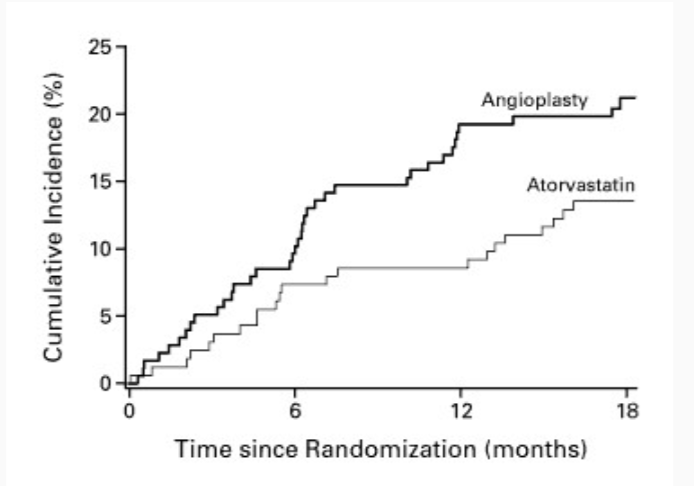
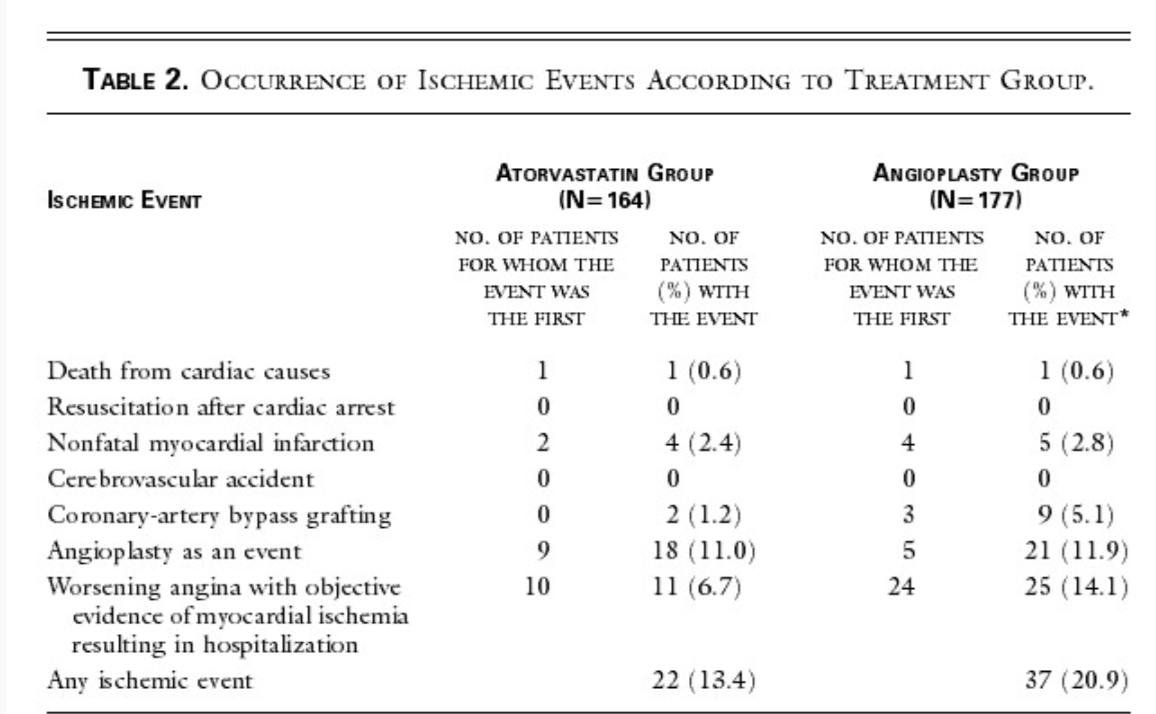
Pts with severe CAD. One group gets PTCA (fixed). One group gets tablet (atorvastatin)
AVERT trial
https://t.co/UVSgbl8PZt
Amazingly -- LOOK AT THIS DATA for major adverse events