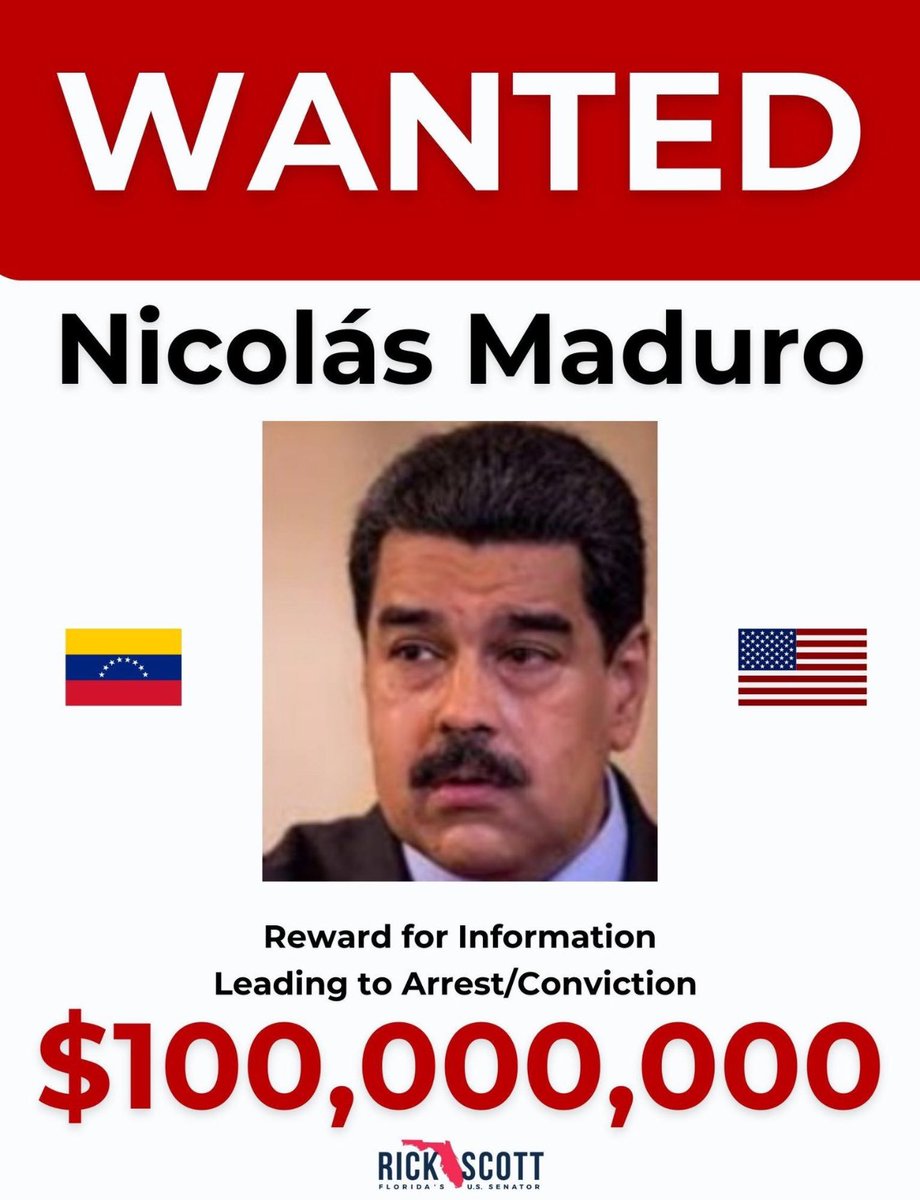
Gracias @SenRickScott y @marcorubio por su arduo trabajo en pro de la libertad para Venezuela. 🇻🇪
Miraflores, hoy más que ayer, está en pánico.
#YaCasiVenezuela@realErikDPrince 🤝
Es el momento de actuar: https://t.co/wVLrk6hLFp
Off Leash update 28 Aug
Venezuela
•Venezuela's opposition called for a fourth round of mass demonstrations at 11 am Caracas time today to demand recognition of its victory in the election that happened exactly one month ago.
•Pres. Maduro refuses to give up his claim that he won the vote - and also refuses to provide proof. Meanwhile, the opposition has offered online tallies confirming its candidate, Edmundo Gonzalez, won more than twice as many votes as Maduro (a figure aligned with exit polls).
•Opposition leader Maria Corina Machado attended the first three major rallies of the past month, and will likely participate today too - despite the threat of being arrested and locked up alongside thousands of Venezuelans that Maduro's goons have detained for infractions as minor as questioning election results on social media.
•Separately, Maduro introduced "profound" changes to his cabinet last night. He shuffled about half of his ministers, but in a way that won't meaningfully affect policy: he rewarded diehard loyalists like VP Delcy Rodriguez and PSUV party leader Diosdado Cabello with expanded roles, and rotated some other allies between key positions.
Iran
•Iran's Supreme Leader, Ayatollah Ali Khamenei, revived long-shot hopes for new nuclear talks with the U.S. by telling his civilian government - now led by reformist president Masoud Pezeshkian - that there's "no harm" in engaging the "enemy."
•Analysts interpreted Khamenei's cautious remarks as hesitant approval for Pezeshkian to proceed with early talks - but under strict red lines drawn out of distrust for "the Great Satan" (as Khamenei and his predecessor dub the U.S. - the UK and Israel are both "Little Satans").
Israel and Gaza
•Israeli security forces conducted a significant drone and ground "counter-terrorism operation" in the West Bank, killing at least nine. It was one of the biggest West Bank operations in recent years.
•There are conflicting reports about the circumstances of Israel's hostage rescue this week. A military spokesman said "precise intelligence" led commandos to Farhan al Qadi's location in a deep underground tunnel, but anonymous Israeli officials told the media that soldiers unexpectedly stumbled upon al Qadi - weak and unguarded - in the midst of a separate tunnel operation.
Ukraine
•Pres. Zelensky said he was open to discussing an armistice - first with Pres. Biden and VP Harris, and then with Russia.
•Zelensky indicated that Ukraine's recent incursion into Kursk was part of a possible peace plan he's angling for: Ukrainian forces captured both troops and territory that can be traded back to Russia - for a price.
Yemen
•The Sounion tanker Yemen's Houthis set ablaze last week may be leaking some of the 1 million barrels of oil it was carrying. The Houthis have continued to intimidate and target salvage operations, prohibiting rescuers from examining the situation.
China
•Earlier today, leaders of Pacific Island nations approved an Australia-backed plan to establish four regional police training centers and a multinational force to respond to regional crises.
•China opposed the plan and advocated against it: Beijing wants island nations to rely on it - and not Australia or its Western allies - for security.
DRC
•In July, Gecamines - a DRC mining parastatal - objected to the proposed sale of Chemaf's copper-cobalt mines to China's Norin Mining on the grounds that the transaction would be a "flagrant violation of the clauses of the farm-out contract between Gecamines and Chemaf" - i.e., it would recalibrate the royalties Gecamines gets from the Etoile and Mutoshi projects for doing nothing.
•DRC's ministers are now standing behind Gecamines: Mines Minister Kizito Pakabomba also said the deal breached Chemaf's agreements with Gecamines, and on Friday the full council of ministers recommended blocking the sale.
Off Leash update 29 Aug
Venezuela
•One of Venezuela's top election officials, Juan Carlos Delpino, directly discredited Pres. Maduro's account of the vote for the first time this week.
•Delpino - who is one of two opposition-aligned members of the five-person National Electoral Council (CNE) responsible for organizing elections and certifying their results - told the NYT that his council "had not received any evidence" that Maduro won a majority of the vote, and lamented that the CNE had "failed the country." He spoke from hiding, fearing for his safety.
•His fear is reasonable: Maduro's security forces continue to arrest Venezuelans who dare support the opposition. Perkins Rocha - opposition leader Marina Corina Machado's lawyer and close confidante - was among those arrested this week.
•With Diosdado Cabello now appointed Minister for the Interior, Justice, and Peace; we can expect the crackdown to worsen: Cabello has previously said that Machado and opposition president-elect Edmundo Gonzalez should be "behind bars."
Israel
•Hamas said the 10 Palestinians Israel killed in its West Bank operations Tuesday and Wednesday were among its members.
•There's a polio outbreak in Gaza, and the UN hopes to innoculate 640,000 Palestinian children with vaccines to stop the spread of the virus - starting this weekend.
•Israel reportedly authorized temporary and localized humanitarian pauses in the fighting in Gaza to facilitate vaccinations, but evacuations, displacement, and ongoing fighting will certainly complicate the process.
Yemen
•Iran says its Houthi proxies in Yemen have agreed to a truce to let rescuers assess the Sounion oil tanker its missiles damaged and set alight. However, the Houthis say they only agreed to allow a tugboat to come tow the ailing - and possibly leaking - Sounion away. Either way, we'll soon learn how big of an environmental risk the damaged tanker is.
Ukraine
•Ukraine used F-16s to shoot down incoming Russian cruise missiles on Monday, marking the first aerial kills by the new (to Ukraine) jets.
•Belgium, Denmark, the Netherlands, and Norway have pledged a total of 85 F-16s for Ukraine; because only a few of them have arrived so far, Ukraine is only using the few it has against targets like these cruise missiles that can't shoot back.
•Separately, Ukrainian drones targeted the Zenit oil depot deep inside Russia's Kirov region, causing two fires. It's the first time Ukraine has struck Kirov, which is 700 miles (1,125 km) inside Russia.
Russia
•In response to new U.S. sanctions against Russia, Russia permanently banned 92 U.S. citizens - including journalists, lawyers, professors, and business executives - from entering the country.
•Among those banned were 14 WSJ employees, including WSJ editor in chief Emma Tucker. Given the 16 months their colleague Evan Gershkovich spent in Russian jail before he was finally released in a swap last month, I doubt anyone from the WSJ was eager to visit Russia anytime soon anyway.
Other News
•French authorities charged Telegram founder Pavel Durov with a slew of crimes related to illegal activity others committed on his platform. He was released on bail of €5 million ($5.5 million) and barred from leaving the country. Free speech advocates and tech companies are preturbed that the creator of an online forum can be held liable for crimes others use it to commit.
Off Leash update 4 Sept
Venezuela
•In a bid to distract Venezuelans while he tries to steal the presidency, Pres. Maduro announced that Christmas in Venezuela will take place almost three months early this year, on October 1.
•Maduro has pre-poned Christmas twice before - in 2021 and 2023 - both to boost the economy by injecting bonuses for public employees and holiday handouts for supporters. This year's early holiday will bring the added benefit of rewarding loyal supporters for turning a blind eye to his election theft.
•Cynical Venezuelans complain that holding Christmas early won't make it any merrier: either way, they can't afford gifts or holiday feasts because of runaway inflation under Maduro's bad economic policies.
•The Venezuelan Episcopal Conference also wasn't joyous about the date change: it issued a statement reiterating that "Christmas commences on December 25" and chiding that Jesus's birthday "is not to be used for political or propaganda goals."
Ukraine
•Russia targeted a Ukrainian military academy and nearby hospital in Poltava, killing at least 51 people - including many cadets.
•Poltava is around 100 miles (160 km) from the Russian border, and the supersonic missiles flew so fast that air raid sirens sounded only minutes before the attack, giving cadets and residents insufficient time to reach shelter. Many of those killed were on their way to a shelter when they were struck down.
•More Russian missiles struck the city of Lviv on the Polish border overnight, killing at least seven.
•Separately, Foreign Minister Kuleba resigned as part of Pres. Zelensky's reshuffle to "strengthen some areas in the government" ahead of "an extremely important autumn." Rumors suggest Kuleba will be replaced by Andriy Sybiha, a career diplomat who's currently the deputy head of Zelensky's office.
Gaza
•The U.S. Justice Department unsealed indictments charging Hamas leader Yahya Sinwar and five other senior Hamas members for a wide range of crimes against American citizens, including - but also predating - the Oct. 7 attacks.
•The charges are mostly symbolic - and three of those indicted are already dead anyway - but the indictments would allow the U.S. to put Sinwar and the other two on trial if they survive the war and are apprehended.
China
•China retaliated against Canada's new tariffs on cheap Chinese electric vehicle (EV) exports by launching a dumping inquiry into Canadian rapeseed (canola), which is a far more important export market for Canada than EVs. Over half of Canada's exported canola goes to China, earning Canada C$5 billion ($3.7 billion) in sales. Ottawa called the probe "deeply concerning."
•Separately, New York accused an ex-gubernatorial aide of acting as a foreign agent for China by accepting Chinese money for political favors like denying Taiwanese officials meetings with the governor and other officials.
Iraq
•U.S. and Iraqi commandos carried out an unusual joint raid on Islamic State militants hiding out in Anbar, killing at least 15 jihadists - including some senior leaders. At least six U.S. soldiers suffered injuries.
Libya
•Libya's rival legislatures agreed to appoint a mutually agreeable candidate to lead the central bank within 30 days, raising hope for an end to the bank's leadership crisis.
•Oil markets are optimistic that they'll resolve their dispute and Libya will start pumping oil again: oil prices fell 4% on weak demand and the prospect of Libyan oil reentering an already-oversupplied market.
Other News
•Romania, Hungary, Georgia, and Azerbaijan kicked off an ambitious project to lay a power line under the Black Sea to bring energy from Azerbaijan's Caspian wind farms to the EU.
•The project was approved in 2022 and became urgent quickly after Russia invaded Ukraine, forcing the EU to seek alternate energy supplies.
Dictadura comunista en China:
75 años.
Dictadura comunista en Corea del Norte:
76 años.
Dictadura comunista en Cuba:
65 años.
Dictadura comunista en Venezuela:
25 años.
Dictadura comunista en Nicaragua:
18 años.
Y según la izquierda, la derecha es un peligro para la democracia.
People need to stop overreacting about Kamala’s plan to reduce food inflation, as if it would lead to communism, mass starvation, and the end of America.
I worked in M&A in the food industry. Here’s a step-by-step summary of what would actually happen:
1. The government announces that grocery retailers aren’t allowed to raise prices.
2. Grocery stores, which operate on 1-2% net margins, can’t survive if their suppliers raise prices. So the government announces that food producers (Kraft Heinz, ConAgra, Tyson, Hormel, et. al.) also aren’t allowed to raise prices.
3. Not all grocery stores are created equal. Stores in lower-income areas make less money than those in higher-income areas, as the former disproportionately sell lower-margin prepackaged foods (“center of the store”) instead of higher-margin fresh products like meat (“perimeter of the store”). Because stores in lower-income areas aren’t able to cover overhead (remember, even if their wholesale costs are fixed, their labor, utilities, insurance, and other operating expenses aren’t fixed… yet), grocery chains start to shut them down. Food deserts in rural areas and in low-income urban areas alike become worse.
4. Meanwhile, margins for food producers are also quickly eroding. Their primary costs (ingredients, energy, and labor) aren’t fixed, and their shrinking gross profits leave less cash flow available to cover overhead, maintain facilities, and reinvest in additional production capacity.
5. Grocery chains, which have finite shelf space, start to repurpose their stores (those they didn’t have to shut down, I should say) to sell more non-price-controlled items—everything from nutrition supplements to kitchenware to apparel—and less price-controlled food products. Your local Kroger or Safeway starts to look and feel more like a Walmart.
6. Food producers stop making products with lower margins. Grocery chain start competing with each other to secure inventory. Since they can’t compete by offering stronger prices (remember, producers aren’t allowed to raise prices here, and, even if they could, grocery chains no longer have the gross profit to bear price increases), they compete on things like payment terms.
7. Small grocery chains start to shut down entirely, or get sold to larger chains like Kroger. In addition to not being able to cover fixed costs, a major reason for this is because they can no longer reliably secure delivery of products, due to producers prioritizing sales to larger customers, which are able to leverage their stronger balance sheets to offer superior payment terms.
8. Smaller food producers—which typically sell via distributors, rather than directly to grocery chains—start to go out of business. Because these producers have an additional step their value chains, and because they have lower volumes over which to spread their fixed costs, their cost structure is inherently disadvantaged compared to major food producers. When grocery stores aren’t able to raise prices, cutting product costs becomes all the more important, and deprioritizing purchases from smaller producers is an easy way to do so.
9. As supply chains break down, lines start to form outside grocery stores every morning. Cities assign police officers to patrol store parking lots, and food producers draft contingency plans to assign armed escorts to delivery trucks.
10. The federal government announces a program to issue block grants for states to purchase and operate shuttered grocery stores. The USDA also seizes closed-down production facilities.
11. The government announces that prices for all key food costs—corn, wheat, cattle, energy, etc.—are also now fixed, to stop “profiteers” from gouging the now-government-operated food industry.
12. Shockingly, the government struggles to operate one of the most complex industries on the planet. The entire food supply chain starts imploding.
13. Communism, mass starvation, and the end of America quickly ensue.
Hey wait a second
¿Donde carajo está la ONU que critica todos los días a Nayib Bukele por meter presos a más de 80.000 pandilleros pero se queda CALLADA y en SILENCIO ante el FRAUDE TOTAL del tirano genocida de Venezuela, Nicolás Maduro. La ONU es una completa MIERDA, estás de acuerdo?
por el Sr. Jorge Alejandro Sammarro Viamonte CI 5.551.900 quien se mudó a nuestra residencia, hace apenas un año, pero ha venido a romper la paz y tranquilidad de muchos, que como yo, vivíamos tranquilos.
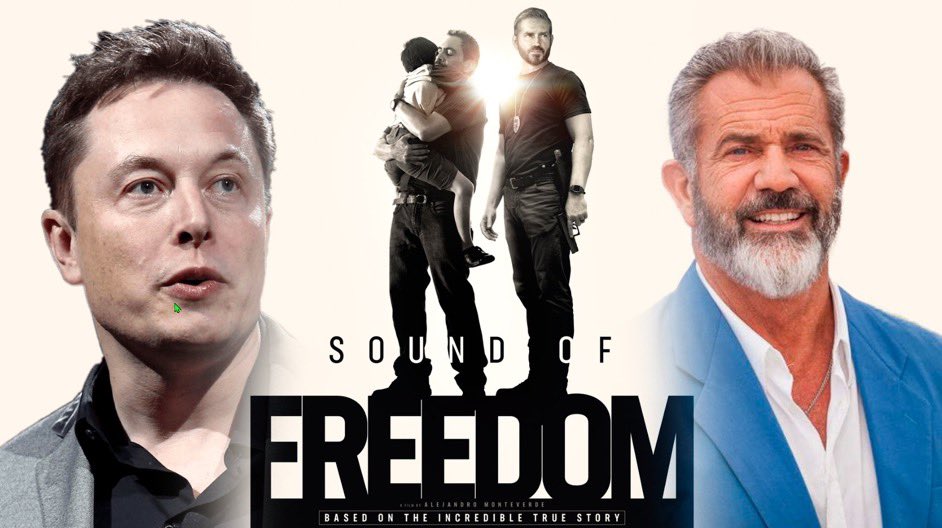
🚨| Elon Musk estaría en conversaciones para mostrar a nivel mundial ‘Sound of Freedom’ en Twitter. Donald Trump también la proyectará este 19 de Julio en New Jersey junto a Eduardo Verástegui, Jim Caviezel y Tim Ballard. ⚠️ ¿Apoyas la difusión masiva de la película?