Cada barca que llega no trae sólo migrantes; trae consigo una pregunta: ¿qué mundo hemos construido, si tantos hermanos tienen que arriesgarse a morir para buscar la vida? La dignidad humana exige vías legales y seguras, rescate y asistencia, cooperación real contra los traficantes, protección efectiva a las víctimas, procesos serios de acogida e integración y políticas que permitan a cada persona vivir con dignidad en su propia tierra. No podemos acostumbrarnos a contar los muertos. La dignidad humana no tiene pasaporte ni pierde valor al cruzar una frontera. #ViajeApostólico
@PerkinsRocha Muy valiente, me contó todo el horror del secuestro de @PerkinsRocha.
Su voz indignada aún debe retumbar en ese farmatodo, donde la única que se atrevió a gritar por èl (sin saber quién era, fue ella.
Gracias @MariaCr35749877
#4Jun Ayer trasladaron a presos de El Helicoide a otros centros de reclusión. El dirigente político y preso político del Táchira Jackson Vera fue enviado a La Planta (El Paraíso). Las mujeres fueron recluidas en el INOF y Las Crisálidas. Otros a Rodeo, Yare y Tocuyito.
@HimiobSantome@rosibeltorresm Prohibido olvidar.
Memoria.
Habrá JUSTICIA.
Por Carmen Teresa Navas
Y su Hijo Victor Hugo Navas
Por todos nuestros caídos ...
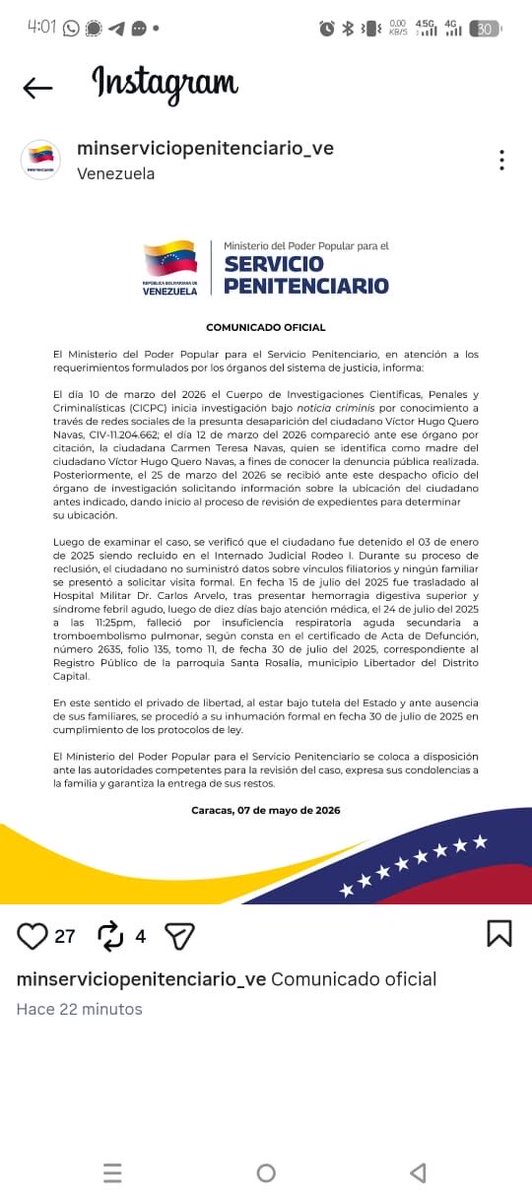
Una madre que lo dio todo por encontrar a su hijo, se enfrentó a un aparato represor, perverso y malvado. El dolor y la indignación es gigantesca, hoy todos estamos de luto. Un luto que pone una sombra muy oscura sobre Vzla
Carmen Navas, madre de Víctor Quero Navas, falleció. No tengo palabras que me sirvan para describir el sentimiento que tengo. Tuvo la fuerza inmensa de esperar y de luchar hasta el final por su hijo. Sólo quien sea madre puede entenderla. Se va, pero con la frente en alto. QEPD.
¡Víctor Quero falleció mientras estaba desaparecido!
El Ministerio Penitenciario dice que no informó vínculos filiatorios, pero su madre fue muchas veces a Rodeo I y negaban su paradero.
¡Indignante!
@AlbertoRodNews Cuánto dolor! Una madre no merece esto. Son desalmados e inhumanos. No puedo con tanto dolor. Paz para su hijo y solo queda resignación para ell. Cuando llegue la justicia, tendrán que recordar cada rostro que destruyeron y cada familia que acabaron.
There are three sovereigns now in the Strait of Hormuz, not two clocks.
NBC News reported Wednesday, citing two US officials, that Trump's reversal on Project Freedom came after Saudi Arabia suspended American access to its bases and airspace. Riyadh told the US it would not allow military aircraft to fly from Prince Sultan Airbase or through Saudi airspace after Trump announced the operation on Truth Social Sunday without coordinating Riyadh. The MBS call failed. The pause was operational, not diplomatic.
The same day, Iran's Ports and Maritime Organisation announced full readiness to provide maritime services, technical support, fuel, and provisions to vessels on VHF channel 16. Iran also operates the new Persian Gulf Strait Authority for transit permits and tolls.
The same day, CENTCOM disabled the M/T Hasna with cannon fire. Trump said he had very good talks over twenty-four hours, that Iran wanted a deal badly, and that if no agreement was reached the bombing would resume at a much higher level.
Three sovereigns. One Wednesday. One Friday.
The MOU is bilateral. The veto is Saudi. The counter is Iranian. The deadline is the same.
By Friday May 8 we will know which sovereign blinks first.
https://t.co/vLQh7ydMdk
A container of iPhones can get to Dubai in fourteen days right now. A million barrels of crude cannot get out at any price. That single sentence is the 2026 Hormuz crisis, and paper oil at $90.38 still hasn’t read it.
The scale of the rerouting is already unprecedented. Per project44, thirty-four thousand ships diverted in the first four weeks. The UAE’s share of Middle East diversions collapsed from 42.6 percent Week 1 to 33.1 percent Week 4. India’s Jawaharlal Nehru Port volumes rose over seven hundred percent versus February. Per CNN, Saudi Arabia’s Logistics Routes Initiative recorded ninety-four thousand outbound trucks to Gulf land borders between February 28 and March 18. Jeddah projected a fifty percent surge in arrivals within two weeks. Containers are not stopped. Containers are rebuilding the Middle East map in real time.
The architecture of that rebuild sits on Maersk’s corporate website. Between April 3 and 16 Maersk published Operational Updates 18 through 22 disclosing the new land-bridge network. Charles van der Steene, regional managing director for the Middle East, confirmed the system to CNN: Jeddah for Red Sea entry, Salalah and Sohar in Oman, Khor Fakkan in the UAE, Jebel Ali via truck through Khor Fakkan, Aqaba for Iraq. Update 20 records the flow verbatim: “From UAE via Landbridge solution connection through Sohar, Salalah and Jeddah ports to Rest of world.” This is not a workaround. It is the new container map, published by the carrier that moves more boxes than anyone.
To the east, the Pakistan leg completes the geometry. The Pakistan-Iran transit corridor went operational April 13 per PressTV and Express Tribune, first shipment refrigerated trucks of frozen meat from Karachi and Gwadar through Rimdan-Gabd to Tashkent under TIR supervision with GPS tracking. Central Asia’s new maritime entry point is a Pakistani truck stop. Windward AI confirms at least two Iran-flagged containerships reached Bandar Abbas between April 14 and 18 hugging the Iranian coastline. The dark fleet is no longer marginal. It is infrastructure.
Then the page turns. Two hundred and thirty loaded oil tankers remain stranded inside the Persian Gulf per mid-April maritime reporting. Brent June settled Friday at $90.38, down 9.07 percent in a single session on Araghchi’s peace announcement. The same day Dated Brent physical traded at $144.42, the highest print since 2008. Saudi East-West and the UAE Abu Dhabi Crude Pipeline together move roughly nine million barrels per day against the fifteen to twenty million that normally transit Hormuz. QatarEnergy declared force majeure on all LNG March 4. Japanese refiners, sourcing seventy percent of their Middle East oil through Hormuz, asked their government to release strategic reserves. Containers reroute. LNG declares force majeure.
The shock hiding inside these two pages is not a trade blockade. It is a molecule blockade. Atoms with wheels under them get trucked, rerouted and priced with manageable war-risk surcharges. Atoms locked in hydrocarbon chains do not. Everything else finds a workaround. Carbon does not. Goldman sees this. JPMorgan sees this. Any macro book still pricing what CMA CGM does rather than what QatarEnergy does is the trade that unwinds first.
The thesis dissolves on one condition. If Saudi East-West and UAE Fujairah together move fourteen million barrels per day before August, or Brent closes below $88 for three consecutive sessions, the bifurcation collapses into ordinary disruption. Until then, containers truck, crude waits, paper prices peace, physical prices war. The blockade is not closed. It is bifurcated.
https://t.co/FRwSI1w8WU
Twelve words just rewrote the post-1945 maritime order and no one has processed what happened.
“Iran controls the Strait of Hormuz and it is open for us.”
Chinese Defense Minister Admiral Dong Jun, speaking publicly to the Trump administration and the US Navy on April 13, the same day CENTCOM activated a blockade of all Iranian ports effective 10am Eastern. Not through diplomatic cables. Not through UN backchannels. A peer nuclear power publicly declaring it will ignore a US naval blockade because it has sovereign energy agreements with the country being blockaded.
This has not happened since 1945. Not during Korea, Vietnam, Cuba, or the Tanker Wars. In every prior American naval interdiction, no peer power publicly declared its intention to transit the enforcement zone by sovereign right. China just did.
The mechanism is energy existential. China imports approximately 1.85 million barrels per day of Iranian crude, roughly 80 to 90 percent of Iran’s total exports. On April 7, China and Russia vetoed a UN Security Council resolution to reopen the Strait, with China’s MFA explicitly calling the disruption a consequence of “US-Israeli illegal military operations against Iran.” Six days later, Dong Jun told the world the Strait is open for Chinese vessels regardless of what Washington orders.
Now trace the logic. The blockade targets Iranian ports. Iran’s primary customer is China. Either the US Navy interdicts a Chinese vessel, or the blockade has no teeth against the only customer that matters. Capital Economics stated it precisely: “Would the U.S. Navy target Chinese vessels in the Strait? Either outcome would represent a significant escalation.” There is no third option.
Trump responded the same day. “We can’t let a country blackmail or extort the world.” Then: “Many ships are heading to our country to load up with the best oil.” Then: “China’s Xi wants to see this ended.” Then the line that reveals everything beneath the rhetoric: “We’ve been called by the other side. They’d like to make a deal very badly.”
The other side is not Iran. Iran’s parliament speaker returned from the collapsed 21-hour Islamabad talks and told Trump: “If you fight, we will fight.” Iran’s military declared “no port in the region will be safe.” The other side that called is Beijing. And the deal is not about nuclear enrichment. It is about Chinese energy security transiting a waterway America can no longer unilaterally control, denominated in a currency that is not the dollar.
Brent surged 7.5% to $102.30. WTI hit $104.20. Crude is up 40 to 50 percent since the war began February 28. American gasoline averaged $4.13 per gallon on April 13, up $1.20 since hostilities started. March CPI printed 3.3%, up from 2.4% in February. The blockade designed to strangle Iran is importing inflation into the American economy at a rate that compounds through every supply chain touching energy. Before the war, 130 vessels transited daily. Saturday, Windward tracked 17. The UK and Australia both refused to join. The ceasefire expires April 22. Trump visits Beijing May 14.
The post-war order was built on one assumption: no country could challenge American naval supremacy at a global chokepoint. Dong Jun just challenged it in twelve words. The question is no longer whether the Strait reopens. It is what currency the toll is paid in when it does.
https://t.co/0fIdGsM5qH
BREAKING: Iran’s delegation is in Islamabad. Iran’s state media says it is not.
The Wall Street Journal reported that Foreign Minister Abbas Araghchi and Parliament Speaker Mohammad Bagher Ghalibaf arrived late Thursday. Al Jadeed News, citing Pakistani media, reported the specific aircraft: an Iranian Air Force RJ85 that departed Tehran with the reported approval of the United States and Israel. Pakistan’s ambassador had posted on April 9 that a 10-member delegation would arrive that evening. He deleted the post hours later. The embassy told AFP the timing was “premature, we were not supposed to send it.”
On the same day, Fars News, Tasnim, and Mehr all reported that claims of an Iranian delegation arriving in Islamabad were “completely false.” Press TV quoted a “well-informed source” saying neither Araghchi nor Ghalibaf had left the country. Iran’s Foreign Ministry spokesperson Baghaei stated that talks remain “contingent on the US’ adherence to ceasefire commitments on all fronts, especially in Lebanon” and that halting the war there is “an inseparable part” of Pakistan’s proposed framework.
The delegation flew to Islamabad on a military aircraft. The state media said nobody left Tehran. Both statements were issued within hours of each other by the same government.
This is not confusion. This is the negotiation.
Iran has arrived at the table while publicly denying the table exists. The denial is not a boycott. It is a position. By maintaining that no team has departed, Tehran preserves the right to walk out at any moment citing the Lebanon precondition. By being physically present, it ensures it does not lose three days of the fourteen-day clock. Iran is simultaneously inside the room and outside it, committed to nothing, present for everything.
Ghalibaf is a former IRGC commander. Araghchi is the man who told 3.69 million people on X that the US must choose “ceasefire or continued war via Israel.” These are not junior diplomats sent to feel out the room. This is the senior leadership of the Islamic Republic sitting in a hotel that was emptied for them, in a city locked down by 10,000 security personnel, behind a Red Zone sealed by the Pakistani army, while their own media tells the Iranian public they never left home.
The domestic audience sees defiance. The diplomatic audience sees presence. And the gap between the two is the space where the actual negotiation happens, before anyone sits at the formal table, before any agenda is tabled, before Vance’s main delegation even lands.
Every party is negotiating while denying it is negotiating. Every denial is itself a negotiating position. IDF Chief Zamir declared Lebanon the “main battlefield” and said Israel is “in a state of war, not a ceasefire” there. The State Department confirmed it will host separate Israel-Lebanon ceasefire negotiations in Washington next week. Pakistan’s defense minister called Israel a “cancerous state” and deleted it. The mediator, the adversary, the ally, and the host are all performing for different audiences in different languages on the same stage. And the Iranian Air Force RJ85 that officially never left Tehran is parked somewhere in Islamabad tonight, waiting for a meeting that its own government says will not happen, at a hotel that was cleared for guests who do not exist, in a country whose defense minister was forced to delete his opinion of the other side twelve hours ago.
The talks have not started. The negotiation began days ago.
https://t.co/0fIdGsM5qH
🚨 ÚLTIMA HORA
La ONU acaba de elegir a China, Cuba, Nicaragua, Arabia Saudí y Sudán para formar parte de su Comité de ONG, que supervisa "la labor de las organizaciones de derechos humanos en la ONU y decide a cuáles acreditar".
BREAKING: The United States has lost at least 16 MQ-9 Reaper drones over Iran since February 28, CBS News confirmed via U.S. officials. Iranian sources claim 24 or more. Eight have been lost since early April alone. At roughly $32 million per airframe, that is between $500 million and $770 million in hardware scattered across Iranian soil in six weeks.
Here is the fact that should reframe the entire conversation about this war.
The final MQ-9 Reaper was delivered to the Air Force in 2025. The production line is closed. General Atomics is no longer manufacturing the airframe. The USAF inventory stood at 230 aircraft before the war began, already in a phased retirement drawdown to 140 by 2035, because the Air Force’s own assessments concluded the Reaper cannot survive contested airspace against peer adversaries. Iran just confirmed that assessment at a rate of roughly three airframes per week.
Sixteen confirmed losses from 230 is seven percent of the entire inventory consumed in six weeks. There is no surge production to replace them. The MQ-9B, the next-generation variant, does not begin deliveries until 2028. Every Reaper lost is subtracted from a fixed number that will never increase.
The vulnerabilities are structural, not incidental. A radar cross-section of one to two square meters. A turboprop-driven silhouette visible to any modern radar. Cruise speed of 200 miles per hour, slow enough for a 1970s-era surface-to-air missile to intercept. Predictable ISR orbits, because persistent surveillance requires holding station over the same coordinates for hours. SATCOM data links relayed through Ramstein Air Base in Germany, vulnerable to Russian-supplied jamming systems Iran has deployed across its network. The Reaper was built for skies where nobody could shoot back. Iran can shoot back.
The IRGC’s Mosaic Doctrine, activated when the February 28 strikes killed senior leadership, distributes air defense across 31 semi-autonomous provincial commands. Each operates its own layered network: Bavar-373 for high-altitude intercepts, S-300 variants for medium-range, short-range MANPADS for anything below the radar horizon. When U.S. strikes decapitated central command, these nodes did not collapse. They continued operating independently, exactly as designed. The system was built by studying the 2003 Iraq war, where centralized Iraqi air defense disintegrated under American precision strikes. Iran learned the lesson and built the opposite: a headless network that fights harder after losing its head.
Hegseth said on April 8 that the United States had used only “a fraction of our strength.” That may be true in aggregate. But the Reaper is not replaceable with fractions. It is a finite inventory from a closed production line being consumed in a theater that was supposed to be its retirement exercise. The stealthier alternatives are not yet deployed at scale and the intelligence demands of a six-week air campaign over a country the size of Alaska leave no room for conservation.
The MQ-9 Reaper killed Qasem Soleimani. It defined twenty years of American air dominance from Afghanistan to Yemen to Somalia. It was the platform that made war cheap, remote, and politically painless. A pilot in Nevada, a Hellfire over Kandahar, a target eliminated without a boot touching foreign soil.
Its silent death over Iran is the sound of that era ending. Not because the technology failed, but because the environment it was designed for no longer exists, and the factory that built it no longer operates.
https://t.co/0fIdGsM5qH
JUST IN: The IRGC just claimed responsibility for coordinated strikes on Saudi petrochemical facilities, framing the attacks as retaliation for the IDF’s strike on the Shiraz nitric acid plant. Follow what is happening to the molecule supply from both directions and you will see something that no energy desk has modelled.
The IDF struck Shiraz because the facility produced nitric acid, which is an essential material for manufacturing explosives and ballistic missile components. The IDF described it as one of the few remaining complexes producing critical chemical components for Iran’s weapons programme. That targeting rationale is precise and militarily coherent: degrade the regime’s ability to produce the propellant chemistry that powers the missiles still being fired at Israeli and Gulf civilian populations. Asaluyeh and Mahshahr were struck for the same reason. Defence Minister Katz confirmed that the petrochemical industry is a central engine in financing IRGC activities and Iran’s military build-up.
Iran’s response was not to negotiate. It was to attack Saudi petrochemical facilities. The very infrastructure that produces fertiliser, pharmaceuticals, and plastics for the broader region is now being destroyed from both sides of the conflict simultaneously. Israel degrades Iranian military-chemistry capacity through precision strikes on dual-use facilities. Iran retaliates by hitting Gulf civilian petrochemical infrastructure that has nothing to do with the weapons programme and everything to do with feeding and medicating hundreds of millions of people across South Asia and Africa.
The molecule crisis just doubled its geographic scope. Sadara at Jubail was already offline from supply chain disruption. SABIC had already declared force majeure on five product lines. Now Iranian missiles and drones are actively targeting the surviving Gulf petrochemical capacity that the world was counting on to partially offset the Iranian losses. The regime that closed Hormuz to punish the global economy is now physically destroying the petrochemical plants on the other side of the Gulf as well.
Iran embedded its ballistic missile programme inside civilian petrochemical complexes precisely because the dual-use architecture creates a dilemma for any adversary. Strike the nitric acid plant and you degrade missile production but also reduce fertiliser precursor output. Leave it standing and the missiles keep flying into Haifa apartment buildings. The IDF chose to degrade the military threat. The civilian consequence is real but the responsibility for co-locating weapons chemistry inside fertiliser plants belongs to the regime that made that architectural decision decades ago.
What the market has not yet processed is that Iran’s retaliation against Saudi petrochemical facilities eliminates the offset. The consensus model assumed that Gulf Arab capacity outside Iran would partially compensate for Iranian losses. That assumption died when IRGC drones hit Saudi production sites. The six-country, six-domain molecule crisis now has no geographic hedge. The deficit is not narrowing. It is compounding on both sides of the strait.
C&EN titled its assessment: “Iran war will debilitate petrochemicals for the rest of 2026.” That was before Iran started destroying Saudi petrochemical infrastructure. QatarEnergy says Ras Laffan takes up to five years to repair. That was before the IRGC threatened to plunge the entire region into darkness. The five heat exchanger manufacturers on earth cannot simultaneously rebuild facilities being actively bombed by the regime whose military chemistry they were designed to replace.
The molecule supply is now under fire from every direction. The duration just extended again.
Full analysis - https://t.co/0fIdGsM5qH
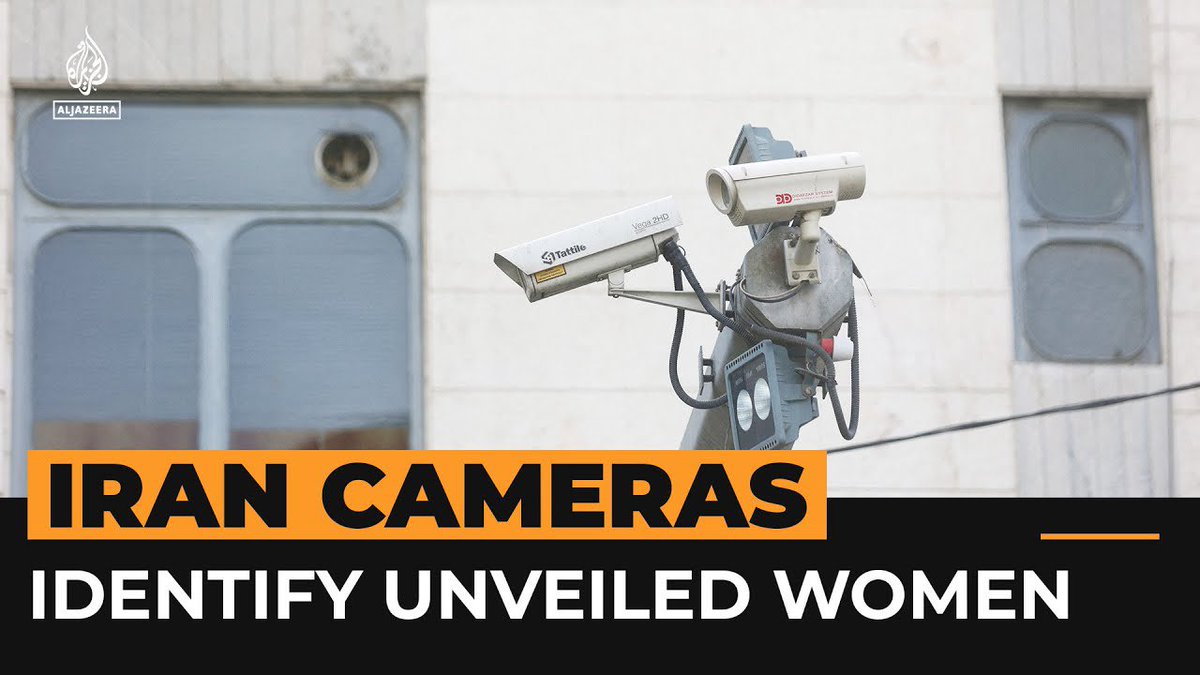
Iran built the most comprehensive civilian surveillance network in the Middle East. Cameras on every street. Facial recognition at universities. License plate readers that automatically fined women for removing their hijab in their own cars. A mobile app called Nazer that let citizens report uncovered women. Drones at beaches. The infrastructure that killed Mahsa Amini in September 2022 and crushed the Woman, Life, Freedom uprising that followed.
Israel hacked nearly all of it.
According to the Financial Times, citing two people familiar with the matter, nearly all of Tehran’s traffic cameras had been compromised for years. The footage was encrypted and transmitted to servers in Tel Aviv and southern Israel. One camera near Pasteur Street proved especially valuable. It was angled in such a way that Israeli analysts could see where members of Khamenei’s security detail parked their personal cars. Through that single camera angle, Israeli intelligence built files on the bodyguards’ home addresses, work schedules, commuting routes, and which senior officials they were assigned to protect.
Unit 8200 used algorithms to process billions of data points into what intelligence officers call a “pattern of life.” A person familiar with the process described it as “an assembly line with a single product: targets.”
“We knew Tehran like we know Jerusalem,” an Israeli intelligence official told the Financial Times. “And when you know a place as well as you know the street you grew up on, you notice a single thing that’s out of place.”
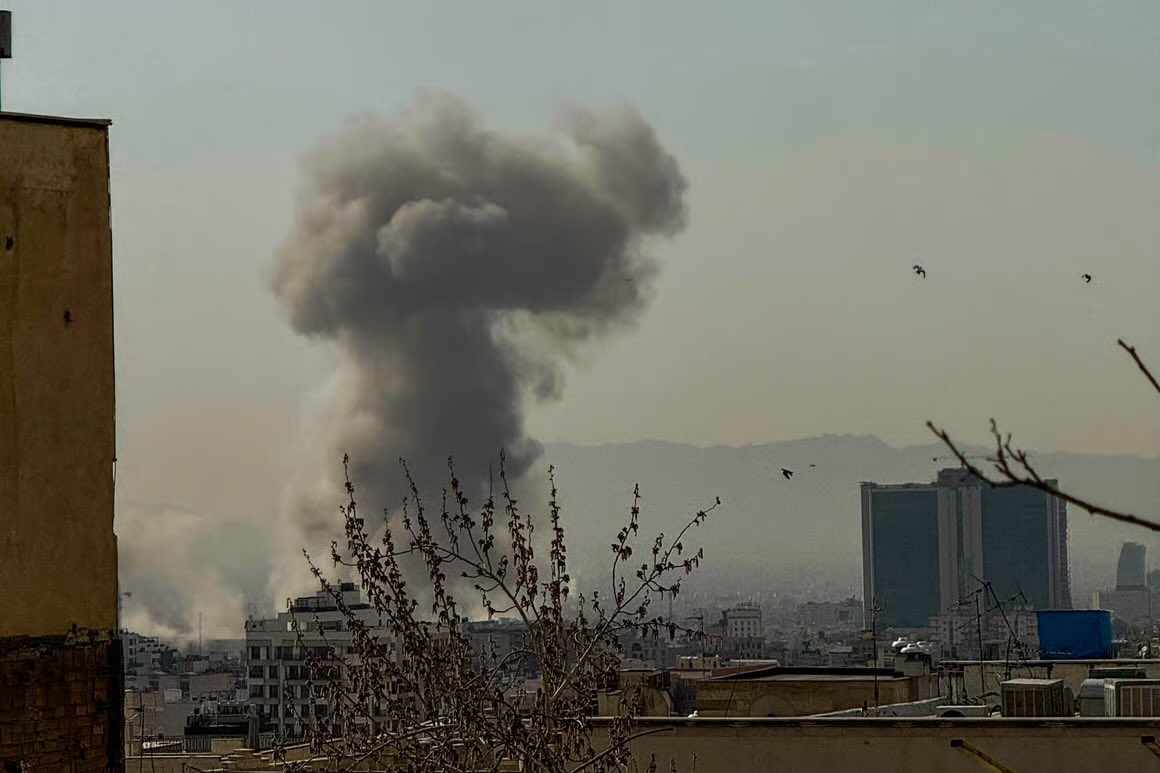
On February 28, when intelligence confirmed Khamenei would attend a morning meeting at his compound near Pasteur Street, the operation entered its final phase. Israel disrupted approximately 12 cellular antennas in the area, causing phones to appear “busy” when dialed. Khamenei’s security detail could not receive warnings. Israeli aircraft fired 30 precision munitions. The strike was carried out in daylight for tactical surprise.
Former Mossad official Sima Shine told the Financial Times that Israel’s strategic focus on Iran dates to a 2001 directive from Prime Minister Ariel Sharon. Twenty-five years of patient intelligence collection culminated in a single Saturday morning.
Here is the part that should stay with you.
The cameras Israel hacked were not military installations. They were the regime’s domestic surveillance apparatus. The same cameras that tracked women who removed their hijab. The same system that sent automated text messages to women in Isfahan accusing them of “improper veiling.” The same infrastructure the Guidance Patrol used to build digital dossiers on Iranian women and girls for the crime of showing their hair.
Israel turned the tools of the morality police into the tools of the regime’s destruction.
There is a viral claim that after the assassination, Mossad wiped the morality police’s databases on Iranian women. No Tier 1, 2, or 3 source confirms this. It traces to a single unverified social media post. I will not present it as fact.
But the verified reality is extraordinary enough. The regime built a surveillance state to control its own women. A foreign intelligence service co-opted that state to kill the man who ordered it built. The cameras that watched women became the cameras that watched Khamenei die.
That is poetic justice written in code.
https://t.co/ULBgEzZ3A8
Twenty-four hours ago there were seven countries in this conflict. Now there are twelve. By Monday there will be more.
Here is the full picture no single news feed is giving you.
Israel struck Tehran, Isfahan, Qom, Karaj, Kermanshah, Tabriz, and Lorestan in a single coordinated operation timed to the moment Iran’s senior leadership gathered in one room. Daylight strikes at 8:15 a.m. because the target was not infrastructure. The target was a meeting. Months of intelligence. One window. The first Israeli strike in history designed not to destroy a program but to decapitate a government.
Iran answered by firing missiles at every American installation it could reach. Bahrain’s Fifth Fleet headquarters. Al Dhafra in the UAE. Al Udeid in Qatar. Ali Al Salem in Kuwait. Jordan shot down two ballistic missiles over its own territory. One civilian killed in Abu Dhabi from debris. Every Gulf defense system activated simultaneously for the first time. Most intercepts succeeded. Iran demonstrated range. It failed to demonstrate precision.
And then the dominoes fell.
Saudi Arabia, which four weeks ago personally promised Tehran it would never allow its territory to be used against Iran, released a statement pledging “all its capabilities” to support every attacked nation in “all measures they take.” Dubai shut down both international airports indefinitely. 280 flights canceled. Emirates, Etihad, Qatar Airways, Turkish Airlines, Air India, Lufthansa, British Airways grounded or rerouting. The busiest international aviation hub on earth went dark because Iranian missiles were crossing its airspace.
Now watch what is moving in the shadows. Russia signed a 500-unit Verba MANPADS deal with Iran in December. China is finalizing CM-302 anti-ship missiles for the IRGC navy. Joint Russia-China-Iran naval drills ran through the Strait of Hormuz eleven days ago. But when the strikes landed, Moscow issued a statement. Beijing issued a statement. Neither moved a ship, a plane, or a soldier.
Russia called it “unprovoked armed aggression.” China called it “extremely dangerous hegemonic bullying.” Then both sat on their hands while their ally absorbed precision strikes on its capital and fired missiles into six sovereign nations, building the very coalition Russia and China spent a decade trying to prevent.
Iran needed its allies to act. They wrote press releases.
This is the architecture of isolation. In 48 hours Iran went from a nation with diplomatic channels to Oman, trade ties to China, arms deals with Russia, and détente with Saudi Arabia to a nation that attacked its own mediators, exhausted its missiles against interceptors, and watched its partners choose words over weapons.
The regime that survived the June war. The regime that survived 32,000 protester deaths. The regime that survived economic collapse. That regime now faces precision strikes, a six-nation coalition, closed airspace, frozen diplomacy, and allies who condemn on television what they will not contest on the battlefield.
The war is 24 hours old. Iran is already alone. https://t.co/BrzGRrU3VW