Instinct raised $1B at a $10B valuation, from Benchmark, Sequoia, Coatue
They have 14 employees.
Most of the new money will go toward compute, which CEO Noah spends 40% of his time acquiring.
They are growing 10% a day, had $1B of transaction volume, 50% of which is travel
I made a site to explain System One thinking (Jev is an example of this)! We make fast judgments all day, some models can too. The guide explains how to use those quick judgments in software.
In my typical way, it leverages interactive animations, and Night Owl 🦉
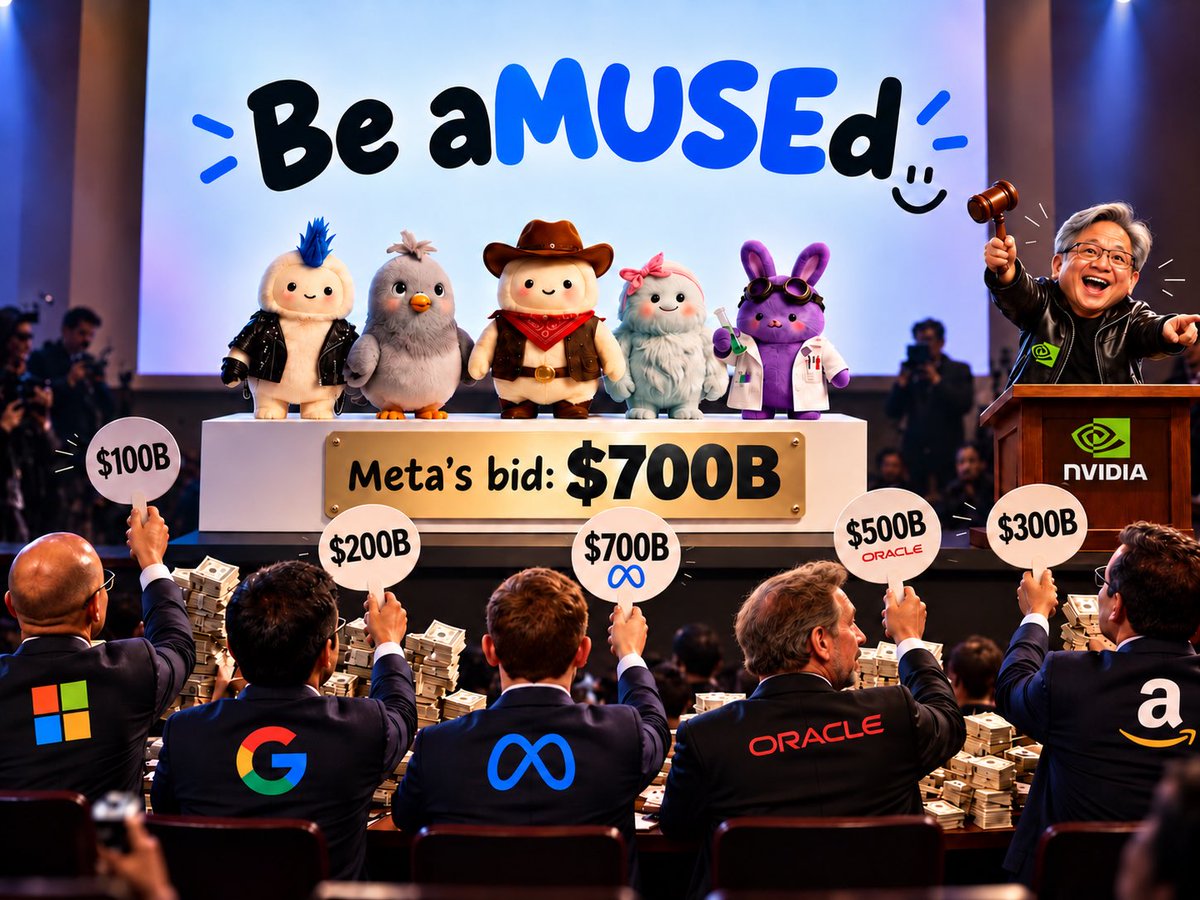
This article captured the current AI capex race pretty accurately, the funny part is nobody has to be irrational. Every next bid can make sense on its own, and somehow you still end up with a $700B bidding war 😂
We're launching the Muse / Instinct for enterprise, backed by a16z Speedrun.
We believe the next big shift in work isn't the model or the agent. It's the interface.
General-purpose AI assistants are supercharging how consumers get things done. Employees still spend 60% of their day doing work about work, a third of their time finding things, and switch between apps 1,200 times a day.
Contxt works where your team does. Text it in Slack or Teams, call it in Claude or ChatGPT, or forward it your emails.
It has a dynamic memory across your tools, history, and people, and can do work directly in your browser, just like your team does. You get the 100x productivity of a consumer AI assistant with the controls, audit trail, and shared knowledge a company needs.
We're a Princeton-educated team of ex-NASA engineers, repeat founders, and quants.
Found this interesting @Meta paper today on multimodal AI. Anecdotally, the finished apps from frontier labs already feel much better than the bare APIs. This reinforces that LLM is only one part of the product, the architecture around it matters just as much.
MMI was born out of a simple question, what modality should models reply with. Turns out such a benchmark didn't exist so after a year's grind MMI is out. Congrats to the team!
Paper here: https://t.co/L15xUoSgwa
Data here: https://t.co/ZFkVmUvEzw
MMI was born out of a simple question, what modality should models reply with. Turns out such a benchmark didn't exist so after a year's grind MMI is out. Congrats to the team!
Paper here: https://t.co/L15xUoSgwa
Data here: https://t.co/ZFkVmUvEzw
The AI race is slowly becoming an infrastructure race. Models still matter, but you need the power, cooling, transformers, racks, land and grid capacity to actually scale them. OpenAI’s former data center head moving to Nvidia feels like another signal that the bottleneck is moving out of the lab!!
OPENAI’S FORMER DATA CENTER HEAD JOINS NVIDIA
Chris Malone, OpenAI’s former head of data centers, has joined $NVDA as VP of its DSX Platform, which helps customers design and build AI data centers around Nvidia’s infrastructure.
Malone left OpenAI in August after joining in early 2025 following the launch of Stargate. He previously worked on data center infrastructure at both Meta and Google.
OPENAI’S FORMER DATA CENTER HEAD JOINS NVIDIA
Chris Malone, OpenAI’s former head of data centers, has joined $NVDA as VP of its DSX Platform, which helps customers design and build AI data centers around Nvidia’s infrastructure.
Malone left OpenAI in August after joining in early 2025 following the launch of Stargate. He previously worked on data center infrastructure at both Meta and Google.
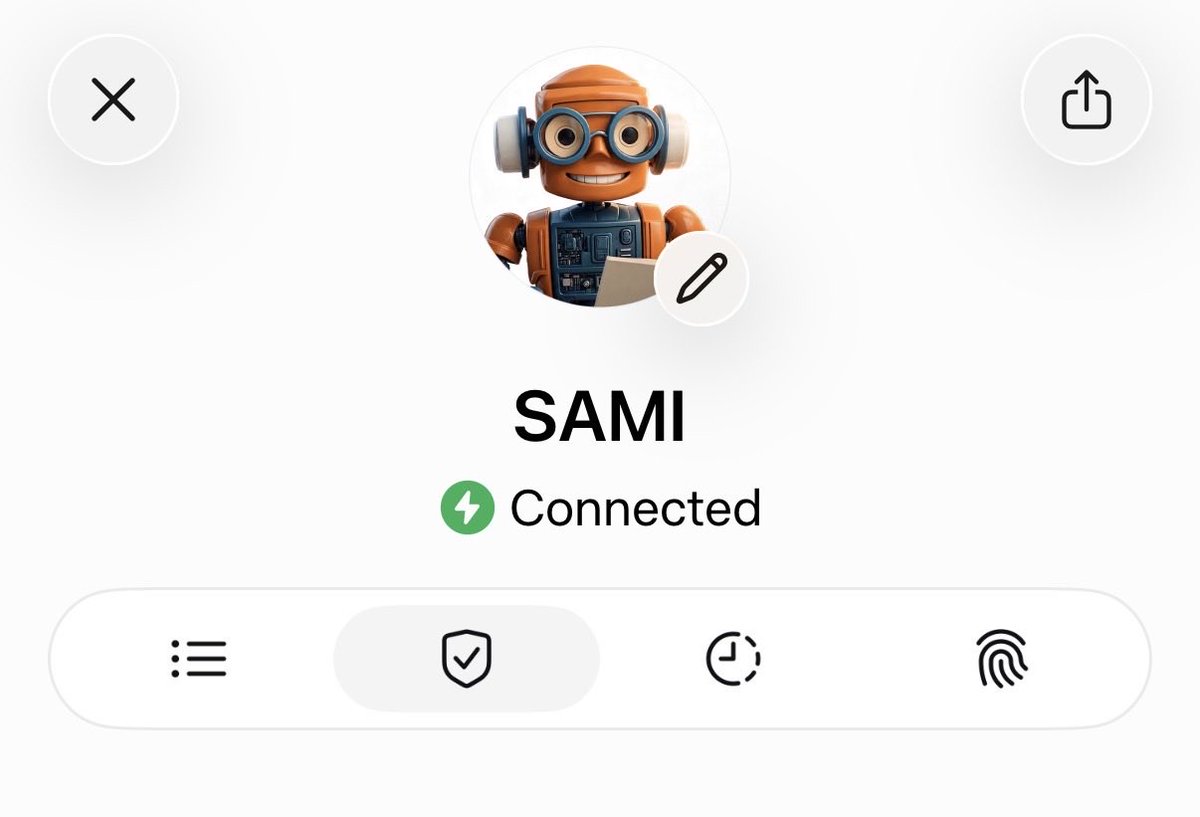
@alexandr_wang@clamasoto Mine is SAMI- Structured Artificial Multimodal Intelligence.
Structured because everything is organized, multimodal because muse handle text, images, voice notes and all 😊
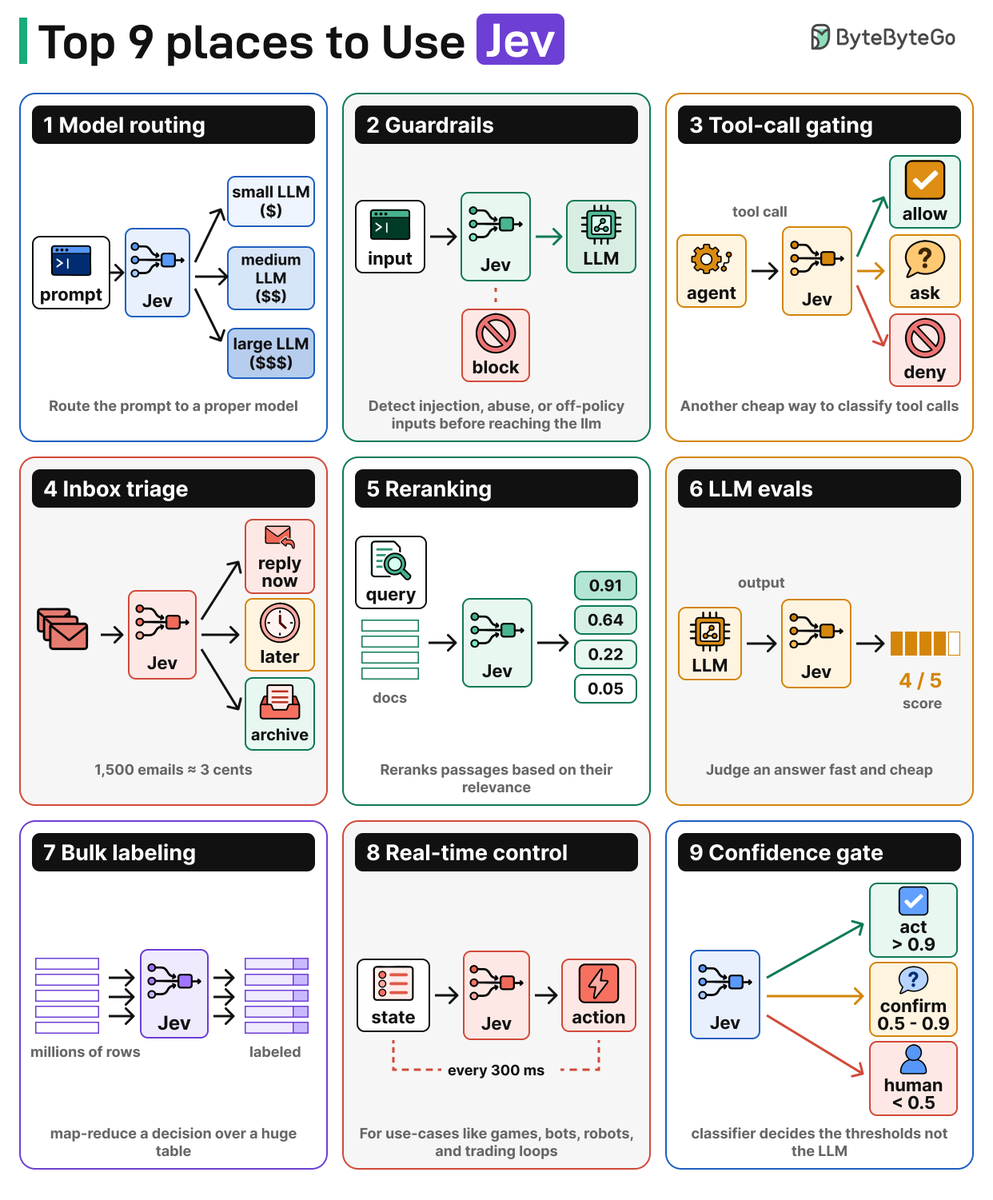
Jev is TypeSafe AI's first System One Model.
It is 100x faster and cheaper than frontier LLMs.
That opens up a lot of use cases people usually skip because the big models are too slow or too expensive for them.
Here are 9 use cases where we think Jev could be used instead of an LLM.
Everything is a supply chain problem, AI included 😊 Alibaba wants 20GW+ of data centers by 2032. That’s power, land, cooling and transformers (the electrical kind) before the next wave of models can really scale. Time to watch the interconnection queue and not just the parameter count!!
$BABA UNVEILS NEW AI CHIP, PLANS 5T-10T PARAMETER MODELS AND 20GW+ OF DATA CENTER CAPACITY
Alibaba unveiled its new Zhenwu V900 AI chip, designed for both model training and inference, with performance roughly 3x higher than its predecessor released just four months ago.
The V900 is expected to enter mass production and commercial release in Q1 2027. Alibaba says clusters built around the chip can scale to as many as 500,000 accelerators for training and running frontier AI models.
Alibaba is also targeting more than 20GW of global data center capacity by 2032 and plans to launch its new Yitian 720 and 730 CPUs for agentic AI workloads in 2027.
Qwen4 is currently in training and expected soon, while future Qwen generations are expected to scale to roughly 5T-10T parameters, versus 2.4T for the current Qwen 3.8 Max.
Alibaba has committed more than $53B over three years toward AI infrastructure and capabilities.
$BABA UNVEILS NEW AI CHIP, PLANS 5T-10T PARAMETER MODELS AND 20GW+ OF DATA CENTER CAPACITY
Alibaba unveiled its new Zhenwu V900 AI chip, designed for both model training and inference, with performance roughly 3x higher than its predecessor released just four months ago.
The V900 is expected to enter mass production and commercial release in Q1 2027. Alibaba says clusters built around the chip can scale to as many as 500,000 accelerators for training and running frontier AI models.
Alibaba is also targeting more than 20GW of global data center capacity by 2032 and plans to launch its new Yitian 720 and 730 CPUs for agentic AI workloads in 2027.
Qwen4 is currently in training and expected soon, while future Qwen generations are expected to scale to roughly 5T-10T parameters, versus 2.4T for the current Qwen 3.8 Max.
Alibaba has committed more than $53B over three years toward AI infrastructure and capabilities.
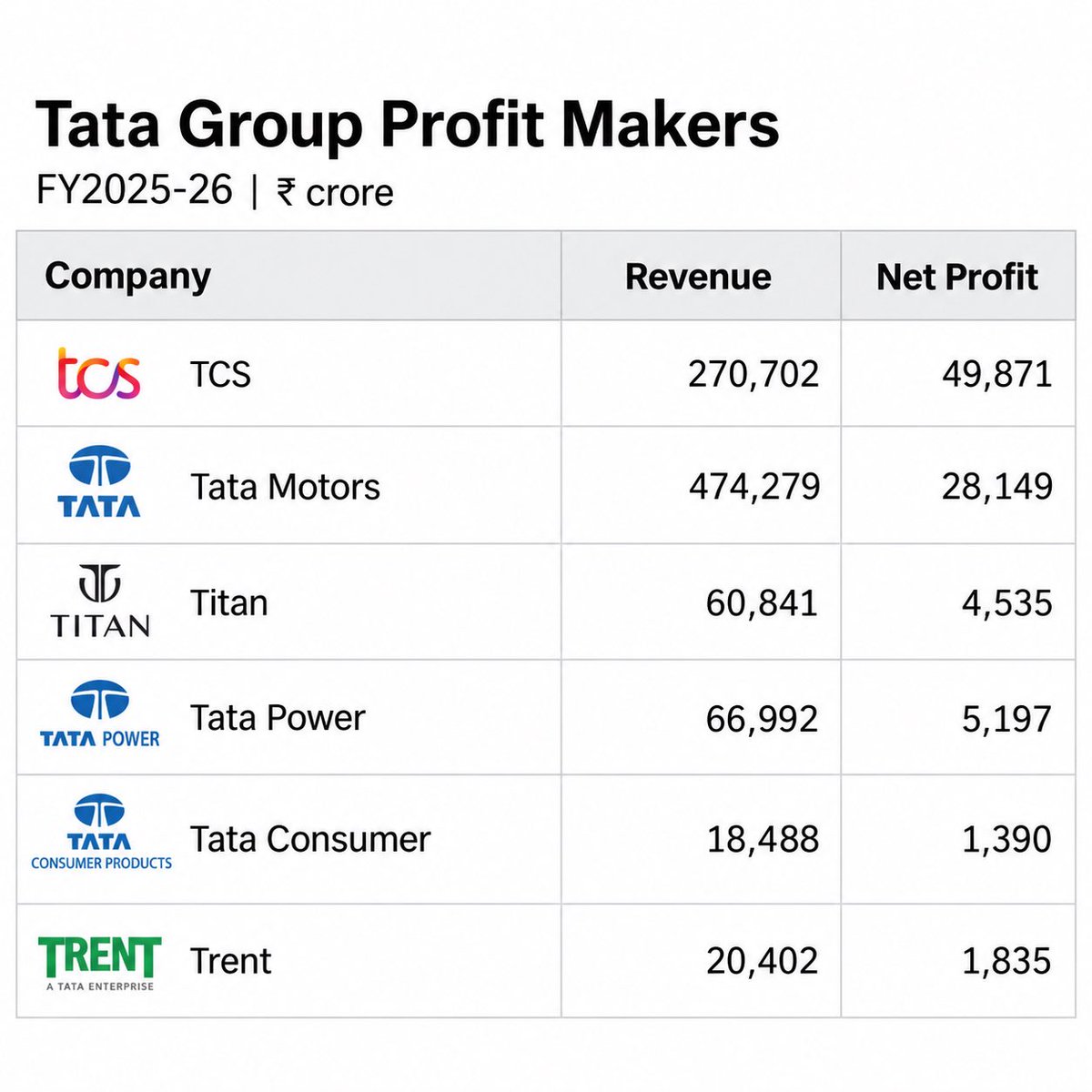
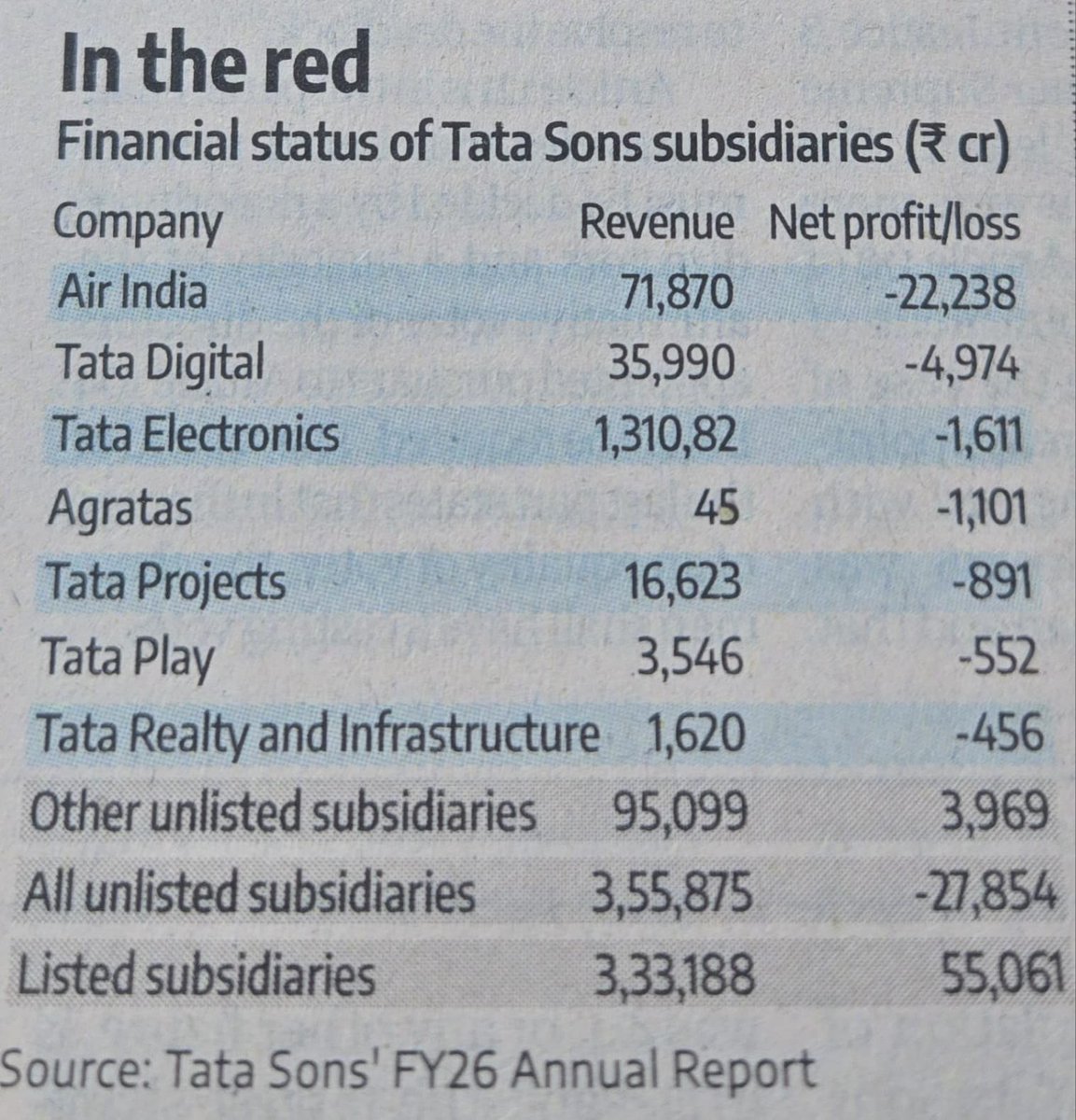
I think this misses the conglomerate model a bit. Tata has cash-generating businesses funding bigger bets, much like Amazon did before AWS became such a massive payoff. Not every bet has to work, a few just have to work really big. And I think the Tatas have managed sunk cost fallacy pretty well over time. If history has taught us one thing, never bet against the @TataCompanies 😊
Amazon did ~$69B in ad revenue last year vs ~$269B from online stores. That’s the tension here, true agentic commerce makes shopping easier, but it can also bypass the sponsored discovery layer Amazon monetizes so well. A truly Day 1, customer-obsessed Amazon would probably be willing to cannibalize some of that ad revenue if it created a much better buying experience. The flywheel still turns, the revenue just gets redistributed.