Bitcoin needs better design. We're doing something about it.
Dates/Location: Sept 15-19, Presidio SF
Bitcoin Design Week brings together Silicon Valley designers and the bitcoin community to tackle the hardest design challenges in money.
📱 UX/UI Design for Bitcoin Core by @haasemike will bring the #Bitcoin Core App to mobile enabling users to run nodes, access essential wallet features directly on their phones to improve their financial privacy.
Funding will support the project’s design & development.
My talk for @fossback about the Open Design Guide (https://t.co/zERUR7o4hv) was accepted. There are several other talks about the role of design(ers) in the line-up. Looking forward to it. https://t.co/soy7LFXvuS
The @savingsatoshi case study in the @bitcoin_design Guide is live. It provides lots of background about this unique and ambitious project. I'm super thankful to and proud of everyone who chipped in (you're all ₿OSSes). https://t.co/1UxjvMU3uT
In defense of developer depression
Reflecting on my journey in Bitcoin over the last decade, I've come to realize that I've achieved success where a lot of other developers have failed.
Ironically, one of the biggest issues I'm still dealing with is that I may have succeeded too much. As a developer, you must understand that unfortunately, most people you’ll end up working with will not want you to succeed. The majority will simply want you to code what is needed for their success… and then go away. Disappear.
The core problem for you is that creating anything great requires deep coding focus for extended periods. You also need to constantly iterate on the product while ensuring it gains traction. Many developers mistakenly believe they can do both.
The hard truth is that you shouldn’t be doing this. You shouldn’t have to choose which part to handicap – your developer skills or the reach of the product you’re building.
Don’t fall for the false dilemma. Instead, find trusted collaborators who allow you to stay in a state of deep focus. Look for people who, once you create something worthy of public attention, won’t take your contributions for granted or betray you by claiming all the rewards for themselves.
My own immense success… it’s depressing to know that it had more to do with other people than myself. Yes, of course, I worked hard for it. I honed my craft for over 25 years. Studied computer science and led engineering at numerous startups. Stayed humble, while churning out commits for decades. But every time it came down to the wire, none of that mattered. What truly mattered was whether certain people recognized my contributions and stood up for my proof of work… or not.
So, if you are a developer – knowing that even in best-case scenarios you’ll depend on the goodwill of others is soul-crushing. You absolutely should be depressed.
But then recognize that the way out of that depression is through long-term commitments with others who are on the same journey. Only surround yourself with trustworthy people. There is a reason that 4-year vesting schedules are standard in startups. For you and your code to truly succeed - you have to be part for long-term efforts with significant upside.
Anything less – and you’re setting yourself up for failure. You don’t want to create a routine where you daily force yourself into states of deep focus, only to see that after a couple of years of building, you’re defeated by an inferior product that has better marketers at the helm. You also don’t want to lose your technical competency in building political and promotion skills… this world needs more developers, not more politicians.
Observe your depression, but don’t succumb to it. In most cases, it correlates with how deeply you care about your craft. It’s a hint – that the way forward is with others. So, don’t fight the intuition, but follow it to find trusted collaborators who will help you realize the best version of the product you’re coding.
@nvcoelho Don’t 100% understand your notes, but I’m generally a huge fan of giving users simplified insights into their wallet and notifying them of actions that save them money.
Literally years in the making, @savingsatoshi is an interactive RPG that uses storytelling and gaming mechanics to onboard developers into the FOSS bitcoin ecosystem: https://t.co/hxK7uQbkUb
Mark your calendars for a new Hands-On Demo on December 11th: UI Design with Penpot! @LauraKalbag will design a complete layout from scratch in just one hour!
🕒 3-4 PM UTC
▶️ YouTube, PeerTube, or LinkedIn.
ℹ️ Details: https://t.co/T9KWB7GxwV
https://t.co/NCiJCddCNv
@easyuxd Thanks. I think the address might just need to go altogether (show either label or address, whatever is available). My concern (if we keep it) with another text style would be visual overload, the whole design is already borderline, but it's a simple thing to try.
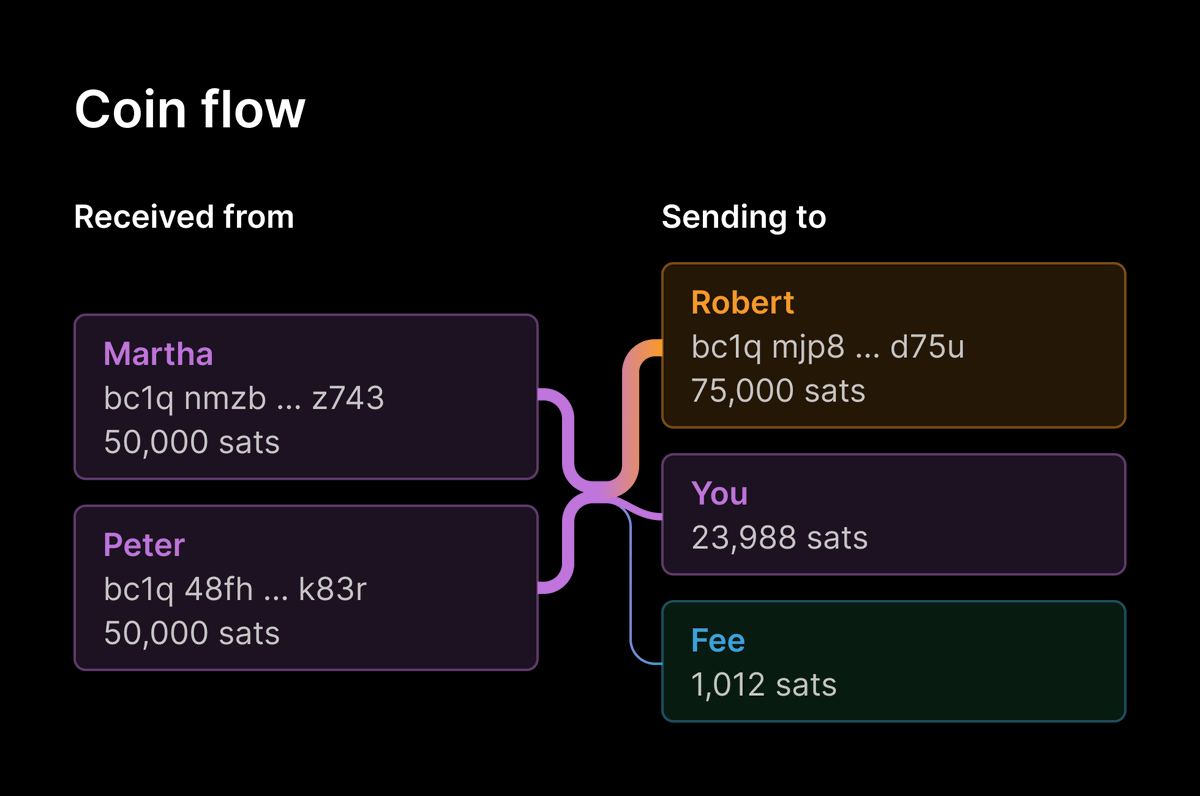
Here's a visual for a planned transaction visualizer in the Bitcoin Core App (Sparrow-inspired). Does that look useful to you? You can also try the work-in-progress web prototype: https://t.co/WMpj6COZyu
Especially open-source community-led projects are well-positioned to provide unique user experiences that companies and custodial solutions cannot offer due to their different goals, structure and incentives.
Design should capture and express the essential properties of a product/technology. If users can't tell the difference between self-custodial and custodial bitcoin apps, then we're doing it wrong.