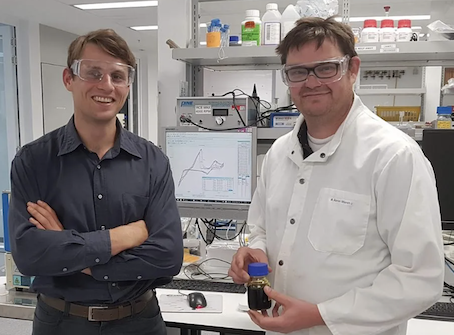
So much early stage science never escapes the lab! A better model is needed. Stage 1 now live. Find out more about how we are building a new discovery, funding & collaboration ecosystem for early-stage science research. https://t.co/iW5GLlVFeR
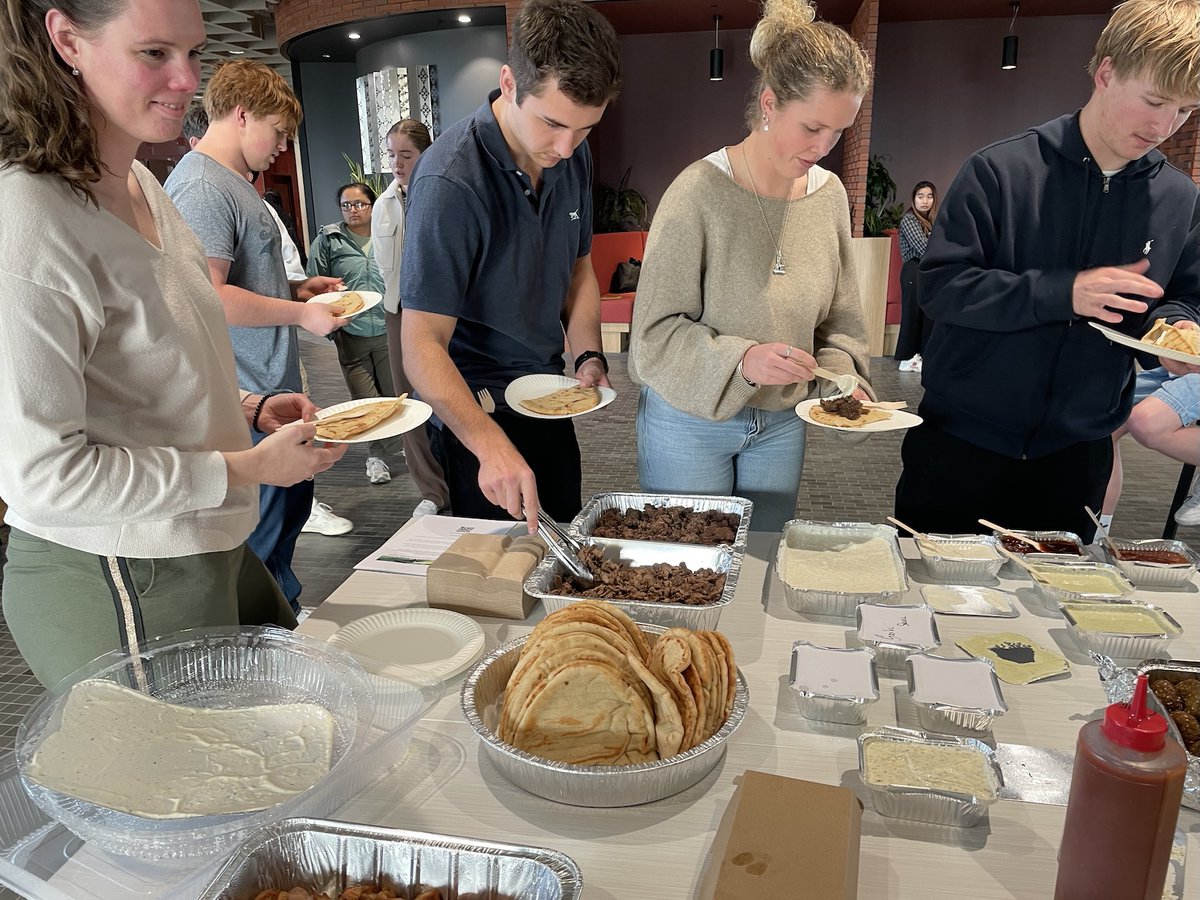
Hunger games. So pleased we could shout lunch today for students on the The King's Trust enterprise training workshop pilot program hosted by @LincolnUniNZ.
London's not just about finance - it's also about science. Turns out those things are rather complementary. Check out the fascinating @WCIDLondon podcast.
🎙�� New episode of the @WCIDLondon Podcast!
Recorded at the Deep Tech Network Investor Series, featuring synbio investors + founders on what it takes to raise today 🚀
🎧 Listen: https://t.co/7gre3keCXE
#deeptech #syntheticbiology #biotech
Not so fast, superbugs! 🐞🐛
Imperial startup NEX Health Intelligence is using AI to predict the appearance and spread of infections within hospitals.
Read more 👇
https://t.co/Fss3taenok
Keeping the "big cats" theme going this week. New Zealand synthetic biology startup Bontia Bio is creating sustainable, non-toxic, nature-based treatments for our furry friends. https://t.co/kCCau2ocdo
Touted as “one to watch” in biotech investor circles, German bio-pharmaceutical company Kupando is advancing a disruptive dual approach that could both reduce solid tumours and counter infectious diseases. https://t.co/dO9JWIRSoS...
New Zealand MacDiarmid Institute says Kiwi cleantech is booming. But better connectivity to global capital is needed. (Spoiler: we are working on it) https://t.co/WoGtsVSGbe
Paris based company Standing Ovation specialises in producing animal-free casein through precision fermentation. They just raised an impressive €30 million in Series A funding. https://t.co/Rbvmf3vysf...
Greentech venture Arborea is bridging the gap between design engineering and biotechnology with a synthetic leaf that creates food directly from sunlight. https://t.co/1ndUhaq5jd
Mucking Around With Zethos. Zincovery has a new brand and a wider mission. Extracting a range of critical minerals from industrial waste. https://t.co/MSGYYEWYSy
Australia's R&D system is too fragmented and risk-averse to sustain future living standards and must transition into a “smart country” by overhauling how it funds, governs, and commercialises big ideas says a new report. https://t.co/tIhzFeIJez
EU Inc, a new pan-European legal entity structure, has now been formally proposed by the European Commission. Streamlining compliance activities for high tech startup ventures is part of the drive towards making the continent more competitive globally. https://t.co/BwuQjwfYBY
We've pledged to fund 100 new trees in this planting initiative. The project nicely aligns with our goal of creating regenerative outcomes from academic work. Please join us! https://t.co/SarGwpJ2rg
Knowledge network effects whilst powerful, have always been somewhat random. Very soon @unreasonable_ai will offer actual useful tools to systemise and vastly accelerate this approach for science.
Scientific discovery is reaching the limits of human capacity: too much data, too many disconnected fields, and too few ways to connect ideas fast enough to matter. The next breakthroughs in materials, medicine, energy, and beyond will not come from scaling today’s AI paradigm alone or from relying on serendipity alone. They will require a new kind of AI for knowledge discovery that not only models the world but shapes what it could become. At Unreasonable Labs, we are building superintelligence for knowledge discovery: systems that reason across disciplines, generate novel hypotheses, test them through simulation and experimentation, and help guide real-world discovery. Our AI engine is not confined to what it has seen in training. It creates new data, builds new tools, and maintains a persistent world model that grows more powerful as it reasons.
Why now?
Even today's most powerful AI models face a core limitation: they are trained on what we already know. True discovery begins when a system encounters something its current model cannot explain. This is why you cannot train your way to a discovery - a system has to reason through new problems, update its beliefs, and revise its understanding of the world as it thinks.
Another critical insight is that rich knowledge already exists, but is not yet applied to solve pressing problems. It sits in millions of papers, patents, and datasets, trapped in isolated silos, often in legacy data vaults. What's missing is a way to connect it, scale it, unlock the potential, and synthesize genuine novel predictions.
The time is now to build a system that enables practitioners to design, explore, and direct discovery, whether through human guidance or full automation, while capturing the tacit insight that domain experts bring.
Steerable reasoning
That is why we built an operating system for scientific discovery - one that replaces chance with steerable reasoning.
Rather than retrieving static facts, our AI builds and continuously updates a living world model - a representation of knowledge the system can actively reason over, question, and revise.
A concrete example: say you want to create "smart concrete" that can flex - a concept that doesn't exist yet. Our AI maps relationships across domains, finds a path from morphable smart materials to concrete, and identifies the most efficient way to bridge those concepts. It then autonomously writes simulations, tests the hypothesis, and refines the idea. Then it interacts with hardware to produce a physical artifact, and the loop expands into the real-world, where the machine becomes world-shaping.
Our AI gives users full visibility into how the system arrived at a conclusion. It delineates which existing patents and papers it drew upon versus what is genuinely new - protecting IP and competitive concerns from the start, and offering deep compositional insights into technology advances.
It takes unreasonable people to make progress
Our team reflects the interdisciplinary expertise required to build this next breakthrough - my co-founder Yuan Cao @caoyuan33 (formerly DeepMind) and Andrew Lew, @HaiqianYang, Matt Insler, Jennifer Kang and Julia McLaughlin.
We are backed by $13.5M in seed funding led by @PlaygroundVC with participation from @aixventures, @e14fund, and MS&AD. We are guided by advisors including Robert Langer (1,000+ patents), Kostya Novoselov (Nobel Prize in Physics), and @Thom_Wolf (Co-founder of Hugging Face).
We already have multiple pilot programs underway with leading industrial partners in materials science and engineering, with additional engagements developing across energy, logistics, bioengineering, and other strategic domains.
The biggest challenges of our time - fusion energy, sustainable materials, new medicines - demand exponentially more innovation than humans alone can produce. We are not replacing scientists, and instead are making every scientist capable of leading their own team of AI-powered researchers. Abundant innovation leads to abundant prosperity.
Watch our launch video below to see what we're building @unreasonable_ai 👇
Today we are announcing a major update to Edison Literature, our scientific deep research agent. It represents a significant advancement over our previous PaperQA2 algorithm: it enables deeper reasoning over 100s of scientific documents, can retrieve information from figures and tables, and is state-of-the art among other deep research systems on scientific tasks.