Don’t miss the deadlines, Register now!
https://t.co/a7yjfjPpTx
Earlybird Registrations: 15 July 2022
Abstract Submissions: 31 July 2022
Lightning Presentation Submissions: 31 July 2022
Please subscribe to our newsletter:
https://t.co/3nHL72aEOV
#17Saga2022
#PrincipalComponentAnalysis is used in #machinelearning and is a great #statistical tool for understanding datasets with lots of different parameters
It's what you use when you have run out of axes on a graph to display the parameters
Check out:
https://t.co/CIUCeWZrHx
#Regressiontrees are a regression algorithm used in #MachineLearning
They are great for #nonlinear datasets
Here is a great video explaining how they work:
https://t.co/JoPZfh5KQe
Busy learning about machine learning:
Did you know the algorithms are either regression or classification algorithms
Exciting work being starting at @WitsGeoscience using Grace satellite data and machine learning to understand changes ground water in South Africa
#PAPSSN
Had fun with the @WitsGeoscience postgrad students yesterday loading the NGEA Challenge data into Geosoft
Excited to look at all the data available in this underexplored part of South Africa
Have you considered setting up a team and entering?
https://t.co/bqq4G2q8QB
@sigwegweprince@WitsGeoscience Thanks for asking Prince. The student is looking at the depth to a shale layer that might host shale gas using seismic data, and investigating the dolerites that have intruded the basin using magnetics and other shallow geophysical methods
#UsefulnessOfGeophysics:
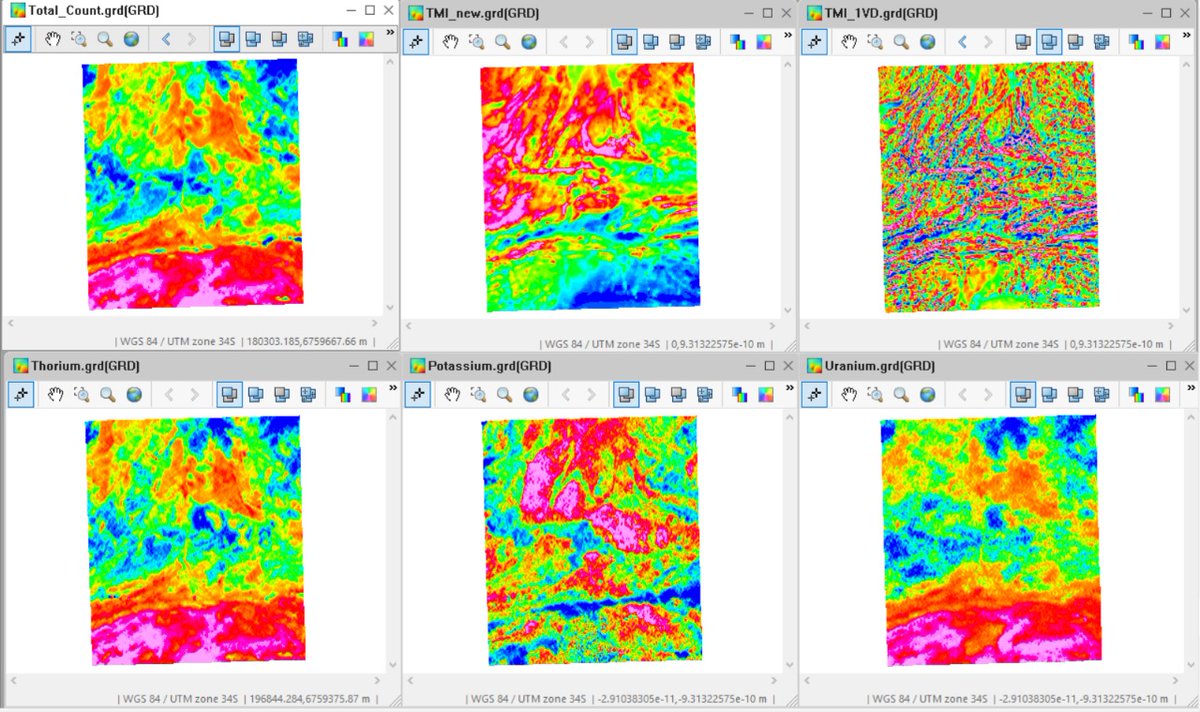
Southeastern South Africa is covered by younger (~200 million year old) non-magnetic sediments.
This magnetic data is a looking glass into the 1 billion year old basement (pink), and dolerites that intruded the sediments.
#MScResearch@WitsGeoscience
Quick and easy modeling software makes teaching a pleasure! Thanks Prof Gordon Cooper!
Here are @WitsGeoscience students using inhouse mag2dc software to model the magnetic anomaly over a dyke
Why don't you give it a try?
https://t.co/UbYCSDlUuQ
https://t.co/zsoL4aMSET
The Beattie Magnetic Anomaly was my first piece of investigating work for my PhD. It appears to be linked to shear zones in the Natal Belt Proterozoic crust.
Learn more about the history of this massive magnetic anomaly from Johan de Beer:
https://t.co/qzgZfGTCcZ
South African geology always keeps you guessing
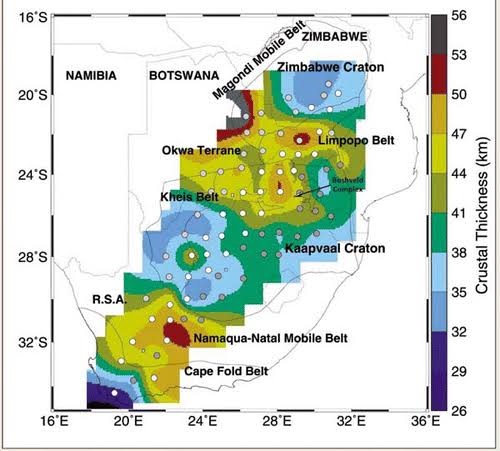
You might think that because of our high topography inland (over 1000 m), that the crustal thickness would be greater
The South African Seismic Experiment in the 1990s showed the opposite to be true
https://t.co/qJfab0AjB4
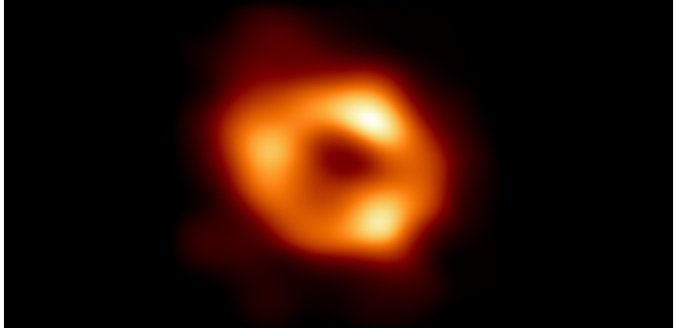
Amazing image of the black hole at the centre if the milky way. Well, it is more an image if the glowing gases around the hole because it is...black
It is four million times bigger than the Sun.
Just makes me want a donut :)
Amazing job @WitsUniversity
https://t.co/xxprdBzaLs
I am embarrassed to admit I didn't know much about where my city's water comes from. Johannesburg needs to say a huge thank you to Lesotho
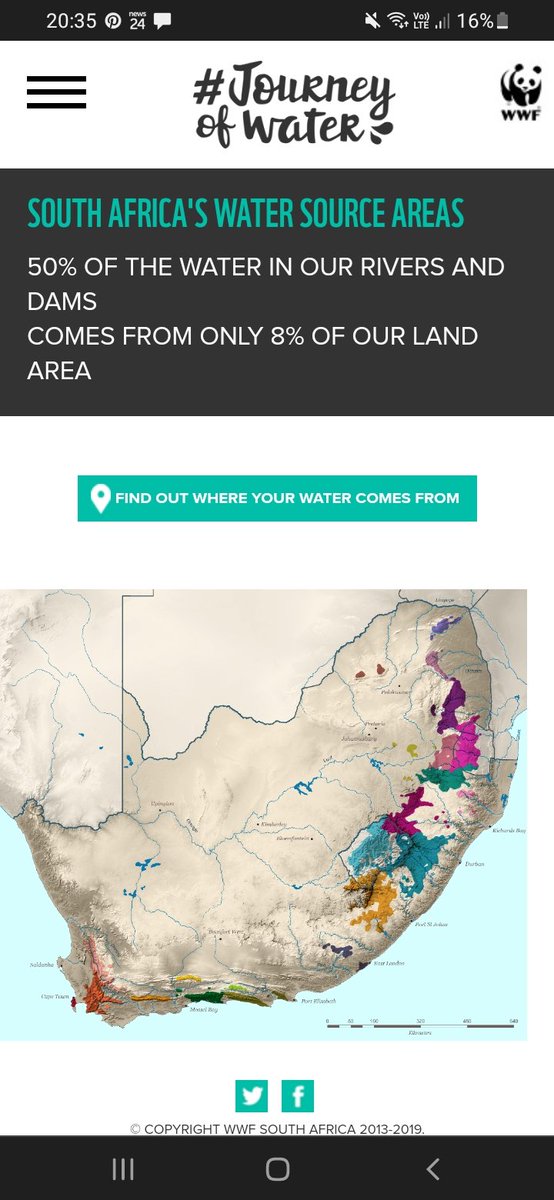
What a useful website: I didn't know 50% of water in rivers & dams in South Africa comes from only 8% of our land!
https://t.co/pEBEynXc14
Did you know that even while sitting still, you are moving about as fast as your nails grow. We measure this with GPS
However, you have to correct for atmospheric effects, which are dependent on whether your climate is dry or tropical
Check out recent study from @WitsGeoscience
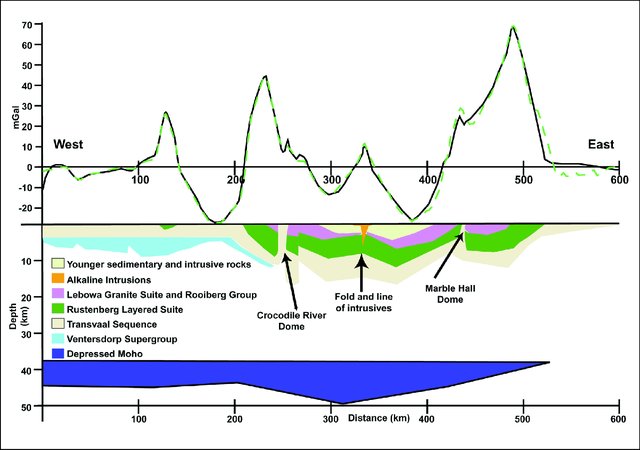
@GeophysicsWebb It is such a nice simple model that shows the usefulness of geophysics! Hopefully the @WitsGeoscience Applied Geology 3 students will appreciate it when they learn about it this afternoon
The ambiguity of gravity data:
@GeophysicsWebb showed the lobes of the Bushveld Complex ARE connected at depth. While previously researchers showed they AREN'T
How she did it?
She included the Moho in her model: The gravity low from the depressed Moho offset the Bushveld high!