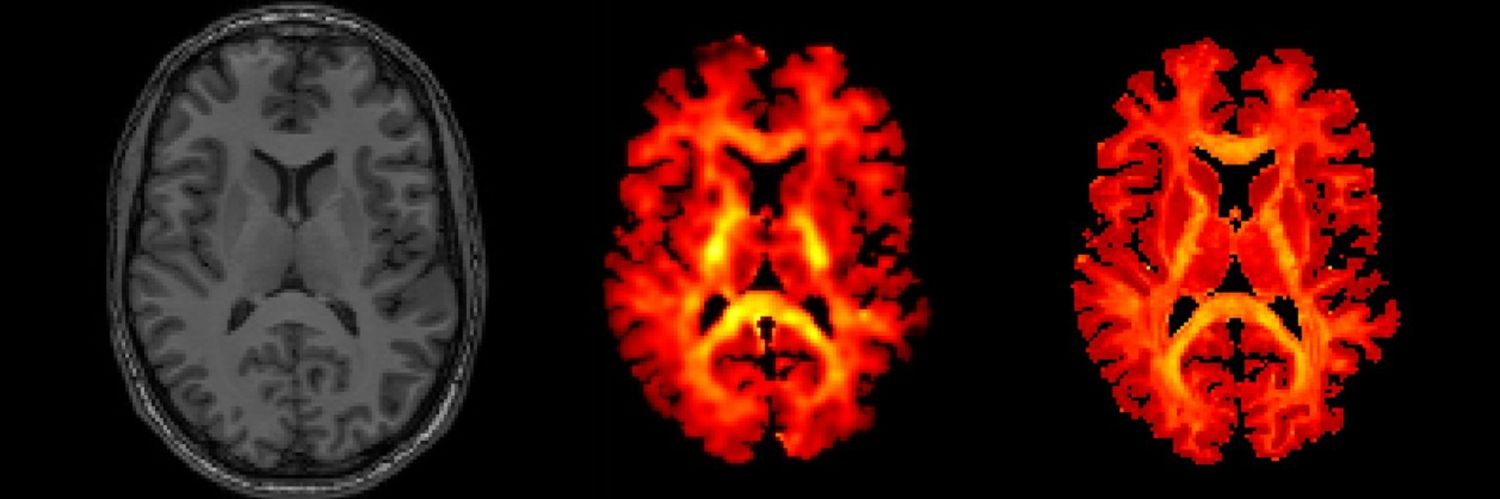
DTI-ALPS is a commonly used MRI marker for glymphatic dysfunction, but can it distinguish contributions of perivascular diffusivity and axonal degeneration?
@Gerald989 and I wrote an editorial on this topic for JMRI:
https://t.co/pSw6E1kyRY
Recently, our work by Eussen et al. on the core network of the structural covariance network in childhood absence epilepsy was published in @HeliyonJournal! https://t.co/i64Yt1H4iu
Combined, this shows that the structural networks in children with childhood absence epilepsy are less efficiently organized compared to healthy controls and that they are related to cognitive performance.
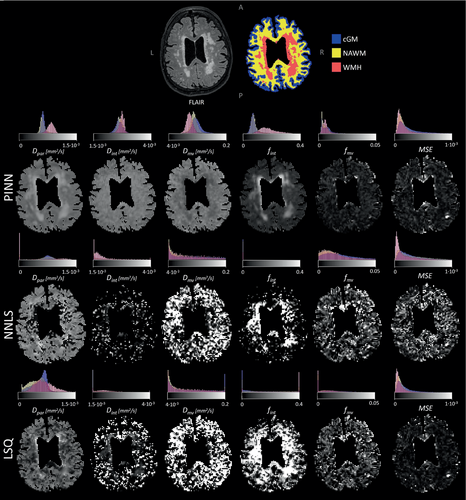
Last week our work by Voorter et al. on the analysis of multi-b-value diffusion MRI using physics-informed neural networks was published in @mrm_highlights! https://t.co/7XmNJiYeMy
A thread 👇
Compared to other least-squares approaches, the physics-informed neural network yields parameters maps with increased CNR, a higher test-retest repeatability and a higher accuracy (the latter based on simulated data)!
Image processing of structural, diffusion-weighted, and functional MRI aids the presurgical work-up for epilepsy by increasing epileptogenic zone detection rate. @MaastrichtUMC @MaastrichtU @Kempenhaeghe@Gerald989@jfajansenphd https://t.co/158Ev2AyMo
A great overview of our recent work reviewing current advances in image processing for the detection of the epileptogenic zone by Daniel Uher. #tweetorial
Full paper: https://t.co/PeTSgJbegS
1/15: Epileptic zone detection is one example where advanced MRI techniques have direct clinical impact! A #RadInTraining#TWEETORIAL (@RadITrainEditor) where morphometric analysis, relaxation mapping, and fractional anisotropy are discussed to identify epilepsy causing lesions.
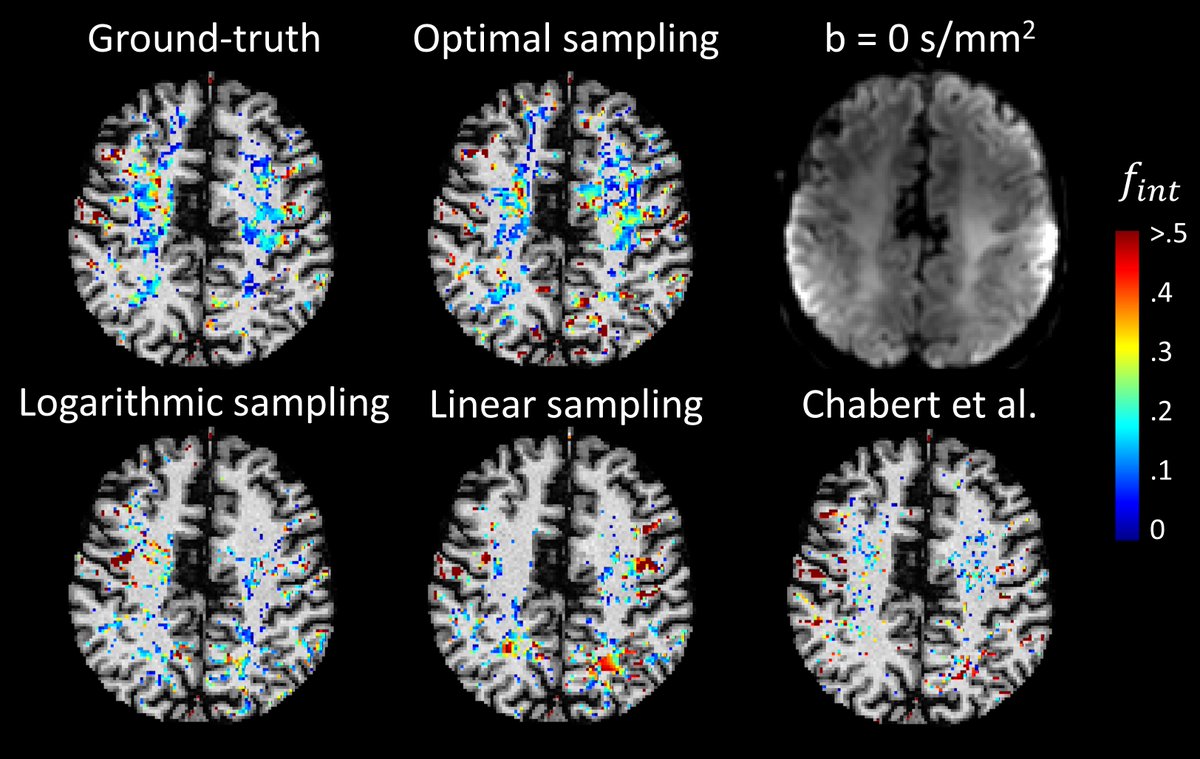
Our new paper is out in @mrm_highlights! In this study we used a genetic algorithm to assess which b-values should be acquired to extract certain metrics from a multi-b-value acquistion https://t.co/GgX1WeDRhU! A thread 👇
Our optimized sampling strategy outperformed other, commonly used, samplings based on simulated and real-world data. Therefore, we showed that the intermediate component can be quantified more accurately using specific b-value sampling schemes!