Madame Celeste Amarilla,
Vous êtes une femme méprisable et indigne de sa fonction.
Vous ne représentez pas le Paraguay, ce pays qui a transpiré la passion et l’honneur tout au long de la compétition. Par votre inconscience et votre racisme décomplexé, le monde entier a déjà oublié le parcours et l’effort historique que vos joueurs ont réalisés durant cette coupe du monde pour laisser place à une dame incompétente donnant la pire image possible de son pays.
Je ne laisserai jamais aux gens comme elle, la liberté de laisser propager leur haine et leur racisme à travers le monde.
Let's talk about Mexican football, about their World Cup, about Gilberto Mora and this new generation of talented midfielders, and about why I believe this match against England can give real hope for the future of Mexican football.
Mexico did a fantastic job at this World Cup. Four wins in a row against South Africa, South Korea, the Czech Republic and Ecuador, without conceding a single goal, before dominating England, one of the tournament favourites, for long periods and being brave enough to impose themselves.
Of course, hosting the World Cup and playing at altitude are significant advantages. But you don't reach this stage of a World Cup because of those factors alone.
I said it a few months ago: I felt Javier Aguirre and his coaching staff had found something. Mexico finally started to develop an identity. Before that, I struggled to understand what kind of team Mexico wanted to be. There wasn't a clear idea of how they wanted to play or what they wanted to represent on the pitch.
Aguirre realised he had an exceptional group of technical midfielders and that he needed to build around them. More importantly, he understood that Mexico had enough quality in midfield to dominate possession and look any national team in the eye. That's why he moved towards a 3-4-3 with a square midfield, allowing him to accommodate players like Erik Lira, Álvaro Fidalgo, Obed Vargas, Bryan Gutiérrez and Gilberto Mora. You can even add more names performing well in Liga MX, such as Marcel Ruiz, unfortunately injured, or Charly Rodríguez.
Mexico found its identity in that 3-4-3. The left winger, usually Julián Quiñones, played inside and enjoyed an outstanding World Cup in that role. Gallardo pushed high from left fullback, while the right back generally stayed deeper. This created a solid 3+2 rest defence that allowed Mexico to remain protected whenever possession was lost.
But the main reason I believe this system suited Mexico is because of the profiles they currently produce. Mexico lacks players who consistently threaten in behind or can punish opponents in transition with pace over long distances. One solution would have been to defend in a low 5-4-1 block and wait for transition opportunities. The problem is that if you don't have players capable of carrying those transitions, sooner or later your game plan collapses. It made a lot of sense for Mexico to be more dominant on the ball and, especially, to press opponents high from goal kicks and other restarts, something they had been doing well for a long time and that led to goals, such as the opener against South Africa.
Interestingly, Aguirre was actually more conservative during the group stage than he was against Ecuador and England. Against South Korea and the Czech Republic, Mexico often defended in a reactive 5-4-1. But against Ecuador and England, they pressed aggressively in a 4-4-2, enjoyed much more possession and controlled large parts of both matches.
There is one name that changed everything, Gilberto Mora.
At just 17 years old, he demanded the ball in front of more than 80,000 people at the Azteca Stadium and gave his teammates the confidence to play with courage. He showed Mexico that if you surround him with intelligent, technical players who can combine with him, this team can compete with anyone.
Suddenly, "Piojo" Alvarado started playing at a much higher level alongside Mora. Mexico began creating relationships, combining through quick one-twos, building wide triangles and, above all, generating dangerous crosses into the penalty area.
Alvarado would drift inside onto his stronger foot before delivering inswinging crosses towards Quiñones and Raúl Jiménez. It became one of the defining images of Mexico's tournament.
Alvarado cuts inside, everyone inside the Azteca rises to their feet, and Raúl Jiménez powers a header into the net. You could hang it in the Louvre.
Yes, we can argue that Mexico struggled in the final minutes against England and that Aguirre made a mistake by introducing too many strikers and relying almost exclusively on crosses. But this is also the same Javier Aguirre who produced two incredibly brave game plans, trusted young players and selected the best performers rather than simply choosing those playing in Europe. In fact, Mexico fielded more Liga MX players than European-based players.
I'm not sure whether this evolution towards a more courageous, possession-oriented style was entirely Aguirre's idea, whether it was driven by Gilberto Mora's emergence, by the players themselves, or by the Mexican public demanding a braver national team. Perhaps it was a combination of all those factors. Whatever the reason, Javier Aguirre will always do what he believes gives his team the best chance of competing.
Now it's time for the Mexican Football Federation to think about the future.
The players themselves are already giving you an identity. You simply need to embrace it.
Everything should start with Gilberto Mora (17) and building a structure that allows him to flourish. Alongside him you have Obed Vargas (20), Bryan Gutiérrez (23), Marcel Ruiz (25) and Erik Lira (26). There aren't many areas of the pitch where Mexico is producing this much talent.
You can even add more players who still need time but have potential: Elías Montiel (20), Iker Fimbres (21), Denzel García (22), Fidel Ambriz (23) and Jordan Carrillo (24). There are more than enough talented young midfielders to build an identity around.
The next step is surrounding them with players who fit that style. If Mexico wants to become a dominant possession team, they need centre-backs capable of defending far from goal, pressing aggressively, covering large spaces and who can contribute in possession.
They already have Johan Vásquez (27), an established European defender who is left-footed, a rare and valuable profile, and perfectly suited to defending high while contributing in build-up. Now Mexico needs to produce more centre-backs with similar characteristics. Diego Campillo (24) could become one of them, but the search shouldn't stop there.
At full-back, the future is promising. Rodrigo Huescas (22) and Mateo Chávez (22) are already playing for FC Copenhagen and AZ Alkmaar at a young age. Both possess the energy and technical quality to overlap, underlap and defend aggressively in open spaces. Neither is particularly dominant aerially, which is another reason why Mexico should aim to defend further away from their own penalty area.
In goal, "Tala" Rangel (26) has shown he can become the right goalkeeper if Mexico continues down a possession-oriented path.
On wide attacking positions, Mexico still needs to produce more wingers capable of consistently winning 1v1 situations. Alvarado (27) and Huerta (25) offer solutions, and Alvarado showed throughout this World Cup that he has the quality to hurt opponents whenever he receives to feet.
But Mexico also needs wide players who can attack depth, stretch defensive lines and create more space for the midfielders to operate between the lines. They need more pace. More players capable of threatening large spaces.
Up front, Santiago Giménez (25) can be a good option. But he still needs to stay healthy more often and reach his best level. Then there's "Hormiga" González (23). He may not receive as much attention, but he has intelligent movement inside the box, consistently scores goals, attacks depth well and contributes aggressively in the press. When so many of your midfielders want the ball to feet and are more technical than athletic, having a striker who constantly stretches the opposition, attacks space and presses with intensity becomes incredibly valuable.
Of course, players like Quiñones and Raúl Jiménez can continue contributing while Mexico gradually gives more responsibility to younger profiles and develops the next generation of strikers.
Ultimately, this World Cup has allowed Mexico and its supporters to dream again, but there is still plenty of work to do.
Mexico needs to invest more in coach education to produce better Mexican coaches, who will eventually develop better players in the academies.
The federation should also make it easier for young Mexican players to move abroad earlier, even if transfer fees are lower.
And finally, promotion and relegation must return.
Young players develop fastest when they compete under pressure. Few matches are more demanding than fighting against relegation or battling for promotion. Those experiences shape players who can later perform on the biggest stages, like a World Cup.
The encouraging part is that Mexico has started talking about football again. Apart from a few journalists unwilling to evolve, most people have praised the way this team competed. The catastrophism and negativity that have surrounded Mexican football for years are slowly disappearing.
Mexico is a genuine football country, one of the greatest in the world in that respect. Few stadiums roar like the Azteca. Few cities live football like Mexico City. Everywhere you go, people are talking about their national team.
Now it's time for Mexico and its federation to match that passion with a long-term vision.
The potential is there. This team has planted the seed.
🚨🚨| BEAUTIFUL MOMENT: The entire Colombia fanbase near him respectfully waited for him to finish singing the Congo national anthem alone before joining in to 𝐂𝐇𝐄𝐄𝐑 him afterward 🥲🇨🇴
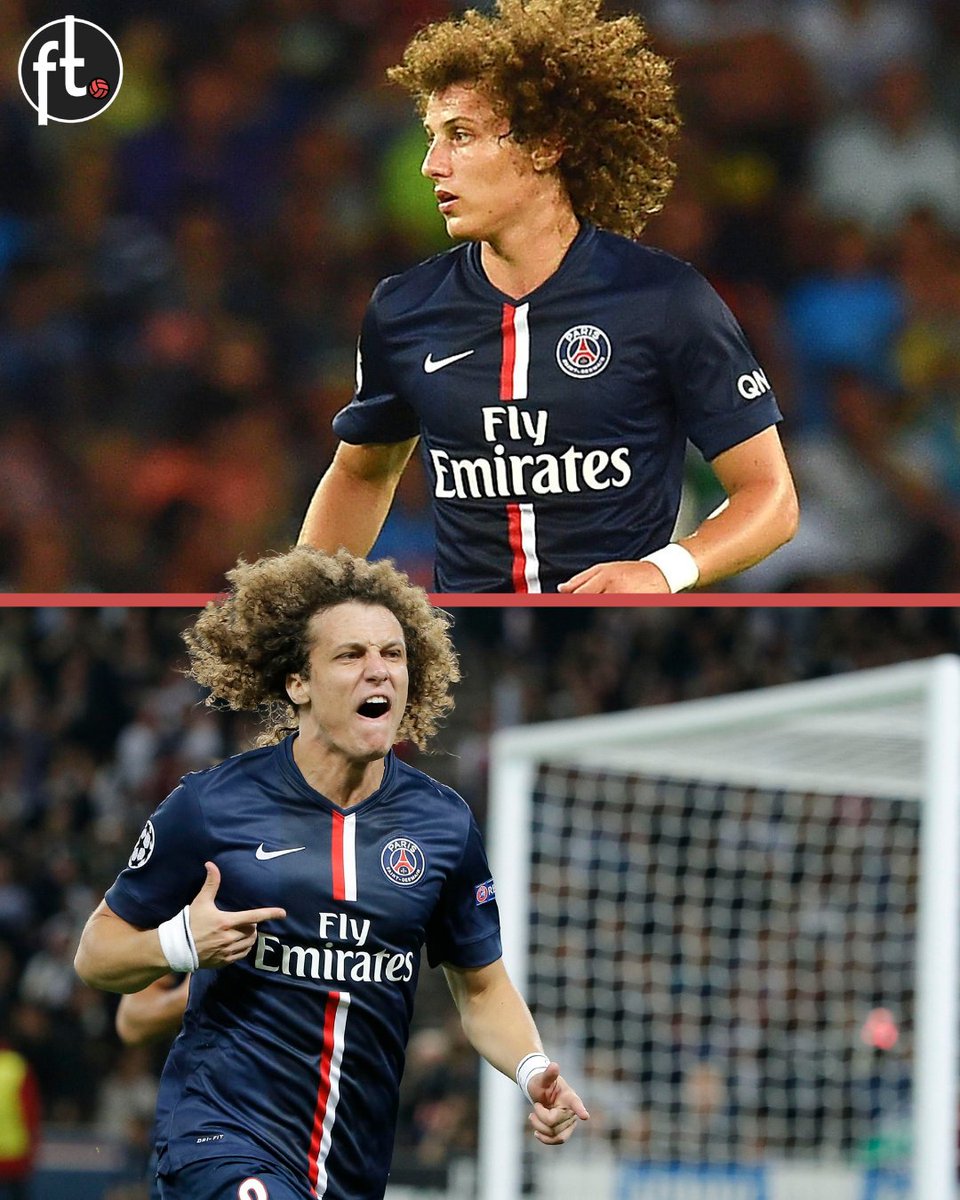
🇧🇷🗣️ This is an INCREDIBLE story from David Luiz about his time in Paris:
“A few months after I moved to Paris, two of my friends from Diadema came to spend some time with me there. They had broken up with their wife and girlfriend and were sad, so I invited them, hoping the visit would help clear their minds. Great.
“They soon met other Brazilians, who played for a team like the seventh-division amateur league in the suburbs of Paris — all immigrants without proper papers.
“Every night, my two friends came home angry, complaining that they were constantly beaten up. So, I said: “I’ll go over there tomorrow to watch you play.” And I did.
“I arrived wearing a ninja hat, half disguised, and watched. The opponents were all dressed up, with their uniforms, equipment, water bottles, and a coach. And my friends’ team was wearing nothing: one in white shorts, another in purple, a third in yellow. The guys were hanging from the goalposts to warm up…. It was a mess.
At the end of the match, which they lost, I asked:
“Do you want me to train the team?”
I’ll never forget the guys’ smiles. They were so genuinely happy and excited, something I had only seen when I was a kid, when we would fly kites in Diadema.
I started training the guys every Monday, from 10 to midnight. Sometimes I would train them on Monday and play a Champions League match on Tuesday. I even remember scoring a goal against Barcelona on one of those days. I started loving Mondays. I couldn’t wait to be with those guys. We talked, I listened a lot, and I got to know each one’s stories and struggles.
“Some made money playing capoeira, others delivering items on motorbikes or washing dishes. All of them had a hard life, afraid because of their illegal status, with little hope that things would improve, but football brightened up and took the weight off their days.
On my first holidays, I went back to Brazil and went to talk to the ultimate crazy woman, my mother:
“Mum, can you make stuff for the boys there?”
“Say no more! She made travel polo shirts, tracksuits, match uniforms, training uniforms, everything in sizes S, M, L, XL….
I went back to Paris with 21 suitcases. The guys’ dedication grew along with their joy. We started training twice a week, then three times. We got promoted, and at the end of the season, I had a crazy idea. Another one. “I’m going to throw a gala for the team, just like PSG does for us every year.” I rented a castle-like nightclub where Matuidi had thrown his birthday party and started producing ours.
“I had already hired a guy who used to film for PSG to film our guys’ matches, too. I asked him to bring all the videos to my house so we could watch them and choose the best goals of the year, the top scorer, the goalkeeper’s best saves. Let’s show them on the big screen! Then I ordered trophies for the winners of each category. Hey, but what about the others? Plaques! We’re going to make little wooden-and-acrylic plaques with each one’s name on them. Everything was perfect. The day before, I called the guys together:
“Do you have a white button-up shirt and a basic black coat for tomorrow’s party?”
Nobody had one. OK, I will buy you some.
I went to the store myself and got some. Then I thought about their girlfriends and wives. I called the group again and gave each one some pocket money so that their SOs could buy a dress if they wanted.
The party night arrived.
And if I told you it was incredible, one of the most extraordinary emotional moments of my life, as cool as winning the Champions League, would you believe me?”
🎙️ @TPTFootball
@AllTheTicket@SI_FootballClub Thats how it goes. Some take the baton and some fall short, big clubs should sign many candidates and get rid of those that don’t work out. I believe only that way you end up with quality players. Need to act fast on ins and outs.
Cesc Fabregas explains why he cried after his Chelsea exit, but wasn’t seen crying when he left Arsenal 👀:
🗣️ "It was very emotional for me. While I was playing for Arsenal, I saw Chelsea as a rival. In fact, I never would've thought I’d become a Chelsea player one day.
But crying after my last game for Chelsea was something I couldn’t control. It was a very emotional moment. Despite joining from a rival club, the fans showed me love beyond imagination. I was so loved at Chelsea that I started wishing I had started my career there.
Chelsea gave me what was difficult for me to get at Arsenal. No disrespect to Arsenal, I love them too, because that’s where Chelsea noticed me. I’m happy I was able to win trophies with Chelsea, not just play for them.
Hopefully, one day I’ll be a coach at one of those two clubs. It’s a dream for me."