A platform to bring together healthcare professionals, share research and news updates, to improve the care of skin diseases in older adults. #geriderm
**GeriDerm ERG 1 hour Meeting**
Join us this Tuesday 10/5
9amPDT/12pm EST
Updates on GeriDerm research and clinical practice as well as initial task force development. If interested, please join!
Would you use gabapentinoids or antihistamines for itch in older adults?
Spoiler alert: it’s not antihistamines
Excellent work by @UofUMedicine student and GeriDerm Student lead Shreya Sreekantaswamy.
Gabapentin and pregabalin are efficacious and safe options for the treatment of multifactorial pruritus in older adults. @DanielButlerMD and @SSreekantaswamy provide context to the nuances of prescribing and advocates for the inclusion of these medications in this population.
How do dermatologists address adherence in older patients?
This article gives practical tips to meet the needs of older patients beyond just diagnosis and treatment.
Ex: Have you ever recommended a patient cut the end of their topical cream tube?
https://t.co/RRUzTm4YKr
Critical work for the Geri Derm community looking at antihistamines in older adults.
This work looks at risks, benefits and gives practical tips. @JAADjournals@DanielButlerMD@linos_eleni
https://t.co/Joo7aZu0Fx
We found atopic dermatitis cannot be accurately identified in Ontario administrative data, but can in EMR data. EMR case definitions can now be linked with admin data for health services research. Thanks to @PSIFoundation@CdnDermFdn@CIHR_IRSC for funding!
Really fun to write this article: https://t.co/d3PYAwgk4X
Grover disease is a microcosm of geriatric dermatology @GeriDerm : we kinda know it when we see it but just starting to understand underlying details of pathophys and treatment.
Hope this continues the discussion.
Our December issue is now live online, featuring topics such as geriatric dermatology, androgenetic alopecia, IBD and psoriasis, and the 2021 E/M coding changes! Read the full issue at https://t.co/4VNbWxIJIW #dermtwitter
Thank you @TheDermEditor for featuring our work in developing Geri Dermatology @GeriDerm
Facts:
-Aging=inevitable
-Derms see loads of older adults
-Older patients often challenge the derm scientific, educational, and system infrastructure
-Huge opportunity for growth
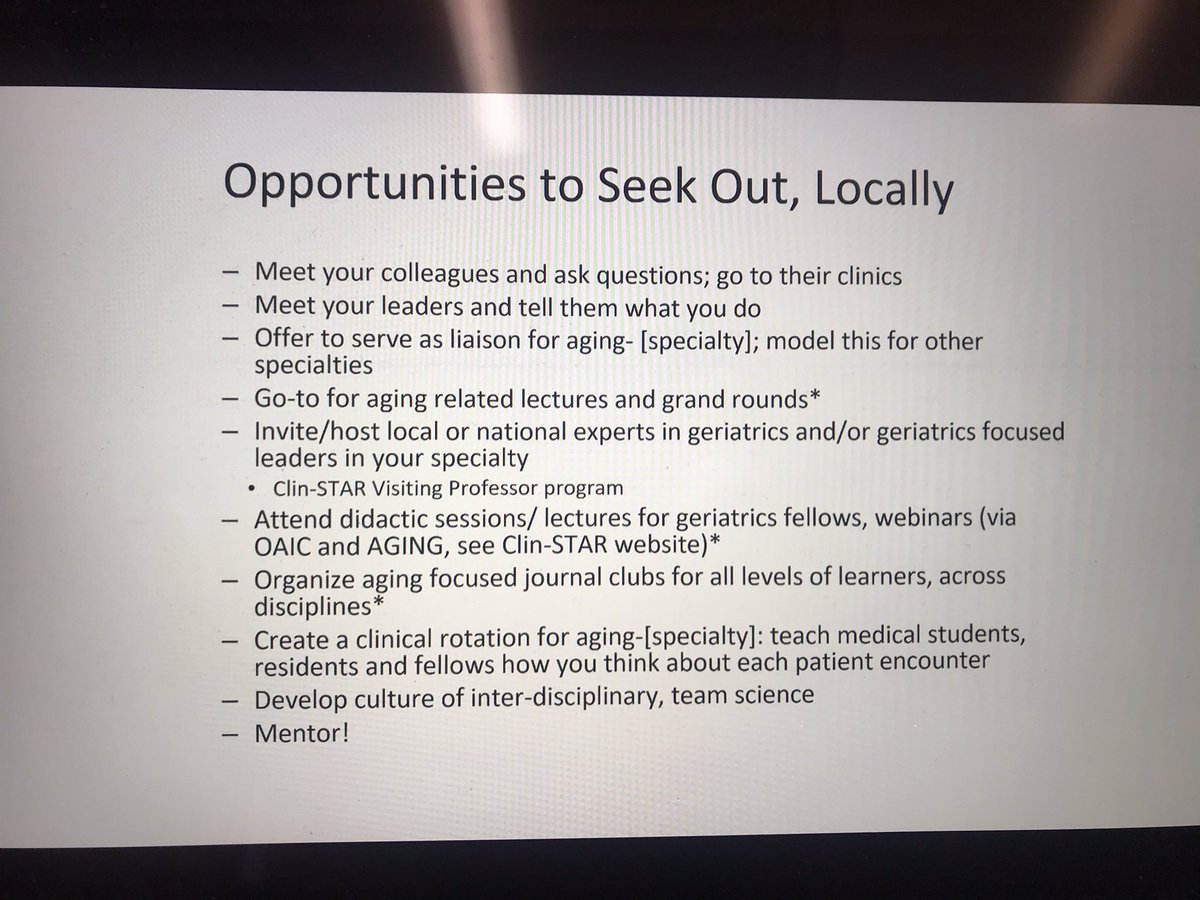
Join the NIA-funded Clin-STAR database today! Complete this brief questionnaire by December 22 to secure your spot in this national, high-impact community of clinician-scientists in aging research: https://t.co/kUq2AAdQ24
Announcing:
The Geriatric Dermatology Society
https://t.co/8iUP580sAo
Thanks to leadership from medical student lead Shreya Sreekantaswamy from @UofUMedicine
We hope this serves as a collaborative platform for research, clinical, educational advancement. #dermtwitter
We must continue to advocate for older patients in dermatology. The responsibility is on the field.
The more momentum we build, the more we can meet the needs of our aging population.
https://t.co/6JVyICHp0Y
This is a massive issue. We’re blind treating these patients because they are not included. Leave providers and patients w anxiety treating because there’s not enough data. Often results in undertreatment.
It’s dermatology‘s job to advocate, prioritize and include older adults
Did any older patients delay treatment for BCC and SCC?
Mackenzie Wehner at MD Anderson Cancer Center is conducting an IRB-approved study on COVID-related delays in skin cancer treatments to understand patient experiences (e.g. symptoms, emotions, changes to their tumor).
Information to send directly to patients:
Researchers at MD Anderson are conducting a study to understand the experiences of people who have been diagnosed with Basal Cell Carcinoma (BCC) or Squamous Cell Carcinoma (SCC) and have had their treatment delayed due to COVID-19.