"In a lot of photographs of jazz musicians... everything is still. I wanted to show how I felt when I was hearing the music." - Anthony Barboza
June is Black Music Month, and we're highlighting Black music history and visual culture with stories and images from our collection. Stay tuned for more! 🎵
In this illustration for spell 17 of the Book of the Dead, a blade-wielding cat cuts the head off a snake. The serpent is Apep, the lord of chaos, who every night attacks the sun god Re during his nocturnal journey through the underworld. Re, in the form of a great cat, defeats Apep, ensuring cosmic order.
In the Book of the Dead, as in day-to-day life, this battle repeats eternally. Chaos always threatens, but the rhythm of day and night reassures us (as it has for thousands of years) that order will be restored. ☀️
🐈⬛ https://t.co/DeEJWluFDG
These photographs come from the Johnson Publishing Company Archive, one of the most comprehensive records of Black culture in the 20th century which is currently being digitized and archived by Getty and Smithsonian’s National Museum of African American History and Culture. [🧵4/4]
https://t.co/LCA6IfWGRA
Happy #PrideMonth! 🌈 Fashionable, feminine, and a rebellious source of entertainment.
In the Johnson Publishing Company Archive, you'll find iconic images of drag ball performers from the 1940s–60s. [🧵1/4]
For art historian Alex Jones, they became a fascination, and a research project that brought these images back to life for the first time in nearly seven decades. [🧵3/4]
https://t.co/AsKkZSLNcF
Not to brag, but we have some CREATIVE visitors.
It’s #NationalCreativityDay! How are you creating? Inspired by your visit, or art in our collection? Please tag us @gettymuseum!
McMillan passed away in February, but his life’s work can be remembered through his archive which is housed in Getty’s collections and available to be studied by researchers and scholars.
https://t.co/qjImqxkh56
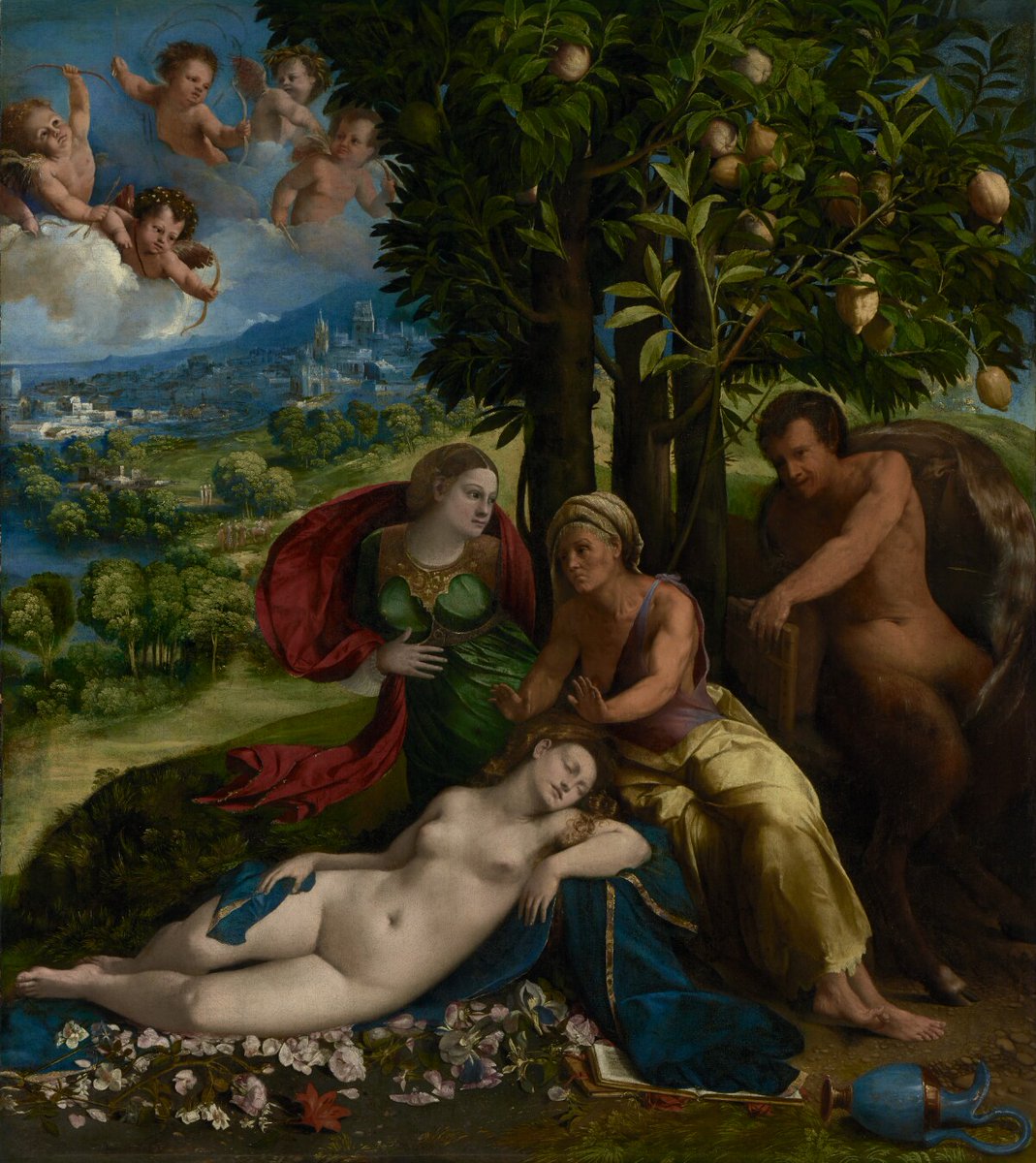
Through time, the color green in art has been made from the copper-derived mineral called malachite, the pale gray-green glaze called celadon, or verdigris—made by hanging copper plates over a hot vinegar bath.
It has also symbolized everything from life, rejuvenation, rebirth, fertility, and more.








![GettyMuseum's tweet photo. These photographs come from the Johnson Publishing Company Archive, one of the most comprehensive records of Black culture in the 20th century which is currently being digitized and archived by Getty and Smithsonian’s National Museum of African American History and Culture. [🧵4/4]
https://t.co/LCA6IfWGRA](https://pbs.twimg.com/media/HJwY-fyakAANGMz.jpg)
![GettyMuseum's tweet photo. Happy #PrideMonth! 🌈 Fashionable, feminine, and a rebellious source of entertainment.
In the Johnson Publishing Company Archive, you'll find iconic images of drag ball performers from the 1940s–60s. [🧵1/4] https://t.co/UolYiVJvpZ](https://pbs.twimg.com/media/HJwXzLKaMAACJzk.jpg)
![GettyMuseum's tweet photo. For art historian Alex Jones, they became a fascination, and a research project that brought these images back to life for the first time in nearly seven decades. [🧵3/4]
https://t.co/AsKkZSLNcF https://t.co/Pnqjatzp5W](https://pbs.twimg.com/media/HJwY5ydaEAAbk3U.jpg)