canva just pivoted from "design tool with AI" to "AI tool with design." their new agentic system generates entire campaigns from a single prompt.
this is the playbook every SaaS will follow in 2026: your product becomes the AI, the old product becomes a feature.
what tool do you use daily that hasn't made this shift yet?
Most revenue motions do not fail from lack of activity.
They fail from noisy signal and blurry ownership.
One fix that worked in a lean security team:
Two-lane routing.
Enterprise vs. rest.
Rule-based qualification.
Clear handoff logic.
Result:
$2M pipeline.
160% YoY growth.
No extra headcount.
Signal beats volume.
Every time.
If AI is making your agency produce more but delivery still slips, scope still drifts, and reporting still feels manual, the problem is not output speed. Which handoff, approval, or client update would you remove first if you rebuilt the workflow today?
Starting in May, I’m mentoring a new accelerator cohort. My first lesson? Stop obsessing over Product-Market Fit.
PMF means people love your product. GTM Fit means you have a repeatable, scalable way to grow.
Investors don't fund "magic touches"—they fund systems.
Let me say this clearly…
When you try to attract everyone…
you end up attracting no one serious.
Because your message is too weak to pull anyone in.
👉 Specificity creates connection.
Be honest 👇
Who exactly stops scrolling when they see your content?
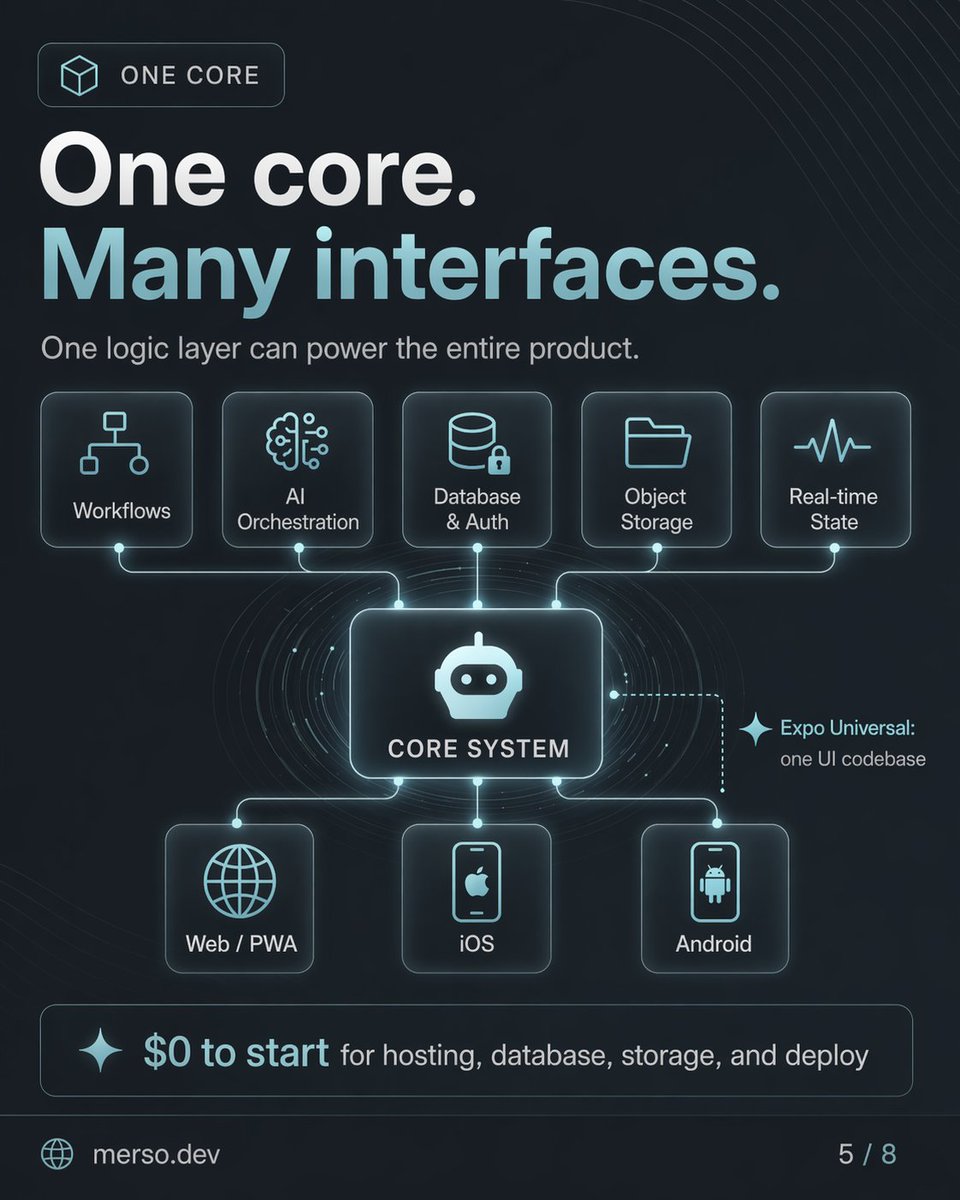
The real change happens when the whole system becomes autonomous:
- goal
- workflow
- AI orchestration
- state
- tools and APIs
- final outcome
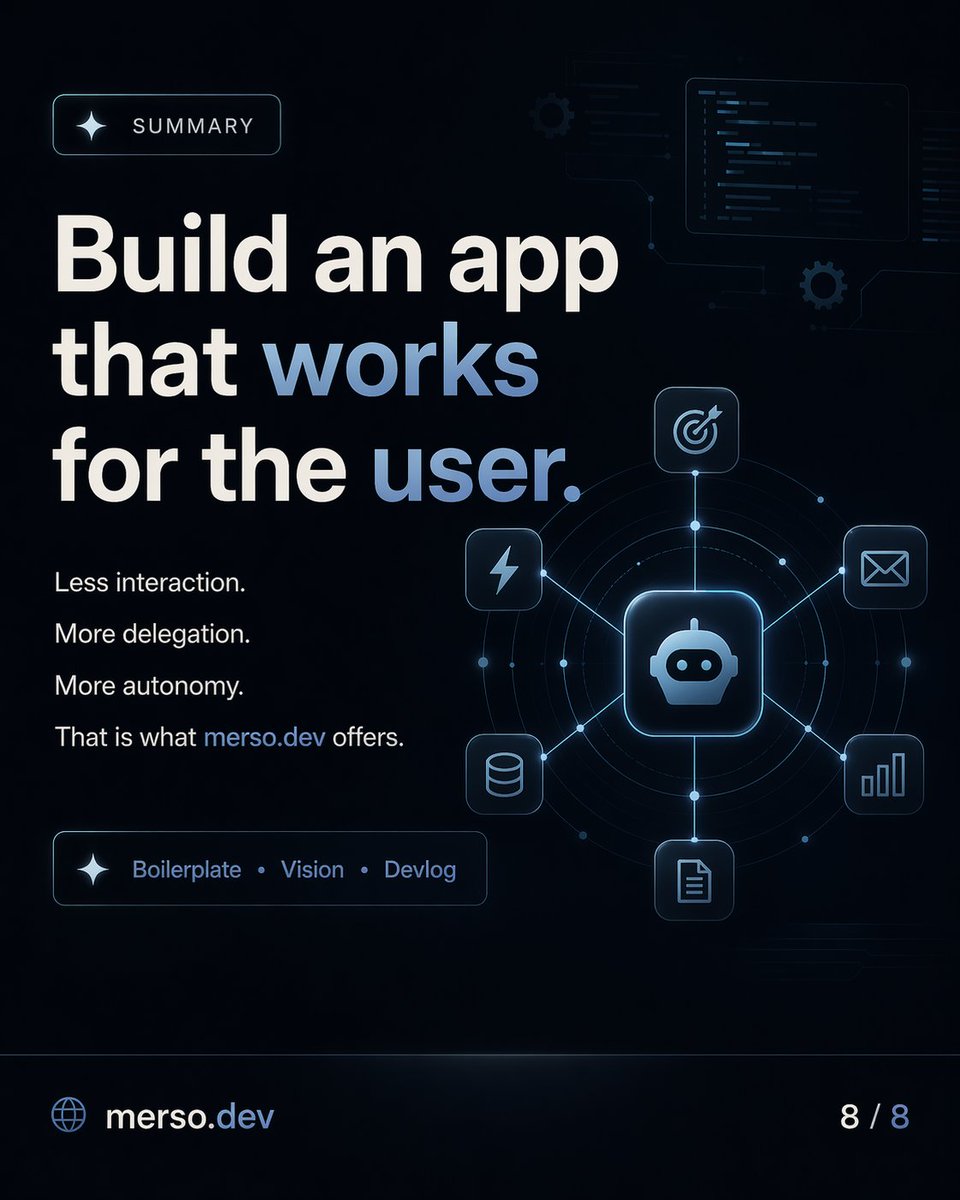
The app stops being a dashboard.
It starts being an operator.
Build systems that work for the user, not the other way around.
SF now has 2,000 AI startups that raised $86B last year. a london startup just got $500M PRE-series A for "recursive self-improvement."
meanwhile i'm running 5 products off a single linux box with 23 cron jobs and a $47/mo cloud bill.
the gap between funded AI and profitable AI has never been wider. pick your side.
What didn't work:
• Trying to build "for creators" first. Too broad. Pivoted to enterprise training/knowledge.
• Hiring a dedicated marketer. Founder-led sales beat this 10x.
• Overbuilding features. Customers wanted less, not more.
Specificity is the last thing AI cannot do in content.
"It's not just 'my exact caption structure.' It's—the exact structure that took my post from 2% to 11% engagement in 30 days."
"Specificity signals credibility."
Unpopular opinion: Most businesses between $2M and $15M don’t have a marketing problem.
They have a “nobody sees the whole picture” problem.
Marketing is doing marketing things.
Sales is doing sales things.
Ops is doing ops things.
But nobody is connecting the dots between them.
That’s not a strategy issue. It’s a structural one.
And no amount of agency spend fixes a structural gap.
Agent adoption is less about raw capability and more about operator trust. Before install, people want to see permission boundaries, approval points, rollback path, and one bounded workflow worth testing. Better trust surfaces beat bigger promises.
Founders delay GTM hiring because founder-led sales works at first.
But what works from 0→$1M (founder hustle, warm intros, custom pitches) breaks at $1M→$3M when repeatability matters more than heroics.
The real bottleneck in most institutions is not intelligence.
It is execution latency.
Too many approvals.
Too many disconnected systems.
Too much manual coordination.
Agentic AI becomes powerful when it compresses the distance between decision and action.
Why this fails mechanically: GTM is a learning loop. If you delay the owner of that loop, you delay message testing, channel feedback, and sales process design. Lost compounding never comes back.
Hybrid SDR teams are the signal. AI-only teams book 29 meetings/month. Human-only teams book 56. Hybrid teams hit 117. The debate is not AI vs reps anymore. It is whether your workflow lets each do the work they are best at.
Founder-led sales can hide the problem for a while. Revenue still comes in, so teams assume the system works. It doesn’t. It’s usually founder hustle, not repeatable GTM.
The bottleneck for GTM teams used to be doing the work. Now it's keeping track of it all. AI made us capable of so much more that task management became the new full-time job.
AI SDRs: $39 per qualified lead, 1-minute response time. Human SDRs: $262 per lead, 42-hour response. That math passes a CFO whiteboard test. Unit economics, not productivity theater. #RevOps
73% of marketing leaders say manual campaign coordination is their biggest bottleneck.
AGMA360 eliminates it entirely.
AI agents running 24/7. Zero manual handoffs. Pure execution.
The future of marketing isn't more tools—it's autonomous agents.
#MarketingAutomation #AIMarketing