Ever wish you could focus on just the interesting parts of your 2D plots?
Caleb Thomas, a talented member of the MATLAB user community, has made it possible with his open-source Zoomed Axes contribution.
Check it out 👉 https://t.co/k8gy1bjaKg
Marble Madness (Atari Games, 1984), designed by Mark Cerny, puts you in control of... a marble! For those old enough to remember this gem, its only flaw was its shortness (only 6 levels), and I wonder why they didn't just make more levels. Surely, the core programming was the heavy lifting, adding a few more levels (the easier part) would have given this game a much longer lifetime.
What stands out are brilliant isometric graphics, an iconic soundtrack, and an interesting concept: guiding a marble through a maze with traps and obstacles. I remember real-life versions; a wooden box covered by plexiglass containing a maze-like structure, where you guide a metal ball from one end to the other by tilting the box.
Marble Madness belongs in that rare category of early '80s games that truly stood out. You can't put it with Paradroid, Elite or The Sentinel, but it left its mark. Close your eyes and listen to the first 10-15 seconds of the soundtrack for the ultimate time travel experience.
BREAKING: Sugars essential for life have been found in pristine asteroid Bennu samples collected by NASA’s OSIRIS-REx spacecraft. Combined with previous detections of amino acids and nucleobases, we see that life’s ingredients were widespread throughout the solar system: https://t.co/Tb3HpwZG9J
More on the study led by Yoshihiro Furukawa of @TohokuUniPR⤵️
For those going home to visit family this weekend:
• Samsung calls it Auto Motion Plus
• LG calls it TruMotion
• Sony calls it Motionflow
• Roku calls it Action Smoothing
• Google TV calls it Motion Enhancement
• Vizio calls it Smooth Motion Effect.
@carl_feynman@psychiel Did you see this article from 1987 in Omni about lucid dreaming? It suggests reading things twice - if they’re different, you’re likely dreaming, and then could control it. https://t.co/WECq1iC95H
YES! THIS IS MY FAVORITE TIME OF THE YEAR! - The absolute last minute that abstracts can be submitted to the Stereoscopic Displays and Applications conference!
T-Minus 5 days to be exact 👀
@SDnAconf
@p4ra114x_5h1f4 Whoops, I meant to say the part that stuck out to me is the “anti-pinhole” (small blocker) half of the work. Check out the second part of their CVPR slides. Hmm they cite a 1982 paper…
@p4ra114x_5h1f4 I need to refresh my memory about it, but: light must bounce off a “scene,” then be blocked by an occluder (a basketball, even), and then (typically at least) hit a surface which is then photographed. Perhaps the camera needs excellent SNR, can’t recall.
@p4ra114x_5h1f4 The gist is that whereas a typical pinhole camera (or room with a pinhole) uses a “hole,” it turns out an OCCLUDER works too, like a basketball!
@p4ra114x_5h1f4@RealPreCinema Ever see “Accidental pinhole and pinspeck cameras”? When I saw this stuff and the videos it was a “wait, what???” moment for me: https://t.co/dJgVyT0S5y
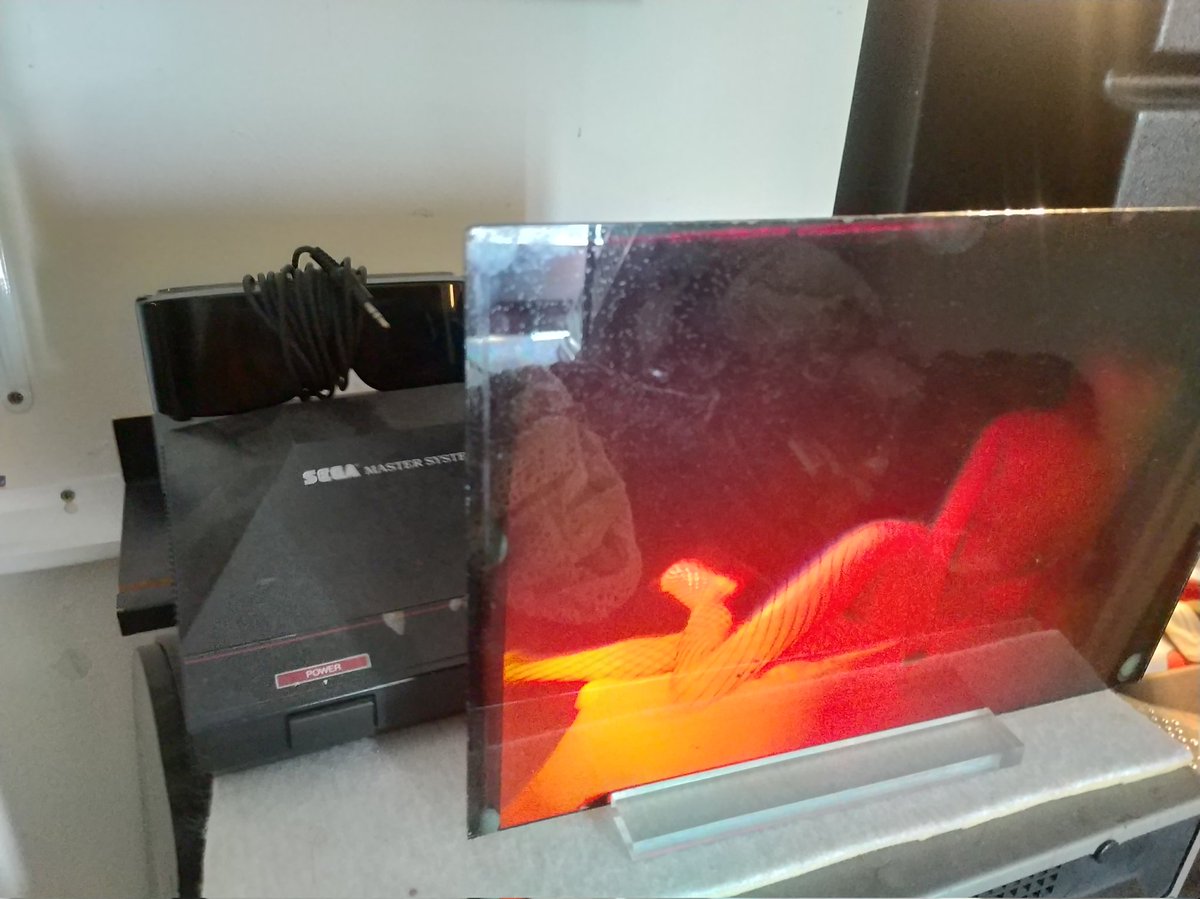
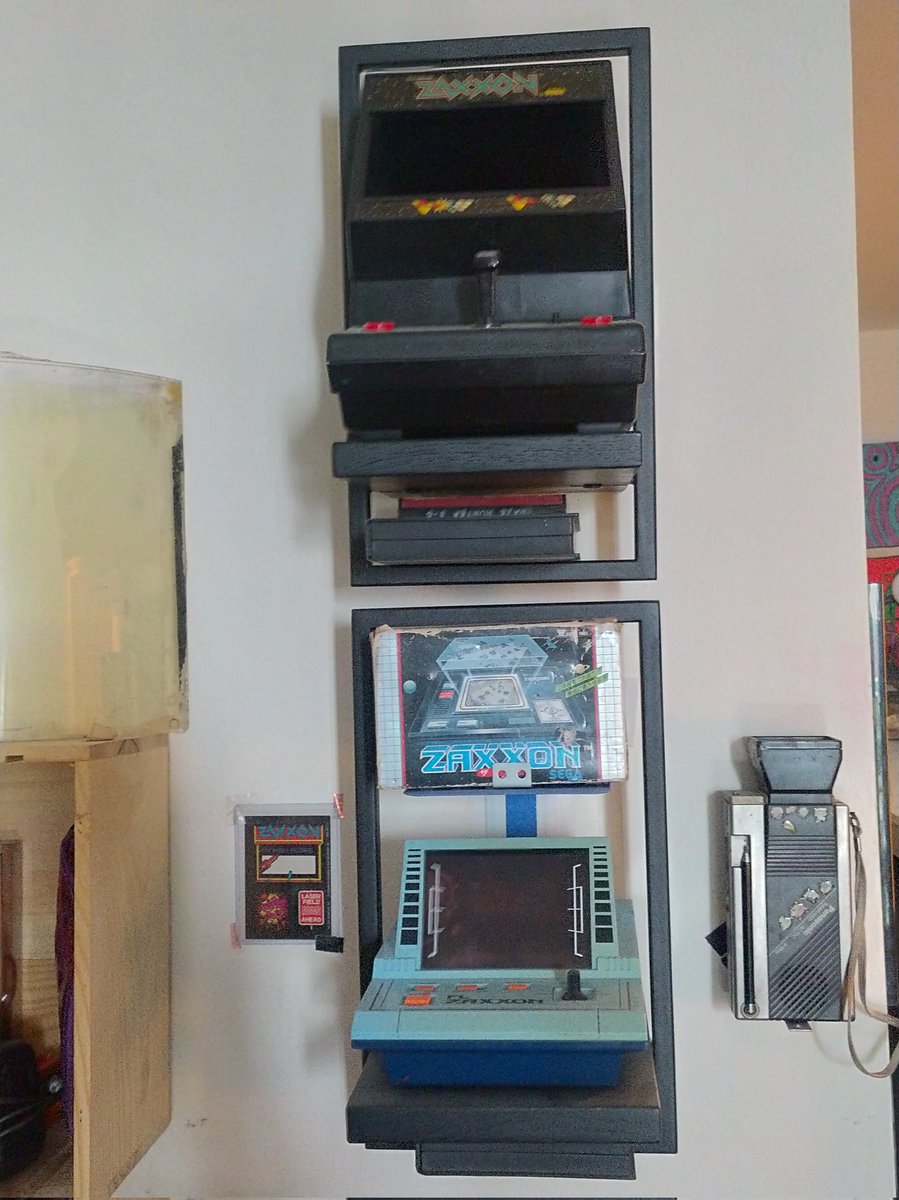
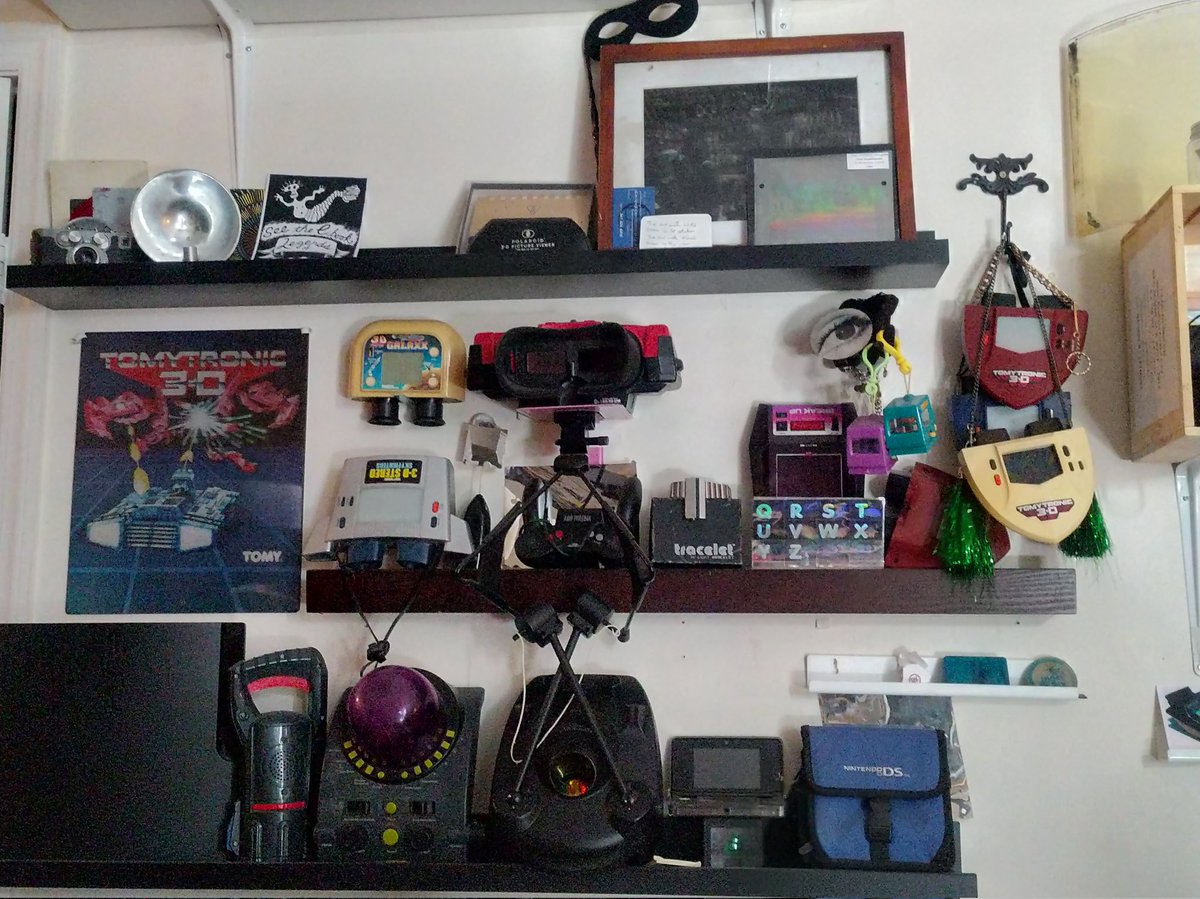
For sale, really big impressive 3D video game collection. Super rare & obscure shit. Multiple copies of a few choice choice items. Museum pieces. I actually wrote my whitepaper @SDnAconf on it. I have shit no one else thought of looking for. #3d#retrogames#3dvideogames