The gap between onboarding and actual participation is bigger than most teams realize. Reducing that friction can make all the difference.
#swapperfinance
Just discovered @PlayBugati and I’m curious to see how the ecosystem evolves. Always exciting to explore new Web3 projects early and watch the community grow. Looking forward to what’s coming next 🚀 #BUGATI#Web3
BUGATI Early Access is now live on @base
🏰 https://t.co/X3w6Vjotvy
Three(3) test servers are launching soon, and eligible early players will receive $BUGA to begin their journey.
Enter a fortress-based (MMO) where players build, trade, battle, and earn USDC across a living multiplayer world.
The first wave is limited to 5,000 players.
Register now and secure your place before the gates open.
Mint your BUGATI Mystery Box on Opensea now
🏰 https://t.co/ynTMDiGIFw
Limited to 5,000 boxes at just 0.0015 ETH each, available for 24 hours only.
Unlock your share of the $BUGA token allocation and discover ultra-rare items from the world of BUGATI.
Xeffy's Community MiniApp has launched! 🚀
Join us: https://t.co/hmAJIkcSfD
Access the Xeffy app, become an early contributor, and contribute to RWA mass adoption!
Early participants and contributors will be provided with our ecosystem token $Xef 🎁
Mark June 2026 on your calendars!👀🪂
Invite your friends and earn points by using the app!
I used to think oracles were just price feeds. The more I build in Web3, the more I realize they’re basically the data layer everything depends on. If the data is off, the protocol is exposed.
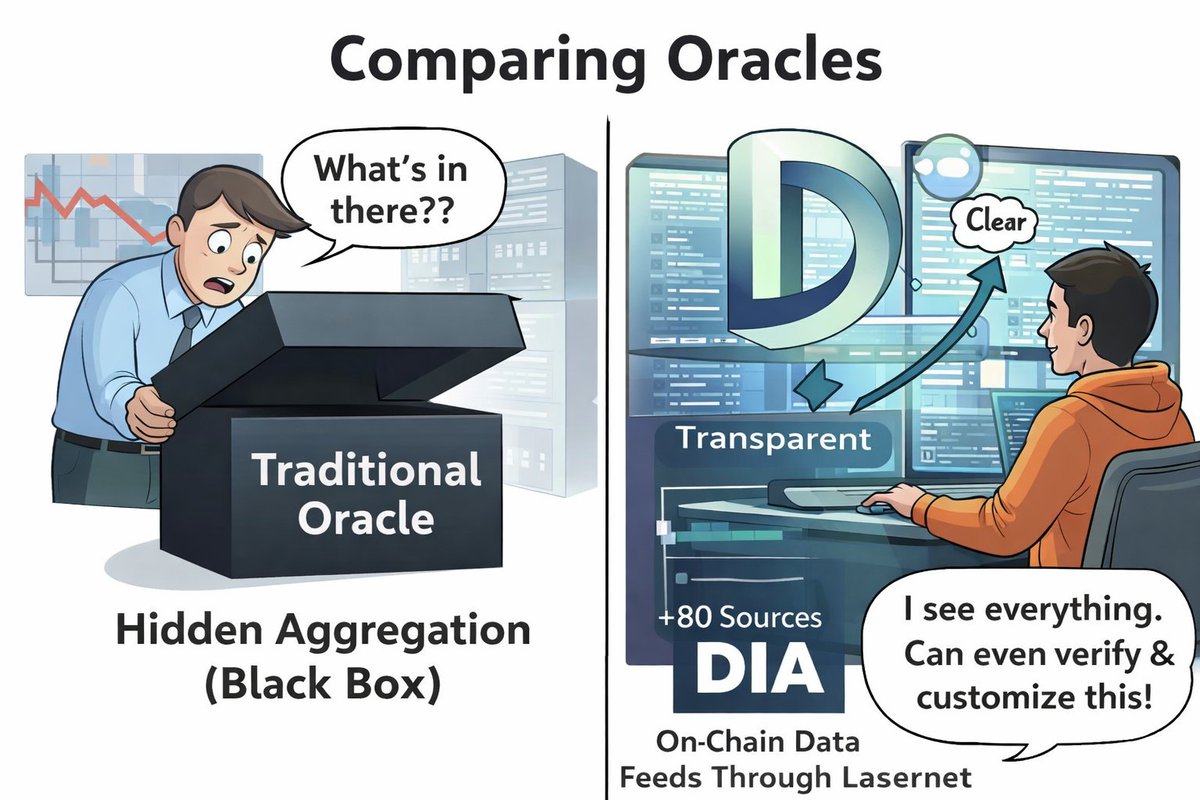
What stands out to me about @DIAdata_org is that they pull raw trade data from 80+ on and off chain sources and compute their feeds fully on chain. That means you can actually verify where the numbers come from.
For me, that transparency is the real edge.
Been poking around @RallyOnChain and honestly it feels different. No gatekeepers, creators actually get rewarded for their work and the AI checks make sure it’s fair.
Can’t wait for the Beta and to see how tokens mix into campaigns. It actually makes doing Web3 marketing feel less messy.
Been thinking how messy things could get if AI agents clash in the Agent Economy. Trust alone won’t cut it, someone actually needs to enforce fairness.
Checked out https://t.co/cWE0MconUd. This AI jury is kinda wild. It can handle disputes fast and make sense of different evidence types.
Honestly, knowing there’s a system like this makes me way more comfortable experimenting with autonomous agents.
Traded BTC on @grvt_io this morning, small size just to test liquidity. My orders filled faster than I expected and I didn’t get the random slippage I usually see elsewhere.
Switched to mostly limit orders and noticed the maker rebate stacking up. Felt good not bleeding fees for once.
Also kinda wild that my balance is still earning around 10% while I’m actively trading. That part surprised me more than anything.
Been keeping an eye on GLP too, holding steady in this market. Curious how the GRVT airdrop will turn out.
Just been trading on @grvt_io. Spreads are tight, orderbook is deep. Placing limit orders actually pays off, which feels pretty cool.
Seeing my balance earn around 10% yield while I trade feels like a bonus for just doing my thing.
GLP looks solid, and that GRVT airdrop coming up could be big.
Honestly, I usually don’t share stuff unless I’ve tried it myself.
@RallyOnChain caught my attention because it actually focuses on content quality, not just followers and hype. It’s still early, but I feel it could be useful for serious Web3 creators.
If you’re curious and want to get in early, here’s my link:
https://t.co/bKfKDVo8YF
If you join, let’s build something solid, not just noisy
1/6
I think PR reviews are quietly breaking.
Not because devs got worse.
But because the volume is insane now.
GitHub is merging something like 43M PRs a month.
Add AI on top of that. It’s chaos.
I did not expect to look twice at another oracle project, but digging into @DIAdata_org changed my perspective.
Most people hear “oracle” and just think price feeds. But oracles are the backbone of DeFi. If the data is wrong or opaque, everything built on top of it is at risk.
What caught my attention is that DIA sources raw trade data from 80+ on and off chain venues, and instead of relying on hidden aggregation, they compute feeds on chain through Lasernet. That makes the methodology transparent and verifiable, not a black box.
They support 20,000+ assets across 60+ blockchains, which shows this is not a niche experiment. For me, the real value is that developers can actually inspect, customize, and verify the data logic themselves. That is what Web3 data infrastructure should look like.