I have curated with @lauraiannelli a dashboard displaying part of the data from the IPOLHYS national survey of Italian Internet users about polarization, news consumption, and political participatory behaviors. It is available in this website's section 👇
https://t.co/YHN7RITFtm
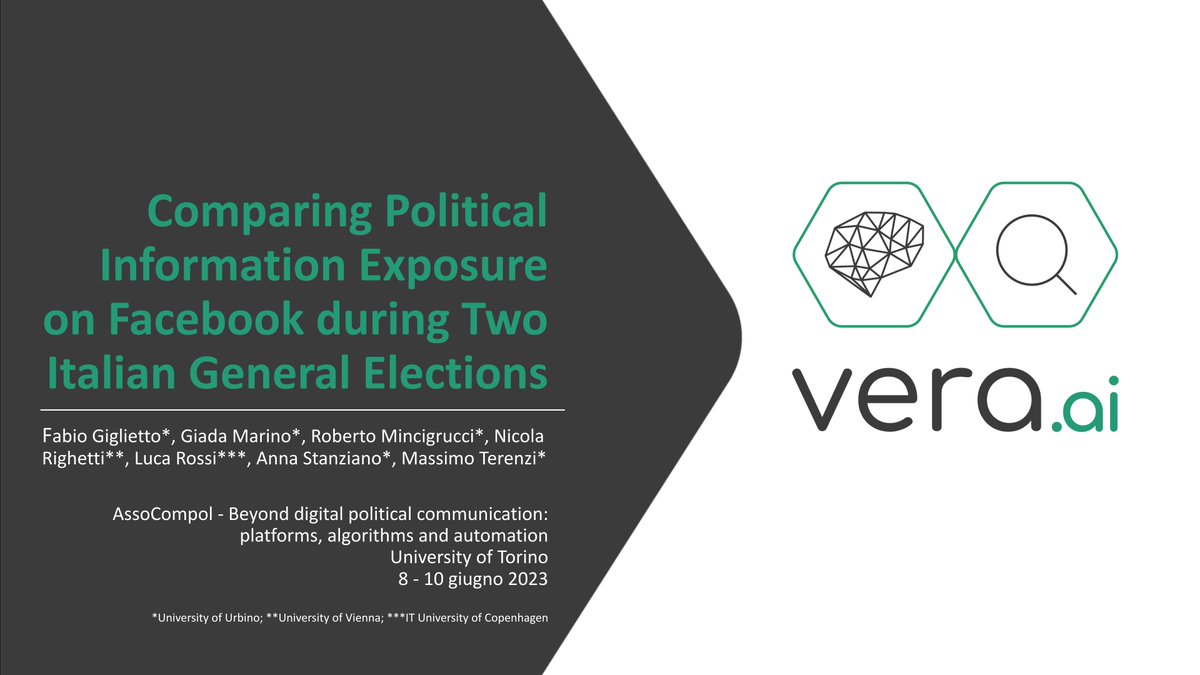
This afternoon @uniurbit, with @AnnaStanziano90 I will talk about religious networks of FB accounts performing Coordinated Sharing Behavior for political/proselytism purposes that emerged studying the 2022 Italian elections👇👇
https://t.co/vUQba33Ua2
Thrilled to announce our first #VeraAI publication: 'A Workflow to Detect, Monitor, and Update Lists of Coordinated Social Media Accounts Across Time: The Case of the 2022 Italian Election.' 📄🇪🇺 Read it here: https://t.co/NU3L4O6Rjc #SocialMediaResearch
Join our team for the @veraai_eu project and combat malicious influence operations using AI. Apply by 19-08-2023, 23:59. See job details at https://t.co/drauhCZYfv
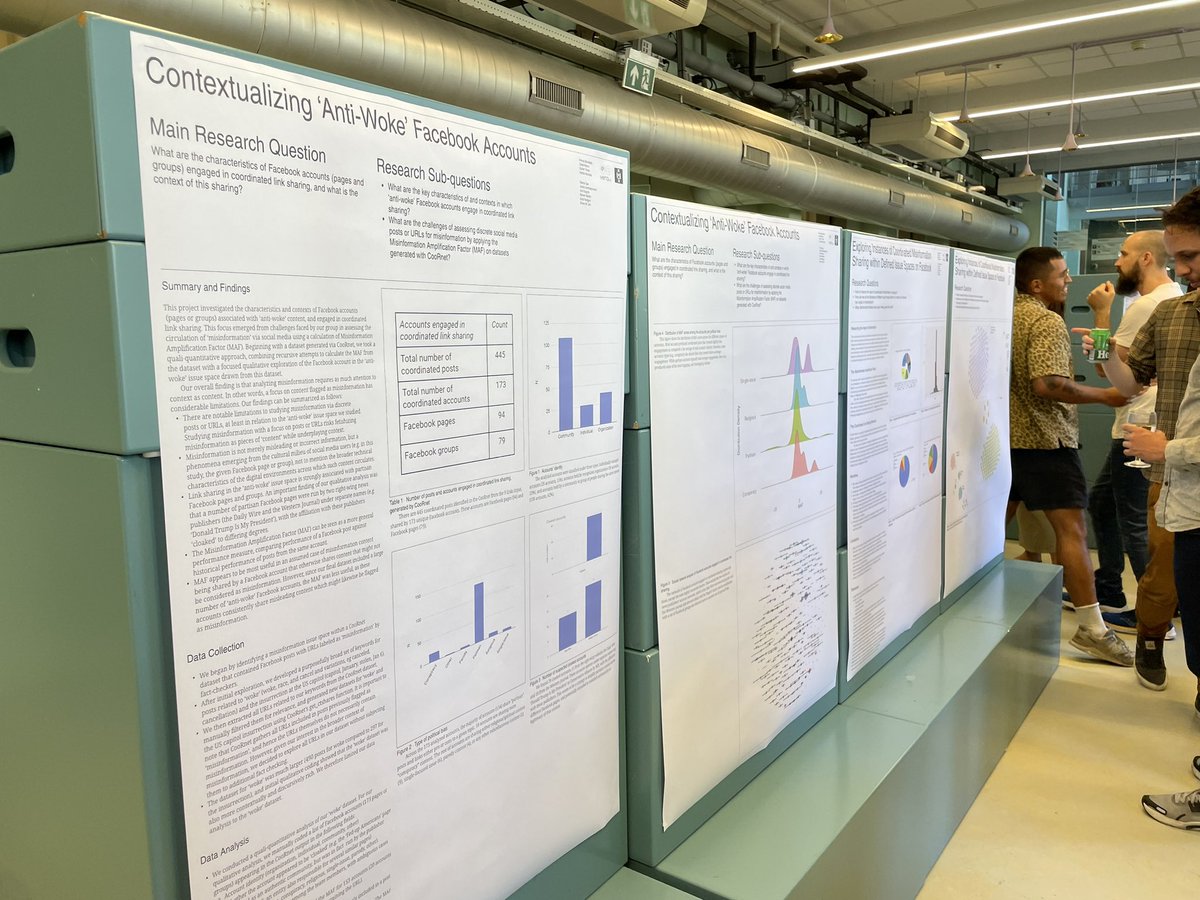
This week I facilitated the project Disinformation impact assessment @ UvA @digitalmethods initiative. We applied the Misinformation amplification factor to coordinated content retrieved by CooRnet. So proud to have supported and collaborated with such amazing colleagues!
Watch the video of a talk and presentation by @fabiogiglietto of @mine_smd@uniurbit that he delivered in June at @qutdmrc. Topic: OpenAI Models for Topic Modelling in Social Media Analysis.
https://t.co/UgLqPl4mAL
Today I am joining the event “Meet the Future of AI: Countering Sophisticated & Advanced Disinformation” in Bruxelles with a lot of @veraai_eu colleagues
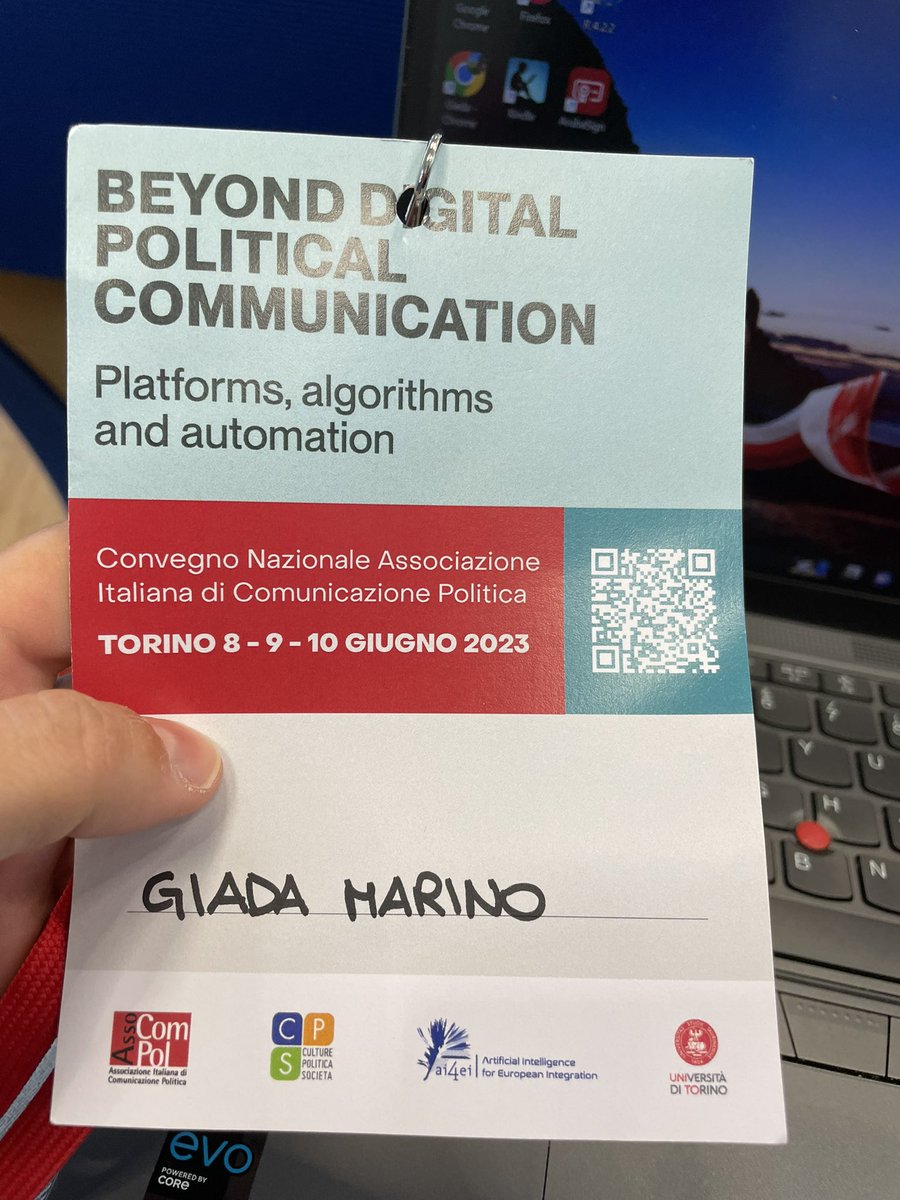
Questa mattina @ #SISCC23 presento lo studio condotto con @lauraiannelli sulle determinanti individuali delle forme di partecipazione ai cicli di notizie problematiche che è parte del progetto IPOLHYS - investigating polarization in the hybrid media system
'Monitoring misleading political narratives and harness platform data to study their influence.' New vera:ai research from the team @mine_smd / @uniu including @fabiogiglietto and @Gi_hades. Aim: identify, categorize, and label similar political narratives https://t.co/bCmKcaFBwz
@Gi_hades is set to unveil our latest research, employing a novel #AI powered workflow designed to detect, classify, and label corresponding political narratives, thereby quantifying their reach on social media. Explore our data at https://t.co/vyfSwoxh4y #ComPol23#OpenAI
Find out about the @uniurbit/@mine_smd team active in vera:ai, namely @fabiogiglietto@Gi_hades & @MincigrucciR, what they work on (e.g. coordinated sharing behavior) and what keeps them awake at night. "Seeing our work reused by others" makes them happy! https://t.co/H91c1TeG9N
Surveys and experiments emerged as common research methods in the reviewed studies. Furthermore, the findings indicated that political polarization is a significant predictor of both the consumption and sharing of problematic information.
📢My latest study with @lauraiannelli on political polarization and problematic information is now available in Frontiers in Sociology. We reviewed 68 studies from 2016 onwards, exploring the relationship between these phenomena. The full article👇👇https://t.co/MDGVe7QGSy
The study highlighted the prevalence of US-based samples and the frequent analysis of Twitter and Facebook as social media platforms. This focus provides valuable insights into the implication of these platforms on the associations between polarization and dis/misinformation.
We have just released version 1.7.0 of #CooRnet, which includes an auto-labeling feature that relies on the #OpenAI API to provide a short description of the coordinated networks detected > https://t.co/ZNDHrjgOYw
At the end of my journey with IPOLHYS, we published the project Online Library section of the website on the relationship between polarization and the media system curated by @lauraiannelli and I. https://t.co/HU0JdlvwZn