A Stanford mathematician spent 40 years watching brilliant students fail at hard problems.
Not because they were stupid.
Because nobody taught them what to do before they started solving.
His name is George Pólya.
His 1945 book has sold over a million copies and never gone out of print.
Marvin Minsky, the man who built the first neural network machine at MIT, said publicly that everyone should read it.
Most people have never heard of it.
The failure Pólya watched repeat itself for four decades was always the same.
A problem appears. The student feels anxiety. They immediately start calculating.
Not because calculating was the right move. Because it felt better than sitting with not knowing.
The calculation was almost always wrong.
Not from lack of skill. From lack of understanding what was actually being asked.
He called it the most neglected step in all of problem solving.
Step one is to understand the problem. Not skim it. Not assume you've seen something similar. Actually understand it.
His filter was one question: can you restate the problem in your own words without looking at it?
If you can't, you haven't understood it. You've only read it.
Most people skip this and spend hours stuck on a problem they never actually understood.
Step two is to make a plan. Not execute. Plan.
The pattern Pólya saw in every successful problem solver was the same. When something feels impossible, find a simpler version and solve that first.
Not because the simpler version is the goal. Because it gives you a method you can carry back.
He phrased it once with precision: if you cannot solve the proposed problem, try to solve a related one.
That question alone is worth more than most problem-solving courses ever taught.
Step three is to execute. Everyone thinks this is the whole game.
It is the third of four steps. Pólya spent the least time on it because it is the most obvious. Once you understand and have a plan, execution is mostly patience.
Step four is the one almost nobody does.
Look back.
Not to check the arithmetic. To ask: can I verify this with a different method? Can I use this method somewhere else? What would I do differently?
This is where the real learning lives.
Every expert Pólya studied had this habit. Every struggling student skipped from the answer to the next question, carrying nothing forward, starting from zero every single time.
His deepest insight was not a technique. It was a diagnosis.
Intelligent people feel bad at problem solving because they confuse reading a problem with understanding it. They confuse starting to work with having a method. They confuse getting an answer with having learned anything.
These are not the same things.
The students who get genuinely good at hard problems are not the ones who practice more.
They are the ones who slow down at the two moments every instinct tells them to rush.
The beginning and the end.
The problem was almost never as hard as it looked.
They just hadn't understood it yet.
Muchas felicidades al joven Isaac del Toro por su histórico tercer lugar en el Tour de France. 🇲🇽🚴♂️
Con este gran logro se convierte en el primer mexicano en subir al podio de esta prestigiosa competencia y en el joven más destacado del ciclismo en la actualidad.
México se siente muy orgulloso de tu esfuerzo, dedicación y de este gran momento que inspira a todo un país. ¡Felicidades, Isaac! Que sigan los éxitos.
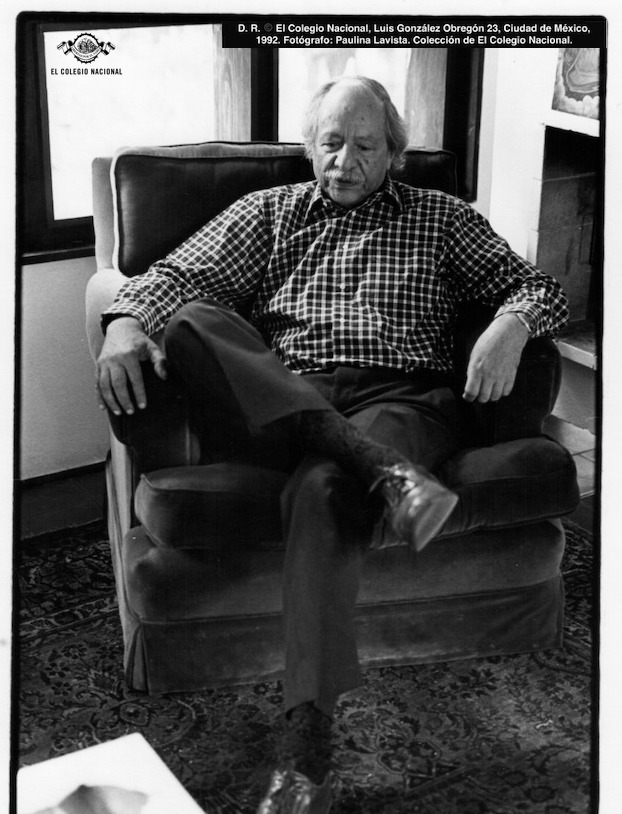
El 25 de julio de 1922 nació Antonio Alatorre Chávez, destacado filólogo que ejerció la crítica literaria y la traducción. Fue premio titular de la Cátedra Italo Calvino 1994 y Premio Nacional de Ciencias y Artes 1998. Ingresó a El Colegio Nacional el 26 de junio de 1981.
Ten years ago I gave the Charles W. Kegley Memorial Lecture in Bakerfield California. There was consternation from a handful of the audience who accused me of lying. I also got a standing ovation at the end and there was a lot of clapping when I answered absurd zionist "questions."
I'd forgotten about it until today when I received a note from someone who was there. This person admitted she had doubts about what I was saying because at some point in my talk or in response to a question (she wasn't sure) I predicted Israel would eventually commit outright genocide and perhaps use a nuclear weapon unless someone stopped them. I don't remember saying that, but she does, and she wanted to apologize for not wholly believing me then because now she knows that I showed them was a mere tip of the iceberg of Israeli evil.
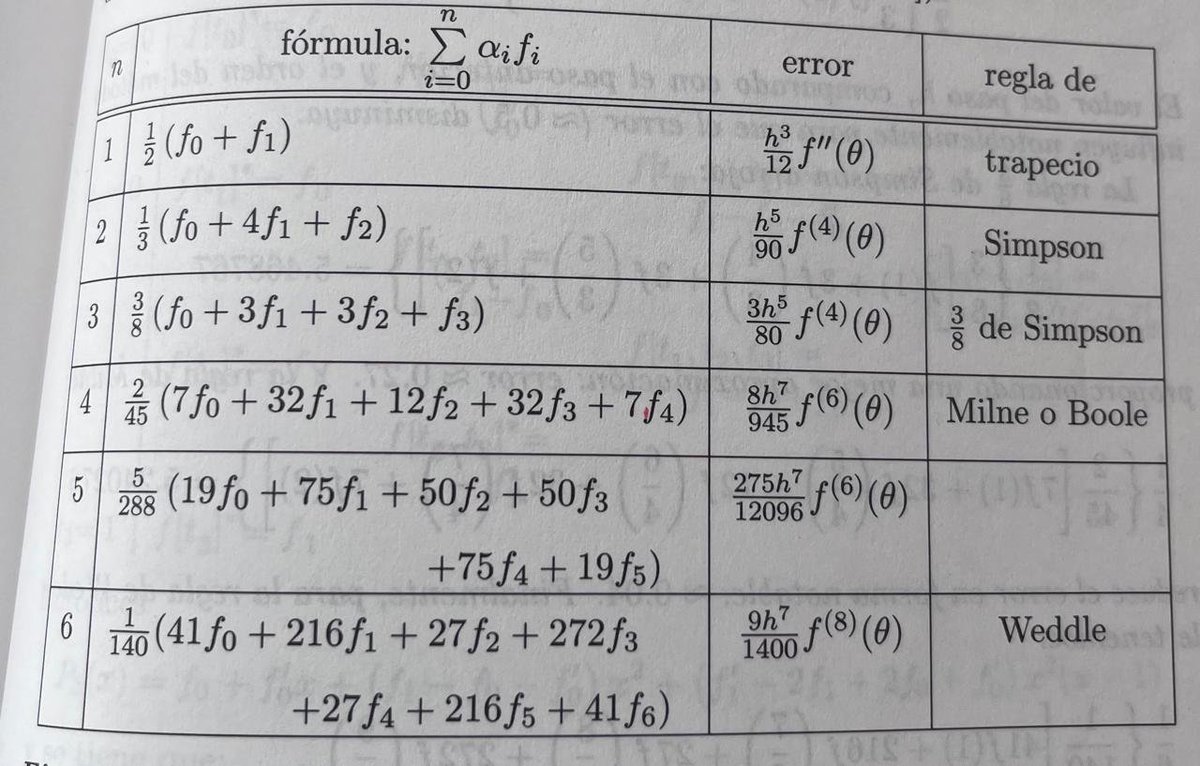
Un día como hoy, en 1682 nació el matemático inglés Roger Cotes. Sea esta una oportunidad para recordar las importantes fórmulas de integración numérica de Newton y Cotes:
@GainKn0w1edge Approximately yes, you can substract 30 instead of 32 AND you can divide by 2 instead of 1.8 or 9/5. But the exact conversion is substract 32 and then divide by 1.8. The difference should be around 10%.
“Algún día, la casa de tus padres dejará de ser la casa de tus padres. La casa seguirá en pie, pero ya no será un hogar, será un recuerdo congelado, un eco de lo que alguna vez fuiste. Algún día, la casa de tus padres ya no olerá a domingos, ni a comidas familiares, ni a la calma después de un día largo. Ese día entenderás que la casa nunca fue la casa, siempre fueron ellos.
Porque la casa de tus padres nunca fueron realmente las paredes, los muebles o el lugar físico, eran ellos:
su presencia, su olor, sus comidas, sus voces y su calor.
Algún día la casa seguirá en pie, pero se convertirá en un eco vacío, un recuerdo congelado."
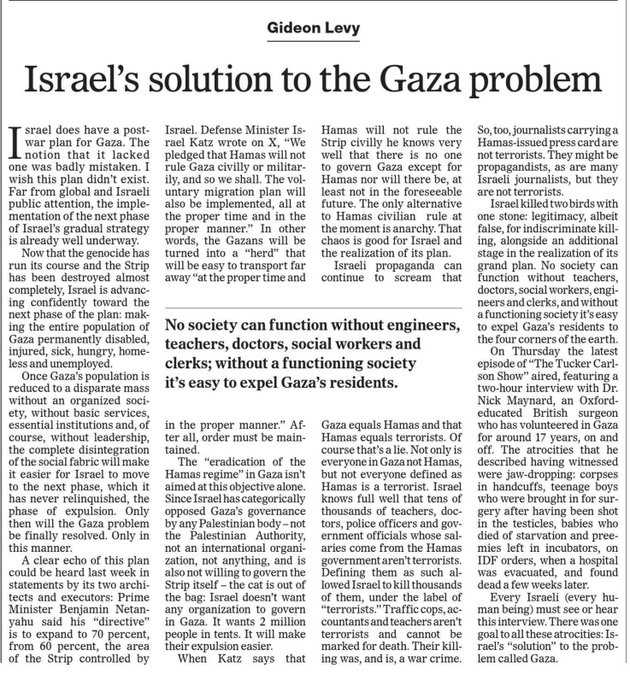
Now that Gaza lies in ruins—shattered, like a beloved face after a long brutality—Israel moves with a terrible confidence to the next act: The act of leaving every soul there not merely wounded, but permanently disabled. Injured, sick, hungry, homeless, without work, without hope. This is not war’s collateral damage. This is design.
As my friend Gideon Levy writes—and he knows, he knows—this is the prelude to expulsion. Think of it: a society without teachers, without doctors, without social workers, without engineers, without clerks. That is not a society. That is a holding pen. A slow erasure. And when nothing functions—no school, no hospital, no office, no heart—then it becomes ‘easy,’ they tell themselves, to scatter the people to the four corners of the earth. Like seeds from a broken pod, except no soil will take them.
We must name this. Not with rage alone, though rage is honest. But with the cold, clear tears of recognition: they are making life impossible so that departure becomes the only ‘choice.’ And the world watches, adjusts its spectacles, and calls for restraint. Restraint! There is no restraint in a slow drowning.