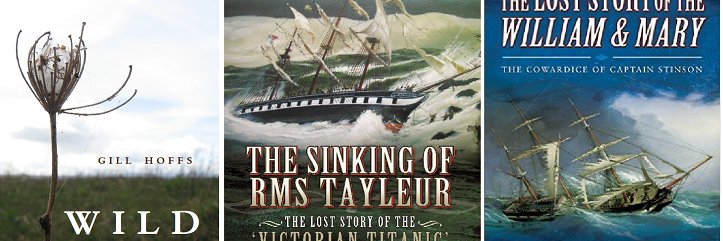
#OTD 1848, an American emigrant ship left #Liverpool for #Boston only to catch fire off the Welsh coast. Despite the best efforts of French and Brazilian royalty (and many others), lots died. More in @penswordbooks "The Lost Story of the Ocean Monarch"⛵️ https://t.co/THceLNBaTn
This Gothic Illuminator identifies himself as Nicholas. He wears a cap sometimes associated w/medieval Jews and holds a hand crutch that suggests a disability. I’ve never seen anything like this in a 13thc psalter. Huge thanks to @liber_ray for her brilliant seminar @bodleianlibs
From our archive comes this remarkable collection of five embroidered pieces all stitched by the same girl, M. Elliott, in an orphanage school. One of the pieces has a date, 30 June 1822. The collection includes a watch holder, watch glass cover, and three samplers (1/2)
The word CULPRIT comes from an historical French phrase—‘culpable, prest d’averrer nostre bille’—literally meaning ‘guilty, ready to prove our case’. The phrase was often abbreviated to ‘cul. prit.’ in English legal records, and ultimately combined as a single word in the 1600s.
It's pretty rare to see a sampler made by a boy & it's pretty rare to see a sampler made in Australia. It's even rarer to see a sampler that's both. Thomas Rice made this in South Australia in the 19th century. It was sold a few days ago by Leski Auctions https://t.co/ekmfnaqsHV
I loved school but one boy in my class was obviously experiencing neglect at home & always in trouble. Not a bad kid just always up to something wrong. Anyway he broke something in science, I saw the fear on his face, so I took the blame. He just msgd on FB to thank me. 32yrs on
Sarah Jane Reddish completed this vibrant, wonderfully textured sampler in 1839, when she was just nine years old. Her sampler includes a large home and accompanying fields with grazing sheep. They are joined by stags, birds and their eggs, flowers, and ripening strawberries
Ann Robinson stitched this beautiful sampler when she was nine years old. The verse, which she titles "Gold," comes from John Gay's poem called "The Miser and Plutus," published in his 1727 book Fables. Ann's verse is framed by a crown, trees, flowers, and a border of buds
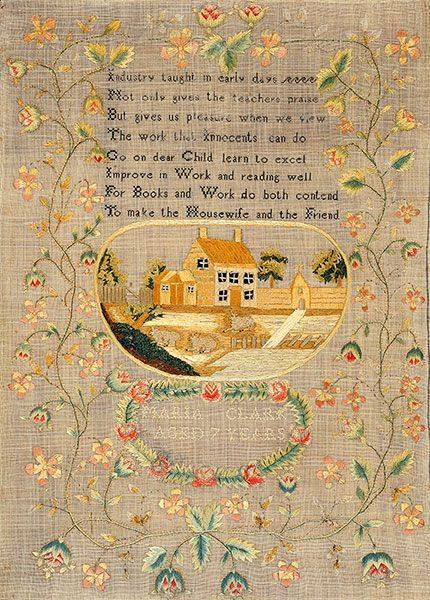
These early 19th-century samplers were worked by Mary Ann Fitzgerald and Mary Clark. Mary Ann lists the year, 1814, while 7 year old Mary does not. These samplers share the same format, central scene, and verse, indicating the same school or teacher
Mary Spencer stitched this sampler in 1789. A line of her inscription reads, “Mary Spencer was born the 16 of February 1777,” meaning she completed her sampler when she was 12. Mary may be the Mary Spencer baptised in Whitechapel, London on 16 March 1777, born to Ann and John
I got shitfaced at a wedding and found some pills in a baggie in my jacket pocket. Took one, woke up the next morning; my dear reader I had swallowed a spare button.
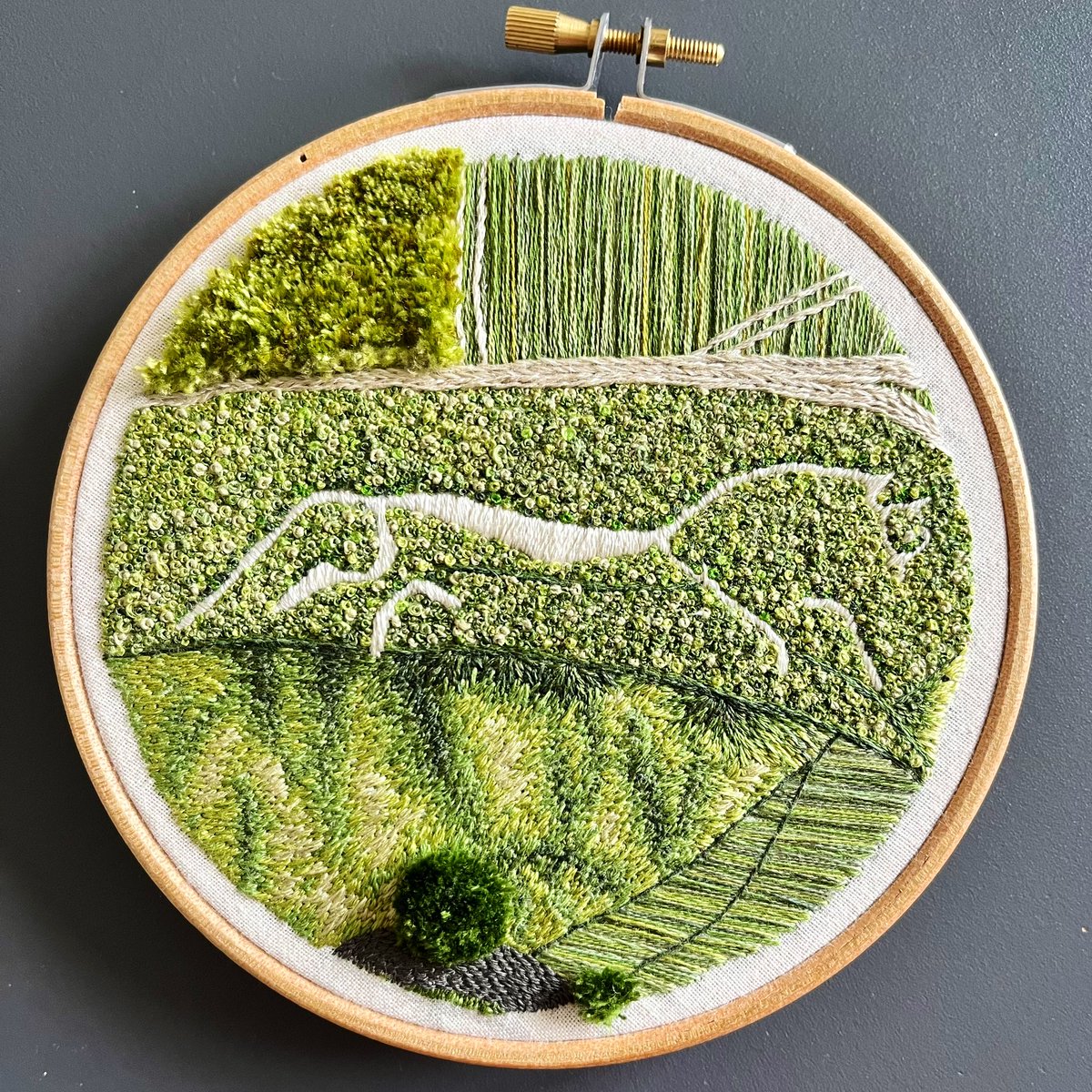
When I’m not clambering around medieval churches, I embroider strange things. Here’s one I just finished of the White Horse at Uffington - a prehistoric landmark cared for by the @nationaltrust. I spent so much time here as a child and it’s always loomed large in my imagination.
The word BLANKET was originally the name of a coarse undyed woollen fabric—and because of its pale colour, the ‘blank’ in ‘blanket’ comes from ‘blanc’, the French word for white.
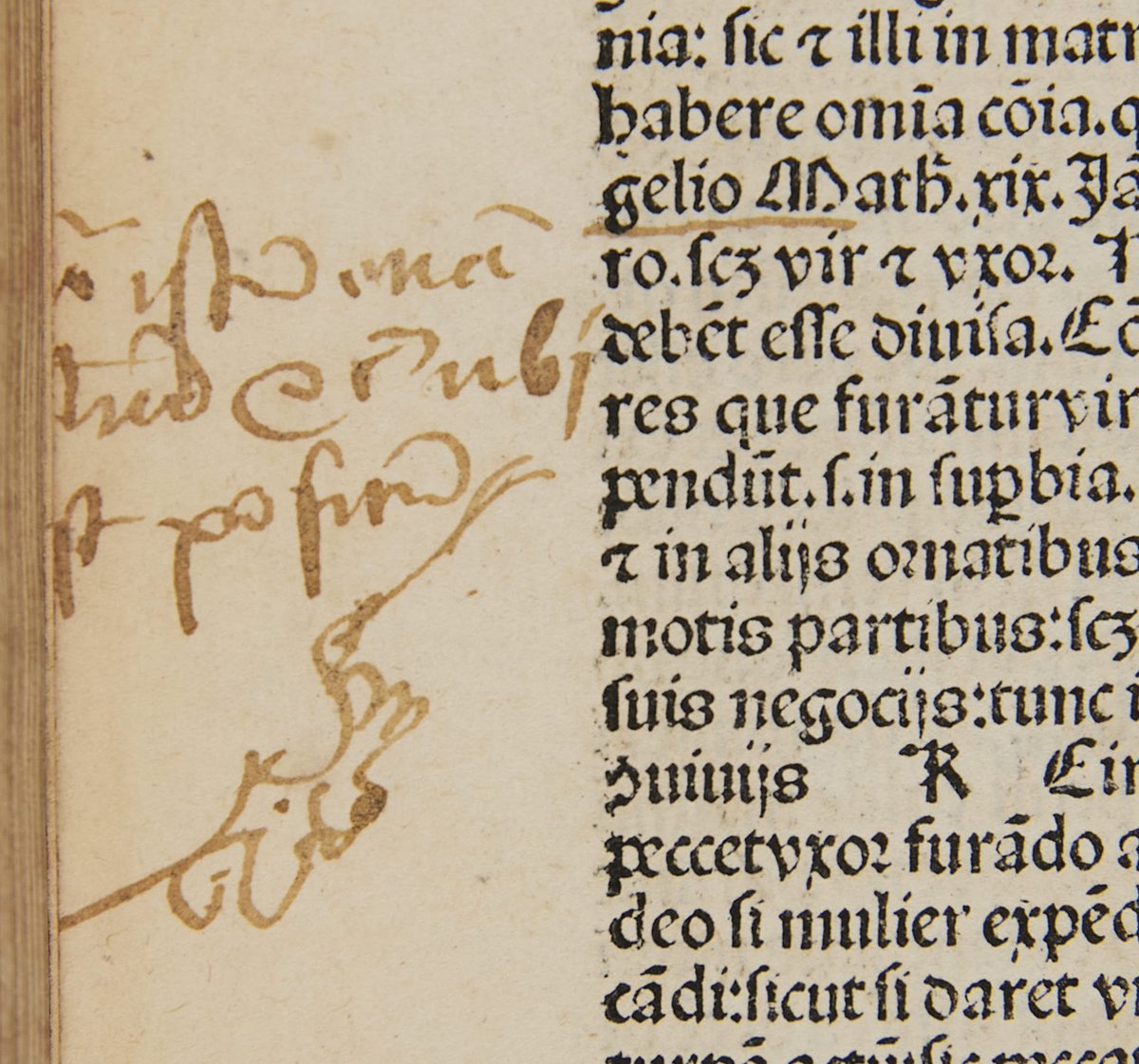
I think this reader was going for a manicule, a finger used to indicate an important part of the text, but all I can see is a balloon dog #ManiculeMonday#MondayMarginalia
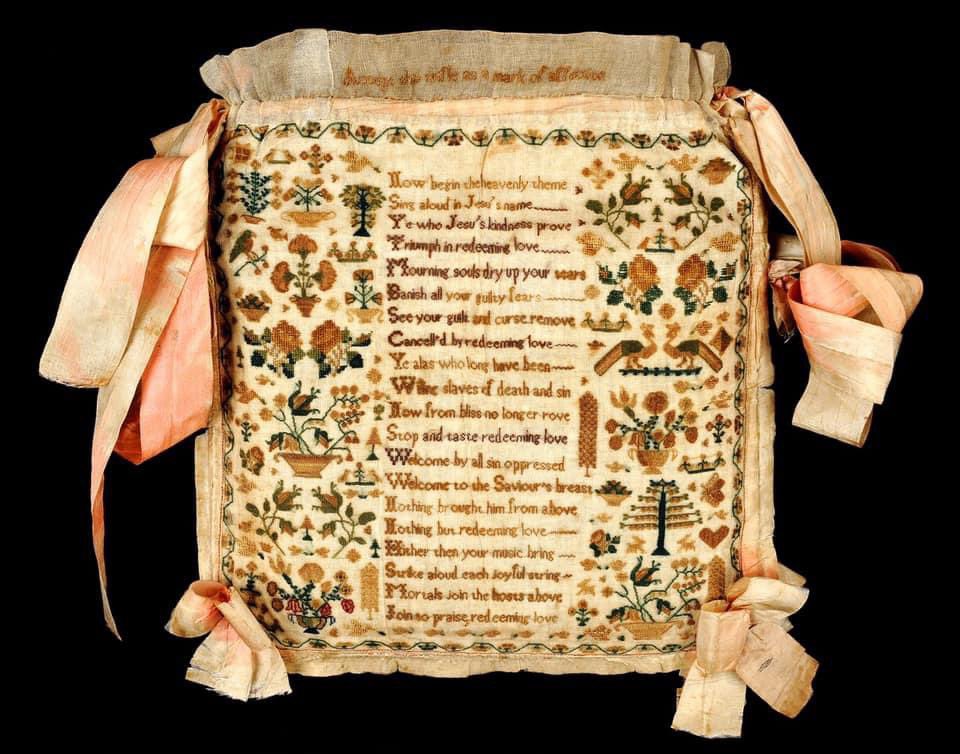
This circa 1840 bag was perhaps made by a schoolgirl at a charity or orphan school, sold to raise funds for the school or as a presentation piece. Along the top are inscriptions that read, “Accept this trifle as a mark of affection” and “From a young Friend”