A first look at qVAULT.
Lock your assets and they go quantum-safe. Unlock to trade.
$qONE and $HYPE first. Q-Day ready.
The first vault built for the day quantum breaks crypto.
Opens soon.
Imagine a packed room. You know a fire is coming. Most people in the room do not.
Do you wait for the fire to break out before pointing to the exit?
Or announce the exit door now, so people can ignore it, or stand near it, or already be outside?
@acheungquantum , CTO qLABS
A major Wall Street bank just rated Bitcoin as more quantum-vulnerable than Ethereum. The reason has nothing to do with the underlying cryptography.
Citi's digital asset research desk, led by analyst Alex Saunders, published the note on May 18. The argument: Bitcoin's slow, consensus-driven governance is the primary amplifier of its quantum risk. Not the underlying cryptography.
Specific factors named in the note: 6.7 to 7 million BTC sitting in wallets with exposed public keys, including addresses associated with Satoshi. The broadcast-to-confirmation window during which a quantum attacker could derive a key and redirect funds before a transaction confirms. Harvest-now-decrypt-later collection of historical on-chain data.
The proposed mitigations exist. BIP-360 and BIP-361 are on the table. The constraint Citi flags is the time it takes Bitcoin to agree on anything that touches the protocol.
Proof-of-stake networks are positioned more favorably in the note because their upgrade cycles are faster, not because their cryptography is stronger.
This is the first time a major Wall Street research desk has published a comparative quantum-vulnerability ranking across blockchains. It will not be the last.
A needle-tip chip running on microwatts inside a pacemaker can run post-quantum cryptography. A blockchain node running on a modern server cannot. The problem was never computational.
MIT researchers presented at the IEEE Custom Integrated Circuits Conference last month: a needle-tip ASIC that runs NIST post-quantum cryptography inside biomedical implants like pacemakers and insulin pumps. The chip achieved 20 to 60 times higher energy efficiency than every other PQC implementation the team benchmarked against, in a smaller area, with built-in protections against physical side-channel attacks.
Same window of coverage: PQCMicro, a production-ready library that runs ML-KEM and ML-DSA on $5 ESP32 microcontrollers with 240 MHz processors and 520 KB of RAM. Chips you'd put in a smart thermostat.
The PQC adoption spectrum now runs from biomedical implants on microwatts, through hobbyist microcontrollers, to consumer apps (NordVPN, Proton Mail), to enterprise infrastructure (Meta, Cloudflare, CIQ), to NIST FIPS 203, 204, and 205. The only gap in the entire stack is blockchain.
If a chip inside a pacemaker can run post-quantum cryptography on microwatts of power, the computational overhead argument for delaying blockchain PQC is finished.
The problem was never the cryptography. It's governance.
qONE is and remains a Hyperliquid-native token.
Hyperliquid and @HyperSwapX stay the native venues.
MEXC adds reach to crypto users who haven't found qONE because they don't use HyperEVM, plus a third price-discovery surface across all three.
qONE is now on MEXC.
QONE/USDT opens in the Innovation Zone with a 3,000,000 $QONE + 10,000 USDT Airdrop+ pool.
- Deposits: open now
- Trading: Apr 30, 10:00 UTC
- Withdrawals: May 1, 10:00 UTC
Announcement: https://t.co/HHE4N75OxP
Giving away $500 in qONE.
10 winners × $50 each.
How to enter:
- Register at https://t.co/HygbUXfy62
- Like + RT this post
- Follow @qlabsofficial
Drawn May 8th.
Quantum: A Researchers' Roundtable.
One hour. Three minds:
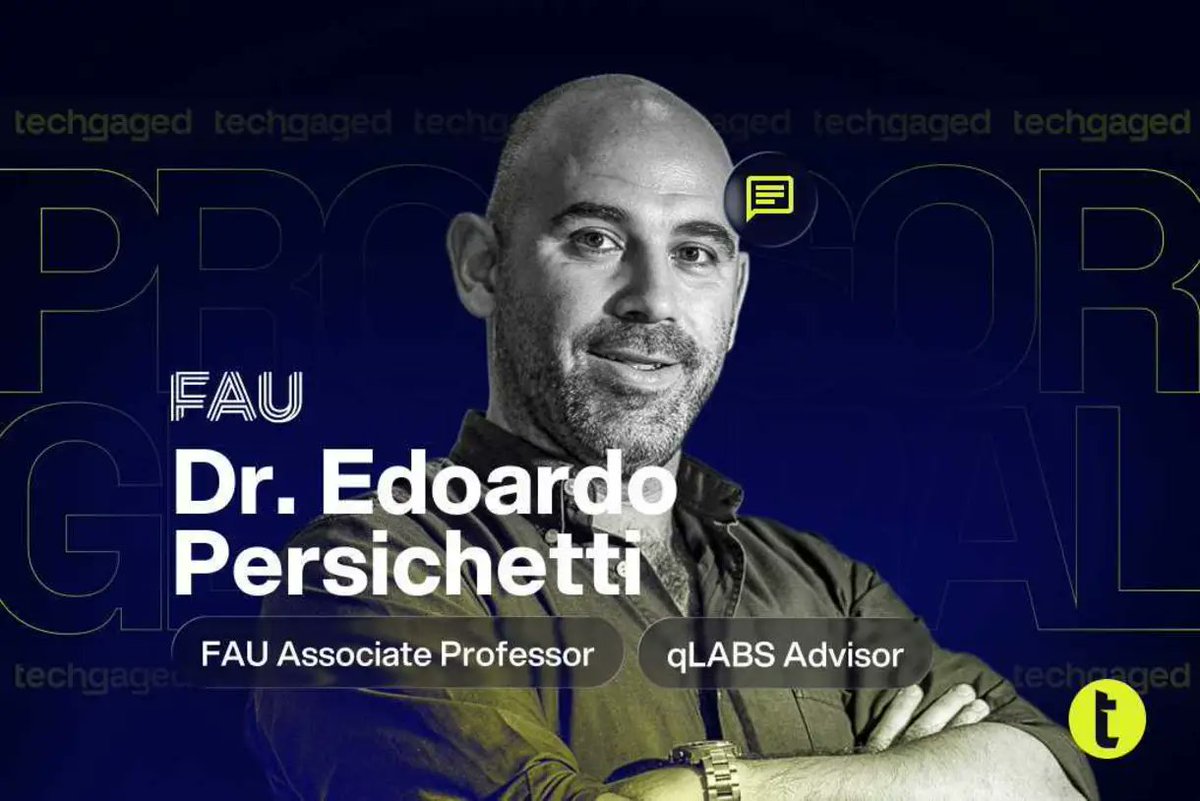
→ Eduardo Persichetti, NIST HQC standard co-author
→ Aaron Moore, ex-DARPA, ex-NSA
→ Andrew Cheung, CTO qLABS, CEO 01 Quantum
No pitch. Just quantum. https://t.co/66DgRx6Uc2
Two major quantum announcements in two weeks.
Google. Now NVIDIA.
The timeline isn't compressing by years anymore. It's compressing by weeks.
Your keys haven't changed since 2009.
Post-quantum cryptography isn't a "best guess." It's been rigorously tested for over a decade.
Our advisor Dr. Persichetti, co-author of the NIST-standardized HQC, sets the record straight on @Cointelegraph's quantum crypto analysis.
Waiting for "perfect certainty" isn't strategy. It's an excuse for inaction.
Your passwords. Your bank. Your data. Most of it isn't quantum-safe yet.
Live webinar. April 15, 1pm UTC.
What's actually at risk, how close Q-Day is, and what you can do.
Set your reminder. https://t.co/FPsYyeZWaG
Great to see more and more L1 chains talking about their post-quantum roadmap
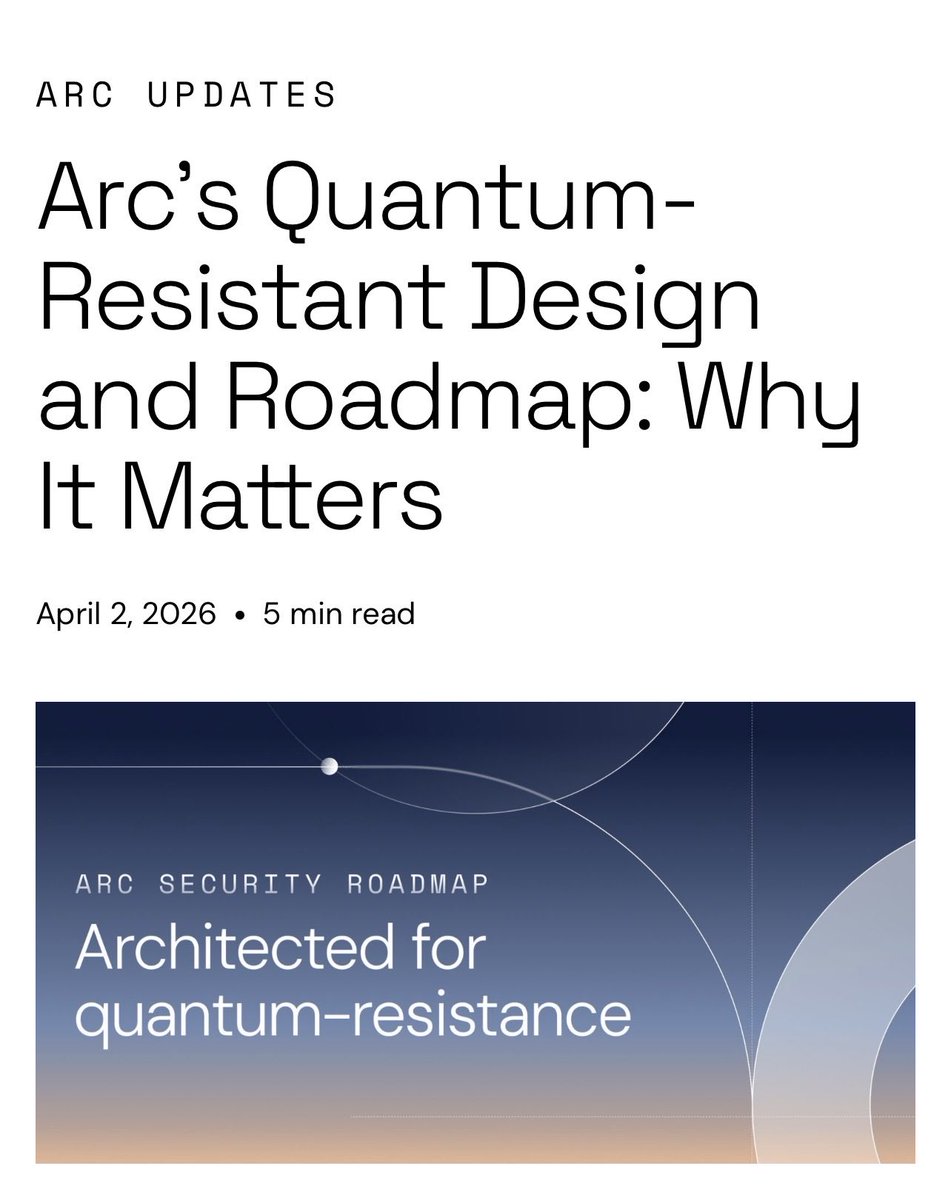
Arc, an L1 for stablecoin finance, by @circle states: „Quantum resilience cannot live only in research papers, exploratory pilots, or distant roadmap slides. It has to show up in the infrastructure.“
I couldn’t agree more and excited to build an L1 migration toolkit by @qlabsofficial helping chains to migrate to a post-quantum environment.
Q-Day won't announce itself.
By the time it's obvious, it's already late.
qVAULT protects what you already hold.
Pre-registration is open.
https://t.co/HygbUXfy62