Don't procrastinate on supporting research!
I've launched a crowdfunding campaign for my project on procrastination and self-esteem.
I’d be grateful if you could support my project, either by making a contribution or sharing this post. Thank you!
https://t.co/AAtwZQdmIy
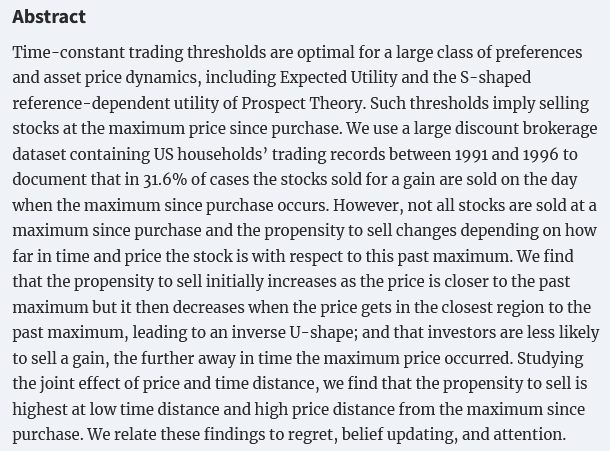
Forthcoming article by @ejuliaStats@GiovanniBurro and Vicky Henderson "Make Hay While The Sun Shines: An Empirical Study of Maximum Price, Regret and Trading Decisions" @EEANews @OUPEconomics
Teaching material available: https://t.co/tCzfSWh4Lu
https://t.co/ZWYowKF3tQ
How and why do households react to unexpected income shocks? Our new paper🚨w/ @PierfrancescMei & @RColarieti dives into this question, which is crucial for informing macroeconomic models & understanding the impacts of fiscal policy. Paper https://t.co/m1AikEGbN6 A short ���1/N
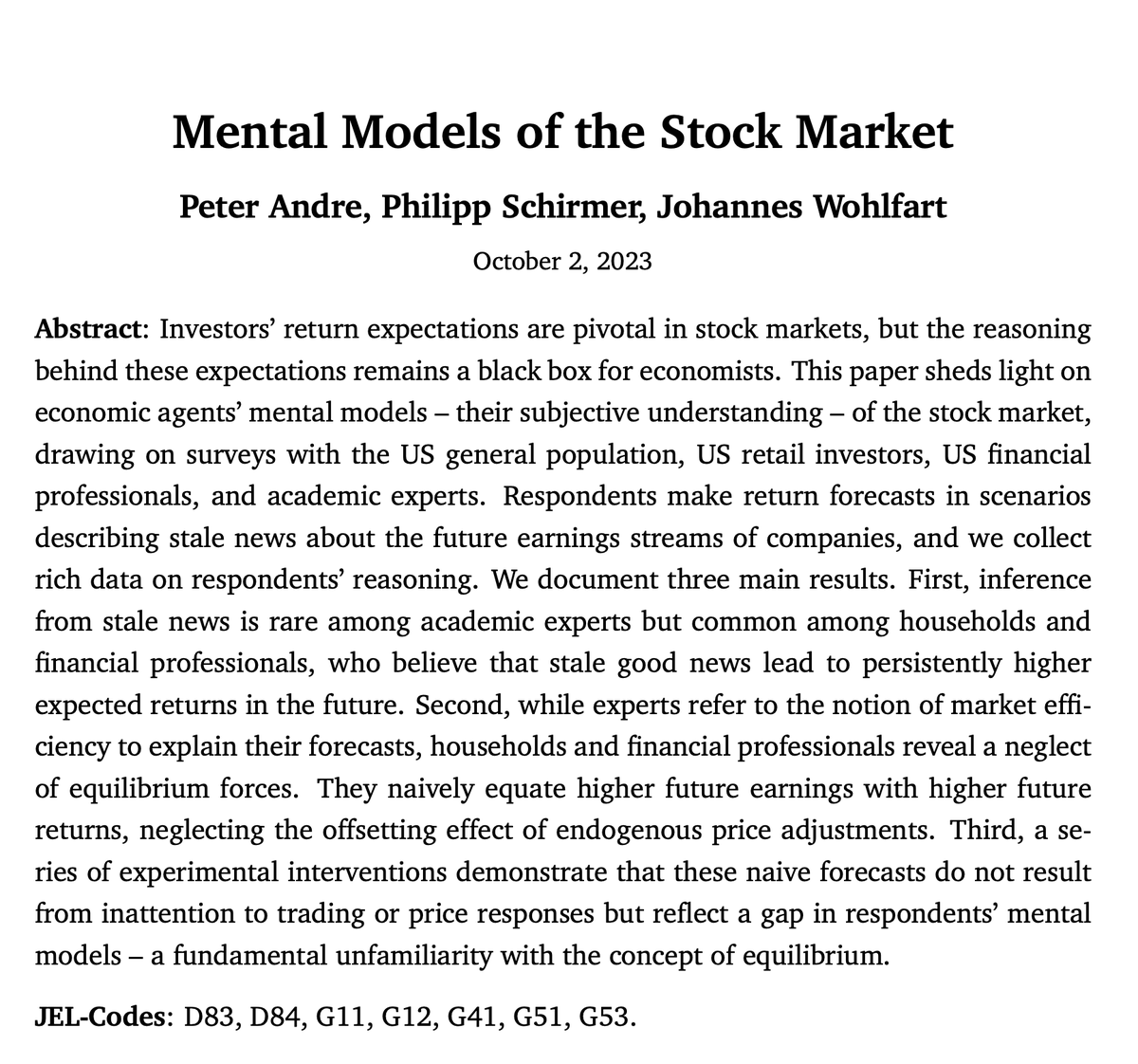
🚨 New paper! 🚨
w/ @ph_schirmer@JoWohlfart
Stock markets revolve around return expectations, which traders form in light of their deeper understanding – their mental model – of the market ...
... which we know very little about. Time to change this!
https://t.co/ZzPxWQ2Xo8
🚨Come, work with us in Heidelberg
Another post doc opportunity in behavioral economics/behavioral finance with my wonderful colleague @SebastianEber12 👇
We are filling a very attractive postdoc position in behavioral economics/behavioral finance at the Alfred-Weber-Institute in Heidelberg. The selected candidate will become a member of the newly fundedresearch group Consumer Preferences, Consumer Mistakes, and Firms’ Response.
I am very happy to share that the paper “Income Inequality and Campaign Contributions: Evidence from the Reagan Tax Cut”, joint with @vlarcinese , is out as an @LSEInequalities working paper. A short thread: 1/n
https://t.co/tRd2kHWP0o
Did declining religious participation in the late 1980s lead to increased deaths of despair (e.g. suicides) in the early 1990s?
A new paper out this week tackles this question. I summarize the paper and give my take below.
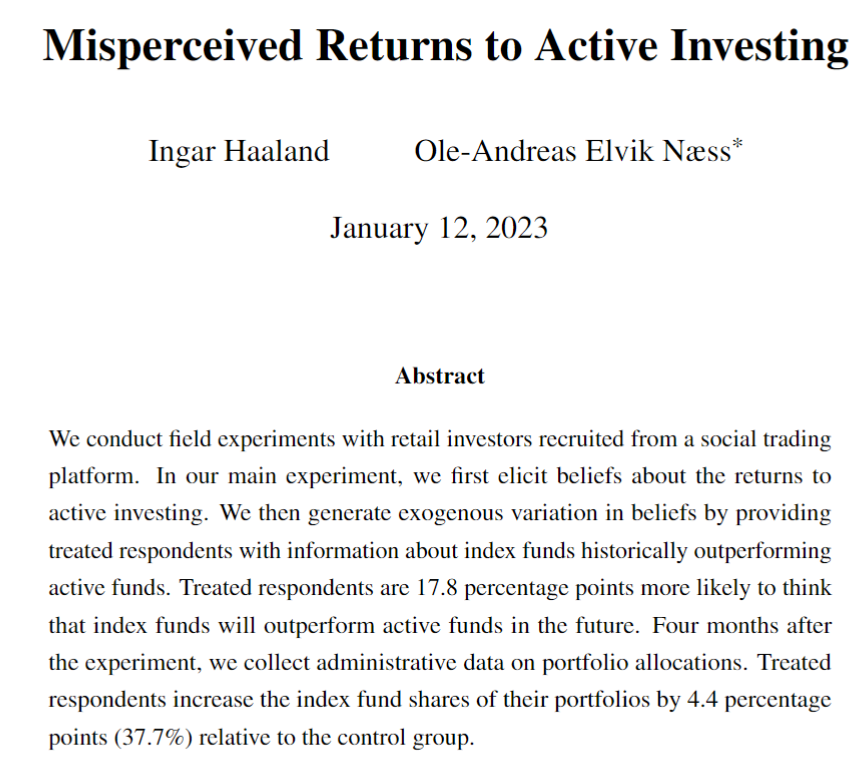
1/ Why do people invest in actively managed funds when index funds consistently give higher returns after fees? In a new paper, @OleAndreasNaess and I examine whether misperceived beliefs can explain this "active investing puzzle".
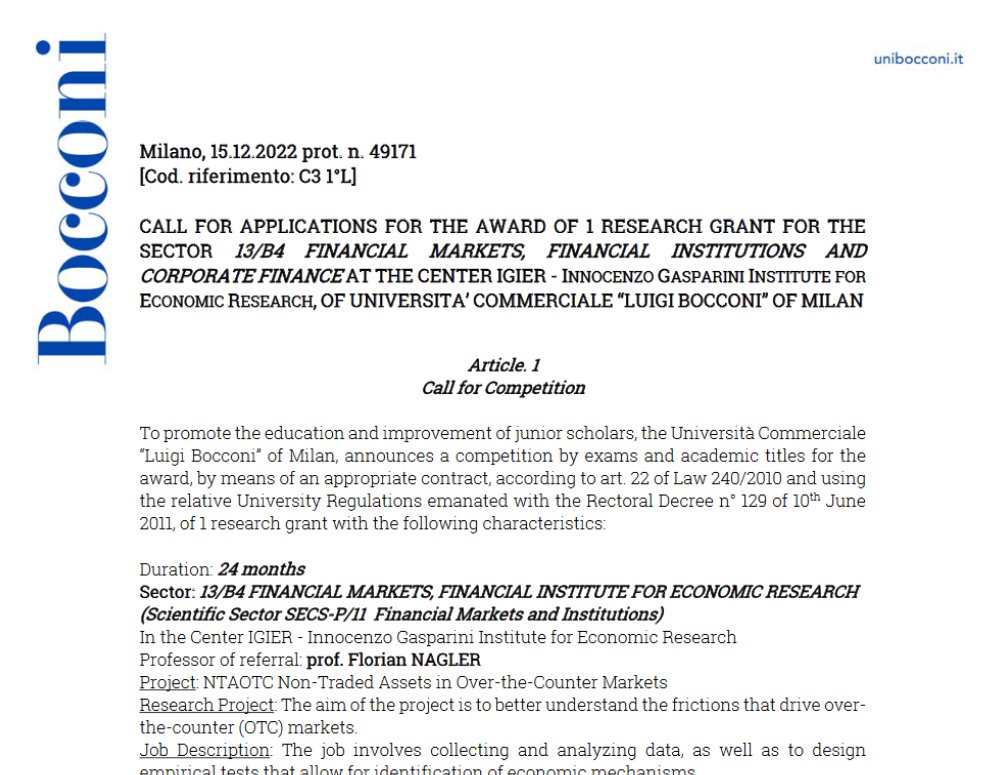
Hey #EconTwitter, are you a JM candidate & looking for a postdoctoral position in #Finance? Check out this call at @Unibocconi by my fantastic colleague Florian Nagler. #PostDoc position for 2 years (potentially renewable). Pic ⬇️& link https://t.co/v3KZpaPMDR
I think the best answer is "more than one-half." Ask why she decided to guess "false" for every option? She knows that approximately half the answers were true and half false, so if she "knew" many true questions, she could infer a disproportionate number of false ones remained.
@jhaushofer@ImranRasul3 You probably know about it or someone has already put it forward in the comments. On the same topic, there is a nice work by @NickPowdthavee@DrKatyaOparina Le-Yu Chen & Sorawoot Srisuma https://t.co/4SVF6tWJgT
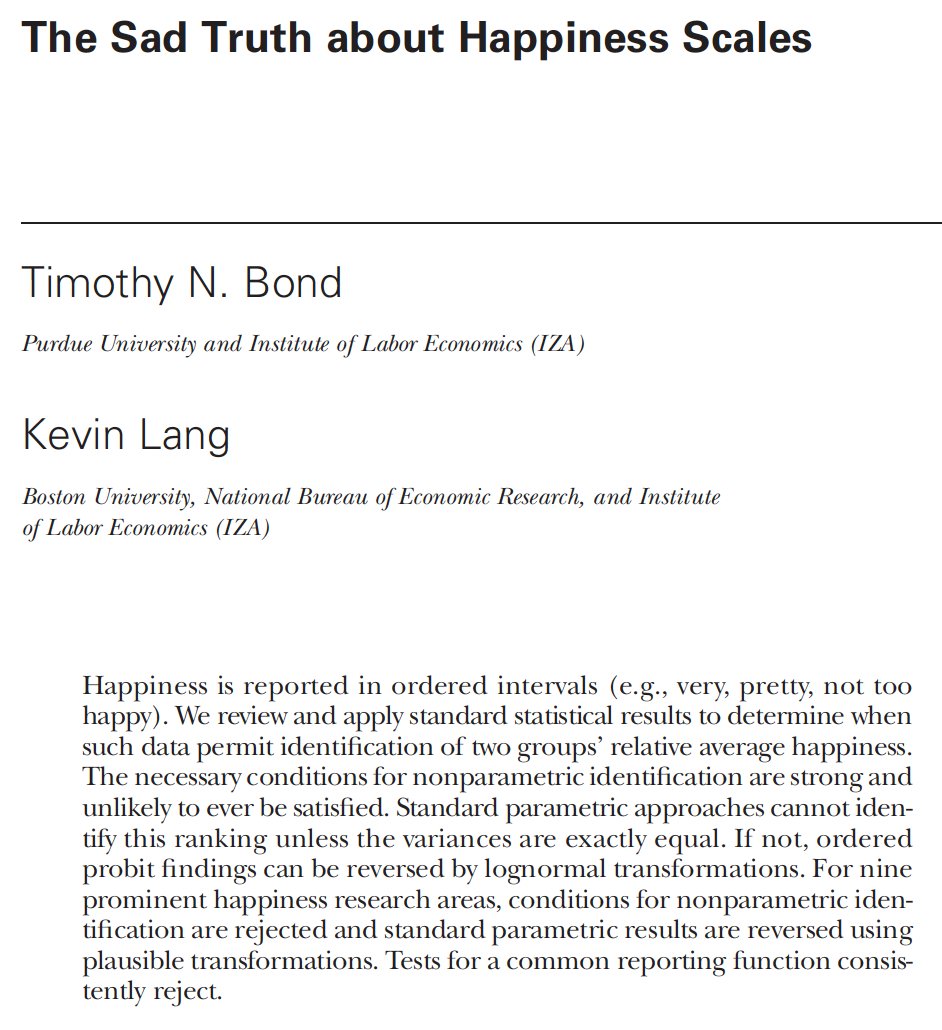
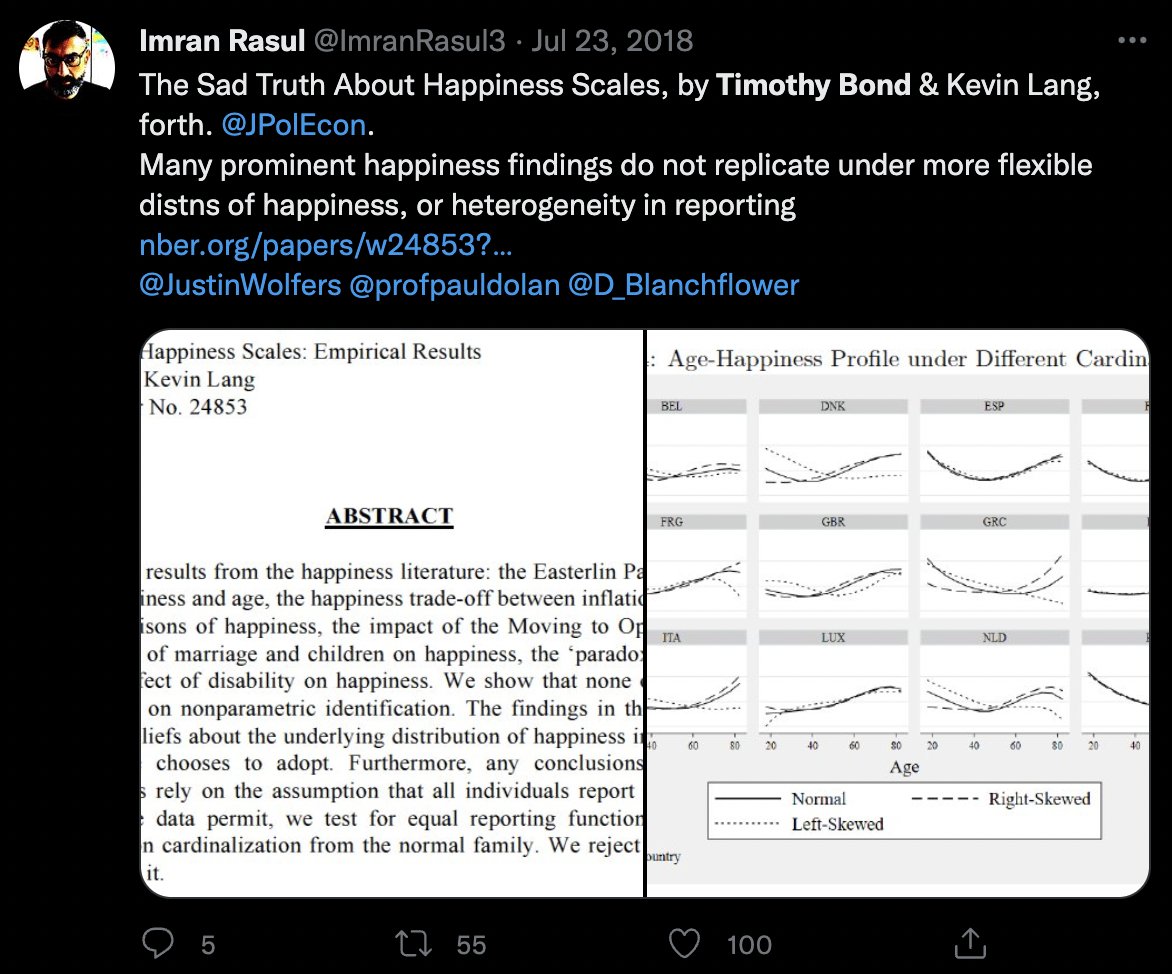
In July 2018, I first came across a paper called “The Sad Truth About Happiness Scales” by Tim Bond and Kevin Lang. My heart sank when I read it (as did that of others, possibly including @ImranRasul3). 1/n
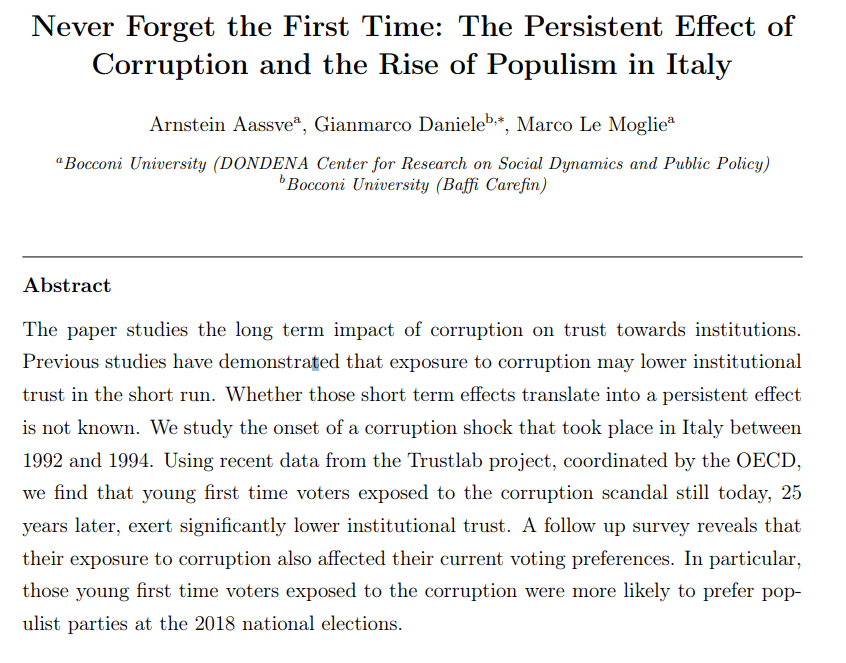
Can corruption scandals permanently affect political attitudes?
Our paper accepted at @The_JOP finds young voters in Italy exposed to corruption scandals in the 1990s, still today, have🔽institutional trust (≈20%) and voted🔼for right-wing parties (+11%) at the 2018 election