#CVPR2025 Area Chairs (ACs) identified a number of highly irresponsible reviewers, those who either abandoned the review process entirely or submitted egregiously low-quality reviews, including some generated by large language models (LLMs).
1/2
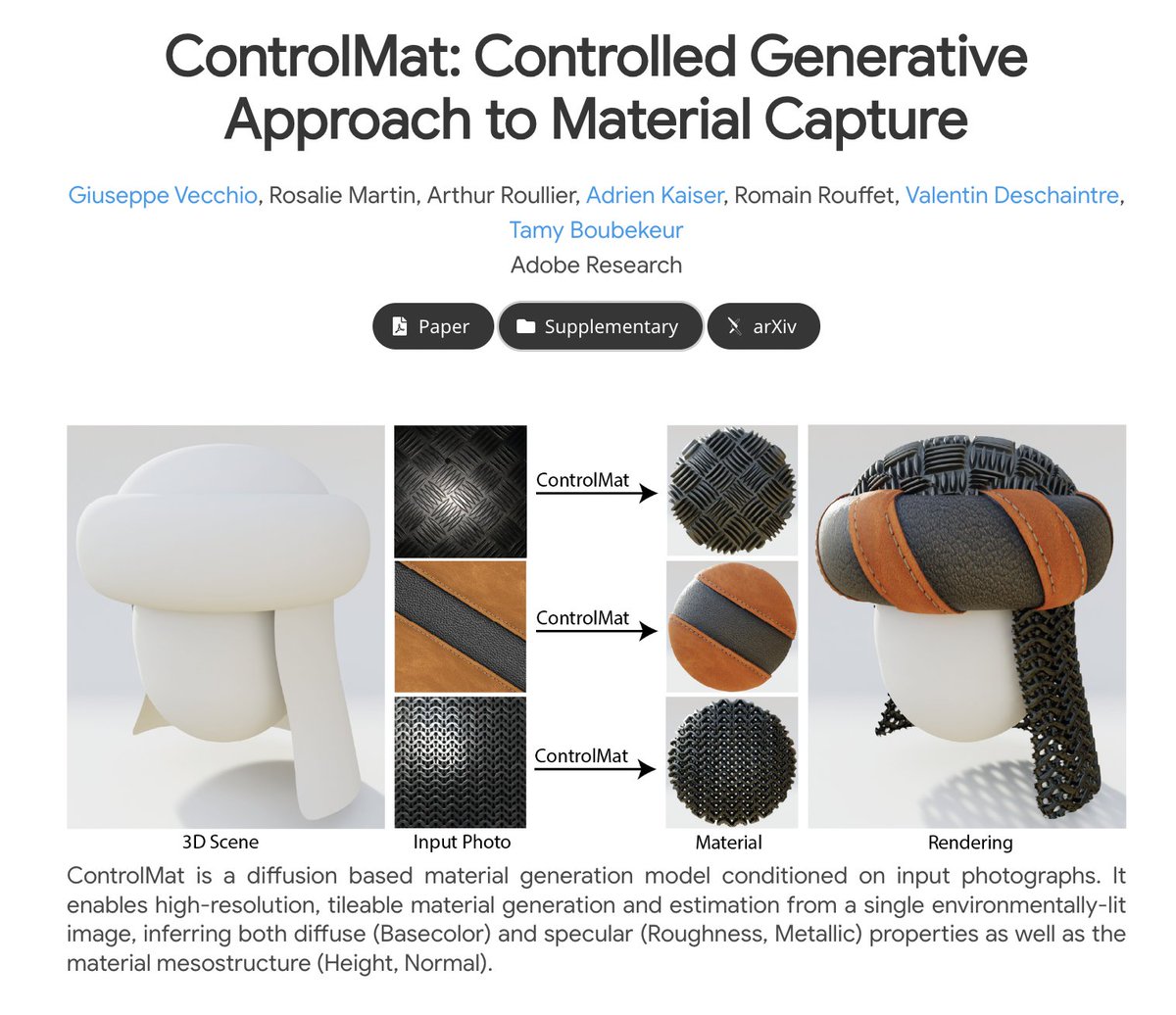
ControlMat casts "image-to-material" as a controlled generative task, guiding in-distribution channels diffusion with the input and introducing diffusion components such "Noise Rolling" for tileability. More in our ToG paper (presented Friday at SIG Asia): https://t.co/TuIKuPbpfM
Adobe Research France is hiring interns for 2025. If you are pursuing a (research oriented) M. Sc. or a Ph. D. in 3D graphics or vision, consider applying :
Paris: https://t.co/VO2h9Z919D
Lyon or Clermont-Ferrand: https://t.co/qnLiM4Y773
Tired of working with textures? Want to enable relighting with materials but you don't know where to find data?
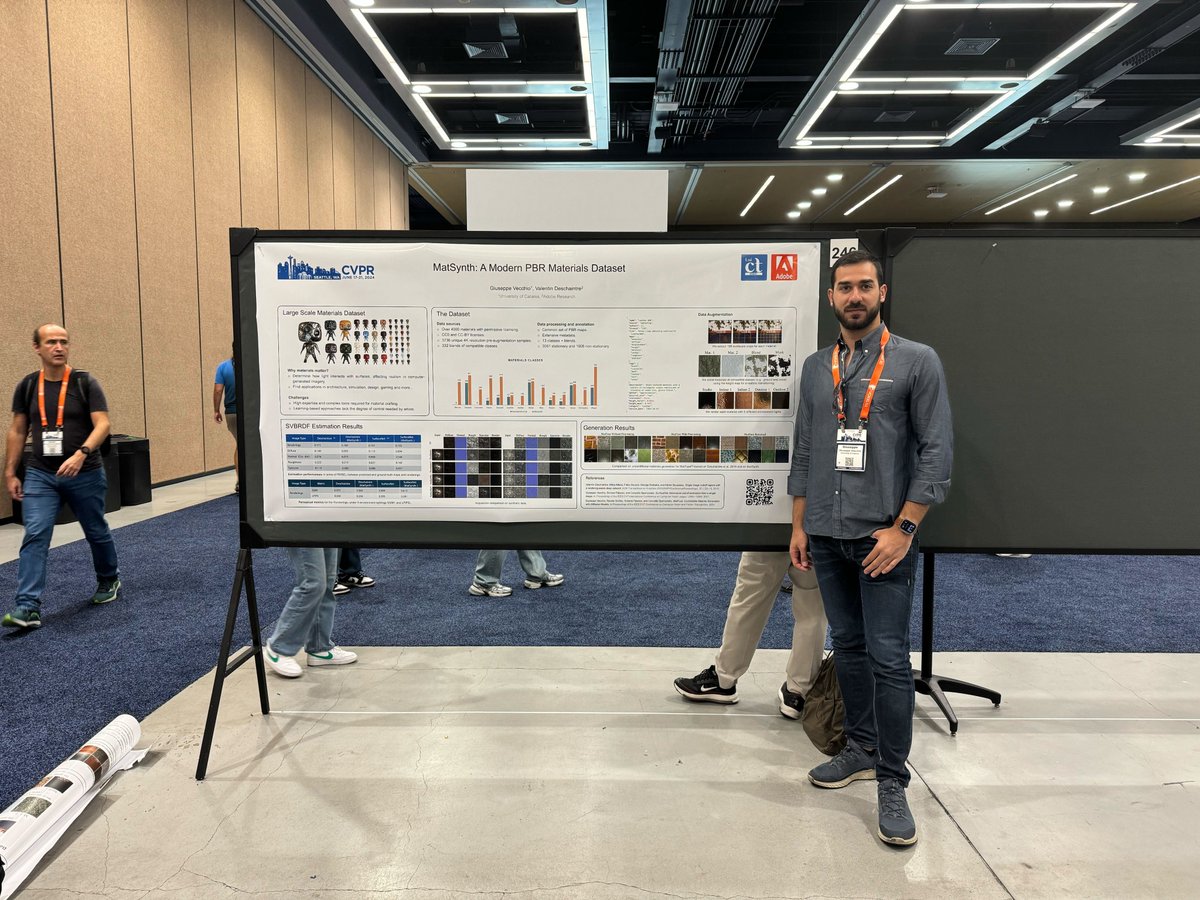
Come to our poster at CVPR! 4F Arch Building, poster 246.
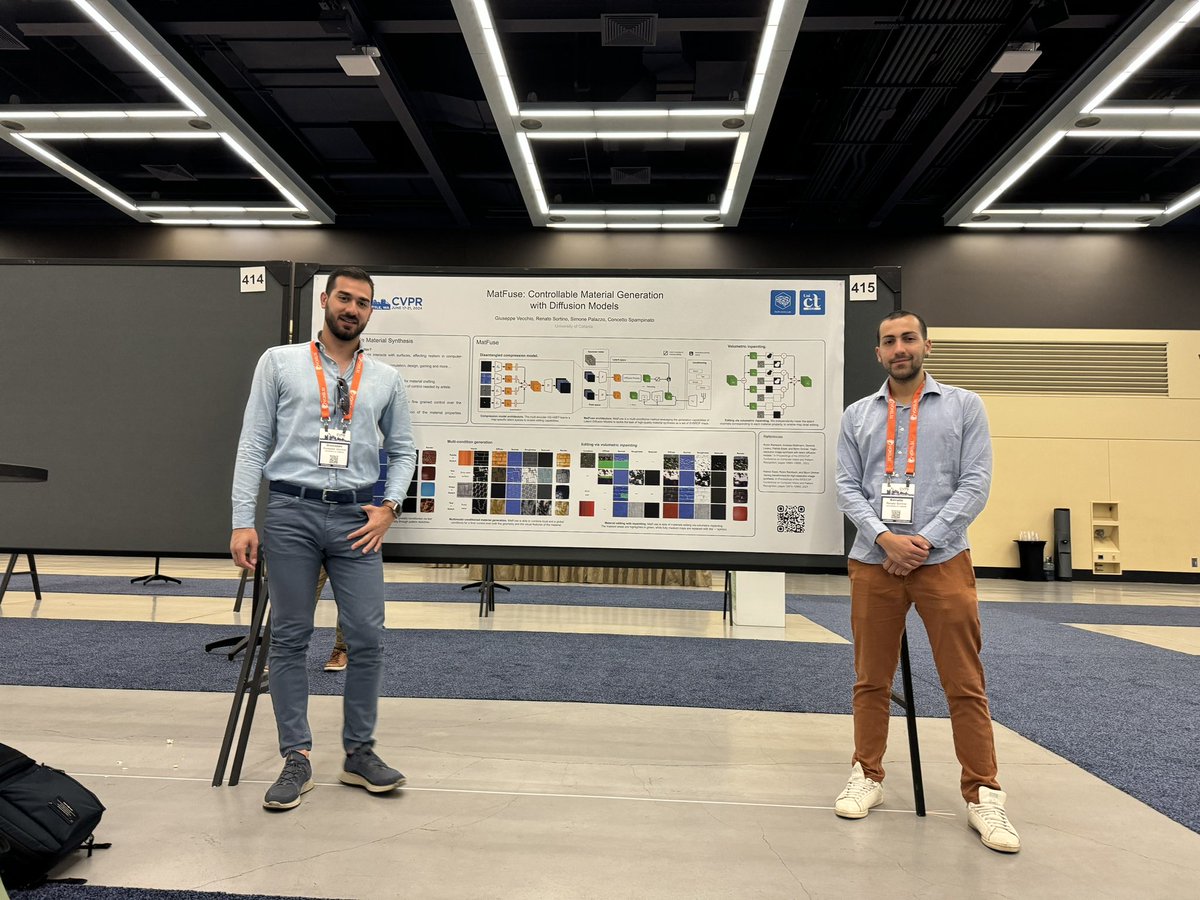
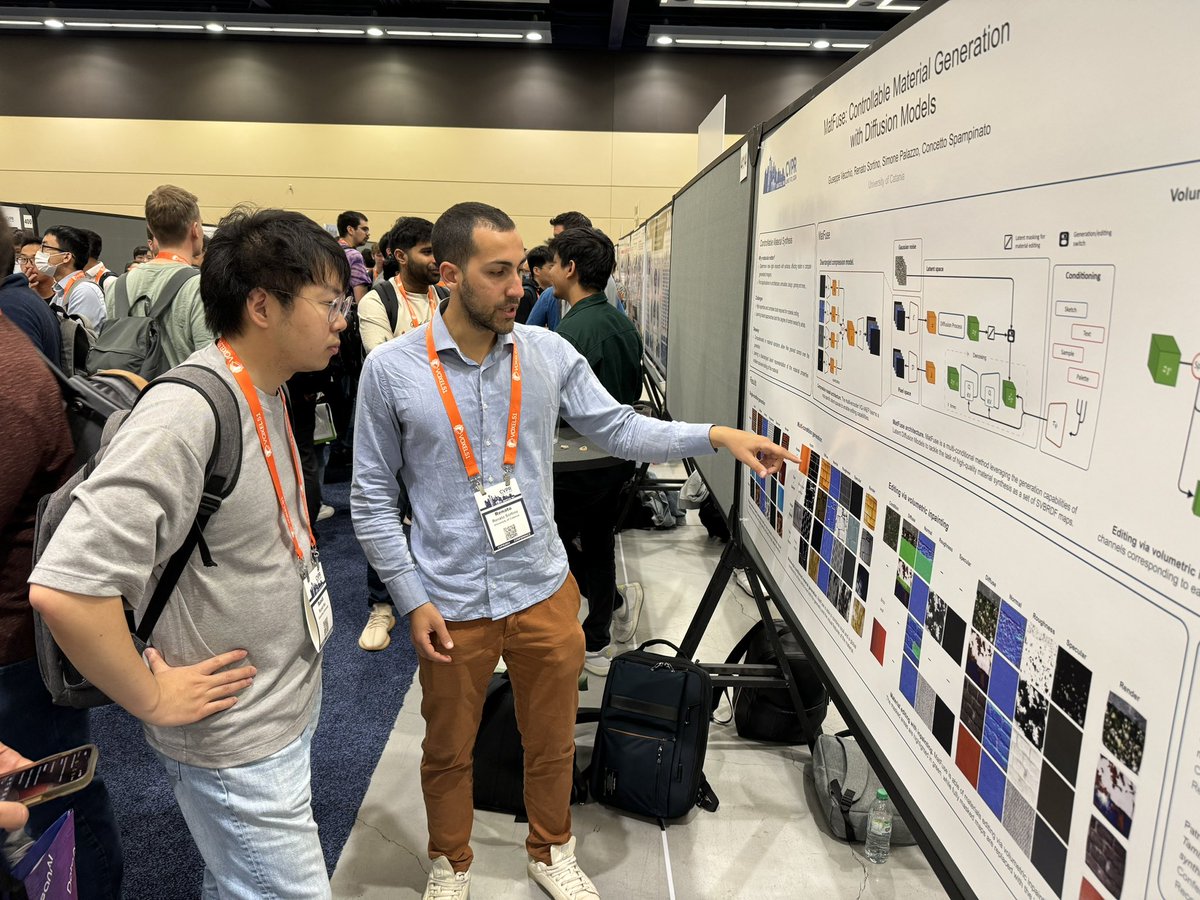
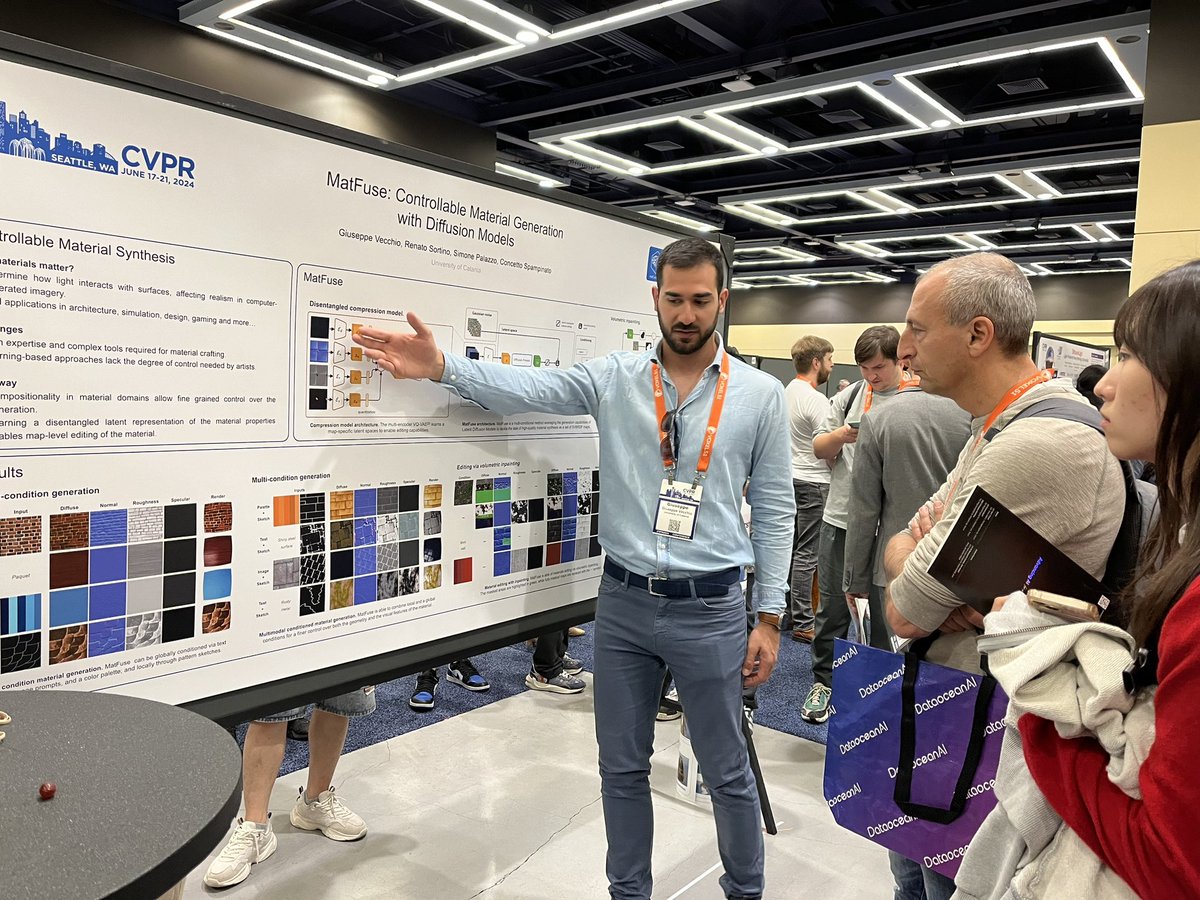
Happy to have been a part of @CVPR presenting “MatFuse: Controllable Material Generation with Diffusion Models” with my colleague @giuvecchio95 .
Project Page: https://t.co/mYNgh9ZrHb
#CVPR2024
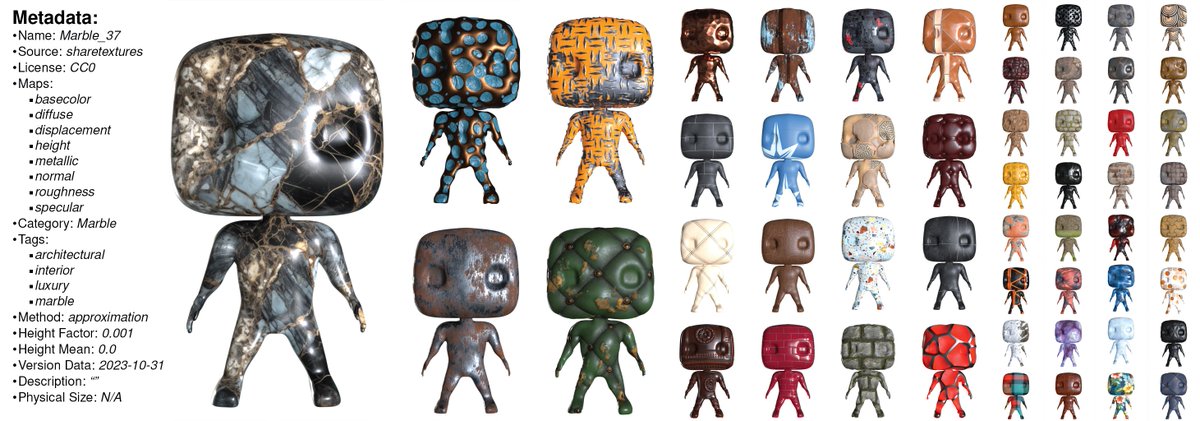
🚀Excited to present at @CVPR our paper introducing #MatSynth, a new large scale PBR materials dataset with permissive licensing!
📅Join us at the poster session on Fri 21st at 10:30 AM.
🌐Project page: https://t.co/lqkiFCnIGB
🤗Release: https://t.co/n9AJ1e24EF
📢Join us next week @CVPR, together with @Rensortino we present #MatFuse a novel method for material synthesis and editing using diffusion models.
We will be at the poster session on Wed 19 at 10:30.
🌐Project page: https://t.co/oaYoMk8HyR
💻Source: https://t.co/AxXV7ZNdQk
The Computer Vision Foundation open access proceedings team is proud to announce that the #CVPR2024 proceedings is now online:
Main conference: https://t.co/ZCVXRO8NwR
Workshops: https://t.co/RyPgGlKIfd
Enjoy and I'll see all of you in Seattle!
MatFuse also allows users to have map-level material editing capabilities through latent manipulation. We learn a disentangled latent representation for each map, allowing us to manipulate the specific parts of the latent space corresponding material property we want to edit.
🎉 Exciting news! Our paper titled “MatFuse: Controllable Material Generation with Diffusion Models” has been accepted at #CVPR2024!
MatFuse introduces a novel approach to material synthesis and editing, leveraging diffusion models.
More at: https://t.co/d98GMqzwHw
MatFuse gives a fine-grained control over the over material synthesis combining multiple sources of conditioning, including color palettes, sketches, text, and pictures.
📢 Permissively licensed SVBRDF Dataset!
https://t.co/ct11LQXpAG
📚SVBRDF Ground truth Material Data with permissive license has been challenging to get or gather in the last few years.
We present MatSynth, with 4000+ carefully curated materials with permissive licences
ControlMat: Controlled Generative Approach to Material Capture by Giuseppe Vecchio et al. From a single photo to clean, realistics, tileable PBR materials with this diffusion-based matching model.
https://t.co/YNYaoIYwKJ
ControlMat: A Controlled Generative Approach to Material Capture
paper page: https://t.co/pDSHly04BO
Material reconstruction from a photograph is a key component of 3D content creation democratization. We propose to formulate this ill-posed problem as a controlled synthesis one, leveraging the recent progress in generative deep networks. We present ControlMat, a method which, given a single photograph with uncontrolled illumination as input, conditions a diffusion model to generate plausible, tileable, high-resolution physically-based digital materials. We carefully analyze the behavior of diffusion models for multi-channel outputs, adapt the sampling process to fuse multi-scale information and introduce rolled diffusion to enable both tileability and patched diffusion for high-resolution outputs. Our generative approach further permits exploration of a variety of materials which could correspond to the input image, mitigating the unknown lighting conditions. We show that our approach outperforms recent inference and latent-space-optimization methods, and carefully validate our diffusion process design choices.
📚We will present our paper "The visual Language of Fabric" at Siggraph in a couple of weeks with @juliagviu!
🌟We explore how people describe materials (fabrics) and perceive them: what concepts and lemmas are important, and L-V models sensitivities.
https://t.co/ymRpXPM14E