This is f*cking insane. The engineer who built Claude Code just dropped a 28-minute video on how to write prompts that actually work.
I've seen $600 courses that don't cover what he shows in the first 5 minutes.
Watch it, then read the guide below on the Claude features 99% of users never find.
STOP ASKING CLAUDE CODE TO FIX THE BUG FIRST.
Ask it to find the input that would make a bad patch look good.
I tested this with two SQLite tasks that shared a timestamp. Both page requests succeeded.
Both returned one row.
I only saw the bug when I compared the IDs and found the same task on both pages. One extra sort key fixed it.
That’s where I see the leverage in Claude Code. A patch is cheap to generate. A bug that survives the demo can eat your afternoon.
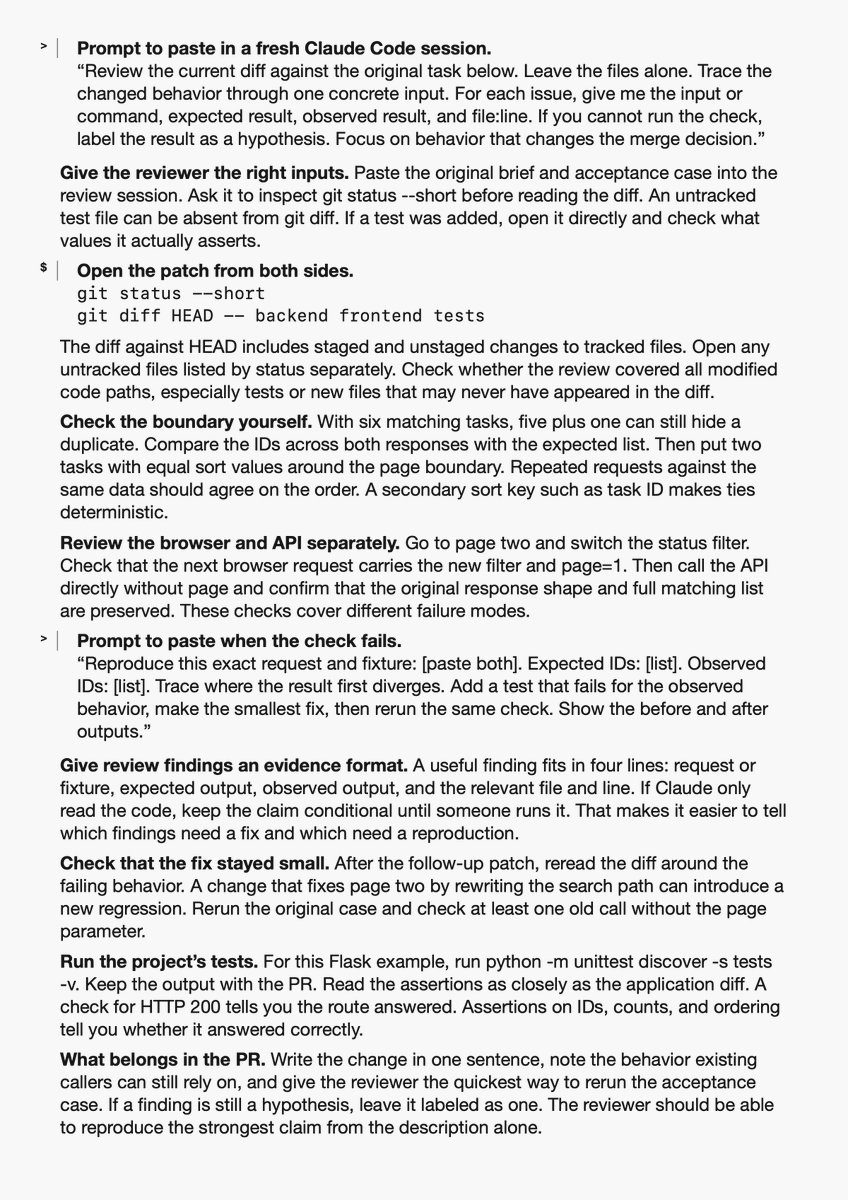
The prompt in the image gives Claude Code a workflow I’d actually use:
→ Trace the current behavior and pin down what must stay compatible.
→ Find one input that exposes a plausible mistake and write down the exact expected result.
→ Run the check before editing, make the smallest patch, then run it again and show both outputs.
The line I’d keep even if I deleted the rest of the prompt:
“Show me one input where this patch would look right and still return the wrong result.”
Bookmark that right now and send to your agent
real money in Claude Code is in catching the bug while it’s still a one-line diff.
i took a SQL query with two sort keys and removed the second one.
it looked like a harmless cleanup.
both requests succeeded, both pages returned a task, and for a second I thought nothing had changed.
then I checked the IDs, I’d got the same task twice.
i put the sort key back and ran the same queries.
both tasks showed up.
that’s when it clicked for me: I want Claude Code to find the one input that makes a harmless-looking change fail, while the only thing it costs me is another test.
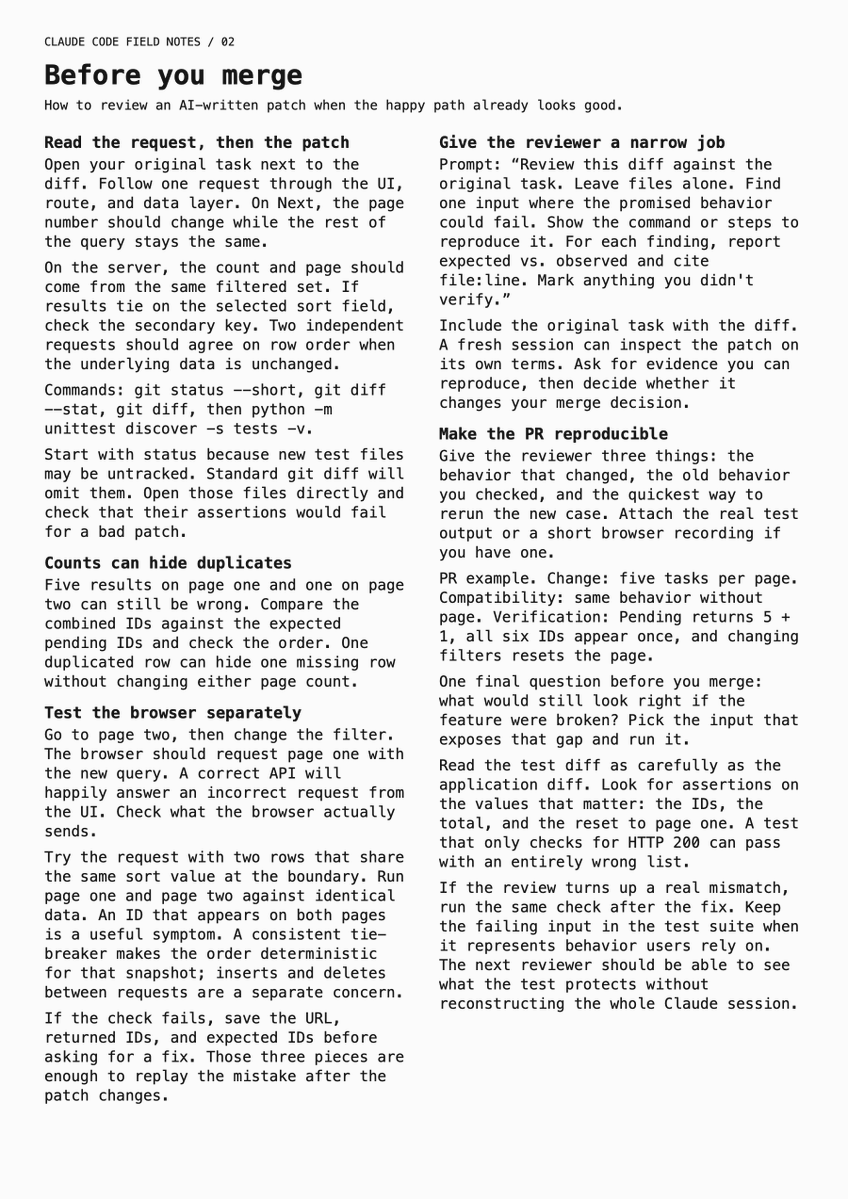
Two pages of Claude Code field notes,from prompt to PR.
How to write a testable prompt, catch edge cases a quick demo can miss, and review the diff before you merge.