What if the biggest shift in the workplace isn’t layoffs… but a complete redesign of how companies operate?
According to a recent Reuters report, Meta is preparing for sweeping layoffs as it pours massive capital into artificial intelligence infrastructure.
The company is projected to invest up to $600 billion in data centers by 2028, with roughly $135 billion in spending expected in 2026 alone.
But this isn’t just a cost-cutting story.
It’s a structural shift in how companies build teams.
Meta is signaling what some analysts are calling an AI-augmented workforce model where fewer employees are supported by powerful AI systems capable of handling tasks once done by entire departments.
CEO Mark Zuckerberg recently suggested that projects that once required large teams may soon be accomplished by one highly skilled individual working alongside AI tools.
Researchers at MIT and Stanford studying AI productivity have already found that generative AI can increase knowledge-worker productivity by 14–40% depending on the task.
If this trend continues, we may see:
• Smaller but highly specialized teams
• AI replacing coordination layers of management
• Companies investing more in compute power than human capital
• The rise of the “super-individual” professional
However, the transition comes with risk.
Meta’s next AI model, reportedly called Avocado, is said to be lagging behind competitors like Google’s Gemini. That means the company is making a bold bet: that leaner, AI-enabled teams will innovate faster than traditional structures.
The bigger question now is not just about layoffs.
It’s about how the definition of work itself may be changing.
What will the workforce look like when AI becomes the primary collaborator?
What if upgrading your work laptop suddenly became… more affordable?
Reports from LinkedIn News and @TechCrunch suggest @Apple may soon unveil a lower-cost MacBook rumored to be called the MacBook Neo—a colorful, potentially more accessible laptop aimed at competing with cheaper laptops and Chromebooks.
For years, Apple laptops have been known for premium performance and premium pricing. But if these reports are accurate, this new device could signal a shift: bringing more professionals, students, and entrepreneurs into the Apple ecosystem.
For the modern workforce, this is a big deal.
Today’s work environment relies heavily on mobility, cloud tools, and battery efficiency. Whether you're working from home, managing a business, or collaborating across teams, the device you use plays a huge role in your productivity.
📊 Consider this:
Research from @IDC and @Gartner_inc shows that portability, battery life, and cost efficiency are among the top factors professionals consider when purchasing laptops for work.
If Apple enters the affordable productivity laptop space, it could mean:
💻 More professionals accessing Apple’s ecosystem without the traditional premium price barrier
🎨 New colorful designs that reflect Apple’s evolving product identity
⚡ Efficient mobile-style chips optimized for everyday workflows like meetings, documents, and cloud-based tools
For entrepreneurs, remote workers, and office professionals alike, this could open a new conversation:
What if your next productivity upgrade didn’t have to break the budget?
E-commerce is projected to hit $1.8 TRILLION by 2030. The real question is — are sellers ready?
According to Forrester’s U.S. Retail E-Commerce Forecast (2025–2030), online sales are expected to reach 29% of total U.S. retail, growing significantly faster than overall retail.
But here’s what’s often missed:
🏬 71% of retail will still happen offline
📈 Competition online will intensify
💰 Customer acquisition costs will likely rise
🤖 AI-driven shopping behavior is accelerating
This isn’t just growth.
It’s structural change.
For sellers:
• The opportunity is massive — but so is competition.
• Education, trust, and brand authority will matter more than ever.
• Omnichannel strategy is no longer optional.
For retail customers:
• More convenience.
• Faster fulfillment.
• AI-personalized shopping experiences.
• But also more noise and decision fatigue.
Behavioral research shows that when choice overload increases, consumers rely more on trusted brands (Iyengar & Lepper, Columbia University).
The next 5 years won’t just reward sellers who list products.
They’ll reward sellers who build ecosystems.
📊 What are you doing today to prepare for 2030?
#Ecommerce #RetailForecast #AmazonSellers #DigitalCommerce #WhatTheTeck
Most entrepreneurs don’t fail from lack of effort. They fail from lack of collaboration.
In a past What The Teck? episode, @jkeyesauthor shared a powerful insight while discussing the “why” behind education:
“Because we're not in this world alone. And the power of many coming together works… Most entrepreneurs fail because they're afraid to let go. They don't effectively collaborate.”
This isn’t about teamwork clichés. It’s about scalability.
Research from Startup Genome shows that startups with balanced founding teams outperform solo founders significantly in early growth stages.
Collaboration isn’t optional — it’s structural.
When founders refuse to delegate:
They become the bottleneck.
Decision velocity slows.
Burnout accelerates.
Growth plateaus.
Letting go isn’t weakness. It’s leverage.
Education, at its core, teaches collaboration — how to think with others, build with others, and succeed with others.
Is your business built to grow beyond you — or does everything still depend on you?
🔗 Watch the full episode with Jim Keyes here:
https://t.co/2hinFeQz8p
One surprise can freeze your business overnight. Run a pre-mortem now: host lockout, hack, bank issue—what breaks first? Full episode: https://t.co/uBGWchmkhk
#LeadershipMatters#Risk
“Cash flow is oxygen.” And right now, Wall Street is watching Amazon breathe.
@amazon snapped a nine-day losing streak after shedding more than $450 billion in market value, following news that it plans to invest $200 billion in capital expenditures this year, largely toward AI infrastructure.
Data centers. Chips. Networking. Scale.
Investors aren’t questioning Amazon’s ambition. They’re questioning timing.
As past What The Teck? guest @jkeyesauthor put it:
“Cashflow, cashflow, cashflow. I mean, it is your oxygen. It's what's needed to live.”
That’s exactly what markets are reacting to.
Heavy AI investment can pressure short-term free cash flow. And when oxygen looks thinner, volatility follows.
But here’s the strategic layer:
• Big Tech capex could reach $700B this year
• AI infrastructure is becoming foundational, not optional
• Amazon expects long-term return on invested capital
This isn’t just a stock fluctuation.
It’s a signal that the platform powering millions of sellers is evolving again.
For entrepreneurs, the message is clear:
If cash flow is oxygen at the corporate level, it’s survival at the seller level.
Strong margins.
Controlled ad spend.
Lower return rates.
Operational discipline.
The marketplace may become smarter.
But fundamentals still win.@
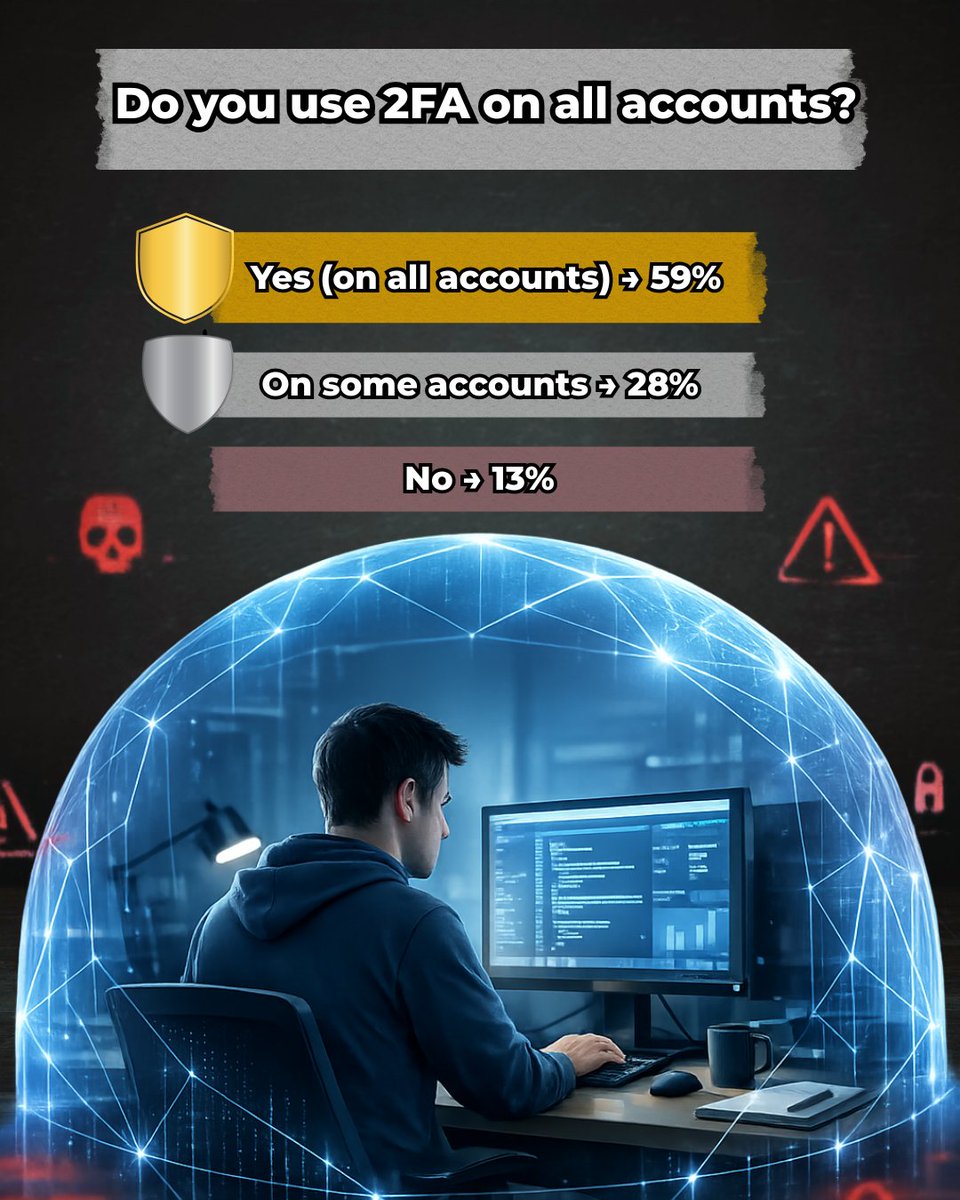
Two-factor authentication is no longer optional — it’s essential.
In this poll, 59% reported using 2FA on all accounts, 28% on some accounts, and 13% on none.
This is more than a statistic.
It’s a reflection of how seriously professionals are beginning to treat cybersecurity — or not.
Two-factor authentication is the baseline of digital defense.
It acts as a critical guardrail against unauthorized access, credential theft, and automated attacks.
Yet nearly 4 in 10 still leave gaps in their protection.
This matters in a world where attackers exploit human and technological vulnerabilities with increasing speed and sophistication.
Our recent conversation with former FBI Senior Computer Scientist James Morrison — who spent over 20 years investigating cyber intrusions and vulnerabilities — reinforces this point.
He has seen firsthand how quickly attackers can exploit simple openings and why basic protective measures matter now more than ever.
For organizations and individuals alike, adopting 2FA across all accounts should be viewed not as an inconvenience, but as a first and non-negotiable step toward better digital hygiene.
If 2FA is just the beginning, what’s the next layer of protection your team should adopt?
Alphabet isn’t borrowing billions for headlines — it’s borrowing for the next decade of AI dominance.
Alphabet’s multi-tranche Swiss franc bond sale signals something bigger than capital strategy. It signals commitment.
When a company issues long-term debt across currencies, it’s making a generational bet. In this case, that bet is AI infrastructure.
According to @McKinsey (2023), generative AI could add up to $4.4 trillion annually to the global economy. But that scale requires massive investment — data centers, chips, energy, cooling, and cloud infrastructure.
This matters because:
• AI is no longer experimental — it’s permanent infrastructure
• Capital markets are funding AI like utilities, not startups
• Every industry integrating AI is now part of this ecosystem
For consumers, this means smarter tools — and potentially higher costs embedded into services.
For entrepreneurs, this means access to powerful AI platforms — but also growing dependency on a few dominant providers.
The real question is not whether AI will shape your workflow. It’s whether your business strategy is flexible enough to adapt if the platforms change.
The AI race is no longer theoretical. It’s being financed in real time.
What does your AI strategy look like in a capital-heavy world?
Hybrid work doesn’t fail because people aren’t trying. It fails where clarity breaks down.
In this poll, 46% identified communication gaps as the hardest part of hybrid work, followed by 33% citing overlapping meetings and 21% pointing to loneliness. Together, these results reveal a common issue: hybrid work struggles most at the seams.
When teams are not aligned on priorities, documentation, or decision ownership, meetings multiply to compensate. Calendars fill up, context gets lost, and work becomes reactive instead of intentional. Loneliness often follows, not because people are disconnected socially, but because they feel out of sync operationally.
For teams like ours, this matters. Hybrid work demands stronger systems, clearer communication norms, and better coordination by design. Flexibility works best when clarity is built in.
What part of your hybrid workflow creates the most friction right now?
Tech is brutal right now. AI has turned the market into an arms race… and the giants are spending billions.
So how does a company compete when @Meta , @Google , @amazon , and @Microsoft can outspend everyone?
Here’s the trap: most tools win early by being “simple”… then fall apart the second a team needs advanced workflows. People hit the wall, duct-tape workarounds, and lose hours (and customers) in the process. Meanwhile, the market moves fast—and “good enough” gets replaced.
In this snippet, @aytekintank from @Jotform breaks down the strategy that kept them growing for 18 years, even with Google Forms, Microsoft Forms, and “hundreds of other form builders” in the mix.
One line says it all: “What if we disrupted our own business? What if we replace forms with AI?”
That’s the mindset shift—build for what users actually need next, not what’s easiest today.
🔑 Key Takeaways
• Specialization beats “generic” when workflows get advanced
• Simple tools create friction the moment complexity shows up
• Self-disruption keeps you ahead of the copycats
• AI Agents can become the first step in a workflow journey
• Naming matters: build for integrations, not one narrow use case
💡 Why It Matters
• Your tools either scale with you… or quietly tax you every day
• “Advanced” is where time, money, and customer experience are won
• The future is workflows that start with conversation, not forms
🧑💼 Your Turn
✔ Identify the “simple tool” you keep outgrowing
✔ List the advanced use-cases it can’t handle
✔ Ask: what would happen if we redesigned this with AI first?
✔ Look for workflows that start with questions, not clicks
Watch the full episode for the deeper strategy—and how this thinking applies to your own business decisions: https://t.co/Qf5Dp6Hkoo
Real support shows up before it’s required.
New York’s paid prenatal leave law represents a meaningful shift in how workplaces recognize real life. By guaranteeing paid time for prenatal care, it removes a long-standing barrier many women face — having to choose between their health and their job.
Studies consistently show that when employees feel supported during major life moments, they’re more likely to stay, stay engaged, and grow with their organization. Family-oriented policies aren’t just compassionate — they’re foundational to long-term retention and trust.
When work cultures acknowledge people as whole humans, loyalty follows.
What policies do you think matter most when it comes to retaining great talent?
Most products are “sprinkling AI” on rigid software. The real shift is AI-first tools that flex to your intent—making software easier for way more people.
@aytekintank
Watch the full episode: https://t.co/uBGWchmkhk
#AI#Software
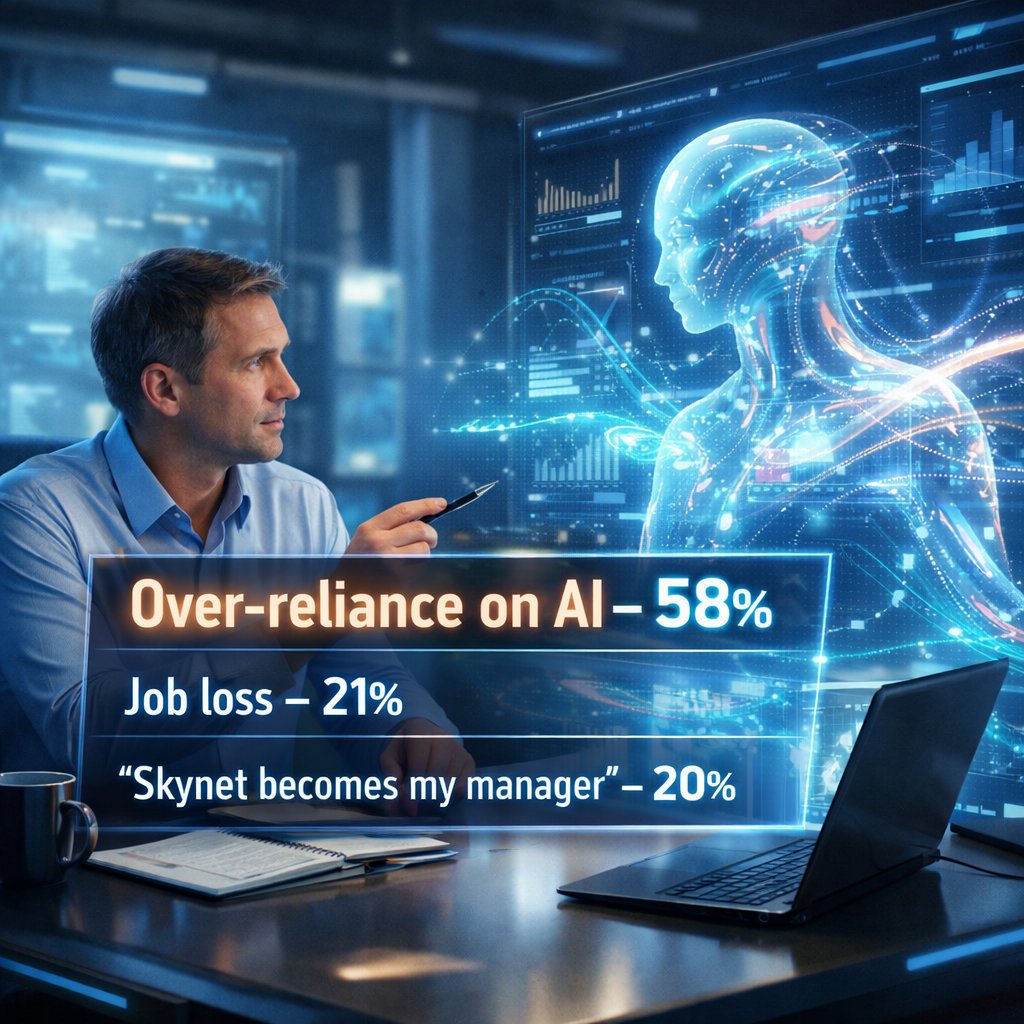
The biggest fear about AI at work is not replacement. It is dependence.
In this poll, 58% said over-reliance on AI scares them most, compared to 21% worried about job loss and 20% jokingly fearing “Skynet becoming their manager.” The results reveal a more nuanced concern than headlines often suggest.
People are not rejecting AI. They are questioning what happens when human judgment is slowly outsourced. Over-reliance risks dulling critical thinking, weakening decision-making skills, and turning powerful tools into unquestioned authorities.
The visual here reflects that tension. AI can process data faster than humans ever could, but humans still bring context, ethics, and accountability. The future of work is not about choosing between humans or machines. It is about designing workflows where AI supports thinking instead of replacing it.
This matters for organizations adopting AI today. Trust is built when people know they are still responsible for decisions, not just executing what an algorithm suggests.
Where should AI assist, and where should human judgment always stay in control?
If you only build, you’re guessing. If you only market, you’re buying churn. @aytekintank 's 50-50 Rule: split time between product + growth. Watch the full episode: https://t.co/uBGWchmkhk
#startups
The real AI story isn’t the headline — it’s the infrastructure behind it.
@Microsoft latest earnings reveal a growing tension in tech: record capital spending on AI and cloud infrastructure, paired with cloud revenue growth that didn’t meet market expectations. While @Azure continues to expand, investors reacted sharply to the cost of building the foundation before the returns fully show up.
This image captures what the numbers don’t:
AI at scale is built in data centers long before it shows up in quarterly applause.
📊 What this signals for businesses and leaders:
🔹 AI infrastructure requires massive upfront investment
🔹 Revenue impact often lags behind deployment
🔹 Markets reward speed, but transformation rewards patience
@McKinsey research shows enterprise AI and digital infrastructure investments typically take 18–36 months to deliver meaningful ROI. What we’re seeing now isn’t failure — it’s the middle of the build.
The bigger question: are organizations aligned on long-term value creation, or still measuring progress quarter by quarter?
👉 How do you evaluate success when the groundwork comes first?
If you’re building a product right now, here’s the scary part: you might be pouring months into something nobody will use.
That “heads-down, perfect it first” mindset feels responsible… until you realize you’re guessing. And guesses are expensive. When founders build behind closed doors for a long time, they don’t just risk a rough launch—they risk a launch to silence. Time wasted. Money wasted. Momentum gone.
That’s why we brought on @aytekintank Aytekin Tank, the mind behind @Jotform , to talk about the first move founders should make when they’re starting from scratch: get real users involved early.
As Aytekin put it: “Build an MVP in a month and release it to like 100 users. And see what happens.”
Because the goal isn’t to impress yourself. It’s to learn what actually works—before you scale the wrong thing.
🔑 Key Takeaways
• Ship faster than your comfort level wants to.
• Start with a tiny release: 1%… or even just 100 users.
• Watch behavior, not compliments—do they use it?
• Feedback is your shortcut to a product people stick with.
• “Stealth building” often turns into stealth failure.
💡 Why It Matters
• You save months by killing bad ideas early.
• You stop burning cash on features nobody asked for.
• You build a product shaped by reality, not assumptions.
• You get traction sooner—and traction changes everything.
🧑💼 Your Turn
✔ Pick the one core problem your product solves.
✔ Build the simplest MVP that proves it.
✔ Put it in front of 100 users this month.
✔ Track what they do (not what they say).
✔ Ship the next version based on what you learned.
Want the full playbook and context from Aytekin? Watch the full episode here: https://t.co/Qf5Dp6GMyQ
— and save this for the next time you feel stuck “perfecting” behind the scenes.
@Microsoft latest AI move isn’t about flash. It’s about sustainability, scale, and staying power.
With the introduction of its second-generation AI chip, Maia 200, Microsoft is signaling a shift in how serious AI infrastructure is being built and deployed. Rather than chasing headline-grabbing training benchmarks, this chip is optimized for inference, where real-world AI usage actually lives.
According to Microsoft, Maia 200 delivers 30% better performance per dollar and is the most efficient inference system the company has ever deployed. That matters because as AI adoption accelerates, power consumption, heat, and long-term operating costs are becoming the true bottlenecks, not model intelligence.
This chip is already being used internally across Microsoft’s AI ecosystem, including Copilot and Foundry services, and is rolling out inside U.S. data centers. It reflects a broader industry reality: the future of AI will be shaped less by hype and more by infrastructure decisions that can scale responsibly.
📌 Key takeaway:
Efficient, reliable AI infrastructure is what turns innovation into something organizations can actually depend on.
How do you see infrastructure decisions shaping the next phase of AI at work?
BREAKING: Microsoft just dropped a chip that could END Nvidia's $4 trillion monopoly.
it's already running GPT-5.2 in production.
the real story (that everyone's missing)
→ Nvidia controls 95% of AI chips.
→ margins? 70%+.
→ lead? Untouchable.
→ moat? Software lock-in (CUDA).
Microsoft just fired the first real shot.
Maia 200 Specs (Absolutely Insane):
• 140 billion transistors on 3nm process
• 10 petaFLOPS at FP4 precision
• 216GB HBM3e memory at 7TB/s bandwidth
• 272MB on-chip SRAM
• 2.8 TB/s networking per chip
performance that actually matters:
→ 3x faster than Amazon Trainium 3
→ outperforms Google TPU v7 in FP8
→ 30% better performance-per-dollar than current gen hardware
→ scales to 6,144 accelerators seamlessly
the SDK preview is live for developers, startups, academics.
the chip war just entered a new era.
Bookmark this, the AI hardware landscape just shifted.
If your business lives online, one email can wreck your day. And founders rarely see it coming.
@aytekintank opened a GoDaddy message after a hackathon and thought, “they’re shutting down our business.” That’s the moment most people realize they’ve been stuck in busywork—reacting, not building.
Aytekin is the founder & CEO of @Jotform (25M users), host of the AI Agents Podcast, and author of Automate Your Busywork. He’s bootstrapped from day one while competing with big tech.
“As a part of an ongoing investigation, we are suspending your domain.”
That kind of shock forces a question: Are you building a company or babysitting tasks while the AI wave changes everything?
🔑 Key Takeaways
• What keeps founders trapped in low-level work
• Why the AI revolution is bigger than internet + mobile
• Why “AI is cheating” is the wrong frame
• Why people like AI: it’s conversational
• How to free time to build “while you sleep.”
💡 Why It Matters
• Busywork steals time, money, and momentum
• AI will reshape software “completely and irreversibly.”
• The fastest teams will outlearn the busiest teams
• Your next advantage is leverage, not hustle
🧑💼 Your Turn
✔ Name one task you repeat weekly
✔ Pick one process to automate this month
✔ Get feedback before you build more features
✔ Decide what only YOU can do
✔ Use AI to go faster—responsibly
Watch the full episode when it drops (subscribe so you don’t miss it): https://t.co/Qf5Dp6Hkoo
TikTok’s future in the U.S. is settled, but the conversation shouldn’t stop there.
After years of legal and political uncertainty, @tiktok_us operations are now officially governed by a majority American-owned joint venture. For creators and businesses, this removes the immediate threat of a nationwide ban and restores long-term predictability for one of the most influential platforms in the digital economy.
Under the new structure, U.S. user data is overseen domestically, the algorithm will be retrained using American user behavior, and platform governance now operates under defined safeguards. From a user perspective, very little is expected to change on the surface.
But ownership clarity does not automatically equal impact clarity.
Research on algorithmic media and attention economics consistently shows that recommendation systems shape behavior regardless of who owns them. The feedback loops that drive discovery, engagement, and influence remain intact, even as the governance framework evolves.
For businesses and creators, the takeaway is balance. TikTok is now more stable to build on, but long-term resilience still depends on strategy, diversification, and intentional platform use.
How does this shift change the way you think about building on TikTok long term?
If you could time travel and redo ONE career moment… would you? ⏳
That thought alone usually triggers a cascade of “what ifs.”
What if I spoke up sooner?
What if I ignored that advice?
What if I took the risk instead of playing it safe?
Rolando Rosas captured that universal feeling perfectly:
“ If I could only travel back in time to change some of the things that I did, stuff that I heard and having all that wisdom gained over the years, imagine the difference that would make in the career.”
What’s fascinating is that psychology has a name for this: counterfactual thinking. Research shows that when used constructively, reflecting on alternate past outcomes can help people learn, adapt, and make better decisions going forward—not to dwell, but to evolve. (Roese, 1997)
💡 The real insight here isn’t regret
It’s awareness.
✔ Experience becomes wisdom when we reflect on it
✔ Growth often starts with questioning past assumptions
✔ The “what if” becomes powerful when it informs the “what’s next”
The irony? We can’t go back in time—but we can apply that earned wisdom today, where it actually matters.