Anthropic tested Claude on NMR chemistry tasks and it performed surprisingly well 🤯!
"Anthropic tested Claude Opus 4.7 on NMR (Nuclear Magnetic Resonance) spectroscopy tasks, one of the most common techniques chemists use to verify molecular structures."
"The researchers compared Claude against leading chemistry tools including ChemDraw and MestReNova across 20 molecules."
"Claude achieved the best overall performance for hydrogen (¹H) NMR prediction, was roughly tied with professional software for carbon (¹³C) NMR, and could even work backward from spectral data to infer a molecule's structure."
NMR spectra act like molecular fingerprints. Interpreting them often requires significant expertise and hours of manual analysis.
This study suggests frontier AI models are becoming genuinely useful scientific assistants, helping researchers analyze data, verify structures, and accelerate parts of the scientific workflow that were previously done by hand.
This is another glimpse of what scientific research looks like when intelligence becomes abundant.
Battery technology continues to move forward.
Japan's Murata just unveiled a new 4,000mAh lithium-ion battery that can reach 50% charge in just 10 minutes, thanks to its advanced tabless design, which helps reduce internal resistance and heat generation during fast charging.
The future is getting faster, as innovations like this make ultra-fast charging more practical and efficient for next generation devices.
Wow. This is HUGE
Eli Lilly's experimental drug Retatrutide delivered some of the strongest obesity-treatment results ever reported in a Phase 3 study.
This drug targets GLP-1, GIP, and glucagon receptors simultaneously, earning it the nickname "Triple-G."
In the TRIUMPH-1 trial, participants receiving 12 mg Retatrutide lost an average of 70.3 pounds (31.9 kg) or 28.3% of their body weight over 80 weeks. More than 65% were no longer classified as obese, while one-third reached a healthy BMI range.
The drug not only aids in weight loss but also alleviates sleep apnea and knee pain. Retatrutide reduced knee osteoarthritis pain by up to 73.1% and lowered obstructive sleep apnea severity by up to 60.6%, highlighting its potential to treat multiple obesity-related conditions with a single therapy.
The drug also showed impressive results in Type 2 diabetes, reducing A1C by up to 2.0%, with about 90% of participants achieving target blood sugar levels below 7%.
"The future of obesity treatment may not be a single-purpose drug, but a therapy that transforms multiple diseases at once."
This is huge for cancer immunotherapy.
"Researchers just discovered that creatine does far more than fuel muscles. It also powers dendritic cells, some of the immune system's most important cancer-fighting coordinators."
"The team found that tumor infiltrating dendritic cells rely on the creatine transporter SLC6A8 to maintain activation, present tumor antigens, and stimulate killer T cells."
"When creatine uptake was blocked, anti-tumor immunity weakened and tumors grew more aggressively. When creatine was supplemented, dendritic cell function and T-cell responses improved."
Cancer is not only be a battle of genetics, but also a battle of cellular energy.
If future human trials confirm these findings, a simple molecule that has been used in sports nutrition for decades could become a powerful ally in next-generation cancer immunotherapies.
Most fascinating part of AI is that it can analyze vast amounts of information at unprecedented speed. Humans are not even close to matching it.
That's why it will accelerate progress like never before.
And it will also help us unlock discoveries we have yet to imagine.
Scientists just created a wearable pacemaker that controls the heart with ultrasound.
BIG BREAKTHROUGH:
Researchers at MIT developed a Non-Invasive Ultrasound Pacemaker (NUP) that can regulate heartbeats without implanted wires or electrodes.
The system uses a 2.5 cm × 2.5 cm wearable ultrasound patch placed on the chest.
It is based on sonogenetics, a technique that uses sound waves to remotely control genetically engineered cells inside the body.
The team engineered heart muscle cells to express MscL-G22S, an ultrasound-sensitive mechanosensitive ion channel.
When ultrasound reaches these cells, the channels open, allowing calcium ions to enter and trigger a heartbeat.
Ultrasound → MscL-G22S activation → Calcium influx → Heartbeat
The researchers successfully paced engineered human heart cells and restored normal heart rhythms in rats.
The system achieved less than 1 mm targeting precision and pacing frequencies up to 9 Hz (540 beats per minute).
Even more impressive, it maintained a favorable safety profile during 8 months of animal testing.
The team also demonstrated the approach in porcine (pig) hearts, suggesting potential for future human-scale applications.
This study is one of the strongest demonstrations yet that wearable ultrasound technology can noninvasively control deep organs.
This is huge. Researchers are uncovering surprising new ways to fight cognitive decline and dementia.
One study analyzed health records from more than 300,000 adults in Wales and found that receiving a shingles vaccine was associated with a lower risk of progressing along the dementia continuum over nearly 9 years.
"Shingles vaccination was associated with a reduced probability of dementia progression."
Meanwhile, in a separate study, researchers identified glycan degradation as a potential driver of cognitive decline. After analyzing blood samples from participants in the AIDS Clinical Trials Group, they found a link between glycan breakdown and cognitive impairment.
The team then used sialidase inhibitors, a class of drugs that includes Tamiflu, to block the enzymes responsible for glycan degradation and reduce inflammation.
Together, these findings point toward new ways to combat neuroinflammation, cognitive decline, dementia and Alzheimer's disease.
This is insane progress
For more than 60 years, faster-than-light particles called tachyons have been dismissed because they appear to break causality and create time-travel paradoxes.
Now, researchers have developed a new framework called Covariant Quantum Field Theory of Tachyons that challenges some of the biggest objections to their existence.
The team showed that long standing issues such as negative-energy instabilities, vacuum instability and observer-dependent inconsistencies can be resolved within a mathematically consistent relativistic framework.
One of the most striking findings is that faster-than-light particles may not automatically break causality in the way physicists once believed.
The work also uncovers deep connections between quantum mechanics, relativity and the fundamental nature of time.
To be clear, no tachyons have been detected and this is not a demonstration of time travel.
But it represents a significant advance in the theoretical study of superluminal physics and reopens scientific discussions that many considered closed.
In other words, a concept that spent decades on the fringes of theoretical physics has just received one of its strongest mathematical foundations yet.
Elon Musk says the future of electricity increasingly belongs to DC.
"AC was the right choice back then, but DC is the right choice today..."
As renewable energy, energy storage, EVs, robotics and AI infrastructure continue to scale, the world will gradually shift toward more DC-based systems.
The 20th century was built on AC.
The 21st century will become the century of DC.
This is BIG: Scientists turn CO₂ into renewable methane using microbes.
Researchers just developed an advanced zero-gap microbial electrosynthesis reactor that converts CO₂ into renewable methane using electricity and methane-producing microbes.
This system achieved over 95% Coulombic efficiency, meaning nearly all supplied electrons were successfully converted into methane rather than being wasted.
The up-scaled reactor produced methane at a rate of 6.9 liters per liter of reactor volume per day, roughly 5 times higher than many previous large scale microbial systems.
This energy storage technology could transform greenhouse gases into storable fuel.
This is insane.
Scientists edit human embryo genes without the DNA damage seen in CRISPR 👀
"Researchers just demonstrated a new base-editing approach that successfully edited genes in human embryos without causing the chromosome-scale damage often seen with traditional CRISPR."
"The team targeted the PCSK9 gene, linked to high LDL cholesterol and heart disease risk, and the HBG gene, which directs fetal hemoglobin production. The edited embryos continued early development with no detectable chromosomal alterations or large DNA deletions."
"The work builds on earlier experiments involving the EYS gene, which causes hereditary blindness. In those studies, CRISPR sometimes produced severe unintended effects, including large DNA losses and even destruction of entire chromosomes, highlighting why safer editing methods are needed."
While about 80% of edited embryos showed mosaicism, researchers now have a promising path forward to improve editing consistency while maintaining safety.
It brings us one step closer to a future where inherited genetic diseases could be corrected before birth.
This is huge.
For decades, computing advanced by cramming in more transistors.
This research points to a different future.
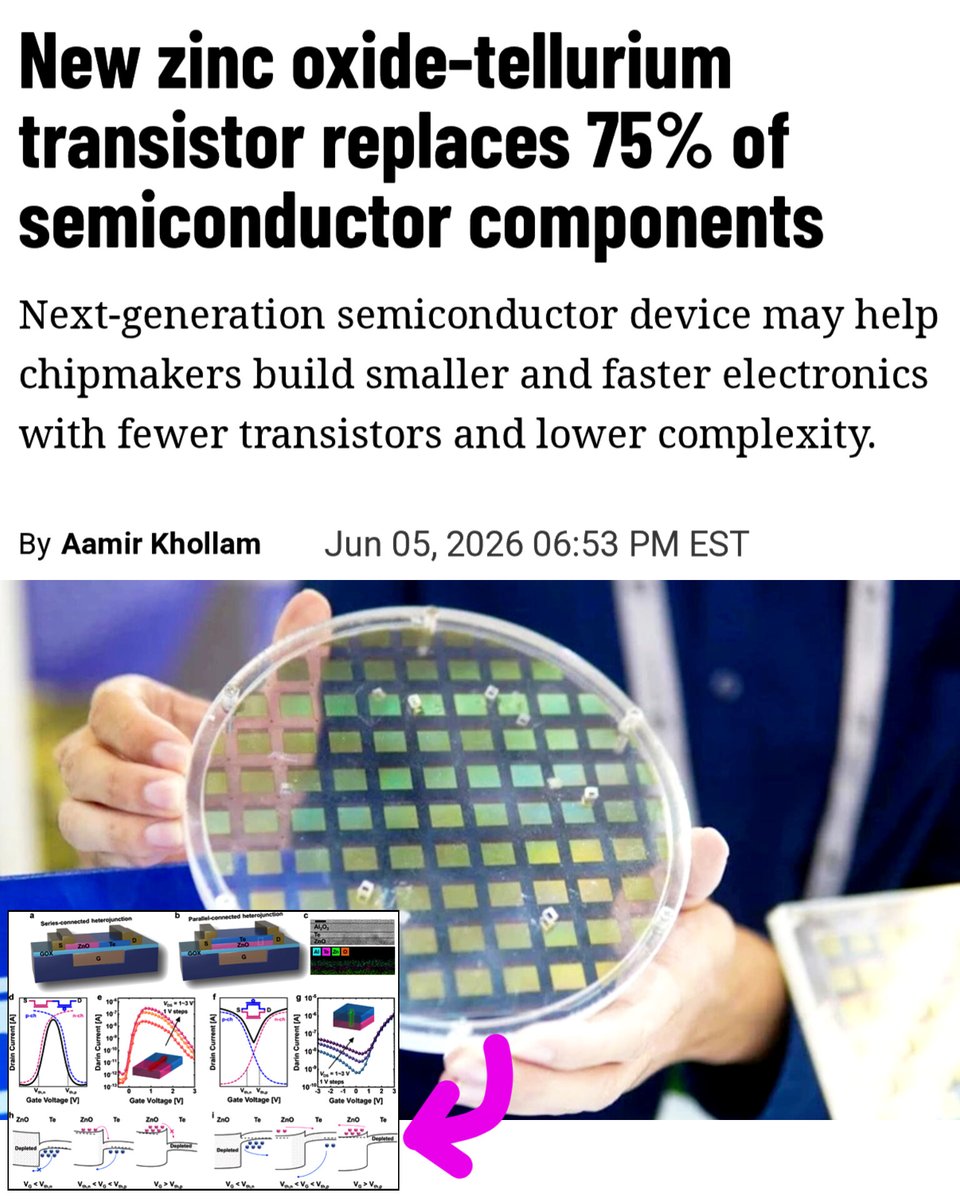
Researchers just demonstrated a ZnO-Te semiconductor device that could help redefine how future chips are built.
"For a frequency quadrupler, the team achieved the same function using one device instead of four transistors, cutting component count by 75%."
"The device exhibits Double Negative Differential Transconductance (D-NDT), allowing a single component to perform functions that normally require multiple devices."
"Researchers also demonstrated approximately 4× faster signal processing compared to conventional approaches."
Acceleration is everywhere!
By 2030, we will eventually find ways to stop biological aging in nearly every organ.
Because scientists are already putting maximum effort to stop the root causes of aging.
I believe first they will restore organ function, like they'll reverse aging by repairing accumulated cellular damage and restoring the body's natural regenerative capabilities.
THIS IS VERY CONCERNING.
Anthropic just called for a global pause in AI development, warning that AI is getting close to improving itself without human help.
In April 2026, Claude ran a full AI research project completely on its own. Humans picked the topic. Claude came up with every experiment, ran every test, and delivered the results.
Two human researchers spent a full week on the same problem and got 23% of the way there.
Claude got 97%.
Claude Mythos Preview is now 52x faster than a skilled human at improving AI training code. The same task takes a human 4 to 8 hours. Claude does it better.
Claude already writes 80% of Anthropic's own code. Their engineers are getting 8x more work done than in 2024, not because they work harder, but because Claude does most of it.
In March 2024, Claude could handle a 4 minute task on its own. Today it handles 12 hour tasks. That number doubles every 4 months. Week long tasks are expected by 2027.
Anthropic warns once AI can build and improve its own next version without any human help, nobody knows how fast things move after that or if humans will still be able to control it.
🚨 CATL eyes lithium-air batteries as a future breakthrough
"CATL, the world's largest EV battery manufacturer, says lithium-air batteries could become a major future direction for energy storage."
"Using lithium metal and oxygen from the air, the technology has a theoretical energy density of up to 12,000 Wh/kg, approaching gasoline's 13,000 Wh/kg."
"Even recent prototypes have demonstrated 1,200+ Wh/kg and around 1,000 charge-discharge cycles, marking significant progress."
"If successfully commercialized, lithium-air batteries could enable 1,600+ km EV range, lighter battery packs and potentially long-range electric aircraft."
Acceleration on the way..
Anti aging progress
"Researchers found that semaglutide, the GLP-1 drug used in Ozempic and Wegovy, slowed multiple DNA-based markers of biological aging in a randomized, placebo-controlled human clinical trial."
"The study analyzed 17 advanced epigenetic clocks and found that semaglutide reduced the pace of biological aging by about 9% compared with placebo over 32 weeks."
"Researchers also observed improvements in aging biomarkers linked to mortality risk, inflammation, brain health, heart health, liver function, kidney function and metabolism."
It is some of the strongest evidence yet that a widely used medicine may influence the underlying biology of aging itself.
The future of longevity may come not from a single anti-aging pill, but from therapies that slow the cellular processes driving aging across the entire body.
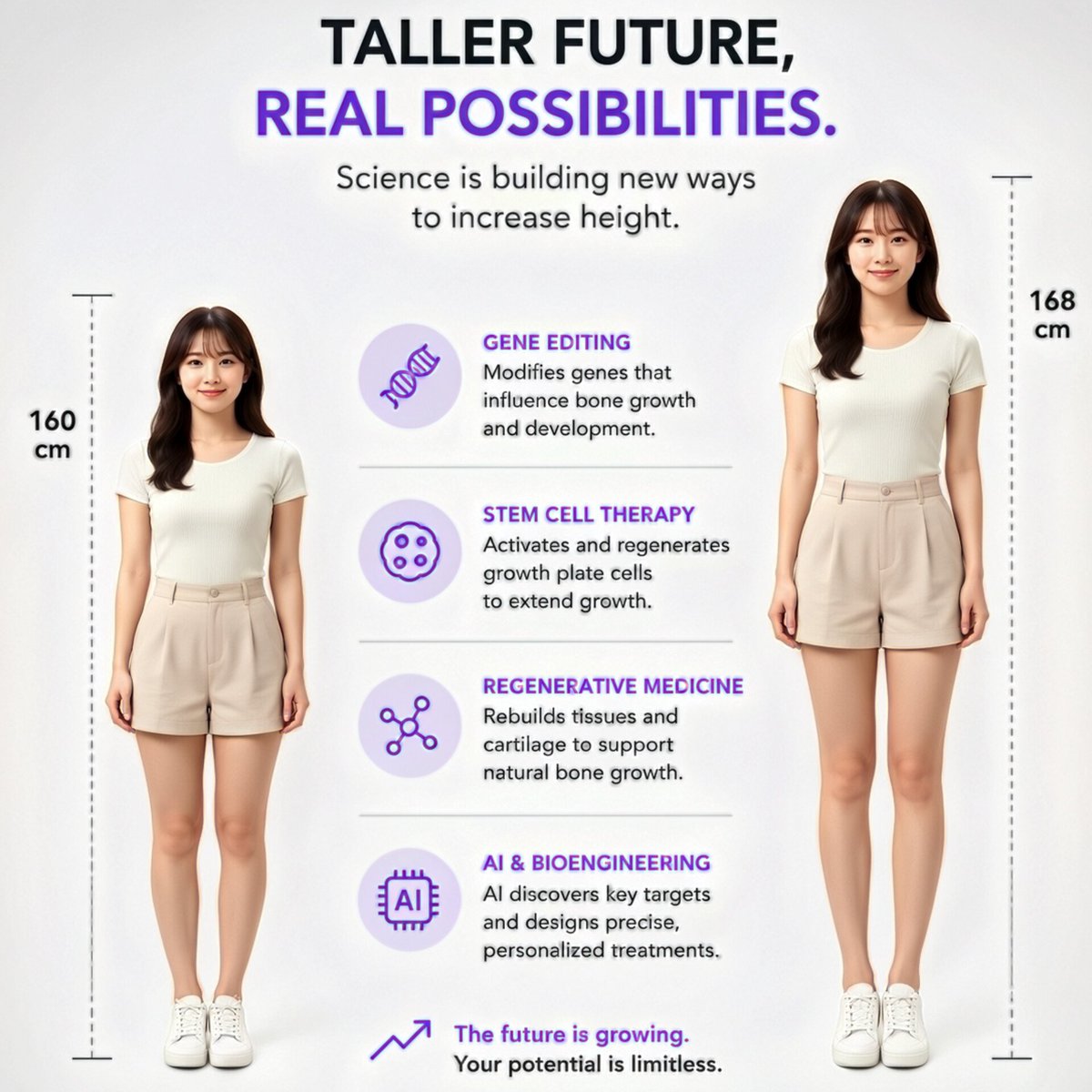
In near future, we will have multiple ways to increase or decrease height.
I know height is not controlled by a single gene. Thousands of genetic variants influence it, along with nutrition, hormones, health and development.
But scientists already understand many of the factors that influence height. Converting that understanding into a precise and reliable height-modification treatment that can reliably add 8 cm remains a major scientific challenge.
Still, advances in AI, gene editing, regenerative medicine, stem-cell biology and computational biology could dramatically accelerate our ability to understand and eventually modify the biological systems that influence height.
We've already seen AI systems such as AlphaFold rapidly predict protein structures that once took years to determine.
I wouldn't be surprised if the coming years bring multiple treatment options that seem impossible today.
The future will be extraordinary. Progress does not solve every problem, but it continually expands what humanity is capable of solving. And those capabilities are advancing faster than ever.
World-first' vaccine designed by artificial intelligence 👀
BIG NEWS:
Researchers have successfully tested one of the first vaccines to reach human trials with an antigen designed using artificial intelligence and computational modeling.
The vaccine, called DIOS-CoVax2, was engineered to target not just COVID-19, but an entire family of related coronaviruses known as sarbecoviruses, including SARS-like viruses that could emerge in the future.
In a Phase 1 clinical trial involving 39 healthy volunteers, the vaccine was found to be safe and generated measurable immune responses.
Rather than copying a protein from a single virus, AI analyzed genetic data from many coronaviruses and helped design a synthetic antigen.
If this approach succeeds in larger trials, it could help scientists develop vaccines that protect against entire virus families before future outbreaks even occur.
In other words, this could mark the beginning of a new era where AI helps design broad-spectrum vaccines for future pandemics before they happen.
🚨 Anthropic says recursive AI could arrive sooner than most expect 👀
Anthropic says the world is approaching Recursive Self-Improvement, where AI systems help create their own more capable successors.
As of May 2026, Claude authored over 80% of the code merged into production at Anthropic, up from low single digits in early 2025. Engineers now ship 8× more code per day than in 2024, while Claude's success rate on open-ended engineering tasks jumped from 26% to 76% in just six months.
Anthropic believes these trends could be an early step toward a future where AI systems assist with AI research, model design, testing, and development, accelerating technological progress far beyond today's pace.
The company says full recursive self-improvement, where AI autonomously builds more capable successors, may arrive sooner than many expect and has proposed coordinated oversight mechanisms among leading AI labs.
Everything is accelerating!
Cool
Wuji Tech just unveiled wuji hand 2, a next gen robotic hand designed for humanoid robots, with a reported 20% improvement in transmission efficiency and an extremely low 0.05 Nm back-drive torque.
For decades, building a robot that could walk was the challenge.
Now, building a robot hand that can truly work like a human hand is becoming the neXt frontier.
we're getting closer to humanoid robots that can interact to physical world with remarkable skill.