L’agenzia AGI: il designatore arbitrale Gianluca Rocchi è indagato perché scelse arbitri graditi all’Inter in due gare del 2024/25 https://t.co/iPLs0Jd7XV
La Spagna ha ordinato la chiusura del suo spazio aereo a tutti i velivoli che partecipano alla guerra in Iran. Il divieto riguarda non solo gli aerei direttamente impegnati nei bombardamenti, ma anche quelli di supporto, per il rifornimento in volo e di stanza in Paesi terzi. Il governo Sánchez ha proibito l'utilizzo delle basi aeree di Rota e Morón de la Frontera, aumentando le tensioni con gli Stati Uniti. Madrid non ha cambiato linea neppure di fronte alle minacce di Trump di un embargo commerciale
Perquisizioni della Gdf in corso al ministero della Difesa, Rfi, Terna e Polo Strategico Nazionale per un’indagine della procura di Roma su presunte irregolarità negli appalti informatici. Coinvolte 26 persone, tra cui generali, dirigenti pubblici e imprenditori; ipotizzati reati come corruzione, riciclaggio e turbativa d’asta
@FurkanGozukara Ultimatums of this scale only matter if backed by enforceable power. Closing US bases, taxing Hormuz traffic, and extracting reparations would imply a level of control Iran does not possess.
@barkmeta If this were the biggest insider trading case in history, we’d already have data, tickers, and investigations underway. Instead, we have big numbers, suggestive timing, and no verifiable evidence.
Don’t confuse markets anticipating geopolitics with conspiracies we can’t prove ;)
@DMRegister Energy is just the first layer. When energy and logistics are under stress, effects spill into agriculture: pricier fertilizers, slower routes, uncertain planting. If Hormuz stays under pressure, problem isn’t today. Oil may be just the beginning. Food risks come next.
@theinformant_x The real issue in the Strait of Hormuz isn’t protecting ships.
It’s unquantifiable risk: mines and hybrid threats break pricing.
No model:
– insurers step back
– markets pull out
– defenses turn reactive
You don’t need to close the Strait. Just make safety impossible.
It is interesting how criminal incidents are immediately used to propose structural solutions such as gender segregation. This is a well-known political mechanism: turning a public order issue into an ideological battle. In politic-religious systems, isolated cases are often used to reinforce social norms already supported by parts of the establishment. The real issue, therefore, is not the safety of the Tawaf, but the model of society some want to impose: responsibility is individual, not collective.
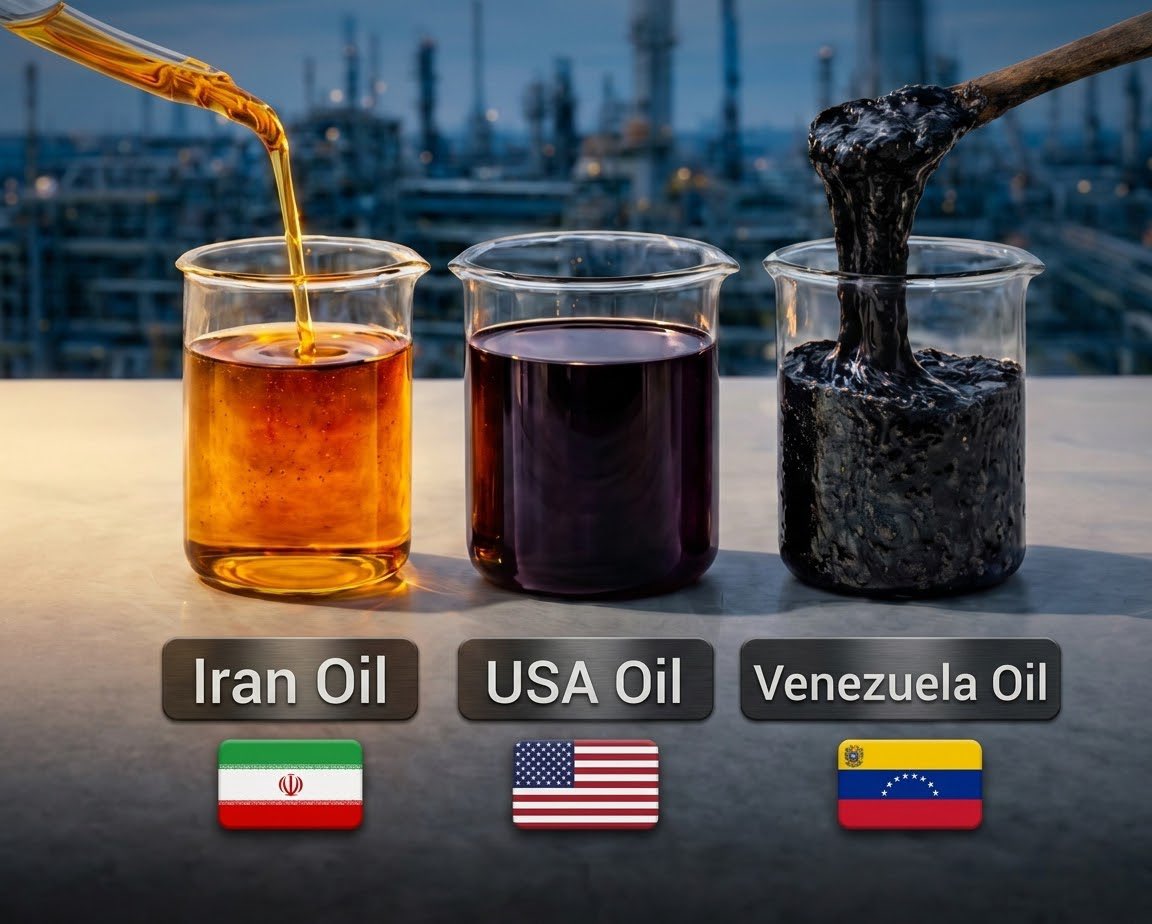
Everyone talks about Iranian oil in barrels. Nobody talks about what is inside them. That difference is why Western refineries have been running shadow networks through Dubai for twenty years to get it despite the sanctions.
Crude oil is not a uniform commodity. It is a spectrum of hydrocarbons with different molecular weights, and the composition of a given crude determines how easily it converts into the products refineries actually want to sell: gasoline, diesel, jet fuel, heating oil. The measurement that captures this is API gravity. Higher API gravity means lighter crude with shorter carbon chains, which means lower energy cost to crack, lower processing cost to refine, and higher yield of the light distillates that carry premium pricing. Lower API gravity means heavier crude requiring more energy, more processing steps, more capital equipment, and producing a higher share of lower-value residuals.
Iranian Light crude runs at 33 to 36 degrees API gravity with sulfur content between 1.36 and 1.5 percent. That is the refinery sweet spot. It is light enough to yield high fractions of gasoline and middle distillates without excessive processing costs, but heavy enough to produce the full range of products that complex refineries are designed to process. It is what petroleum engineers call an optimal blend crude.
Now compare the alternatives.
Venezuelan Merey heavy crude runs at approximately 16 degrees API gravity with sulfur between 3 and 5 percent. Refining it profitably requires a coking unit, a hydrocracker, and an extensive desulfurization train. The equipment exists. The economics work for refineries purpose-built around Venezuelan feedstock. It is not a substitute for Iranian crude. It is a different product requiring different industrial infrastructure.
US West Texas Intermediate runs at 39 to 40 degrees API with sulfur below 0.25 percent. In theory, the cleanest and easiest crude to process. In practice, it is so light that it does not yield the heavier middle distillates a complex refinery needs to run at full capacity. European and Asian refineries built around medium crudes cannot switch to WTI without blending it with heavier crudes to achieve the molecular weight distribution their process units require. WTI is not a drop-in replacement for Iranian medium.
Iranian oil fits where both US shale and Venezuelan heavy do not. It is the liquid that flows through the middle of the global refining system without requiring either the coking infrastructure for heavy crudes or the blending operations for ultra-light shale. That molecular fit is why it commands a persistent premium above comparable grades. It is why Indian refineries maintained Iranian crude purchases through every round of sanctions and negotiated the logistics to keep that flow moving. It is why the Dubai shadow banking and trading network that the UAE is now considering dismantling existed in the first place.
The Strait of Hormuz does not just carry oil. It carries the specific category of oil that the global refining system was built to process most efficiently. Closing it does not just reduce supply. It removes the grade of crude that the system runs best on and forces every refinery in the world to run less efficiently on whatever it can find as a substitute.
That is the premium embedded in the $82 oil price. Not just volume. Molecular weight.
https://t.co/ULBgEzZ3A8
Iranian ballistic missile attacks decline 90% since conflict start: #USCentcom reports Iranian ballistic missile launches down 90% and drone strikes down 83% as of March 5, indicating potential depletion of #Iran's precision-strike capabilities or strategic shift in targeting priorities after six days of sustained combat.