Phones, EVs, defence—critical raw materials power them all. Europe & U.S. still lean on China, leaving supply chains exposed.
See why urgent, innovative action is a must in our GeoTech Centre explainer and report: https://t.co/3dBFx56GYw
The biggest danger? Preparing for the wrong war.
Gen. (ret.) Chris Badia on why realistic training and understanding the war of the future is the key to readiness. #GLOBSEC2026
Full episode: https://t.co/hTCb8JElty
549 days. That's how long it takes a new medicine to reach a patient in Croatia after EU approval, one of the slowest timelines in Europe.
Next Monday in Brussels, GLOBSEC convenes policymakers, dipomats and experts to unpack what that delay actually costs CEE governments.
📡 #FirstLight
Europe's Chips Act 2.0 isn't chasing self-sufficiency. It's a bet on staying indispensable.
Our GeoTech Centre read: demand-side pull over more fabs, hybrid sovereignty over autarky, and quantum as the long game.
Full analysis 👇
https://t.co/AASRWZyX5i
📡 #FirstLight
NATO may adjust its nuclear posture as US conventional forces in Europe shrink. The real question isn't how many weapons, but where they'd go.
@Tomas_A_Nagy on the why, where and when, and why a decision is still far off: https://t.co/w8TLiY30RA
NATO might shift its nuclear posture: the real question is not how many weapons, but where they would go — as this debate is far from any decision.
Earlier this month, the Financial Times broke the news that, amid a significant drawdown of U.S. conventional forces in Europe, NATO is reportedly considering an adjustment to its nuclear deterrence posture.
The aim would be to reassure allies of Washington's commitment at a moment when American conventional forces on the continent could shrink substantially — perhaps within the next year and a half.
Such a move would carry implications not only for NATO's current deterrent policy, but also for the force generation needed to execute the regional defense plans the Alliance adopted in 2023, which remain the foundation of eastern-flank stability.
Three questions follow: why, where, and when.
Is Europe financing its defence the right way? Not yet. 🇪🇺
The EU-27 outspend Russia & China on defence — yet fragmented procurement means far less capability per euro.
New Competitiveness Tracker chapter by @philippemlau 👇
https://t.co/SoD7rnAc9P
📡 #firstlight | One idea worth your morning
The EU's new Cloud and AI Act isn't about banning US hyperscalers.
It's a four-tier sovereignty ladder, from data residency to full autonomy, that ties public contracts to where your workload sits.
Read more: https://t.co/zHcNGMRq1s
📡 #FirstLight | One idea worth your morning
Medicines used to be a health question. Now they're economic security. The real test is geopolitical: keep innovation and production at home, or end up a spectator between the US and China.
https://t.co/iYwKsvPQWA
📡 #FirstLight | One idea worth your morning
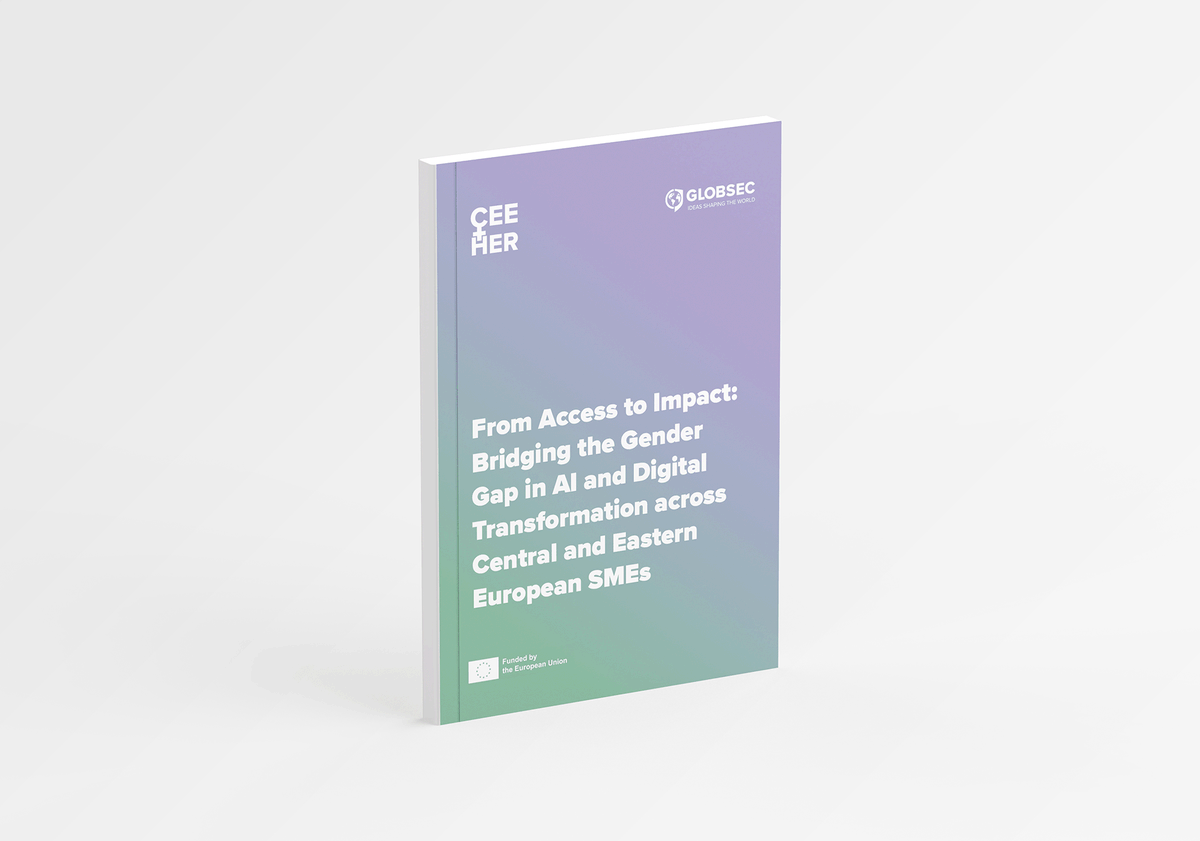
Women across CEE are adopting digital tools, but they're locked out of the rooms where tech strategy and capital get decided.
Our new report: why closing this gap isn't social policy, it's competitiveness. https://t.co/Q3gZmtE6Nr
📡 #FirstLight | One idea worth your morning
Europe is spending more on defence than at any time since the Cold War. But is it enough?
https://t.co/vZ5L7CyCtl
COVID. Ukraine. Now the Middle East.
Each crisis, Europe changes where it buys fossil fuels, not how much it depends on them.
The only durable exit is demand: heat pumps, EVs, efficiency.
New commentary by @janrosenow 👇
https://t.co/JUeZx5ypR1
Europe's tech future is being rewritten.
In this episode from the #GLOBSEC2026 Forum, Ambassador (ret.) @KlyngeC, @Zscaler discusses what technological sovereignty really means.
Watch the full interview: https://t.co/ZCmpmpXLoi
At @GLOBSEC I interviewed Nickolay Mladenov, the diplomat leading the Board of Peace for Gaza.
He warned Israel that pushing Gazans into an area more than half the size of the Strip would lead to another October 7.
Read my report in @thenightlyau
https://t.co/OFXYXRLLDD
@nmladenov
Last week, the @GLOBSEC Forum – one of the world’s leading security conferences – took place at the Hilton Prague Atrium Hotel, attended by numerous government and business leaders. What were the main topics? Our CEAO, @JanRuziJan, shares his insights.👇
GLOBSEC 2026 | “Childhood Has an Expiration Date” Abducted Ukrainian children cannot wait.
At @GLOBSEC this year, more than 2,000 leaders from 86 countries gathered with one goal, as @RobertVassGLB said:
“We come with a clear goal: to find solutions for the future.”
🧵 1/11
@WillemijnAerdts, Minister for Digital Economy and Sovereignty of the Netherlands, on how Europe can learn from the Netherlands in the field of AI and innovations 📈 #GLOBSEC2026#GeoTechSummit