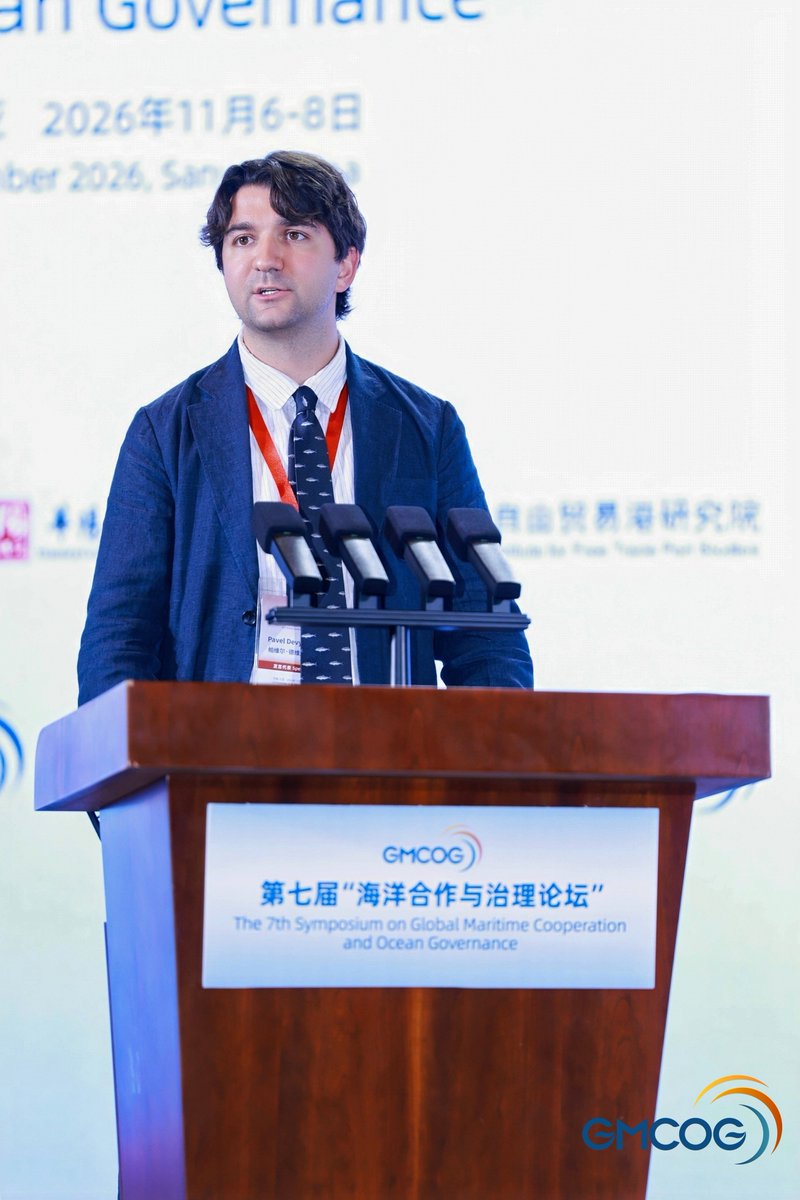
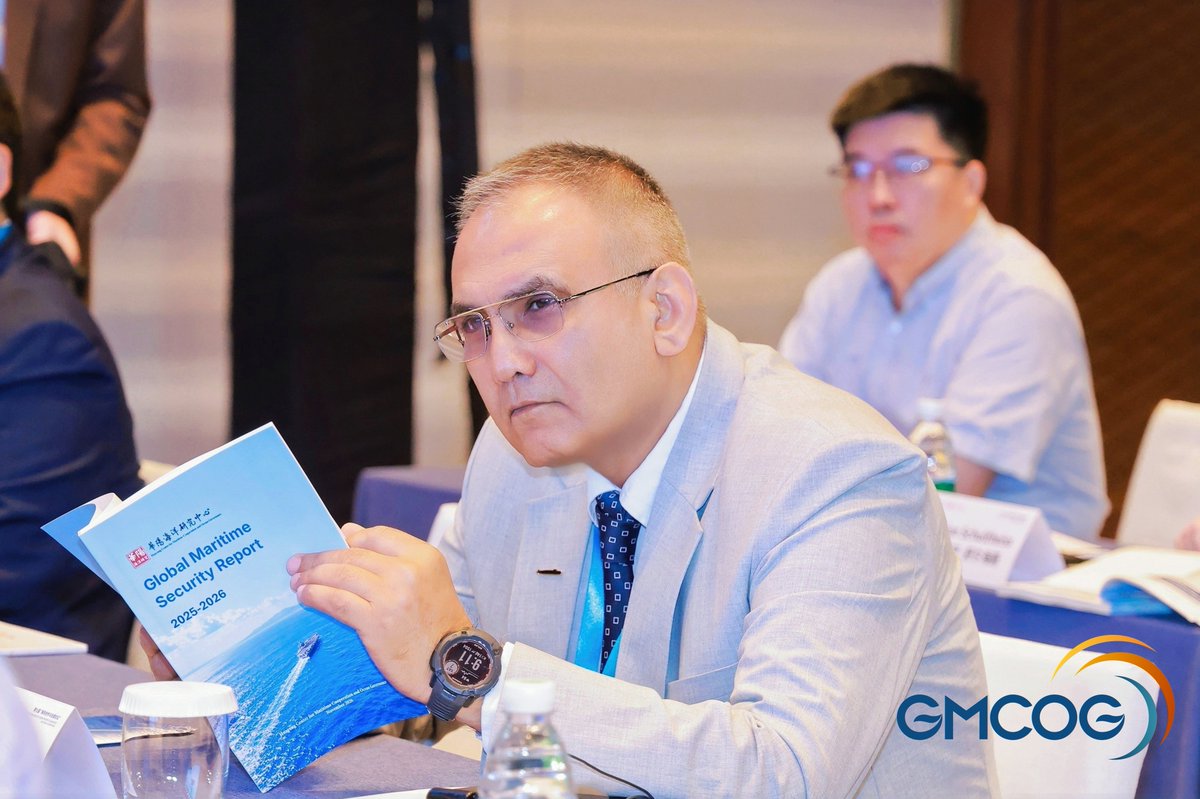
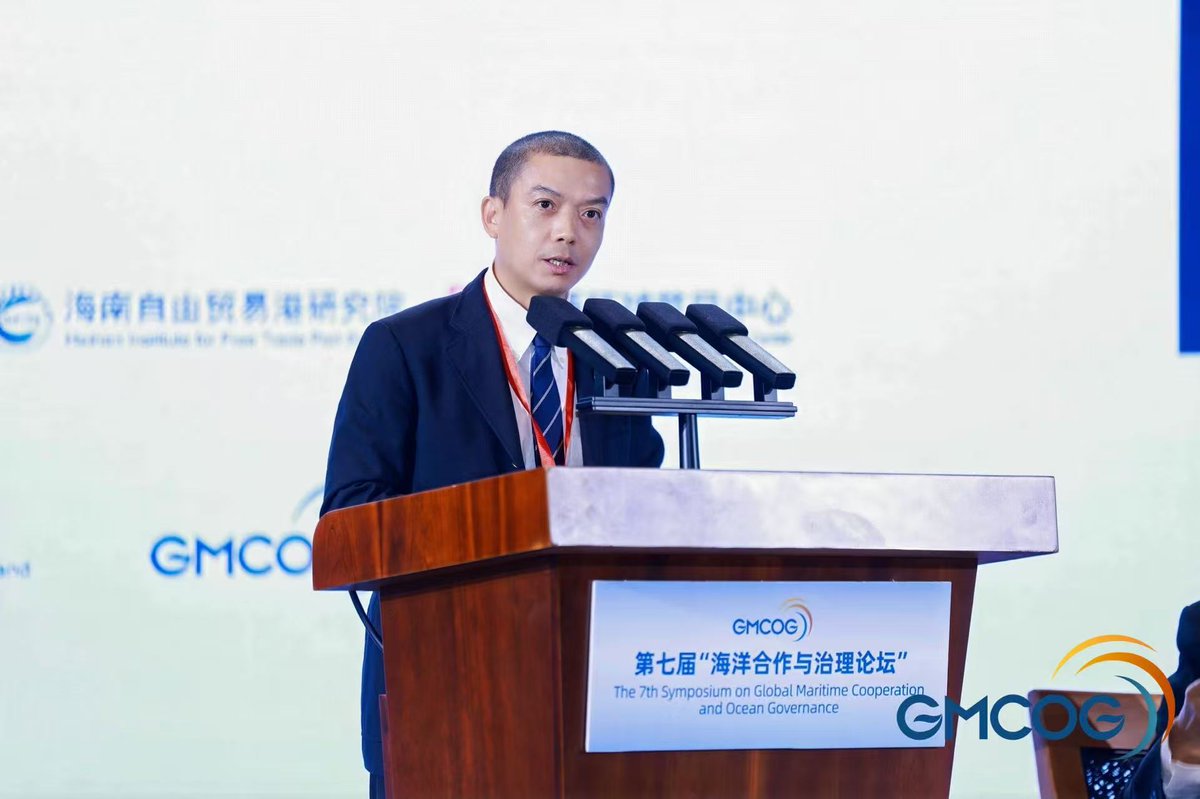
Thank you to @GMCOG_ for the invitation to come to the southernmost part of China and speak about maritime governance in the northernmost part of the world. What a pleasure to join a panel of international experts to discuss Arctic cooperation among the coconut palms of Sanya!
I recently participated in the 7th Symposium on Global Maritime Cooperation
and Ocean Governance organised by the Huayang Center for Maritime Cooperation and Ocean Governance at Sanya, Hainan, China.
@GMCOG_
🔴 LIVE | Closing Ceremony – 7th GMCOG
Wu Shicun, Chairman of the Huayang Center and Chairman of the NISCSS Academic Committee delivered closing remarks.
Wu Shicun reaffirmed his commitment to the Symposium's long-term sustainability, emphasizing openness to diverse perspectives and constructive debate. He also stressed the need to translate meaningful recommendations into practical, actionable measures.
🔴 LIVE | Closing Ceremony – 7th GMCOG
Wu Shicun, Chairman of the Huayang Center and Chairman of the NISCSS Academic Committee delivered closing remarks.
Wu Shicun said, with a broader agenda covering emerging maritime issues, this year's Symposium addressed the diverse concerns of coastal and non-coastal states, both within and beyond the South China Sea region.
The two-day forum has also recorded around 20,000 online and in-person attendances, reflecting growing interest in global maritime cooperation and ocean governance.
Zeng Xiaoming highlighted a practical role for maritime think tanks: turning expert exchanges into policy research and connecting forum discussions with concrete projects, from marine technology platforms to ecological protection. Dialogue should lead to tangible outcomes.
🔴 LIVE | Closing Ceremony - 7th GMCOG
Zeng Xiaoming, Head of NISCSS delivers closing remarks: Zeng Xiaoming highlighted the widening scope of maritime governance: BBNJ implementation, space-based maritime information, offshore renewable energy, and Arctic and deep-sea governance now sit alongside traditional legal and security issues.
Kuang Xianming: China-ASEAN maritime cooperation has made progress in ports, shipping routes and infrastructure, but gaps remain in regulatory alignment, maritime services and blue finance. Greater use of free trade agreements, particularly RCEP, could help bridge these gaps and unlock the full potential of regional blue economy cooperation.
🔴 LIVE | Day 2, Session 7 of the 7th Global Symposium on Maritime Cooperation and Ocean Governance is now underway! Tune in for live discussions and expert insights!
Moderator: Sorajak Kasemsuvan, Council Member, Asian Peace and Reconciliation Council; Former Vice Foreign Minister of Thailand
Speakers:
Zhang Xinjun, Professor of Public International Law, Tsinghua University (@Tsinghua_Uni ), China
Vladislav Tolstykh, Professor, Institute of Oriental Studies of the Russian Academy of Sciences; Leading Researcher at the Sino-Russian Comparative Law Research Center, Shenzhen MSU-BIT University
Lei Xiaolu, Professor, China Institute of Boundary and Ocean Studies, Wuhan University (@WHU_1893 ), China
Tu Lai, Senior Research Fellow, Diplomatic Academy of Vietnam (@Scs_Connect )
Li Li, Director General, Institute of Geophysics, China Earthquake Administration
Ang Kai Lip, Former Acting Director, Department of East Asia, Ministry of Foreign Affairs, Brunei
Huang Huamei, Vice President, South China Sea Development Research Institute, Ministry of Natural Resources, China
Kuang Xianming, Vice President of Hainan Institute for Free Trade Port Studies, China
Kuang Xianming, Vice President of Hainan Institute for Free Trade Port Studies, China: Free trade rules are key to bringing greater certainty to ocean governance. With RCEP set for its first comprehensive review in 2027, the region has a valuable opportunity to deepen blue economy cooperation, strengthen regional connectivity, and advance maritime governance.
Huang Huamei: Integrating citizen science into marine conservation requires standardized monitoring methods, public training, and consistent data quality control. This would allow citizen-collected data to contribute to scientific research and ocean governance.
Huang Huamei, Vice President, South China Sea Development Research Institute, Ministry of Natural Resources, China: Huang Huamei proposed harmonizing coral reef survey indicators, assessment methods, and data formats across the South China Sea. An open data-sharing mechanism among regional research institutions could support more consistent monitoring and conservation efforts.
Ang Kai Lip, Former Acting Director at Brunei’s Ministry of Foreign Affairs, emphasized that effective ocean governance requires practical cooperation and tangible benefits. Marking 35 years of Brunei-China diplomatic relations, he highlighted cooperation in Muara Port development, aquaculture research and climate action as examples of how bilateral partnerships can advance connectivity, scientific capacity and sustainable development.
Vulnerable coastal states often face greater earthquake and tsunami risks but lack monitoring networks and technical capacity. Li Li emphasized that regional cooperation should embed technology transfer, equitable data access, and AI capacity building from the outset.
Li Li, Vice-President of IASPEI, called for stronger international cooperation on offshore seismic hazard assessment, proposing shared risk maps, cross-border ocean-bottom monitoring networks, and equitable capacity building to strengthen marine disaster resilience.
Tu Lai, Senior Research Fellow, Diplomatic Academy of Vietnam: Maritime connectivity supports trade, supply chains, and new opportunities in coastal energy, but also creates vulnerabilities. As highlighted by the IMF in 2024, disruptions at key maritime chokepoints can lengthen shipping times, with consequences for markets and consumers.
Lei Xiaolu, Professor, China Institute of Boundary and Ocean Studies, Wuhan University, China: Science is playing an increasingly important role in global ocean governance. Issues including climate-ocean governance, the BBNJ Agreement, and deep-sea mineral exploitation have deepened the integration of science with law and policy. Looking ahead, how science shapes the interpretation and application of international law through concepts such as the precautionary principle and best available science merits greater attention.
@Tsinghua_Uni Zhang Xinjun, regarding the passage of the Strait of Hormuz, believes that neither the freedom of navigation, nor the military necessity provides a full answer.
Zhang Xinjun, Professor of Public International Law, Tsinghua University (@Tsinghua_Uni ), China: Iran's non-ratification does not offer it unrestricted freedom to close the strait of Hormuz in peacetime. The Corfu Channel case decided upon the non-suspencible right to innocent passage in the international straits in the Corfu Channel. 1958 Convention on the Continental Shelf also reiterated the non-suspension of innocent passage through straits used for international navigation.
Zhang Xinjun: Three historical crisis the Strait of Hormuz including the 1980-1988 Iraq-Iraq "Tanker War", the 2011-2015 Sanctions crisis and threats to close the Strait and the 2026 Regional war and renewed restrictions give us common lesson that threats to navigtion were symptoms of wider confilct and that durable reopening followed deescalation and negotiated arrangements.