You cannot love without wanting to fight for a beloved. But you cannot fight for a beloved unless they are someone worth fighting for. Thus, War and Wooing are not separate: they are Romance itself. https://t.co/YKytAFktuE
We may have to settle the definition of "meek," then. For me, being Meek means to have one's strength under control and ready for critical moments, e.g. safeguarding the home is properly the task of the meek, since the opposite, arrogance/being self-interested, tends to make places unsafe.
And further, I'd say Knights do exist, but they've been systematically de-fanged. We may agree on that point.
@JRR_Talkin2u@firegryphon I dislike it in general, but _Wide Sargasso Sea_ accomplished this by writing a prologue that recast _Jane Eyre_, specifically the "madwoman in the attic" character.
I was asked to comment on this, after it was explained to me:
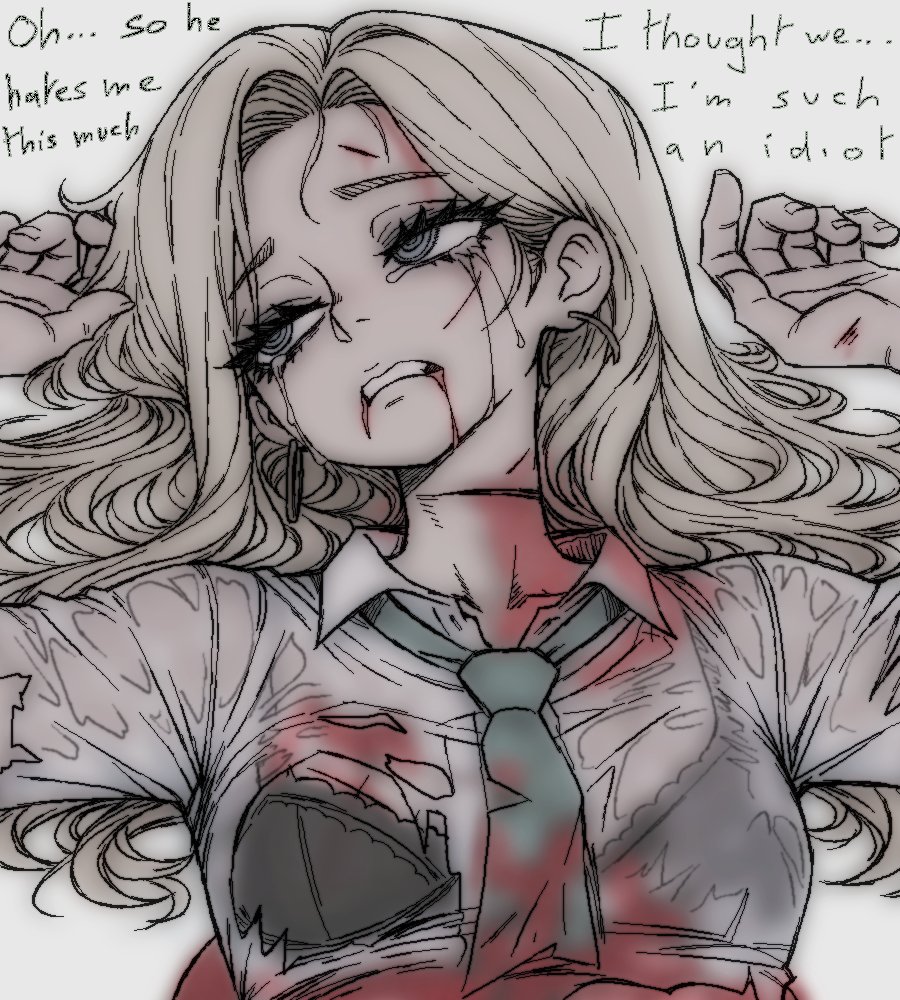
Sectumsempra _can_ deprive Malfoid of having children if Harry is kept mostly as he is in the source material, i.e. using trickery and lies/stealing to solve his problems. To me, it becomes a tragic, ironic punishment for his lack of development and would prompt his growth as a young man.
Sectumsempra _cannot_ deprive Malfoid of having children, however, if Harry is written in a way where he becomes a worthy Lover over time, shedding childish morals for the morals of a man. That's when the child-deprivation becomes a cheap hit of angst.
At least, that's what Aristotle would say.
_I_ say that he and Malfoid should have ten children and be really snooty about it.
Happy Malfoid Monday: Everyone is offering according to their skills. I am no great artist, but I AM a professional editor. If you will accept my lack of source-material knowledge, I would like to help the resurgence to produce the best things it can.
TBH, though, people changing to aim at higher things is itself the most important change.
Please be mindful that I am juggling many jobs, so I may not be able to take every request.
But if you want some professional treatment, I can provide that for you. I do not care how amateur you are; I will take you as seriously as you intend to be.
@AtavismDr By the way, I wanted to extend a personal thanks to your comment the other day that helped spurn the creation of an article. You and @Kit_Shicker were discussing Malfoid, and I saw that I was not alone.
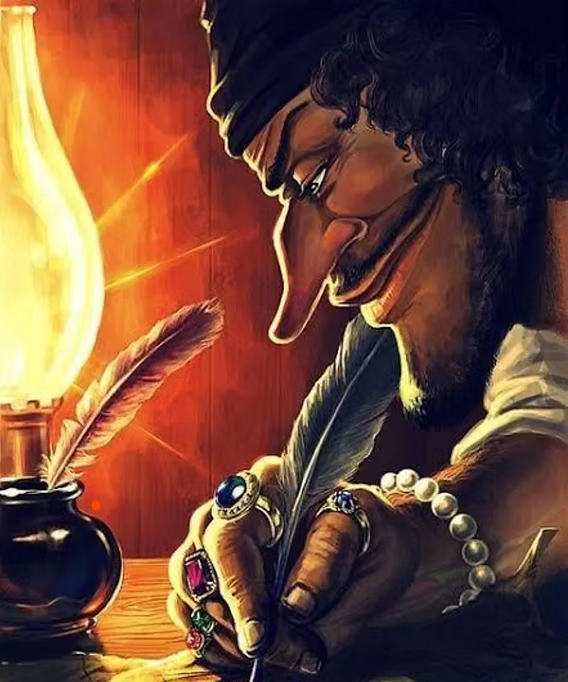
@EthosHeretica Ah, it's Feliciano de Silva's ghost, come back to haunt us: the OG "I only write sequels to other people's work to cash in" courtslop writer.
I wasn't relying on the Ethics. I was relying on the Poetics. It proscribes certain conditions for art that "represents men either as better than in real life, or as worse, or as they are."
It has everything to do with the Feminine power fantasy, viz. to ennoble via mere presence/recognition. If the Female Wielder of the Ennobling power is also injured in the process, then she also receives the accolade of "martyr."
This dynamic has existed for a long time. Modern examples include Hull's 1919 novel, The Sheikh, wherein a... victim of coerced hugging... is able to convince the local warlord to abandon his treacherous ways. This goes all the way up to that benighted romantasy book about the minotaur.
I think the parallels are very hard to ignore. The relationship can also follow Spenserian Romance where they can kneel to each other and flip the dynamic: Harry is a sinner, improved by the pursuit of something of a higher order than himself. Malfoid redeems by the virtue that her knight-errant sees in here.
This is not unlike The Man of La Mancha.