2026 started with a new publication in @MPMIjournal. We identified arabidopsis functions responding to treatment of a bacterial quorum sensing molecule leading to activation of immune response.
@Subhade68512667@GokulanCG
Transcriptome Analysis Reveals Key Players in Plant Immunity Triggered by Diffusible Signal Factor (DSF), a Xanthomonas Secreted Quorum Sensing Molecule | Molecular Plant-Microbe Interactions® https://t.co/ms6Tg5EnEy
Xanthomonas oryzae pv. oryzae Type III Effector Tal9b Targets a Broadly Conserved Disease Susceptibility Locus to Promote Pathogenesis in Rice | Molecular Plant-Microbe Interactions® https://t.co/qFcC9lquLO
#preprint_alert
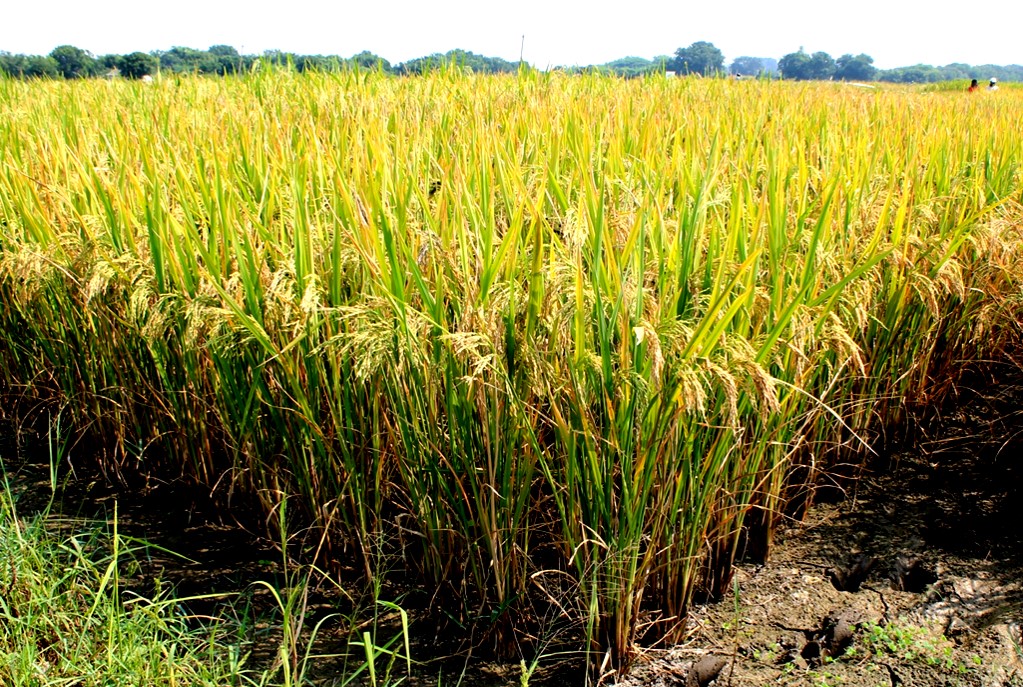
Happy to share our latest work on the identification of a MAPK6 allele that is novel to the rice germplasm. We show that the mutant allele is linked to resistance against the bacterial blight of rice. Mutant plants display constitutive immunity.
A novel allele of Mitogen Activated Protein Kinase 6 is linked to disease resistance and constitutive immunity in rice. https://t.co/ULvrPHoP94 #biorxiv_plants
A novel allele of Mitogen Activated Protein Kinase 6 is linked to disease resistance and constitutive immunity in rice. https://t.co/ULvrPHoP94 #biorxiv_plants
Omics-driven Identification of Candidate Genes and SNP markers in a Major QTL Controlling Early Heading in Rice https://t.co/zZMEQ9Yv1W #biorxiv_plants
Butterfly! Butterfly!
Our study just published from #ImranLab@ccmb_csir in @NaturePlants can be explained with the help of a butterfly.
Worm > Cocoon > Butterfly – a transformation that has fascinated researchers, photographers, and poets for centuries. 1/n
AlphaBridge: tools for the analysis of predicted macromolecular complexes
• AlphaBridge introduces tools to analyze and visualize the interfaces between predicted macromolecular complexes using data from AlphaFold3. It processes the predicted interactions into intuitive diagrams and 3D models for easy interpretation.
• The tool uses a novel “Predicted Merged Confidence” (PMC) matrix, which combines the Predicted Local Distance Difference Test (pLDDT) and Predicted Aligned Error (PAE) metrics to identify multi-component structural modules and binary interfaces with high confidence.
• AlphaBridge uses graph-based community clustering to detect interaction motifs in biomolecular complexes, then visualizes these interactions as chord diagrams (“AlphaBridge diagrams”) to provide a clear and intuitive summary of predicted binding interfaces.
• The tool allows researchers to evaluate the reliability of interactions in predicted protein-protein, protein-DNA, and protein-RNA complexes, offering a scoring and ranking system for predicted interfaces before detailed analysis.
• By varying the cut-off for contact predictions, AlphaBridge can help distinguish between reliable and unreliable predictions, providing insights into physiological relevance. It was particularly useful for evaluating interactions in DNA mismatch repair proteins and RNA binding proteins.
• The AlphaBridge webserver (https://t.co/HMxfguvmnn) offers an interactive platform where users can upload AlphaFold3 prediction files, visualize the predicted 3D structures, and analyze contact interfaces through an integrated web viewer.
• AlphaBridge enhances accessibility for both expert and non-expert users by combining multiple layers of information—contact links, prediction confidence, and visual representations—into one interactive diagram, simplifying the evaluation of complex predictions.
@TassosPerrakis @rborza_
💻Code: https://t.co/pwKfDtQ7MM
📜Paper: https://t.co/EB8po1CCfP
Have you ever seen Arabidopsis lighting up like a Christmas tree🎄? – it’s always the right season for this!
Try our new imaging setup to follow bioluminescent bacteria💡inside plants over time. Great work by our group @NanneTaks@HAvandenBurgLab
https://t.co/nTXTLiscto
#Xanthomonas pathogens are stuck in hydathodes for weeks(!) and cannot traverse to the xylem vasculature if they lack four specific cell wall degrading enzymes.
Tremendous effort and beautiful “Xantho-blots” by @MishaPaauw @HAvandenBurgLab https://t.co/9fOhrR5L5B
We are hiring. If you are interested in developing crops with better #Nutrition apply with your CV and cover letter by the 12th Oct. Experience with HPLC is a plus for one of the position. @TIGS_India#biofortification
https://t.co/gpJ5vROfXE
Many thanks to @NehaaaKum, @hippo_campy and @GokulanCG to come together to make this video. If you want to know how scientists make plants with different desirable traits, this video is for you!
https://t.co/3k5X6F7siZ
You must have heard of development of improved rice varieties. But what goes on behind the scenes? How do scientists choose which varieties to make? And how do they really make these varieties? Here is a glimpse from Hitendra Patel's recent work:
https://t.co/OmtaLqHxfb
@CSIR_IND
GR Chandak lab's whole blood-based PCR test for sickle cell anemia will now be also used at the Chattisgarh Institute of Medical Sciences, Bilaspur for screening pregnant women and newborns. This test has been developed under CSIR-Sickle Cell Anemia Mission.
@CSIR_IND
We are now inviting applications for PhD students for the Jan 2025 batch. Last date for application is 16 Sept!
https://t.co/rNofITTCIx
Here are the eligibility criteria: https://t.co/NwyVuuXzlJ
@CSIR_IND@AcSIR_India
Introducing the DRR Dhan 73 rice, dev by ICAR-IIRR & us, released by the Hon'ble Prime Minister this week. It's a derived line of high-yielding Samba Mahsuri rice, tolerates low soil phosphorus.This is the kind of crop we need to reduce input costs & chem fertilizer pollution.