We demonstrated verifiable quantum advantage with Quantum Echoes. Running 13,000x faster than leading supercomputers, this represents a significant step toward real-world applications. Watch → https://t.co/3WJWnISWZr
Apply now for Google’s academic research awards, a global open call for proposals on groundbreaking foundational and applied research in computing and technology. This cycle, Google is interested in proposals on early fault tolerant quantum computing algorithms and applications, and quantum computing security.
Learn more and apply by August 7 at https://t.co/ucP9RzLFEc
Published today in @Nature: We've unified calibration with computation on our Willow processor, training a reinforcement learning agent to stabilize the logical qubit and pave the way towards a quantum computer that continuously learns from its errors.
Read more: https://t.co/MUAaxkfimN
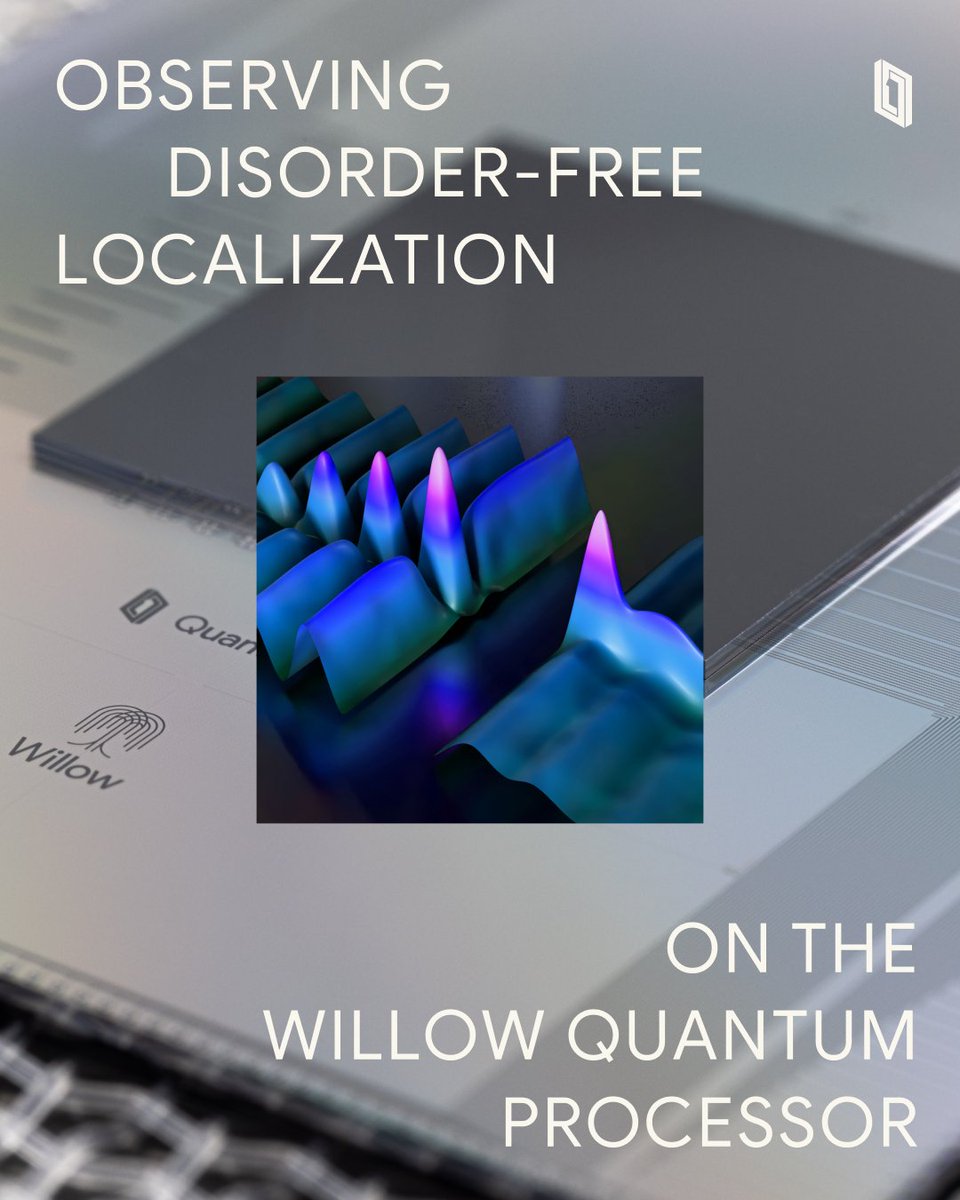
Studying particle diffusion in quantum systems is a major classical computing challenge. Our Willow processor was used to demonstrate disorder-free localization via a quantum algorithm which offers a polynomial speedup for disorder sampling.
Read more: https://t.co/MGbd2EFpaW
Today's executive orders are an important step to help ensure continued US leadership in quantum computing. Google was honored to participate in today's signing ceremony, and we look forward to continued collaboration with the U.S. government.
https://t.co/1sThAqH96Z
Last month, we hosted our annual Quantum Summer Symposium (QSS) at @DatalandMuseum, bringing together our partners, collaborators, and the broader quantum community. Watch the highlight reel to see a recap of the updates and discussions from the event: https://t.co/PD6hlEcRwh
Today, Charina Chou joins Semafor Tech: First Principles to discuss how emerging technologies like quantum computing can transform research achievements into to practical impact. Watch here: https://t.co/JEWj9oYVyU
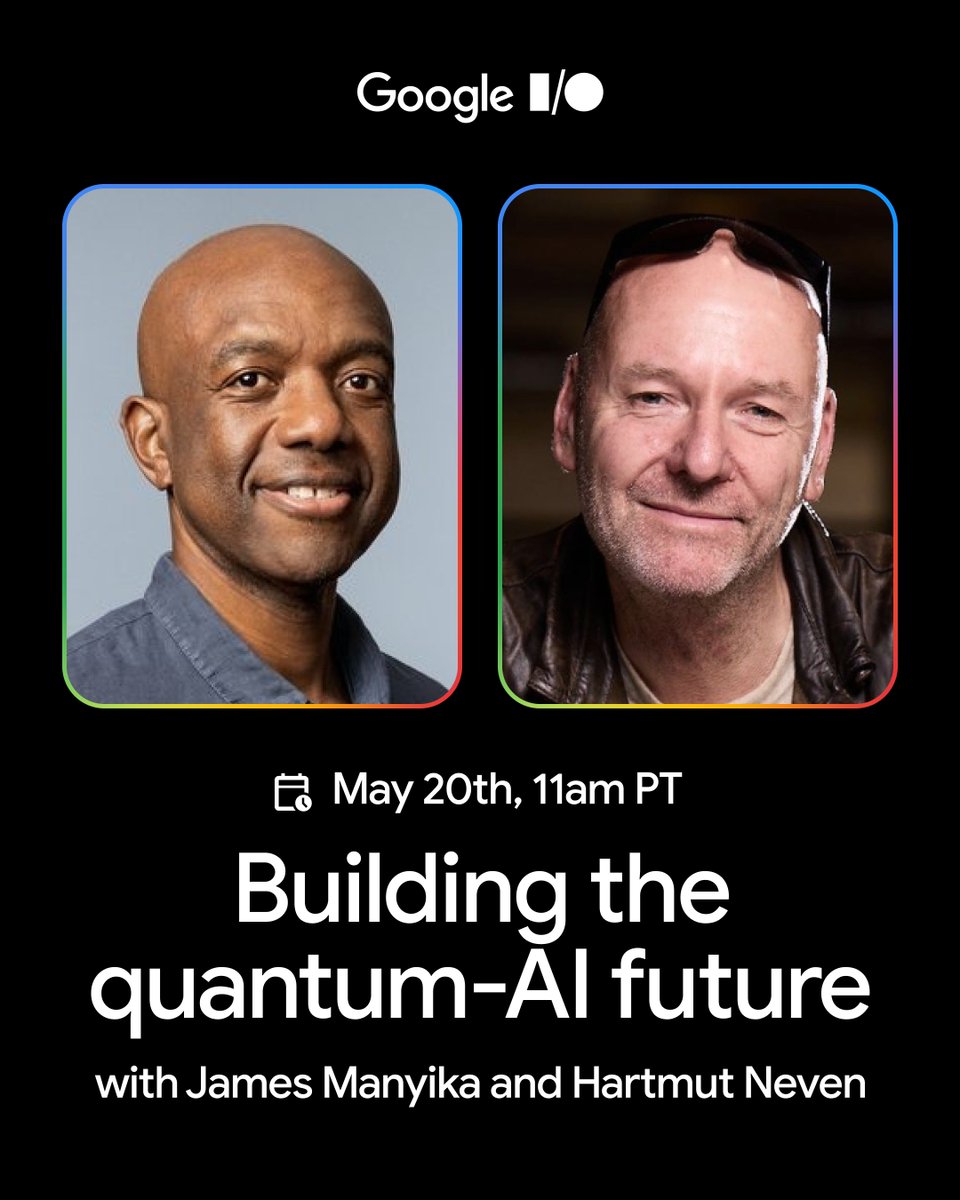
In case you missed it: Hartmut Neven and James Manyika took the #GoogleIO stage to discuss the intersection of quantum computing and AI. If you couldn't make the session, watch the full recording to discover how these two technologies work together: https://t.co/OMnUOe01li
How are quantum computing & AI working together to accelerate discovery?
Tune in for Hartmut Neven & James Manyika’s discussion at #GoogleIO to explore how AI can build quantum hardware, while quantum unlocks new ways to train AI. https://t.co/ddnYoUjzve
We’re launching REPLIQA: a $10M research initiative with @Googleorg and five leading universities to apply advanced quantum science and AI to the life sciences. Read more: https://t.co/j9GZ6Aj90C
Our team ran a verifiable quantum algorithm that probes how parts of a quantum system interact, from molecules to magnets and beyond. On our Willow chip, it ran 13,000× faster than the best classical supercomputers. A first in quantum computing → https://t.co/j56g2M7gx0
How do quantum algorithms become real-world tools? This five-stage framework maps the progression from discovery to deployment, showing where applications demonstrate advantage, can be further optimized, and hold the greatest potential. Learn more → https://t.co/CKTicSop6T
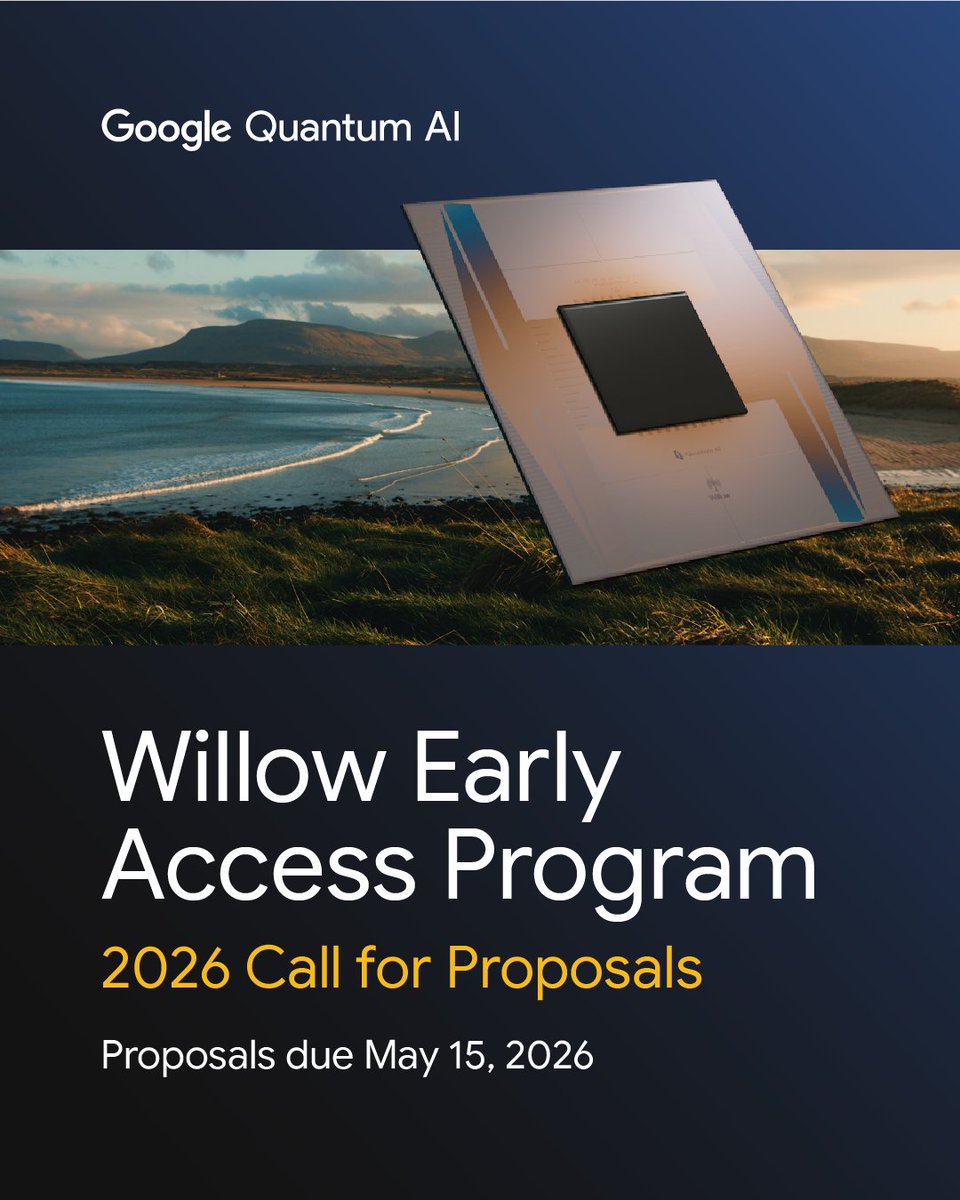
Submit proposals for early access to the Willow quantum processor through the 2026 Willow Early Access Program before the May 15 deadline. Learn more → https://t.co/eCHGWXHFN1
In honor of World Quantum Day, we’re heading onto our campus to answer the top trending questions people are searching for. Join Jenna and Andrew from our team as they break down the basics of quantum and what these systems could actually be used for → https://t.co/cSlLGN6o1I
Happy World Quantum Day! Today’s #GoogleDoodle represents the potential of the qubit. We’re harnessing its unique quantum properties to build systems capable of solving problems that remain intractable for classical computers → https://t.co/24vv6s0uD6
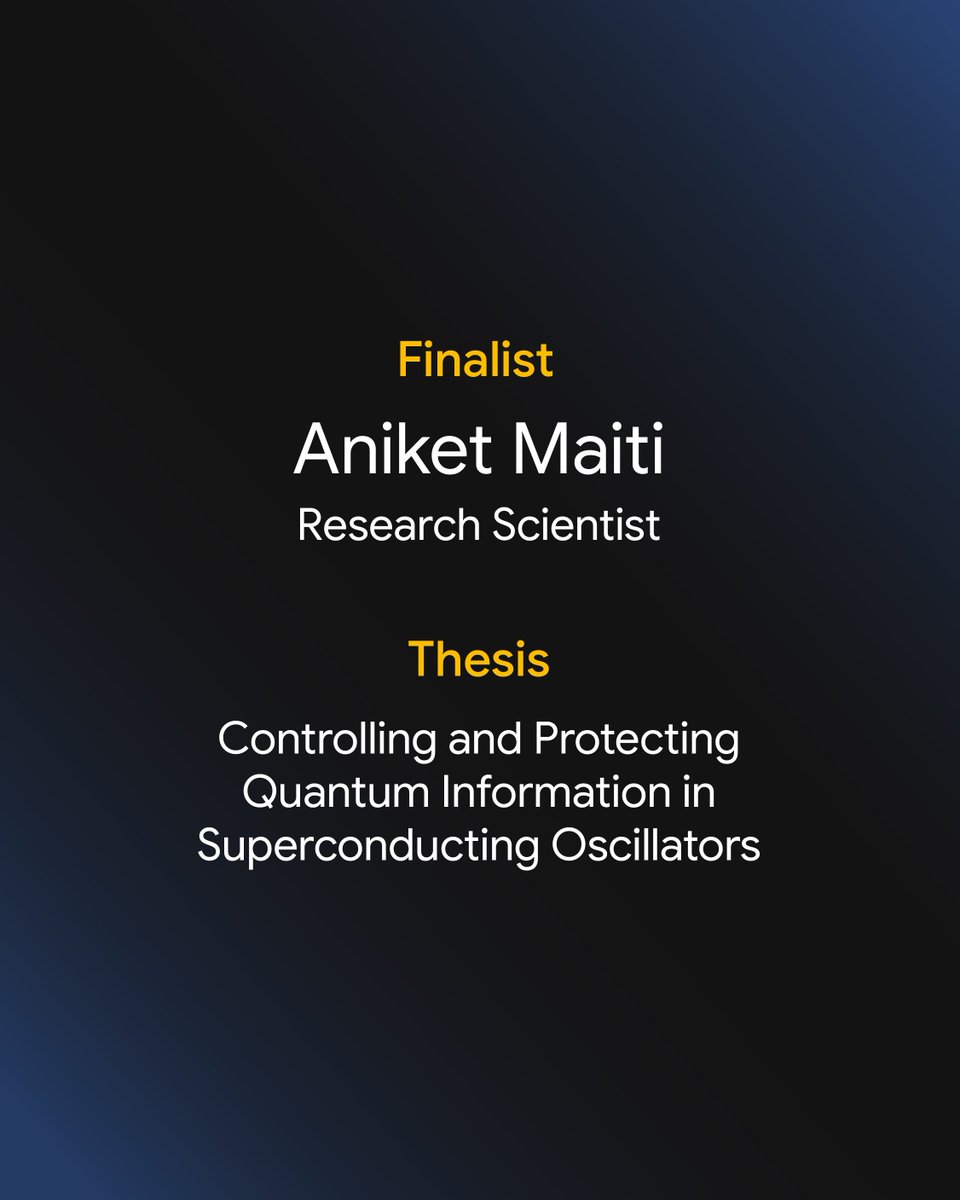
Last month at the 2026 APS Global Physics Summit, two Google Quantum AI researchers were recognized as DQI Best Thesis finalists. Congratulations Nathan Lacroix (Winner) and Aniket Maiti (Finalist) on their work!
Google Quantum AI is now accepting proposals for the Willow Early Access Program.
We are seeking proposals for experiments that can be run on our Willow processor that have the potential to produce foundational, high-quality results. Learn more → https://t.co/48NExeWFqA
Google Quantum AI is expanding to include neutral atom research with our superconducting program. Complementary paths will accelerate our mission to build a large-scale, error-corrected quantum computer—an engineering challenge we are excited to tackle. https://t.co/nSV5VTi5v7