Like many of you we in the GOTO collaboration have become concerned at the way X (we liked it better as Twitter) has developed, so we're leaving for Bluesky. Join us there as @GOTO-network.bsky.social
Our new (from 2023) site at Siding Spring, Australia has provided much more interesting wildlife than our original site at La Palma, in the Canary Is. Some native visitors are not as welcome and frankly a bit of a nuisance
Applying for PhDs/grad school, postdocs, internships, faculty jobs in Astronomy this fall? Here's a website that aims to list a lot of incredible resources that the astro community has made:
Check out: https://t.co/EnRzSFuL80 [1/4]
Today's hybrid GOTO collaboration science meeting (in-person at @WarwickAstro) showcases an amazing year for our project. Both nodes are operational and regularly detecting transients from a wide range of triggers. Plot from David O'Neill's talk; TNS = Transient Name Server
Citizen science project 'Kilonova Seekers' has already ID'd 20 new cosmic explosions in 6 months. Led by @GOTO_Network, involving @MonashAstro A/Prof @DuncanKGalloway and Sergey Belkin, the first stage is published in #MNRAS@RAS_Journals.
Read more 👇
https://t.co/gZvLt6hVkW
We also plan to use Gotito for confirming new detections from the larger array during the night, and performance will be similar. Currently fitted with Sloan g, r, i and Bessel I filters in addition to GOTO-L so beautiful colour images like this snap of M31 are also possible
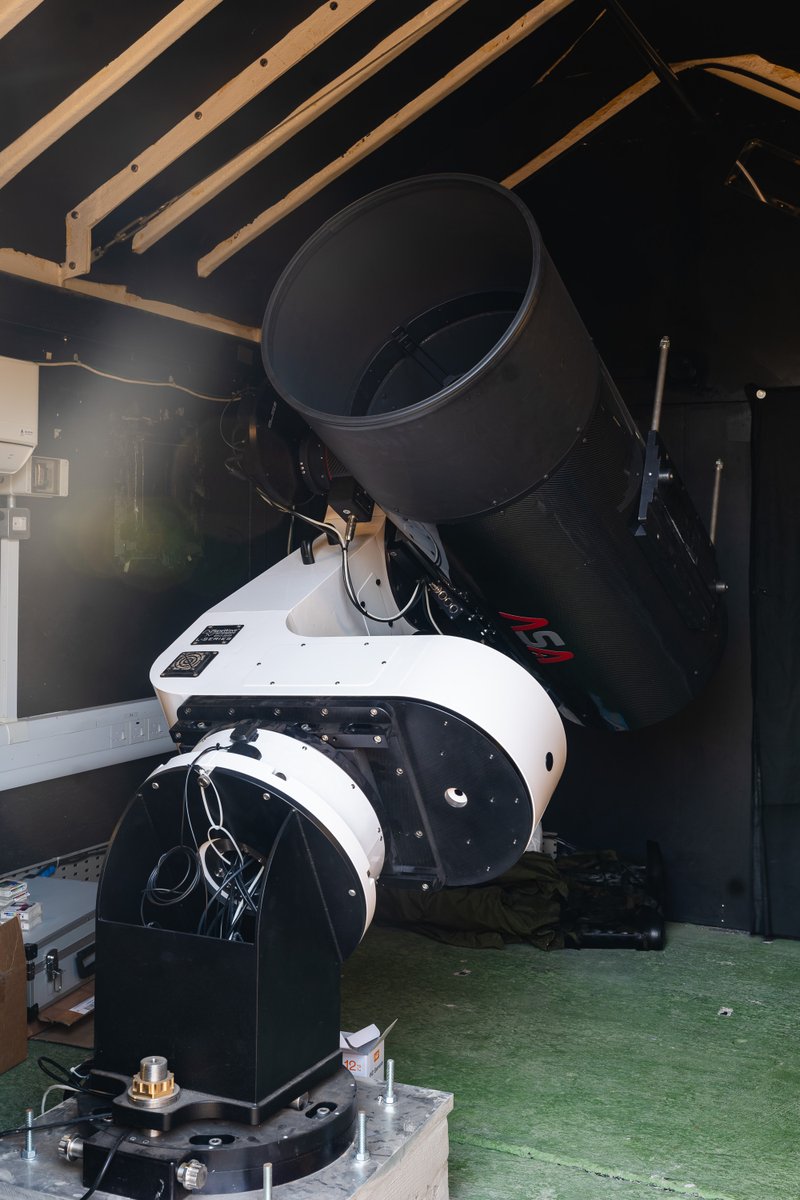
Our GOTO instruments now have a smaller sibling... introducing "Gotito"! It's a single ASA unit telescope on a mount on La Palma that @WarwickAstro PhD student Ben Godson and other collaboration members will use as a test platform for possible future camera and filter changes.
Not all the wildlife on site is as appealing... this ferocious-looking female Red-headed Mouse spider can produce copious amounts of a highly toxic venom, which is potentially as dangerous as that of the Sydney Funnel-web Spider.
Collaboration members from @MonashAstro and @WarwickAstro are at GOTO-South this week to replace cameras following maintenance. K. Ulaczyk took this magnificent image showing the Great Celestial Emu, as known by indigenous observers of the sky, head down https://t.co/KVu9d1uWUR
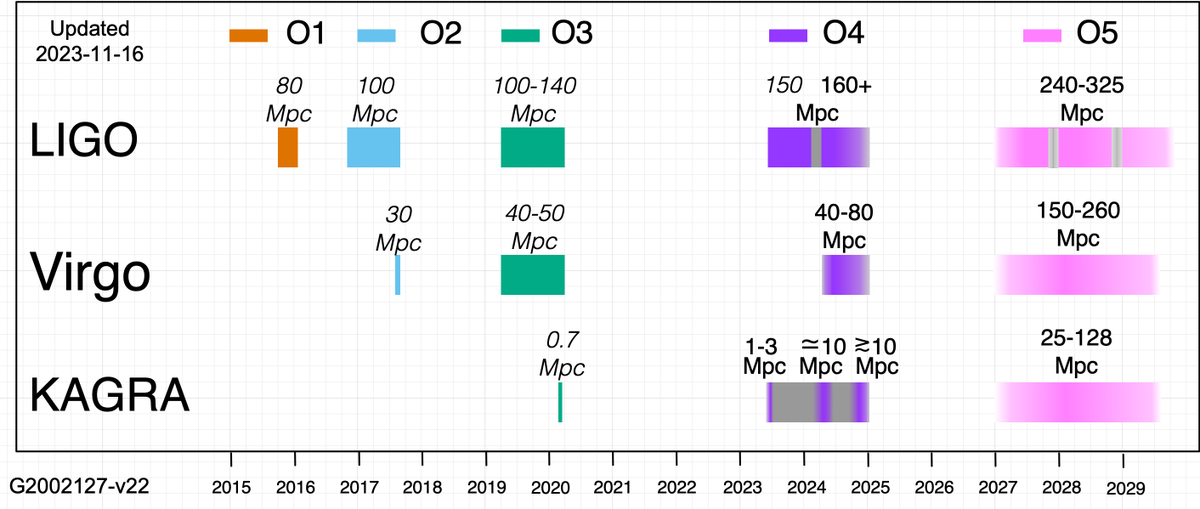
With interferometric detectors on hiatus, we have no chance of binary neutron-star inspiral detections for a while. We're still following up GRB triggers, but what else do our followers think we should observe?
The first half of our fourth observing run (O4a) has come to a close
We'll be back with an engineering run on 13 March, and should start the second half of the observing run (O4b) on 27 March
https://t.co/CyWp70H1if
Please no-one explode until we're back!
🔔📜 IceCube paper submitted to EPJ+!
We report on a successful first attempt at engaging the public in research. Over the course of six months, 1,800 @the_zooniverse users aided in 128,000 classifications of IceCube neutrino events. 🤯
Story ➡️ https://t.co/KRiRgmy2ku
@rha_star Follow-up spectroscopy of this event, named GOTO24eu/AT2024apy with GTC and @ESO VLT indicates a whopping redshift of 3.162 https://t.co/OVpbfWtJXU
.@MonashAstro's Felipe Jiménez-Ibarra presented this week on black holes and GOTO to high school final year students at IES Santa Úrsula, Tenerife (Spain). More than 80 attendees, including students and teachers, particularly excited about our https://t.co/sKSRB3sFdY project!
A huge milestone for newly-commissioned GOTO-South yesterday: first science output! Our GRB working group reported very early non-detections of GRB 230911C around 5 mins post-trigger, read more here: https://t.co/cazgw1v96o







![FloorAstro's tweet photo. Applying for PhDs/grad school, postdocs, internships, faculty jobs in Astronomy this fall? Here's a website that aims to list a lot of incredible resources that the astro community has made:
Check out: https://t.co/EnRzSFuL80 [1/4] https://t.co/RPaY90NulD](https://pbs.twimg.com/media/GSDC9Y5W0AA8r-Q.png)