The French hate air conditioning.
So Paris built a 120-kilometre machine under its streets for producing cold.
It’s called Fraîcheur de Paris, and it does for summer heat what district heating did for winter: centralise the problem.
Instead of every museum, office, hotel, hospital and shop bolting its own cooling plant onto the building, Paris moves cold through pipes.
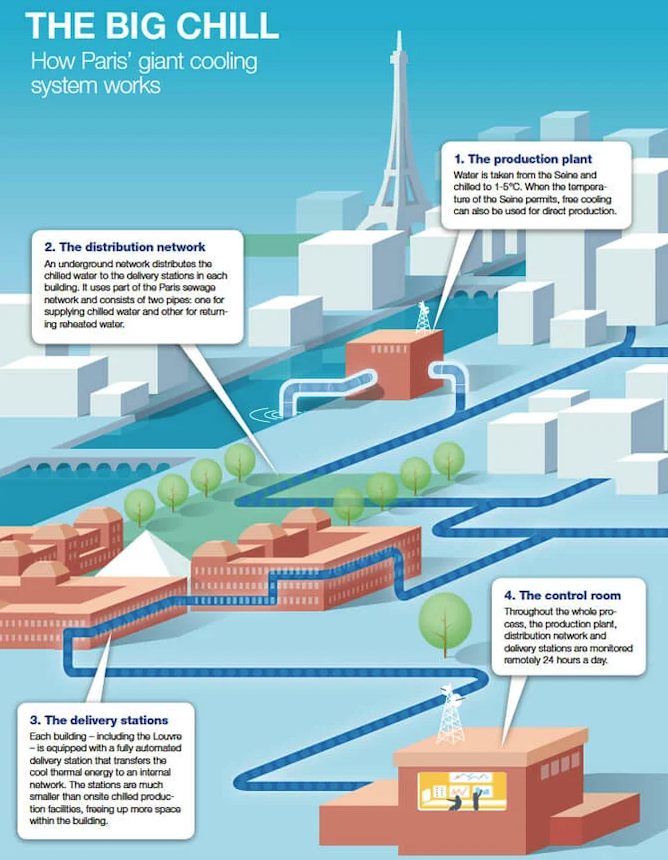
The network sends water chilled to 2 to 4°C through buried supply lines. The water enters a connected building, absorbs heat through an exchange station, then returns at 12 to 14°C to be cooled again.
It essentially functions with two pipes. One carries the cold out, the other carries heat back.
The production plants cool the circuit from 12°C to 4°C. Some sites use the Seine as a heat sink. In colder periods, the system can use the river’s own temperature for free cooling, which means the machines work less and the electricity demand drops. The Seine water doesn’t become the building water. It stays separate, passing temperature across heat exchangers.
The scale is pretty strange when you see it written down though.
It's got 15 production sites, 4 storage sites, 120 km of underground network with 924 subscribers. This has resulted in 7 million square metres cooled, and 493 GWh of cooling sold.
A cold utility running beneath one of the densest cities in Europe.
The Forum des Halles has been cooled this way since 1979. The Louvre since 1986. Galeries Lafayette, Opéra Garnier, Hôtel de Ville, Station F, La Samaritaine and the National Assembly all sit on the same idea. Tourists stand in the Louvre looking at paintings while a municipal cold loop does part of the dull work below ground.
The boring part is the breakthrough.
Cold can be stored at night in chilled water or ice, then used during daytime peaks. The network is monitored from a control room with more than 125,000 control points. A delivery station inside a building takes 5 to 7 times less space than a standalone cooling installation and avoids the roof and façade clutter that turns cities into compressor farms.
That matters because conventional air conditioning solves heat by moving it somewhere nearby. In a dense city, thousands of private machines mean thousands of outdoor units rejecting heat into streets, courtyards and roofs, plus refrigerants, noise, vibration and maintenance spread across every building.
Paris’s public cooling network has a stated coefficient of performance of 4, against 3 for a wet standalone system and 2 for a dry standalone system. Against an equivalent set of autonomous installations, Fraîcheur de Paris says the network gives 100% higher energy efficiency, 35% less electricity use, 90% fewer refrigerant-fluid emissions and 50% lower CO2 emissions.
The climate backdrop is the real reason this exists.
Paris ran a full crisis exercise called “Paris at 50°C” in 2023. Météo-France’s 2050 reference trajectory for France points to heatwave days becoming five times more frequent, hot nights rising sharply in urban centres, and some local extremes around 48°C becoming possible.
The city signed a 20-year concession in 2022 with Fraîcheur de Paris, owned 85% by ENGIE and 15% by RATP. The contract is worth a projected €2.4 billion. The plan is to extend the network by 158 km by 2042, add 20 production plants and 10 storage sites, and reach more than 3,000 subscribers, including hospitals, nurseries, schools and care homes.
This is basically the infrastructure version of admitting that summer is becoming a public systems problem...
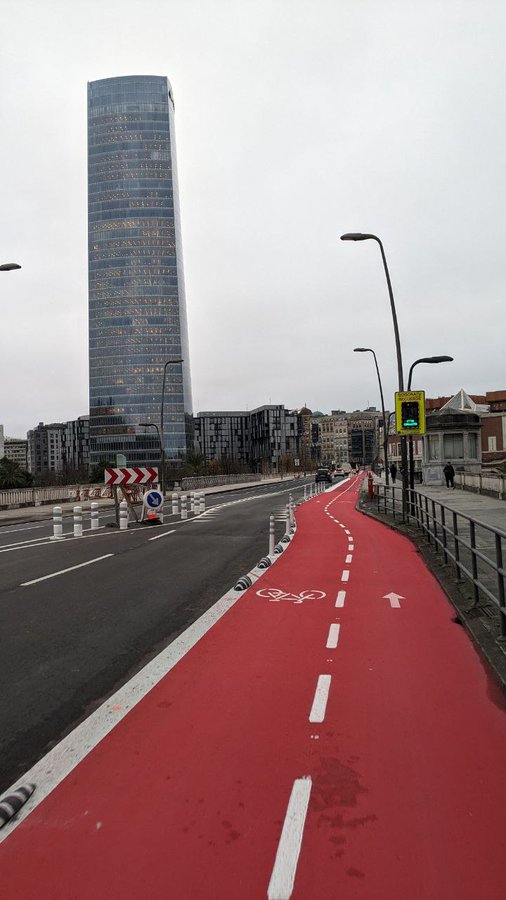
“The most effective approach is to build a network and built it as quickly as possible.
But bike lanes alone do not make a network. In Dutch cities up to two thirds of the network is in mixed, low-traffic conditions, where the bike is the dominant mode.”
https://t.co/UTK2akjTey
Have you submitted your case to the Public Sector Tech Watch Best Cases Award 2026 yet?🏆
#PublicAdministrations across 🇪🇺 can showcase their innovative uses of #AI, #Blockchain, Digital Twins, Quantum Computing and more!
📅 Deadline: 30 June
👉 https://t.co/XSKOSPjOIW
Tokyo didn't build *one* downtown. It built dozens.
The Yamanote Line isn't just a train loop — it's the skeleton of an entirely different kind of city. Each station is its own gravitational center. Shops, offices, apartments, life — all layered around the exits.
You grab lunch between trains. Run errands during your transfer. The city bends around *your* movement.
This is what urban resilience actually looks like — not one massive core choking on its own density, but a constellation of small downtowns, each breathing on its own.
It's been hiding in plain sight for decades. 🌐
*What city do you think could pull this off next?* 👇
#SpaceArchitecture #UrbanDesign #Tokyo #CityPlanning #Megacity #FutureCities #Architecture #UrbanPlanning #YamanoteLine #ArchitectureTok #SmartCities #BuiltEnvironment
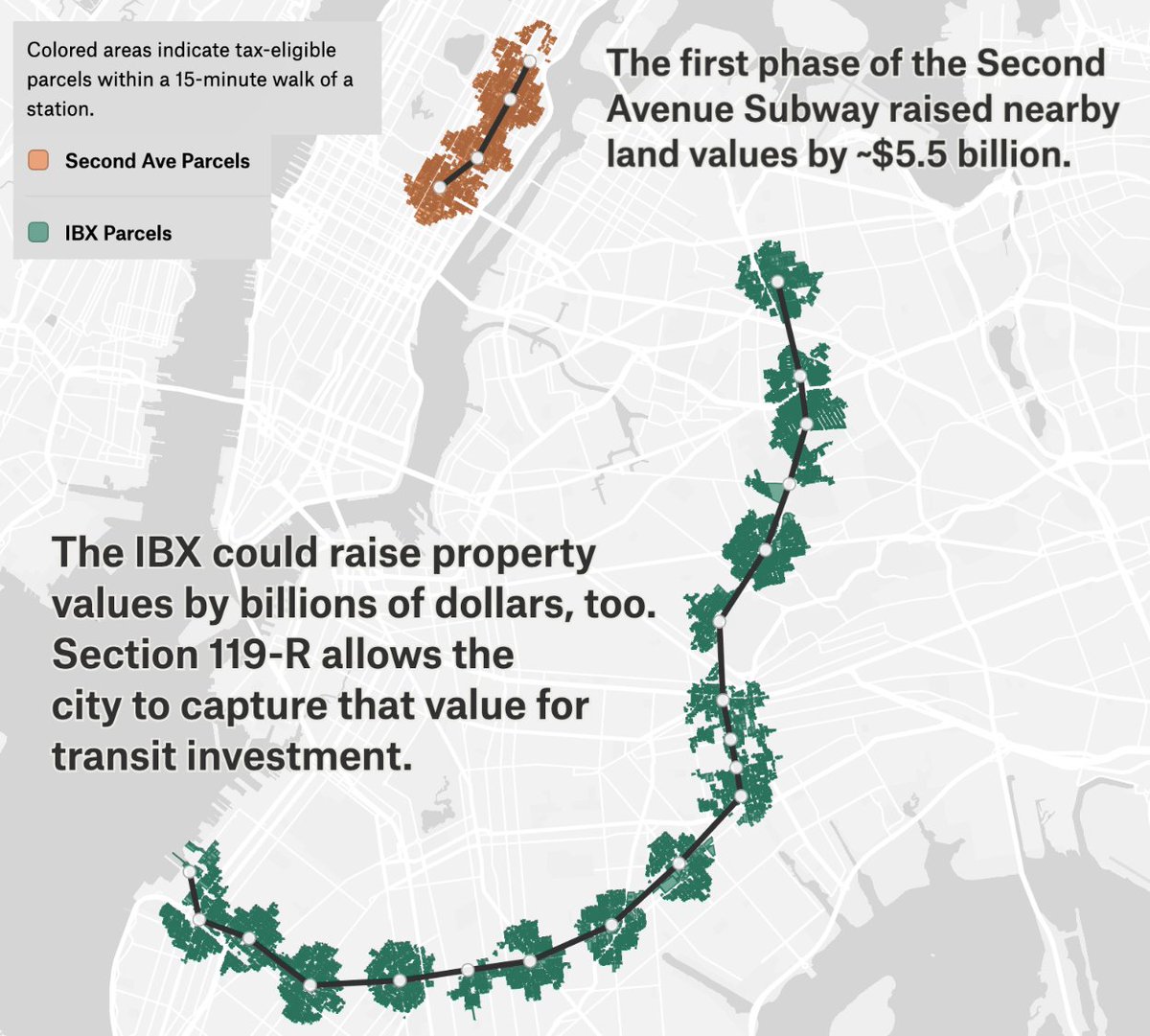
New York State just authorized a land value tax that could generate billions of dollars for new transit.
For the @NiskanenCenter, @aarmlovi and I wrote about how the renewal of § 119-r in the FY27 budget could unlock a virtuous cycle of infrastructure delivery in NYC.
Zohran Mamdani’s proposal to speed up buses and make them fare-free provoked excitement and debate during his mayoral campaign. But NYC isn't the only place where there's political momentum for better buses: municipalities across the US have been eliminating fares for all riders and making strategic improvements to speed up bus service.
NYC will see a conversion of 42nd Street into a river-to-river busway, car-free ticketholder queuing streets near Penn Station, and a complete ban on deliveries across a wide bicep of Midtown. https://t.co/0vJB91sEhM
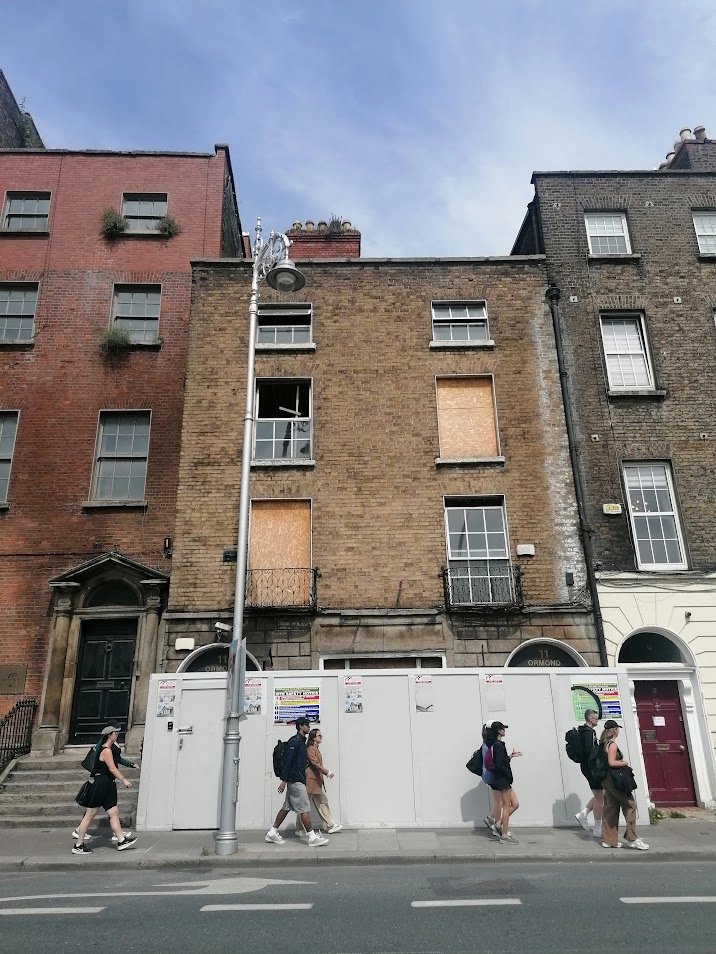
Such a shame to see our Georgian heritage lying vacant and falling into disrepair, especially amid a housing crisis.
Here's an example of three Protected Structure buildings on Ormond Quay Lower in Dublin City on my DerelictSites website:
Dublin City’s Record of Protected Structures — Building Types Analysis (draft)
https://t.co/4uhufmKwkI
6054 -5 Ormond Quay Lower, Dublin 1
https://t.co/EIoTOqGdSq
6058 - 10 Ormond Quay Lower, Dublin 1
https://t.co/dGPrnjKNXh
6059 - 11-11a Ormond Quay Lower, Dublin 1
https://t.co/aNPqpMxynf
Ormond Quay Lower - Board
https://t.co/sbC9IPJldt
Ormond Quay Lower - Map
https://t.co/p71fb2UKab
Useful Links and Grants Available
https://t.co/gD5C39nH0l
Refer to sections:
Georgian townhouse converted into apartments for rent" — multi-unit conversion of a Protected Structure.
Protected Structure needing major repair" — PS owner planning significant work
#Heritage #HousingCrisis #DerelictIreland #VacantIreland #Dublin #Ireland
🌿Llum verda al nou ecobarri al voltant de la fàbrica Roca de Gavà i Viladecans: 2.730 habitatges (1.260 protegits), activitat econòmica, equipaments i un parc de 7,36 ha. Un nou barri pensat per a les persones i respectuós amb el medi ambient.
Més info https://t.co/L2n0eNzFRB
Only in Ireland!😡
In the midst of a housing crisis—17,517 people, including 5,571 children, are relying on emergency accommodation—and with rents and house prices unaffordable to the vast majority, there are still so many derelict and vacant buildings throughout Ireland.
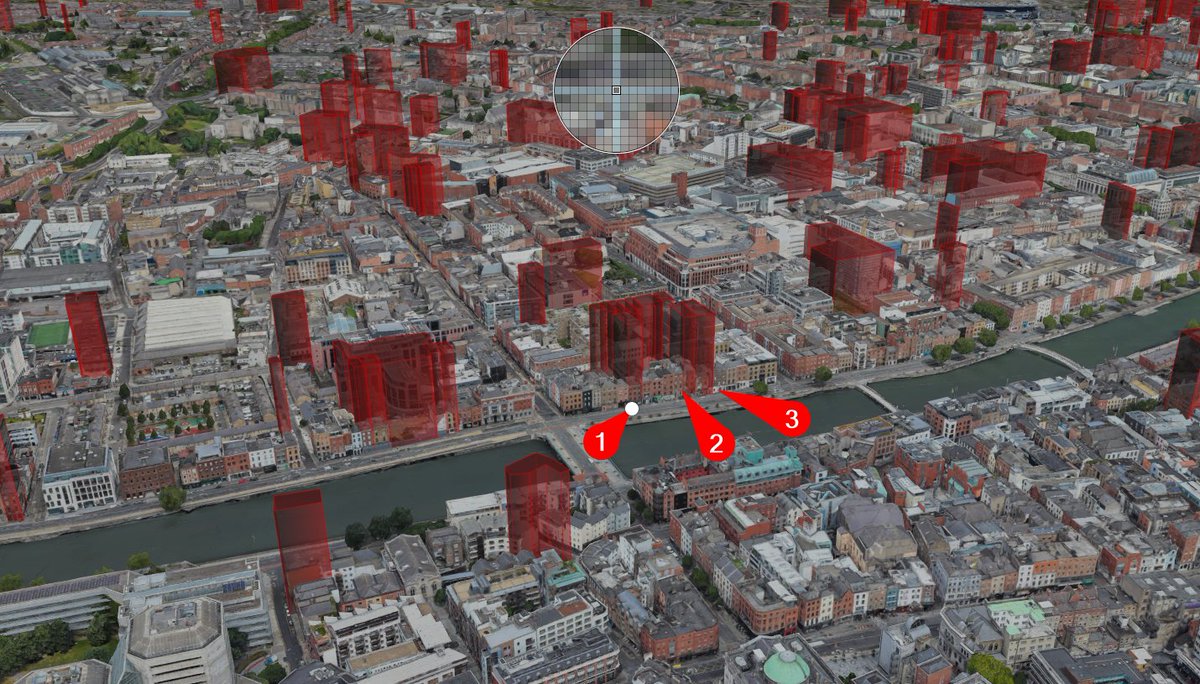
Here is one example in Dublin; in my visualisation, the red blocks represent some of the derelict and vacant sites along Upper and Lower Ormond Quay in Dublin City.
#HousingCrisis #DerelictIreland #VacantIreland #Dublin #Ireland
Always grateful for @MassLtGov’s support. She’s one of MA’s elected officials with the strongest understanding of the policies, constraints, and systemic barriers driving Massachusetts’ housing shortage, and what it will actually take to build the homes we desperately need.
Planners, don't confuse private and public space. You need both.
In Helsinki, as in the typical Scandinavian courtyard block, the interior courtyard is private to the residents of the block. It is not a public amenity. That is what great public streets, squares, playgrounds, and parks are for.
The courtyard is a private residential amenity. It is a shared backyard for the people who live there.
I notice that many new courtyard-style developments in the United States make the courtyard publicly accessible, or leave it visually and physically open to the street. This is a huge mistake. If you are raising little kids in a major population center, with the whole Shakespearean cast of society, for better and for worse, moving through the public realm, you want a private backyard that keeps your children in and strangers out.
That is not anti-urban. It is a normal and healthy residential preference.
Cities should not confuse private and public space. The job of the courtyard is to give residents a secure, green, semi-domestic interior world. The job of the city is to make the public realm beautiful, safe, and generous via better streets, better sidewalks, better parks, more plazas, more playgrounds, etc.
Properties will be worth more, and cities will retain more families, if they stop insisting that every green space inside a residential block become a public amenity. Make public streets and parks wonderful for the public. Let residential courtyards function as the shared backyards they are meant to be.
Yesterday, @NYC_DOT broke ground to complete the redesign of McGuiness Blvd. McGuinness has been the site of so much unnecessary injury & death. This has been a fight many years in the making.
This victory belongs to all the people who have been harmed by traffic violence.
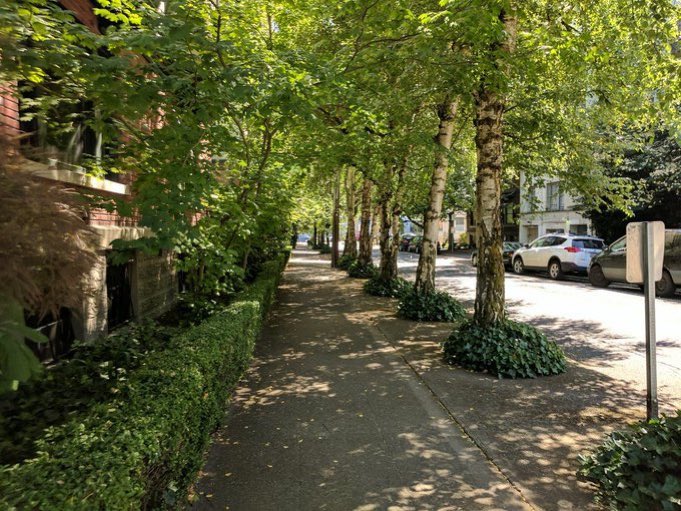
El efecto de un solo árbol en la calle es equivalente a cinco aires acondicionados del tamaño de una habitación funcionando 20 horas al día. Si nuestra ciudad se llenara de calles como esta la vida en verano sería mucho más agradable.
"Quitar asfalto en las ciudades para que la tierra respire y aumente el bienestar de sus habitantes. Esta es la filosofía que inspira muchos proyectos que están empezando a ejecutarse en ciudades europeas y de todo el mundo" https://t.co/BSWxyDwL1I
Check out the transformed S. Indiana Ave, 31st–55th.
This street regularly saw unsafe speeding, with some drivers exceeding 70 MPH. Now, traffic safety improvements have led to safer speeds, shorter crossings, and a more comfortable corridor for all users. #bikesafetymonth
Business up, vacancies down!
Storefront vacancy declined for the fourth straight quarter citywide and for the tenth straight quarter in Manhattan.
Which of the city’s 76 new tea and coffee shops are you trying next?
We're making London better for walking, wheeling & cycling.
Great to see Red Lion St in Camden transformed as part of the Holborn Liveable Neighbourhood work.
Road space reclaimed to prioritise walking, wheeling & cycling, with 🌴☘️🌹to reduce flooding & improve biodiversity.